Fuel delivery
P0172: Causes, Diagnostic Tests and Repair Options
Published:
Edited and fact-checked by: Jacob Bowen
General information; vehicle-specific diagnosis requires an inspection. How we prepare our guides · This page reserves space for ads. Advertising policy · Privacy choices
The quick answer
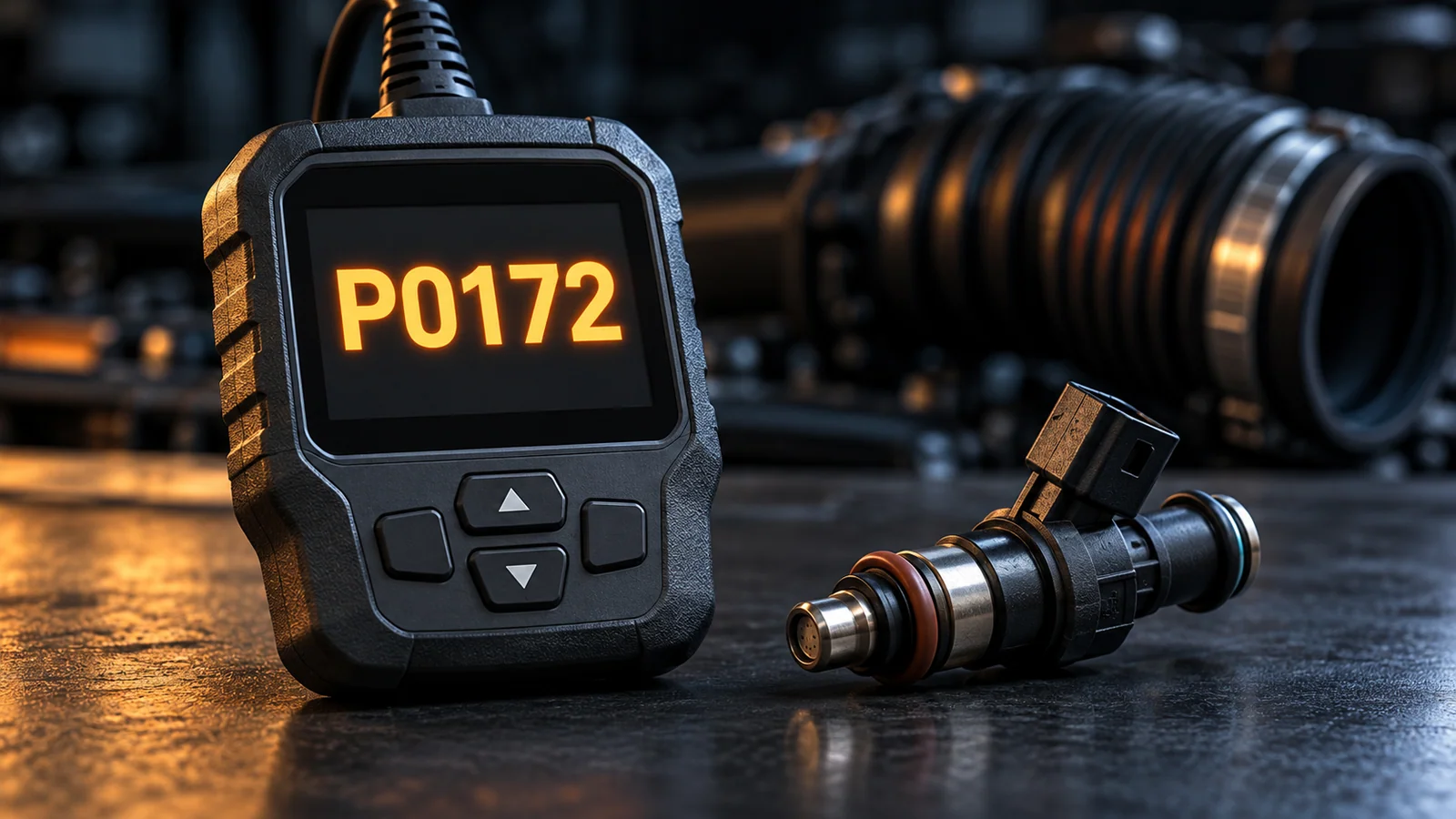
P0172 means the computer has identified a too-rich condition on bank 1. It does not tell you whether an injector, pressure-control component or sensor is responsible. Diagnosis should compare fuel-trim and sensor information under the fault conditions, then test the suspected cause. Save the original codes and data before clearing them or replacing parts.
What does too rich mean?
A rich mixture has too much fuel relative to the available air. In feedback operation, the computer tries to correct what it detects by reducing fuel delivery. If the correction reaches the relevant limit under the required conditions, a rich-system code can be stored.
The code identifies a monitored condition, not a failed component. Confirm the exact engine and bank location rather than assuming bank 1 is always on the driver's side.
What do negative fuel trims tell you?
Negative fuel trim means the computer is taking fuel away. Short-term trim reflects more immediate correction; long-term trim reflects learned adjustment. Those values help show how the system responds, but their meaning depends on the operating conditions and feedback accuracy.
Ask the shop to compare the relevant banks and conditions rather than diagnose from a single screenshot. There is no universal percentage that identifies the bad part on every engine. Clearing learned information before recording it can remove useful evidence.
Which checks help identify the cause of P0172?
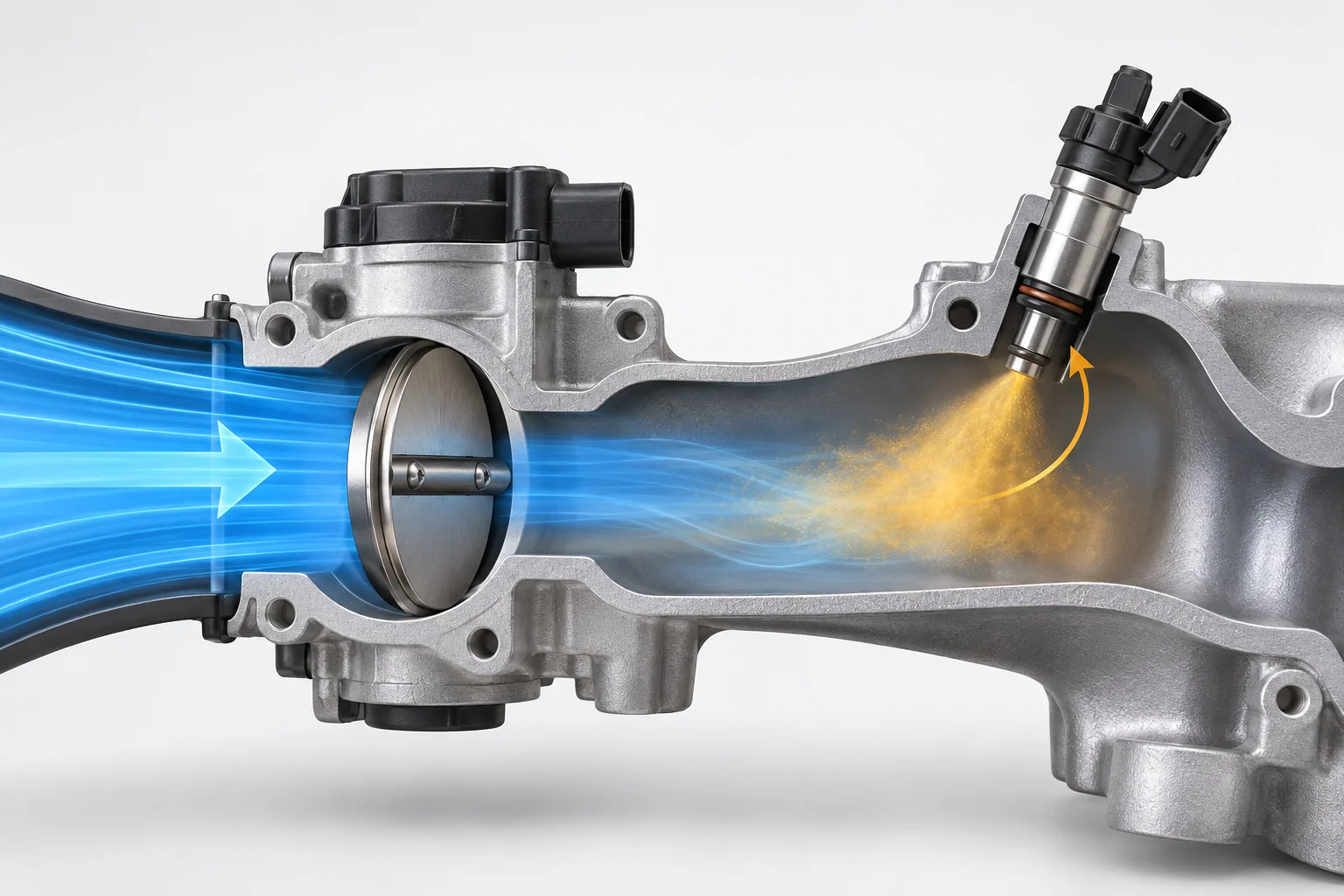
Depending on the system and findings, the investigation may include fuel pressure, injector leakage, intake condition and the plausibility of airflow and exhaust-sensor information. Each branch needs a test: for example, excess pressure and a leaking injector require different corrections.
A sensor reporting rich may be correctly describing another fault. Equally, the presence of a fuel-trim code does not prove every sensor signal is accurate. Ask how the reported condition was checked before approving either a sensor or fuel-system part.
If misfire or other codes are present, include them in the diagnostic plan. A full set of symptoms and data is more useful than treating each code as an unrelated repair.
Is a vacuum leak the usual explanation for a rich code?
Unmetered intake air commonly drives a gasoline feedback system toward a lean correction, so a generic lean-code vacuum-leak checklist is not a complete P0172 diagnosis. The shop should follow the actual trim direction and vehicle procedure.
This distinction matters when searching for a Chevy, Honda, BMW or Toyota fix. The same code can appear on different systems, and a repair that solved a lean condition elsewhere may not address your rich complaint.
How do you know the repair worked?
Ask whether the original complaint, fuel correction and relevant monitor were checked after the repair. A warning light that stays off briefly after code clearing is not enough evidence on its own.
Arrange diagnosis promptly. If there is visible fuel leakage, a strong fuel smell, severe rough running or a flashing check-engine light, stop safely and seek assistance rather than continuing a test drive.
Sources & further reading
- HELLA — OBD-II powertrain DTC definitions (English)
- MOTOR — Fuel Trim Data: A Powerful Diagnostic Tool
- AA1Car / Larry Carley — Engine Vacuum Leaks
- Underhood Service — LTF and STF Fuel Trim Engine Codes P0170, P0175, P0172, P0174
- AA1Car — What Is Fuel Trim?
Vehicle designs and maintenance requirements vary. Consult the owner’s manual for your exact vehicle and seek a qualified inspection for a specific fault.