Fuel delivery
Fuel Gauge Not Working: Causes and Diagnostic Steps
Published:
Edited and fact-checked by: Jacob Bowen
General information; vehicle-specific diagnosis requires an inspection. How we prepare our guides · This page reserves space for ads. Advertising policy · Privacy choices
The quick answer
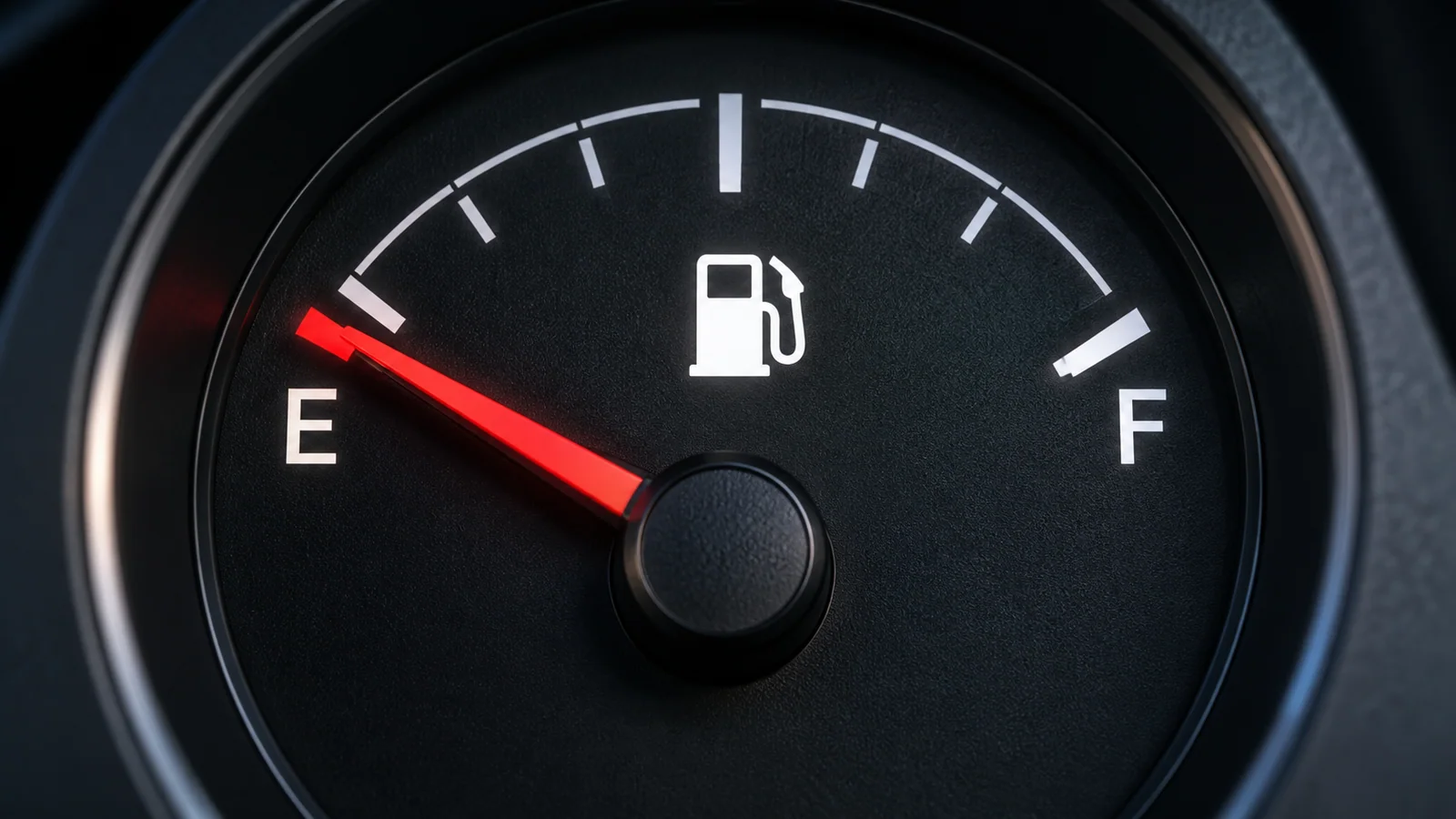
A fuel gauge that stays on full, empty or an incorrect reading may have a faulty tank sender, damaged wiring, a poor connection or a gauge problem. Test the complete signal path before replacing the fuel-pump module. Until it is fixed, do not rely on the gauge or wait for the low-fuel warning to decide when to refuel.
How does the fuel sender control the gauge?
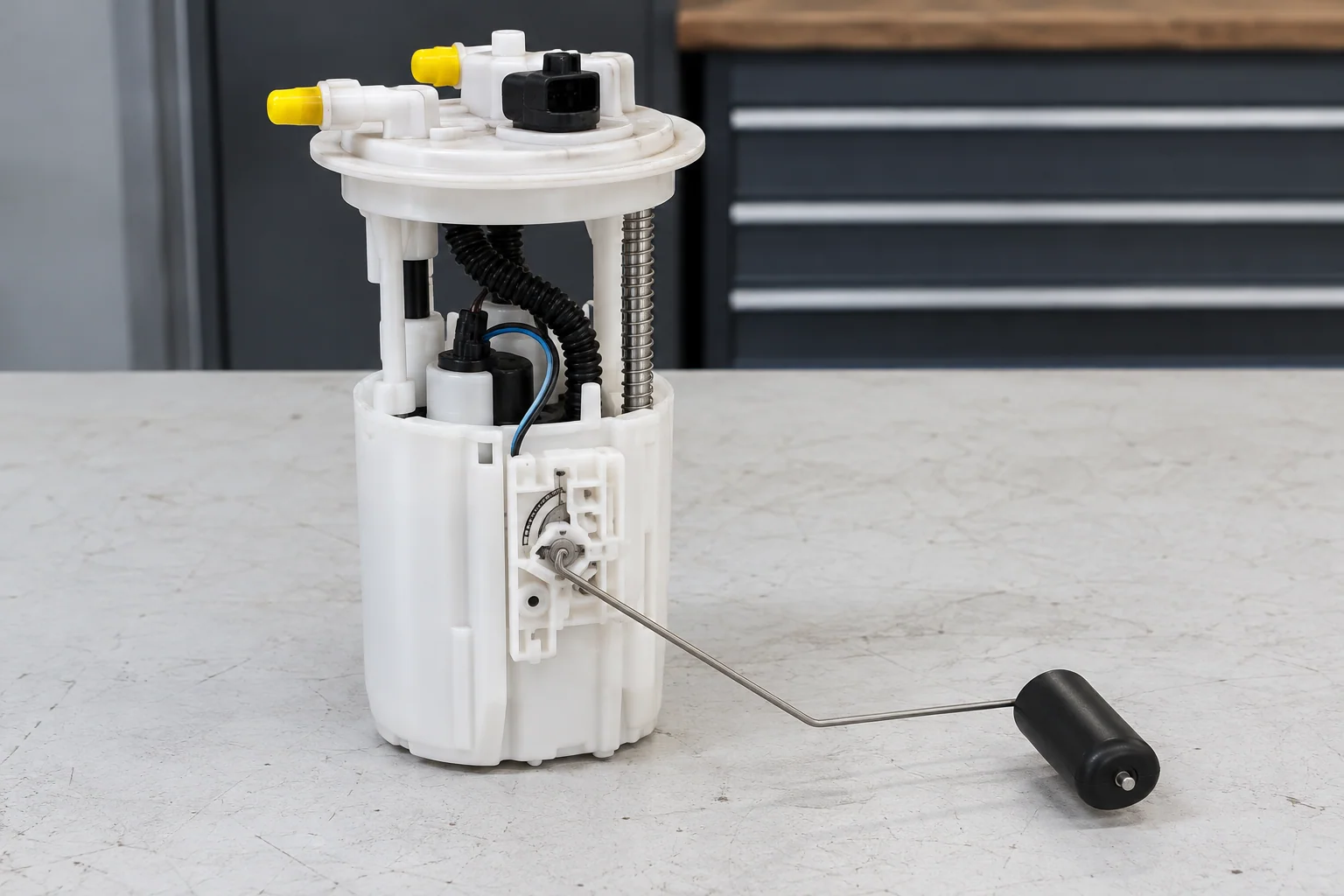
Many systems use a float linked to a variable resistor in the tank. As fuel level changes, the sender signal changes. The gauge may receive that signal directly or through electronic control equipment.
The correct readings depend on the vehicle. Resistance values and the direction of change are not universal. A needle stuck on full does not automatically mean a short circuit, and a reading of empty does not prove the tank is empty.
What can make the reading stick or jump?
A worn sender contact, sticking float, damaged float arm or electrical fault can produce an inaccurate or erratic indication. Wiring and ground problems can imitate a failed sender. If the complaint began after fuel-pump work, the installation and float movement deserve attention.
Tell the shop whether the reading never moves, changes only after bumps, jumps between extremes or fails at a particular fuel level. Also mention other gauges or dashboard functions that stopped working. Those details guide testing without identifying a part on their own.
What should be tested before the tank is opened?
Start with the vehicle's wiring diagram, relevant fuses and accessible connectors. The technician can check supply and ground, retrieve applicable codes and compare the sender circuit with service specifications. Where supported, scan-tool fuel-level data and gauge commands help separate a signal problem from an indication problem.
Appropriate tests may check the sender's change through its travel or simulate a known input to the gauge circuit. The test method must fit the system. Do not ground an unknown wire or copy resistance values from another vehicle.
An older service example covers certain 2004–2007 four-door Ford Explorers and Mercury Mountaineers with erratic readings or P0463. The procedure distinguishes a separately serviceable sender kit from a complete pump assembly. That example shows why application details matter; it is not a universal P0463 repair.
Do you need a sender, a fuel pump or a dashboard repair?
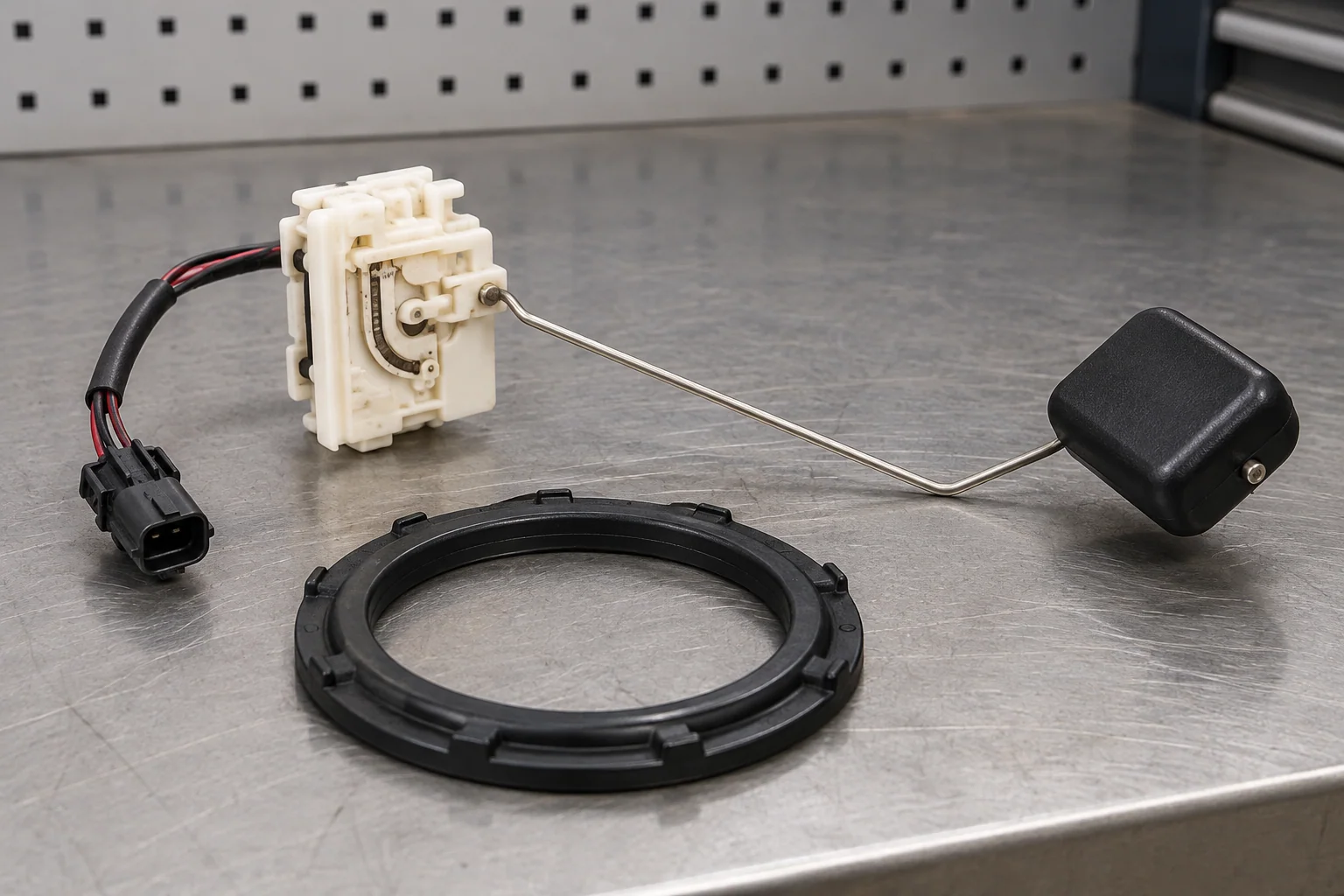
Replace the component or repair the circuit that testing identifies. Some senders are available separately; others are serviced with the tank module. A working pump should not be condemned merely because the gauge is inaccurate.
Access may be through a service opening or may require tank removal. The shop should follow the exact procedure, protect the float and connections, seal the tank correctly and verify the reading and leak-free operation afterward. Opening a fuel tank involves flammable vapors and needs suitable equipment and precautions.
How much does fuel-level sending-unit replacement cost?
RepairPal's broad US estimate, updated September 3, 2026, is $1,608–$1,779: labor of $236–$346 and parts of $1,372–$1,432. It excludes taxes and fees, your location and related repairs. It is not a price for every broken fuel gauge.
Ask whether your quote covers a separate sender, a complete module, tank removal, seals and diagnosis. A connector repair or instrument-cluster repair is a different job. Compare estimates for the same confirmed fault and parts scope.
Sources & further reading
- Delphi — What's wrong with my fuel gauge? Diagnosing a bad fuel sending unit
- Underhood Service — Fuel Pump Tech Tip: MIL On With DTC P0463 Or Erratic Fuel Gauge Operation
- AA1Car / Larry Carley — Diagnose Fuel Gauge
- RepairPal: fuel-level sending-unit replacement estimate
Vehicle designs and maintenance requirements vary. Consult the owner’s manual for your exact vehicle and seek a qualified inspection for a specific fault.