Fuel delivery
Car Smells Like Gas: Symptoms, Diagnosis and Repair Options
Published:
Edited and fact-checked by: Jacob Bowen
General information; vehicle-specific diagnosis requires an inspection. How we prepare our guides · This page reserves space for ads. Advertising policy · Privacy choices
The quick answer
An unexplained gasoline smell needs prompt investigation, especially inside the cabin or near a running engine. If the smell is strong or persistent, or you see leaking fuel, stop safely, switch off and arrange assistance. Do not restart to look for the leak. No visible puddle does not establish that the fuel system is safe.
What should you do before trying to diagnose it?
Keep smoking materials, flames and other ignition sources away. Move occupants to a safe location and contact roadside assistance; if there is a fire or immediate danger, call emergency services. Do not crawl under the vehicle or open fuel lines to investigate.
Ford's Villager owner guide explicitly warns against starting when fuel is seen or smelled and against resetting its fuel shutoff switch under those conditions. The switch arrangement is specific to that vehicle; the safety lesson is to avoid a reset-and-retry response to suspected leaking fuel.
Tell the shop whether it began after refueling, occurs only during starting, persists while parked or enters through the vents. Those details help choose the inspection once the vehicle is safe.
What if it smells like gas but nothing is dripping?
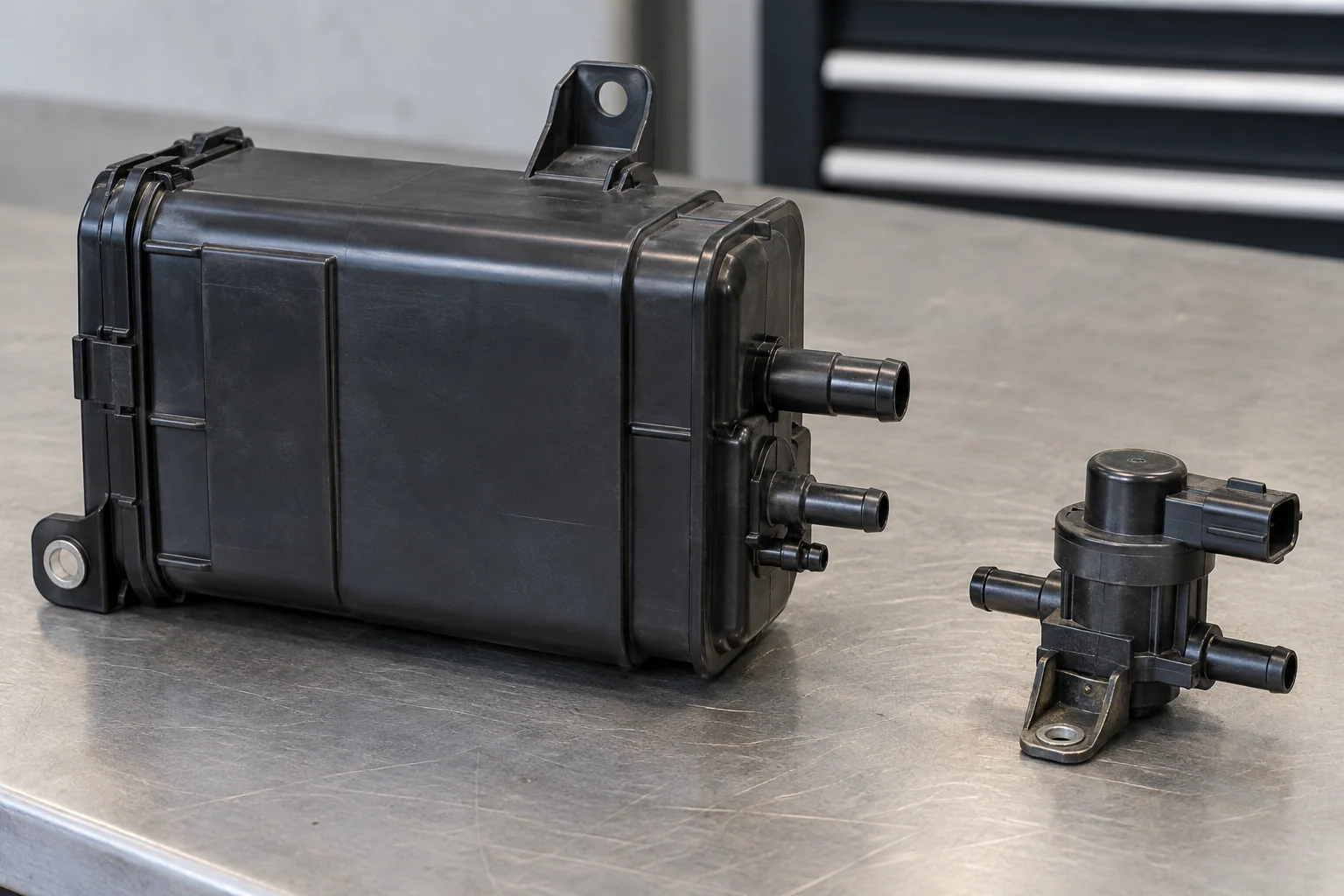
Liquid-fuel leakage and vapor leakage are different possibilities. Snap-on explains that the EVAP system stores fuel vapors in a charcoal canister and controls their movement through the purge and vent circuits.
A vapor-system problem may not leave a puddle, while an intermittent liquid leak may not be visible after shutdown. Absence of a wet spot does not distinguish those paths. Neither does a check-engine code alone.
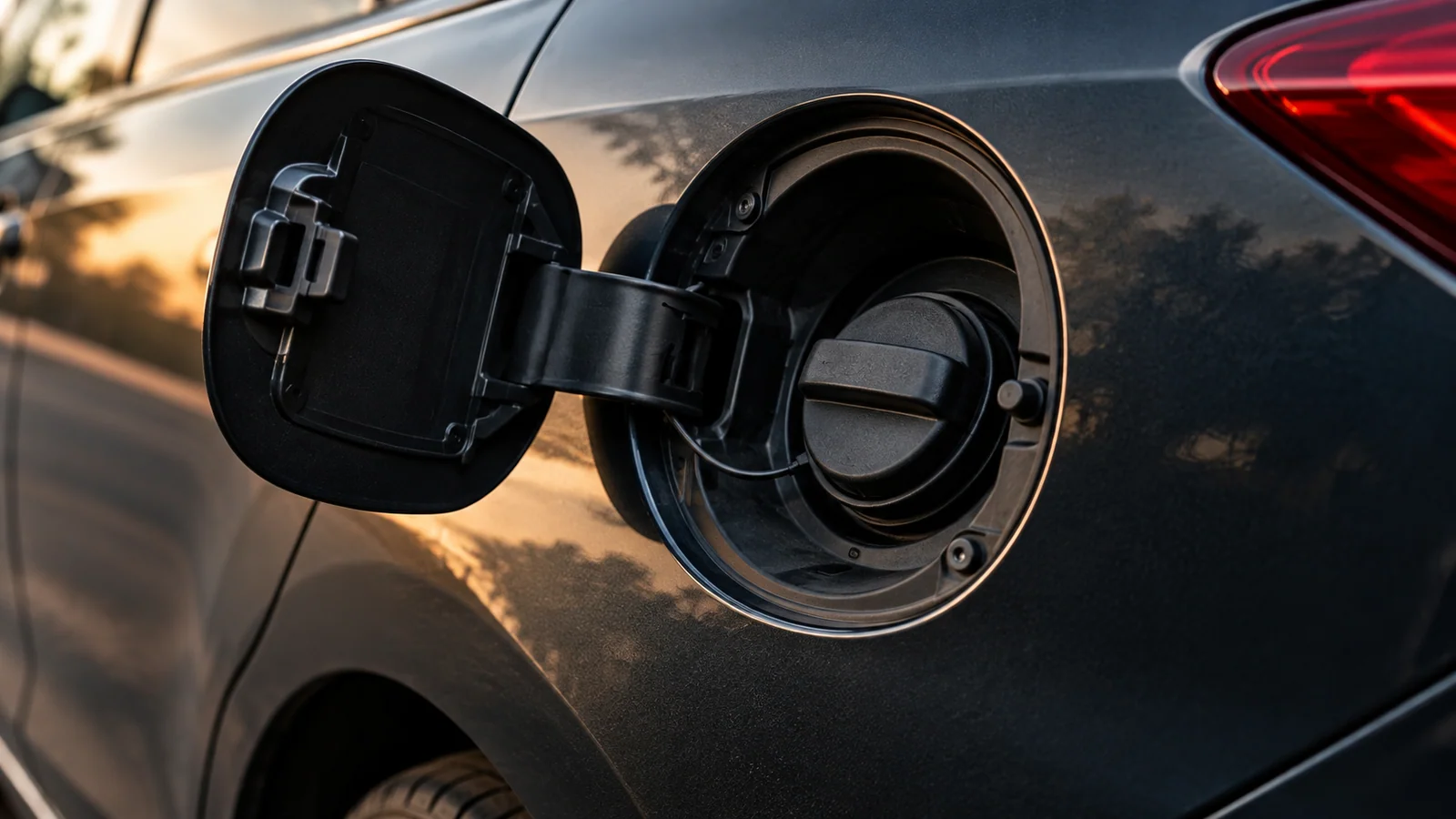
A cap or filler issue is one possible branch, not an automatic answer. Tell the technician about recent refueling or repairs, and have the actual filler design and condition checked rather than replacing a cap on a vehicle that may use a different system.
How are vapor faults separated from fuel-delivery faults?
The shop first inspects the relevant fuel-system areas and retrieves the exact codes and operating conditions. For an EVAP concern, Snap-on describes suitable smoke testing and commanded valve checks with sensor feedback. Electrical testing may be needed as well.
A code naming a purge or vent circuit does not establish where an odor originates, and not every EVAP fault is a leak. The test method and equipment must suit the vehicle. A homemade smoke source or general-purpose air compressor is not an appropriate substitute.
If the reported smell comes from the exhaust with rough running, the running problem needs diagnosis too. Describe where you noticed it without deliberately breathing exhaust; an odor description cannot identify a failed injector or sensor.
What if the engine oil smells like gasoline?
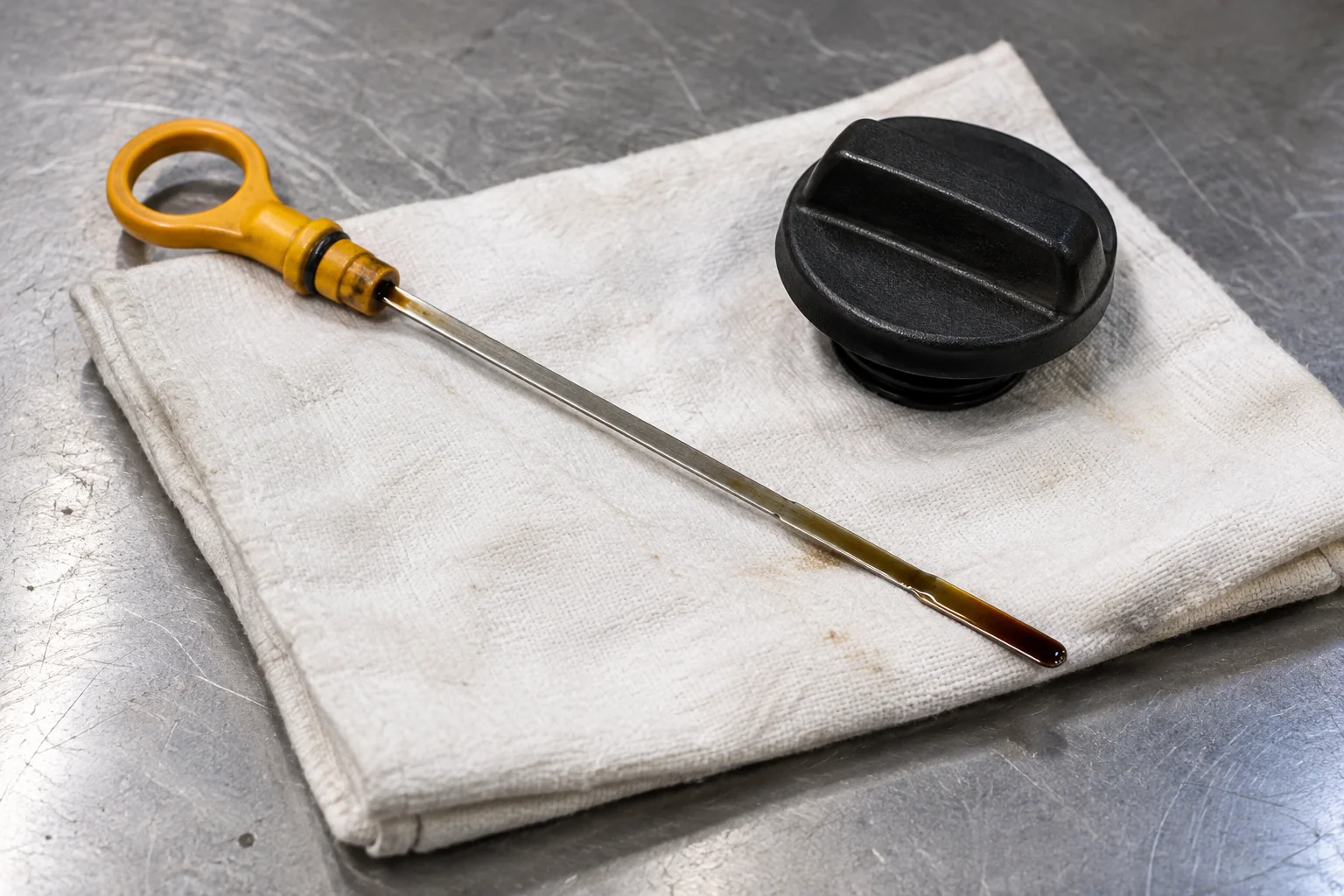
That requires a different assessment from an external fuel leak. Mazda service alert SA-026/18 documents fuel dilution and rising oil level after repeated extremely short, cold trips on its listed direct-injection vehicles. It does not establish that fuel-smelling oil is normal for every engine.
Report any rising oil level, warning codes and running problems, and ask for the applicable dilution checks and maintenance or repair instructions. Smell alone does not measure fuel content. Do not try to cure suspected excessive dilution with a long, hard drive.
What should the repair recommendation explain?
It should identify the source and the evidence: a confirmed liquid leak, a vapor leak, a circuit fault or another verified condition. The required repair and price depend on that finding.
Ask how the shop will check the repaired area and reproduce the original condition safely. A cleared code, new cap or temporary lack of odor is not by itself confirmation that the source was corrected.
Sources & further reading
- Ford Motor Company — 1997 Villager Owner Guide — fuel-leak precautions
- AA1Car / Larry Carley — Troubleshoot Odors & Smells In Your car
- snapon.com — EVAP System Operation and Testing
- Mazda: fuel dilution and P0172, service alert SA-026/18
Vehicle designs and maintenance requirements vary. Consult the owner’s manual for your exact vehicle and seek a qualified inspection for a specific fault.