Suspension and tires
Car Squeaks While Driving: Causes and Diagnostic Steps
Published:
Edited and fact-checked by: Jacob Bowen
General information; vehicle-specific diagnosis requires an inspection. How we prepare our guides · This page reserves space for ads. Advertising policy · Privacy choices
The quick answer
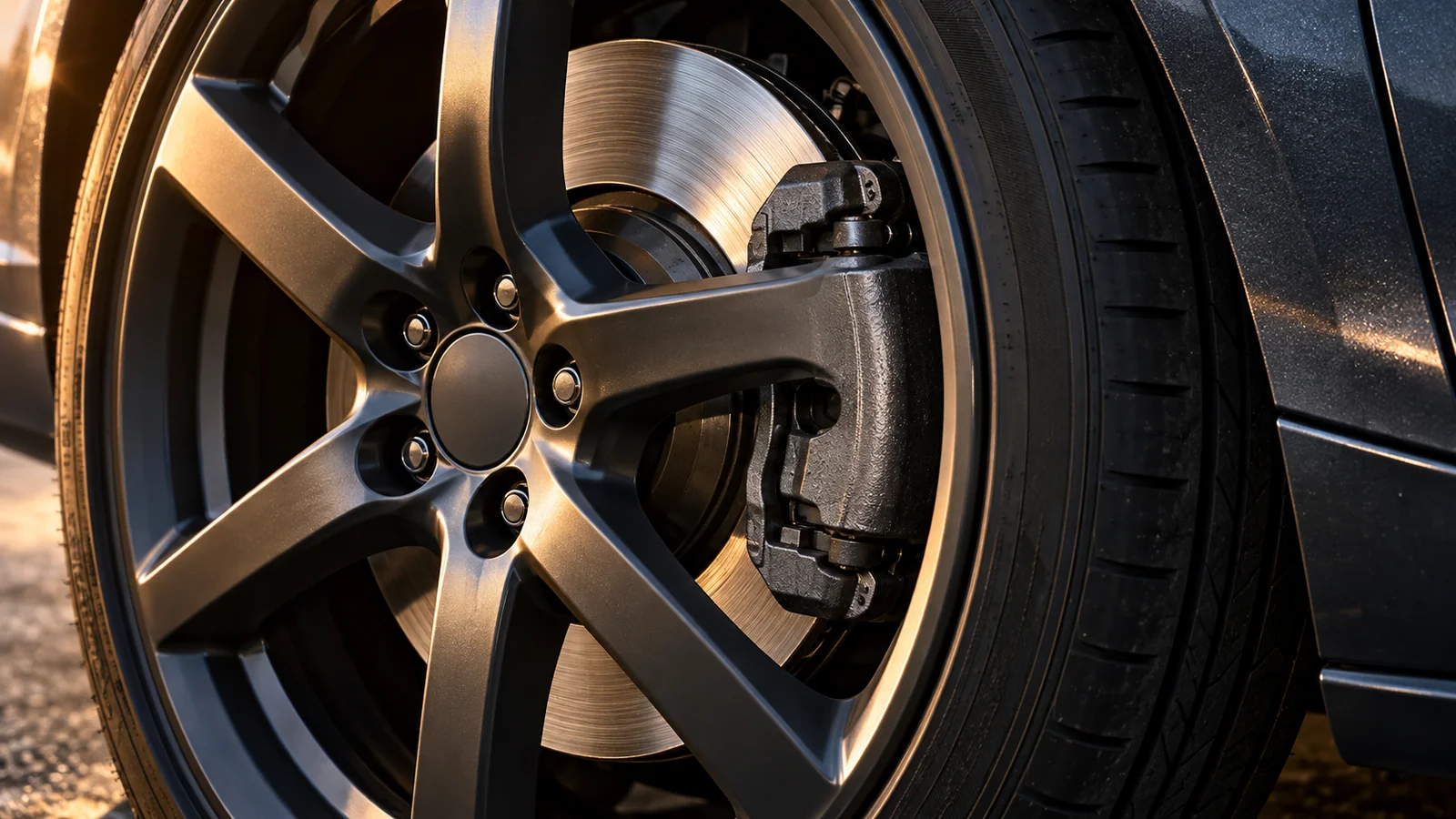
A squeak while driving needs to be located before a repair is chosen. Note whether it changes with braking, turning, bumps, road speed or engine speed. Brakes can make noise even with your foot off the pedal, while suspension movement and belt-drive faults can sound similar from inside the car.
Which observations help narrow down a squeak?
Describe the general area and what changes the sound during normal use. Let a passenger record it if useful; do not handle a phone or perform abrupt maneuvers to provoke the noise.
| When it changes | What to tell the shop |
|---|---|
| Braking or releasing the pedal | Whether light braking changes the sound or pedal feel |
| Turning or crossing bumps | Whether steering movement or suspension movement matters |
| Increasing engine speed | Whether it also happens while the vehicle is stationary |
| After recent work | Which brakes, tires, shocks or other parts were serviced |
Can it be the brakes if you aren't pressing the pedal?
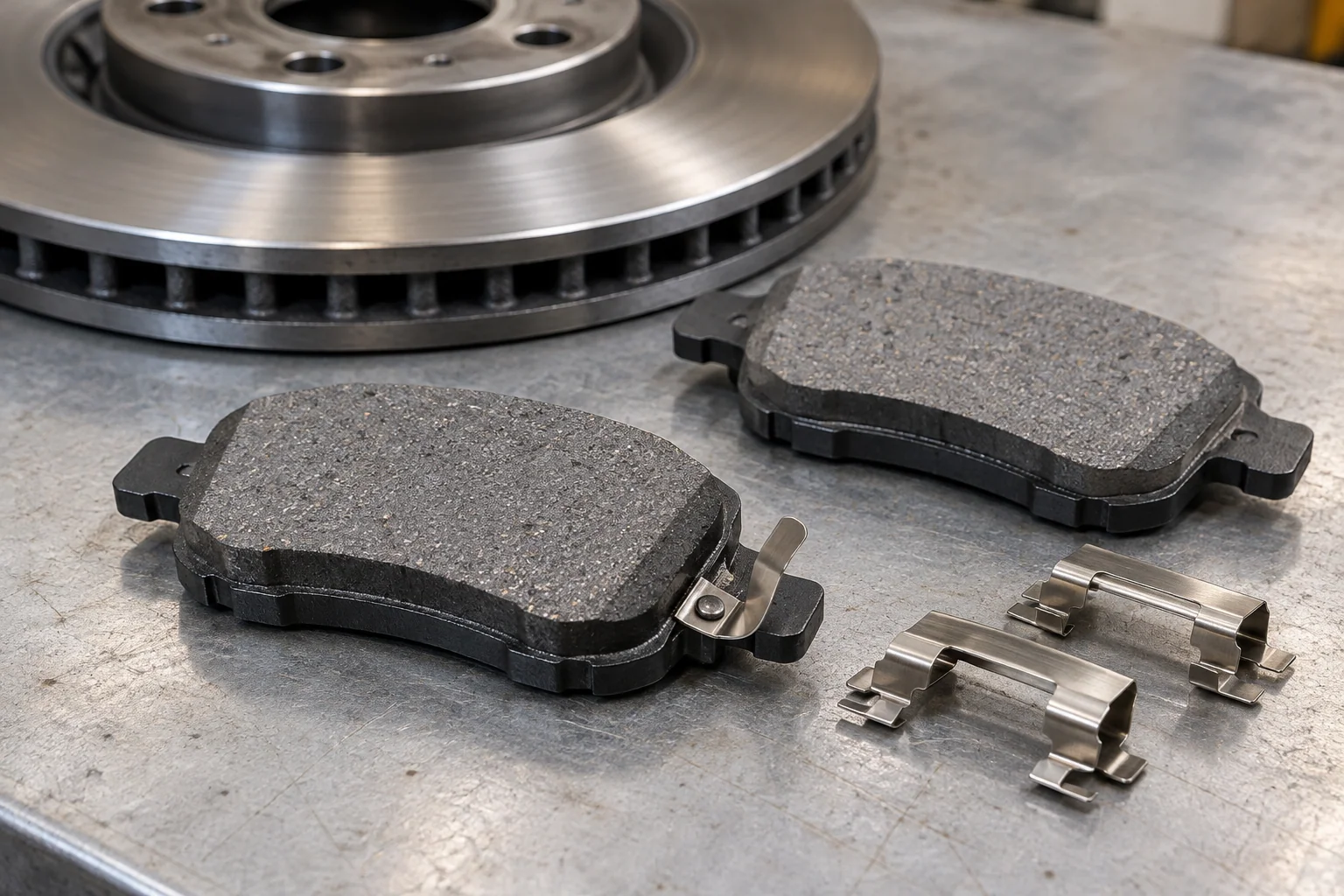
Yes. HELLA's brake-damage guide describes conditions that cause noise both during braking and with the brake released. Wear, damaged friction surfaces, debris or a component that is not moving freely need inspection; the sound alone cannot distinguish them.
Ask for the pad condition, disc condition and findings from the caliper and hardware inspection. Do not spray oil or general-purpose lubricant at a wheel to silence a brake-area squeak.
What if turning or bumps change the noise?
Have the steering and suspension inspected under the appropriate support and loading conditions. MOOG describes locating the general area, then checking the relevant joints, boots and mounts rather than replacing parts because of a sound description.
If the noise began after shocks or struts were replaced, Monroe advises checking the mounting components and surrounding suspension. It specifically points to the upper mounting area for bump-related noise and the bearing assembly when turning affects the noise. Those are inspection leads, not proof that the new strut failed.
Could a belt squeal sound like a driving squeak?
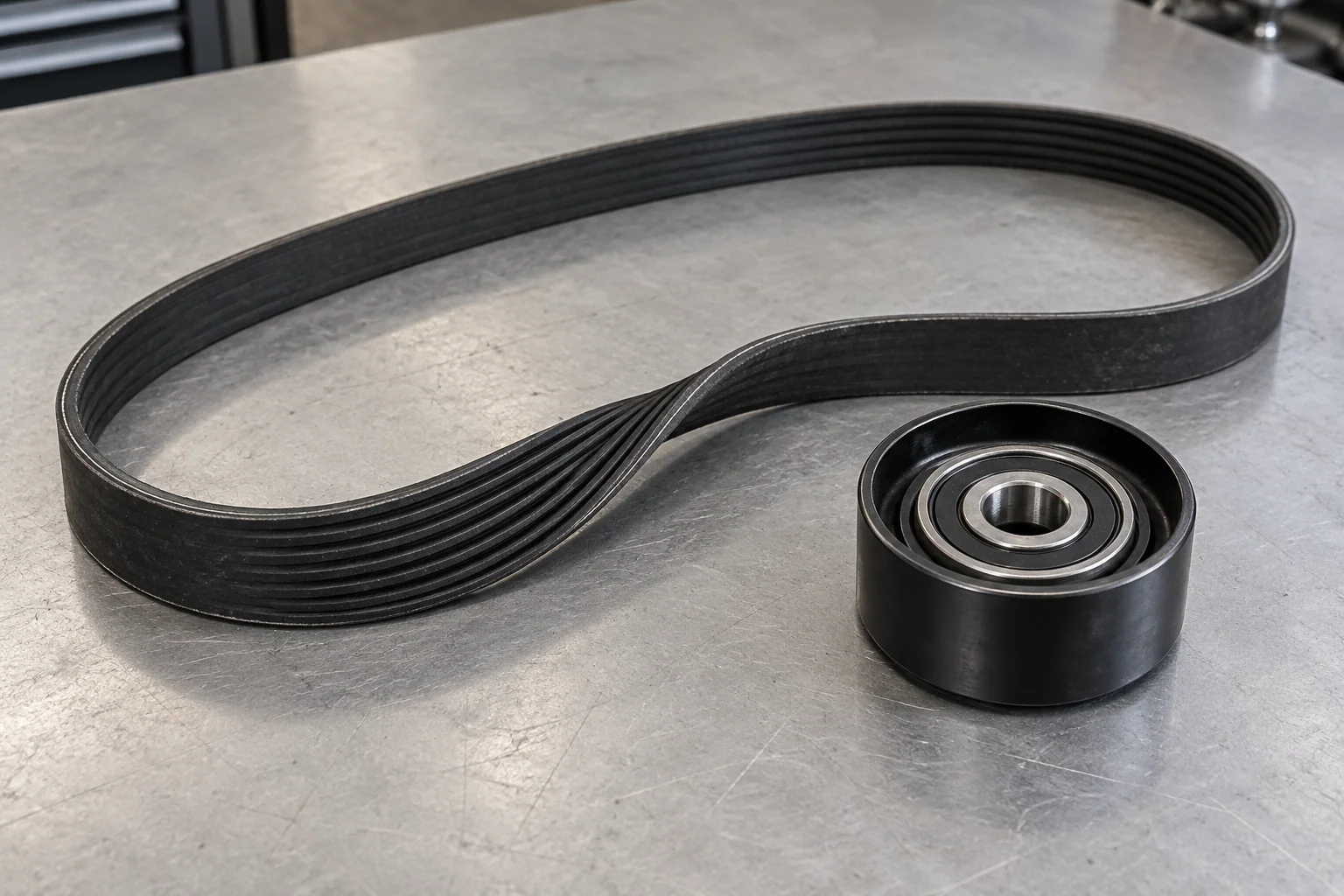
Yes, particularly if it follows engine speed rather than road movement. Dayco identifies belt tension, alignment, pulley condition and contamination as relevant belt-noise checks. Replacing the belt alone may leave another fault in the drive system.
Keep hands, tools and clothing away from running belts and pulleys. Dayco advises against belt dressing. Have the drive inspected with the proper procedure instead of trying to quiet it with a spray.
When should you stop driving, and how is the repair confirmed?
Stop safely if the noise accompanies reduced braking, unsafe steering, grinding, smoke, strong heat or an overheating warning. A sound that seems minor is not a basis for a guaranteed safe driving distance.
For a persistent squeak without those symptoms, arrange inspection and ask the shop to identify its source before authorizing parts. After repair, check the same condition that originally produced it. A quieter car matters, but any associated brake, steering or suspension fault also needs to be corrected.
Sources & further reading
- Monroe — Noise With New Shocks & Struts
- MOOG — How to Isolate Suspension Noises
- HELLA — Failure modes of brake discs and brake pads
- Dayco: serpentine-belt noise FAQs
Vehicle designs and maintenance requirements vary. Consult the owner’s manual for your exact vehicle and seek a qualified inspection for a specific fault.