Suspension and tires
Car or Steering Wheel Shakes at Speed: Causes and Diagnostic Steps
Published:
Edited and fact-checked by: Jacob Bowen
General information; vehicle-specific diagnosis requires an inspection. How we prepare our guides · This page reserves space for ads. Advertising policy · Privacy choices

The quick answer
A car or steering wheel that shakes at speed needs a tire, wheel and steering inspection. An unbalanced wheel is one possibility, but tire damage, an out-of-round assembly, mounting problems or worn components can also cause vibration. The speed where it starts—whether 60, 70 or another mph—does not identify the failed part. Severe wobbling or difficulty controlling the car calls for a safe stop and assistance.
What details help narrow down the vibration?
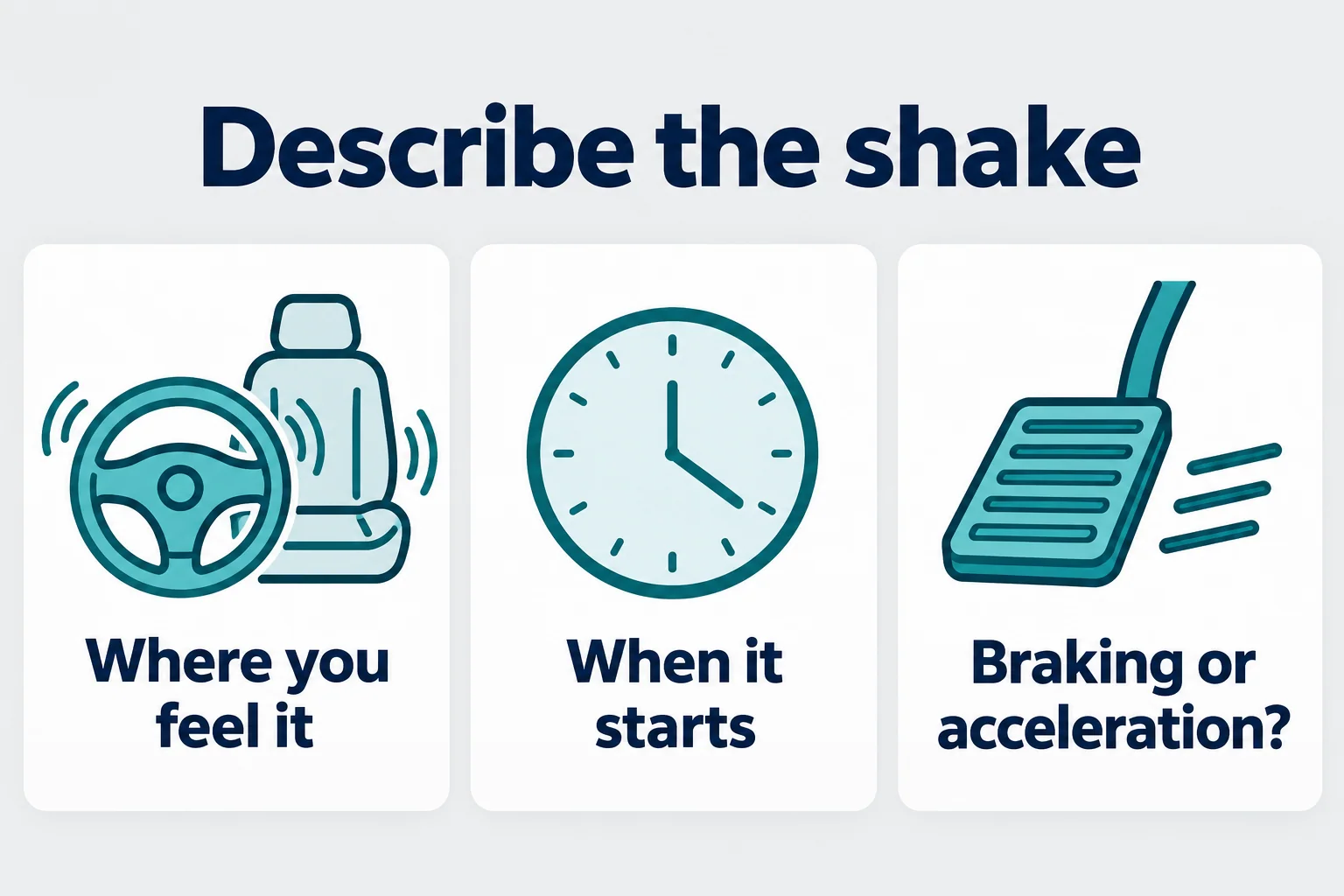
Note when the shake begins, where you feel it, and whether braking or acceleration changes it. Tell the shop about pothole impacts, new tires, a recent rotation or suspension modifications. Do not drive faster to see whether a dangerous shake disappears.
A vibration tied to road speed directs attention differently from one that follows engine speed. A shake that appears mainly when braking or under acceleration deserves testing under that specific condition rather than an automatic wheel-balance recommendation.
What should be checked before replacing parts?
Start with tire condition and pressure, wheel condition and mounting, then measure balance and any suspected out-of-round or sideways movement. A technician should also inspect steering and suspension parts for damage, looseness or binding using the appropriate procedure.
If shaking began immediately after tire work, give the shop that timeline. Ask it to recheck what was disturbed and inspect the assemblies rather than treating the timing as proof that an unrelated major component failed.
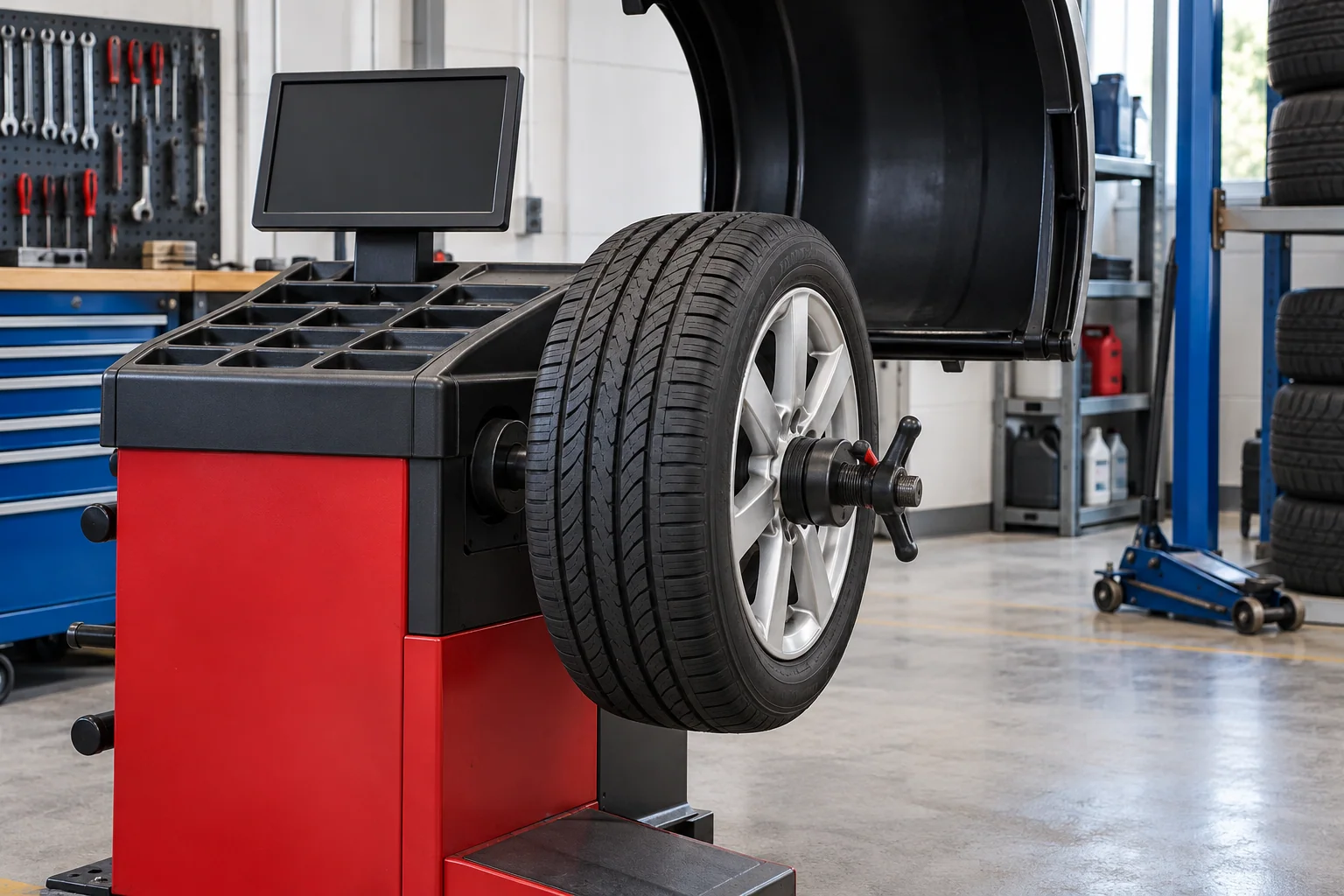
Why might the car still shake after balancing?
Balance corrects uneven mass distribution; it does not prove that a tire and wheel roll uniformly. Runout measurements or equipment that assesses tire force variation may help explain a vibration that remains after ordinary balancing.
Ask for the findings, including which assembly is affected and whether it is damaged or outside the vehicle's requirements. Repeatedly adding weights without identifying why the shake remains can leave the original complaint unresolved.
Is a violent Jeep wobble the same as a mild highway vibration?
It needs its own assessment. Mevotech's steering-wobble guidance focuses on severe oscillation associated particularly with solid-front-axle vehicles. Tire condition, steering linkage, mounting hardware and suspension geometry all matter, especially after a lift or wheel change.
Replacing a steering stabilizer alone does not establish that the underlying cause has been corrected. The system needs an inspection, with repair recommendations tied to actual wear, damage or setup problems.
How should the shop confirm that the repair worked?
Ask which finding explains your particular vibration and how it will be checked afterward. Once the vehicle is safe to test, the shop should compare the original conditions before and after the repair.
For example, if the complaint was a shake after rotation at a particular road speed, a smooth idle in the service bay does not verify the result. Keep the inspection report and any measurements with your repair record.
Sources & further reading
- Mevotech — NO MORE SHIMMY & SHAKE: DIAGNOSING STEERING WOBBLE - Mevotech
- MOOG — When to inspect your steering and suspension system | MOOG
- AA1Car / Larry Carley — Diagnosing Causes of Steering & Suspension Vibration
Vehicle designs and maintenance requirements vary. Consult the owner’s manual for your exact vehicle and seek a qualified inspection for a specific fault.