Drivetrain
Wheel Bearing Symptoms: How to Test and Confirm the Fault
Published:
Edited and fact-checked by: Jacob Bowen
General information; vehicle-specific diagnosis requires an inspection. How we prepare our guides · This page reserves space for ads. Advertising policy · Privacy choices
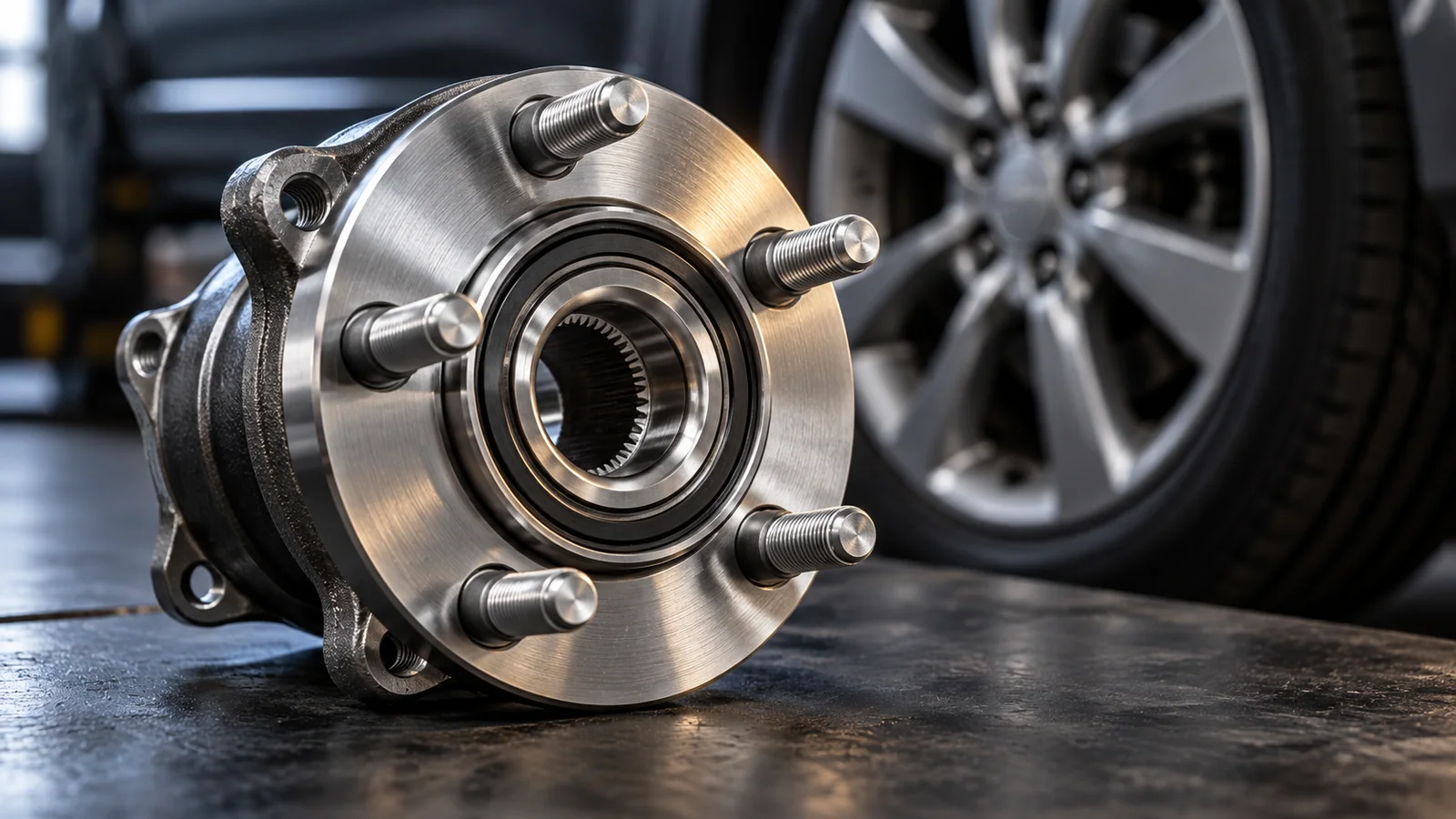
The quick answer
A failing wheel bearing can cause humming, rumbling, growling or grinding that changes with road speed or loading. Tires, brakes and driveline parts can make similar sounds, so an inspection must confirm the source and affected wheel. Do not rely on a noise clip or turning direction alone. Severe grinding, wheel looseness or unpredictable handling calls for a safe stop and assistance.
What should you notice about the sound?
Tell the shop how the sound changes with road speed, braking, acceleration or a gentle turn during normal driving. Mention tire changes, impacts, flooding or recent wheel-end repairs.
Those details help select the checks, but do not make abrupt swerves to diagnose a bearing. If the car does not feel safe, leave any driving assessment to the repair facility after an initial inspection.
How is a bearing distinguished from tire or brake noise?
The technician should inspect tire condition and the surrounding wheel-end assembly, then assess the bearing using the appropriate rotation, noise and play checks. Timken's symptom guidance notes that several types of noise and vibration overlap with other faults.
A tire that is unevenly worn and a rough bearing require different corrections. Ask the shop to identify the observed condition rather than assign a bearing solely because the noise seems to come from that corner.
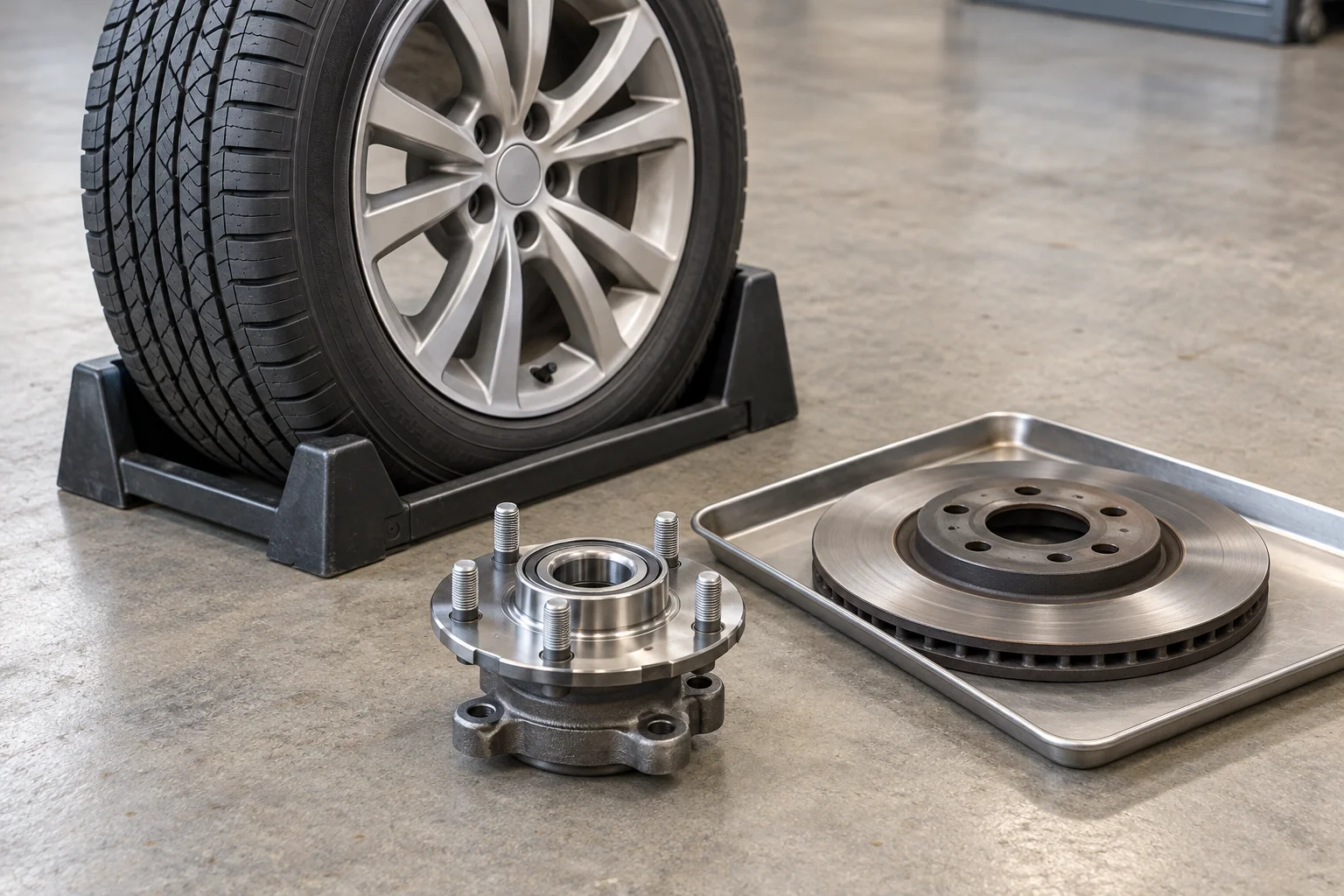
Do wheel play or an ABS warning prove the bearing is bad?
They need interpretation. Movement must be located and compared with the requirements for the bearing and suspension design. A generic shake of the tire cannot establish whether the movement is in a bearing, joint or another connection.
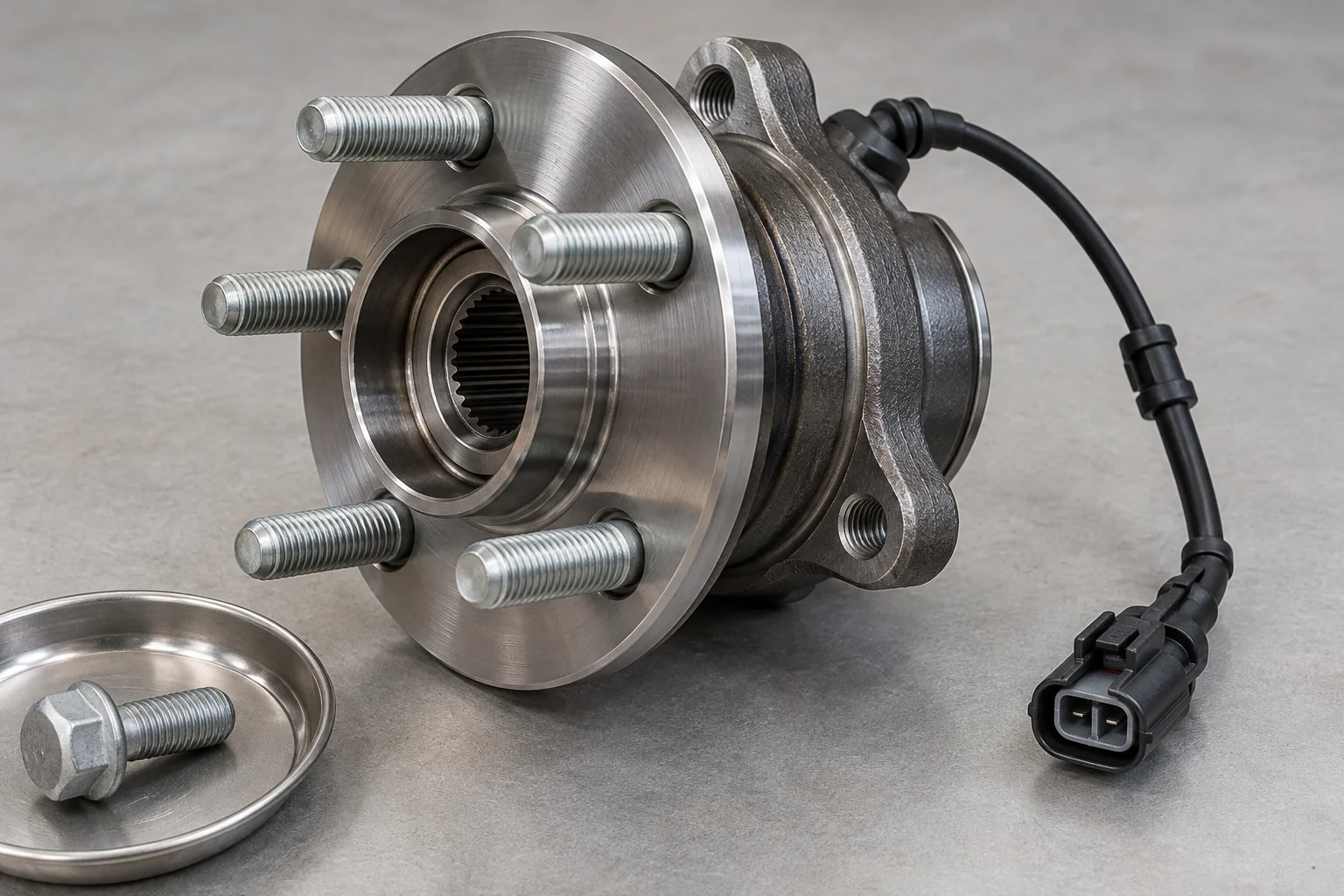
Some hub assemblies include wheel-speed sensing components. An ABS code can make that area relevant, but wiring and connector faults also need checking. The warning does not automatically justify a complete hub replacement.
Can the bearing be adjusted or repacked?
Some serviceable bearing designs can be inspected, adjusted or repacked using the specified procedure. A sealed bearing or hub unit has different service requirements and is not repaired by adding grease from outside.
Ask which design your vehicle uses and what part is actually damaged. Bearing fit, installation support and axle-fastener tightening matter; there is no universal adjustment or hub-nut torque for every car.
How long can you drive with a noisy bearing?
A symptom alone cannot provide a safe number of remaining miles. Arrange inspection promptly, and do not keep using a car with severe noise, looseness or control problems while waiting for the bearing to become easier to diagnose.
After repair, the shop should verify the original noise and any related wheel-speed fault. Ask what was found at the other wheel ends; one failed bearing is a reason to inspect, not proof that all remaining bearings need replacement.
Sources & further reading
- AA1Car / Larry Carley — Wheel Bearing & Seal Replacement
- AA1Car / Larry Carley — Wheel Bearing Hub Repair
- evolution.skf.com — Dynamic tests to evaluate hub bearing units - Evolution
- Timken — Symptoms of a worn wheel hub bearing
Vehicle designs and maintenance requirements vary. Consult the owner’s manual for your exact vehicle and seek a qualified inspection for a specific fault.