Exhaust
White Smoke From Exhaust: Causes and Diagnostic Steps
Published:
Edited and fact-checked by: Jacob Bowen
General information; vehicle-specific diagnosis requires an inspection. How we prepare our guides · This page reserves space for ads. Advertising policy · Privacy choices
The quick answer
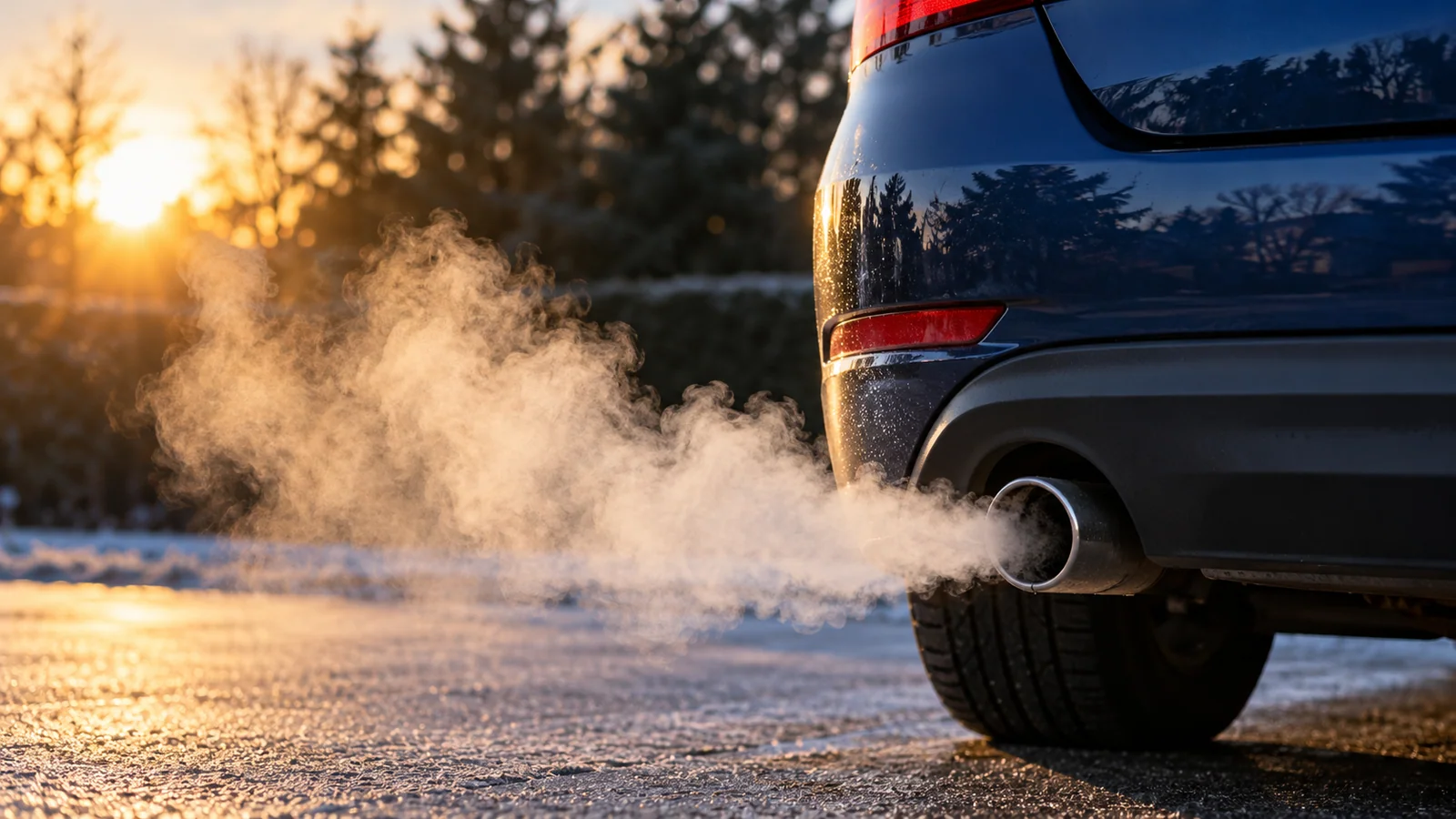
A light white plume during a cold start can be normal condensation. Persistent dense white exhaust, especially with coolant loss, overheating or rough running, needs diagnosis. Do not assume a head gasket has failed from color alone. If the engine is overheating or losing coolant rapidly, stop safely and arrange assistance.
When is white exhaust likely to be condensation?
Cold weather can make water vapor in the exhaust visible. Note whether the plume changes as the engine and exhaust warm, and whether fluid levels and engine operation remain normal.
There is no single number of seconds that separates harmless vapor from a fault in every weather condition. A persistent change, dense plume or accompanying symptom is a reason to investigate rather than judge from a short video alone.
Does white smoke always mean a blown head gasket?
No. Fel-Pro lists white exhaust, coolant loss, overheating and rough running among symptoms that can occur with either a failed head gasket or a cracked cylinder head. Those findings overlap and need further assessment.
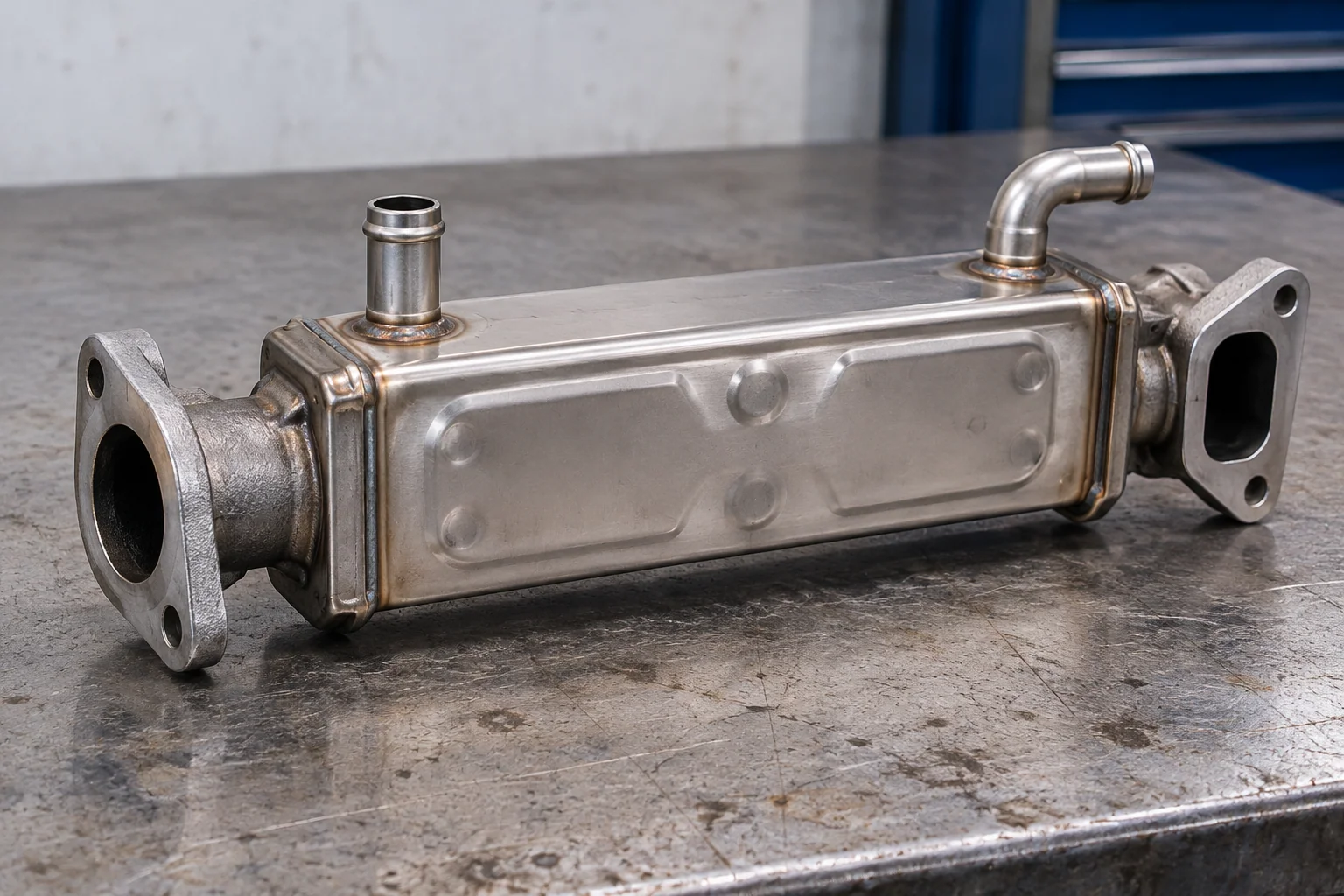
On engines with a coolant-fed EGR cooler, an internal cooler leak is another possible path. Motorservice warns that overlooking it can lead to unnecessary head-gasket or cylinder-head work. That possibility applies only where the engine actually has the relevant equipment.
What if the engine is diesel?
White diesel exhaust can involve coolant or unburned fuel. Cold-start behavior, combustion quality, injection operation and compression can affect the diagnostic path.
Tell the technician whether it clears after startup or continues while driving. Do not apply a gasoline-only explanation or replace injectors from smoke color alone.
What information helps a shop find the cause?
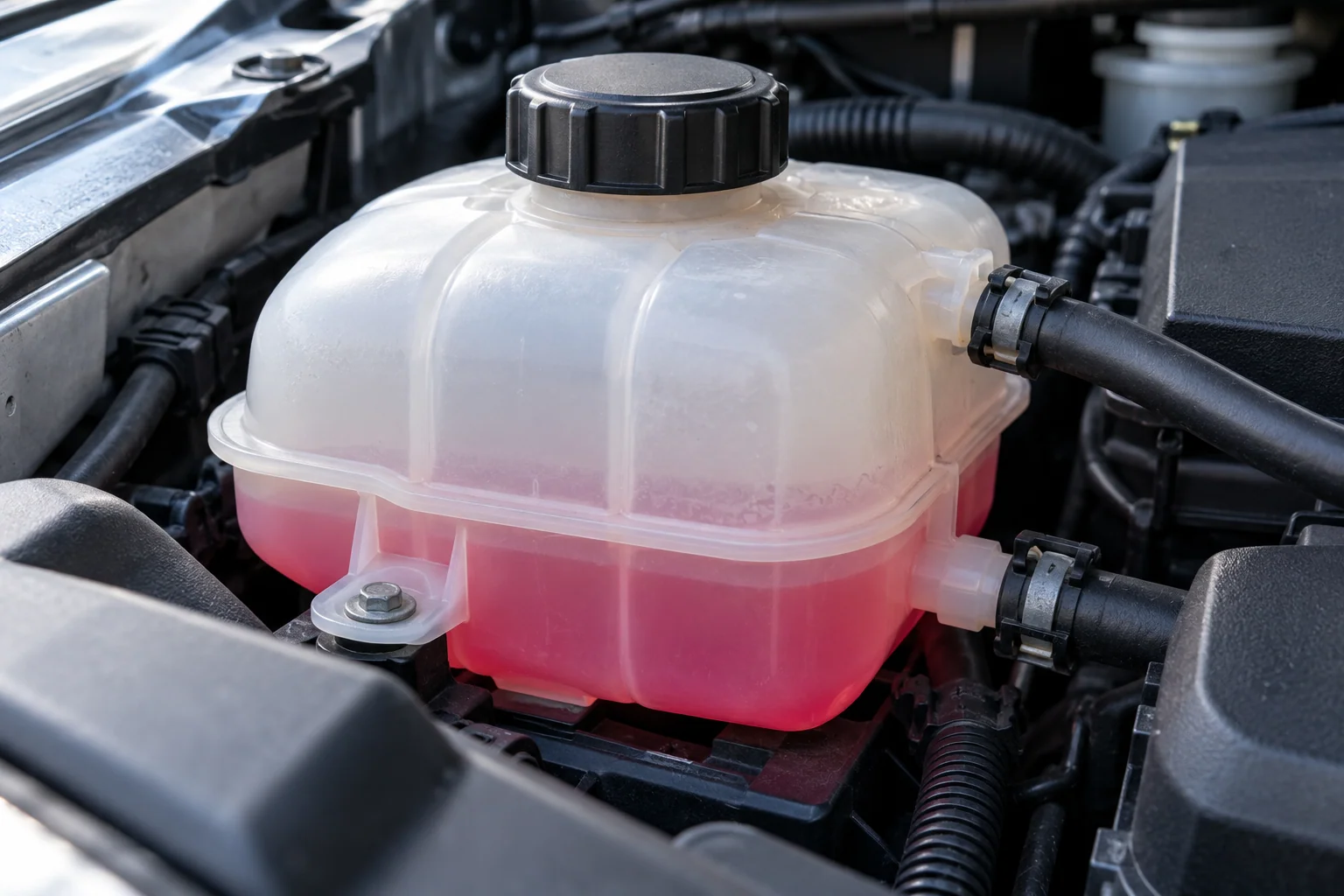
Record when the plume appears, whether the engine is cold or warm, any temperature warning and how often coolant needs attention. Check levels only as the owner's manual directs with the engine safely cooled. Never remove a hot, pressurized coolant cap.
The shop should check for coolant loss and relevant external or internal leakage. Cooling-system pressure checks can contribute evidence, but a loss of pressure alone does not identify the head gasket. Inspection and further engine-specific tests determine the source.
Should you approve head-gasket replacement straight away?
Ask what findings support it and what other applicable leakage paths were assessed. A cracked head requires a different repair from replacing a gasket; specialist inspection or testing may be needed to distinguish them.
Correct the confirmed cause of coolant entry or poor combustion, and investigate any overheating that contributed. An additive is not a substitute for establishing the fault and evaluating the damage.
Is smoke under the hood or from an AC vent the same problem?
No. Identify where the plume originates. Engine-bay or cabin-vent smoke needs a different investigation from tailpipe exhaust. Stop safely and seek help for active smoke or an uncertain source rather than assuming the explanation in this exhaust guide applies.
Sources & further reading
- AA1Car / Larry Carley — Diagnose Exhaust Smoke
- Fel-Pro — Identifying Blown Head Gaskets & Cracked Heads
- Motorservice / Pierburg — Creeping coolant loss | MS Motorservice Trading (Asia)
Vehicle designs and maintenance requirements vary. Consult the owner’s manual for your exact vehicle and seek a qualified inspection for a specific fault.