Exhaust
Black Smoke From Exhaust: Causes and Diagnostic Steps
Published:
Edited and fact-checked by: Jacob Bowen
General information; vehicle-specific diagnosis requires an inspection. How we prepare our guides · This page reserves space for ads. Advertising policy · Privacy choices
The quick answer
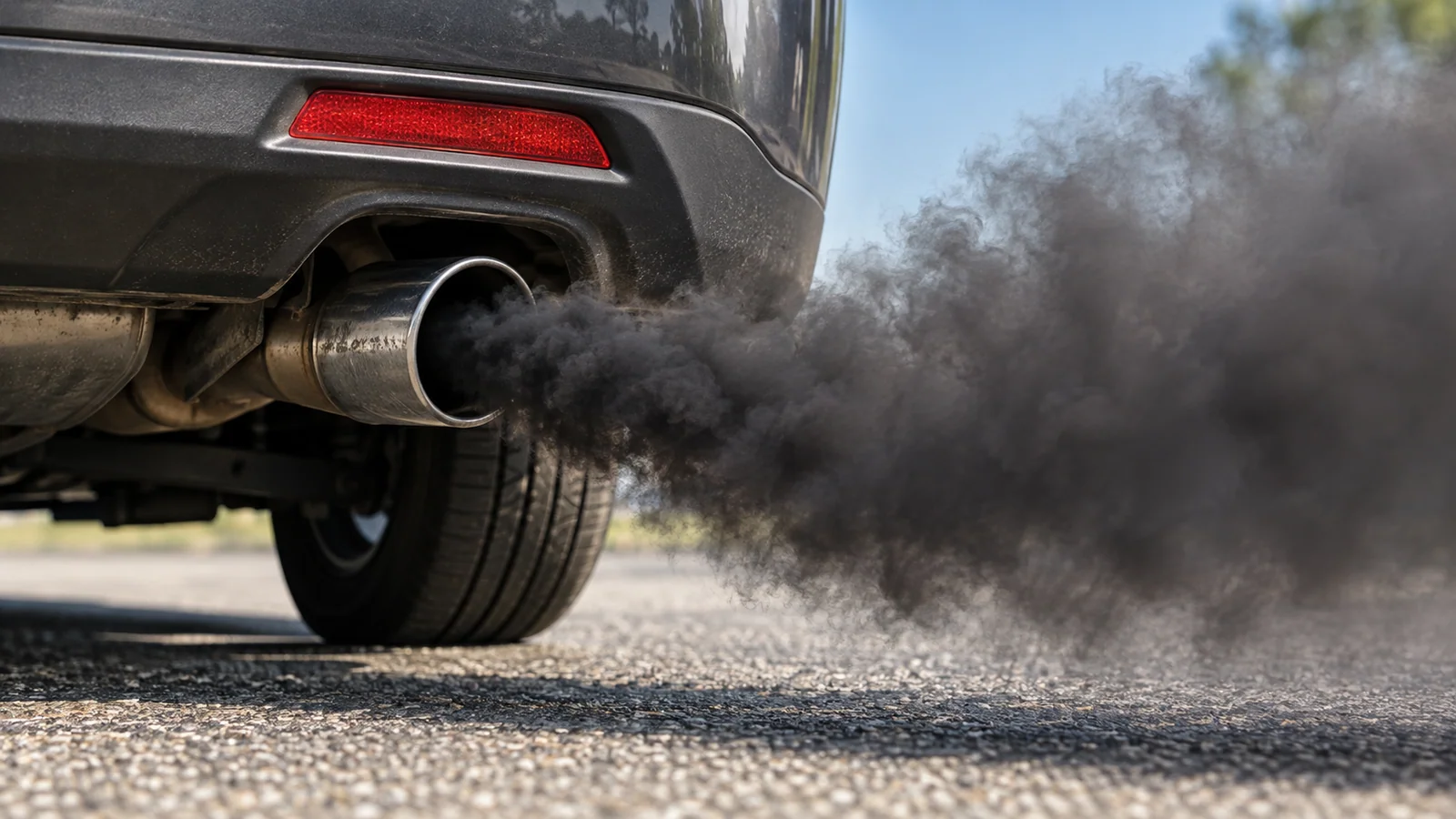
Black exhaust smoke points toward excess fuel or insufficient air for clean combustion. On a gasoline engine, persistent black smoke commonly accompanies rich running; a diesel needs its own air and fuel-system checks. Smoke color does not identify a failed injector or sensor. Record when it happens and have the engine tested before replacing parts.
Does black smoke mean the same thing on gasoline and diesel engines?
The underlying concern is fuel and air balance, but the control systems differ. An older carbureted gasoline engine may need choke or float checks, while a fuel-injected engine needs its relevant fuel-pressure, injector and control checks.
Diesel diagnosis should consider air supply, injection control and the engine's equipment. Do not dismiss persistent smoke as normal simply because the vehicle uses diesel. Describe whether it occurs at startup, under acceleration or continuously.
Could an airflow fault cause black smoke?
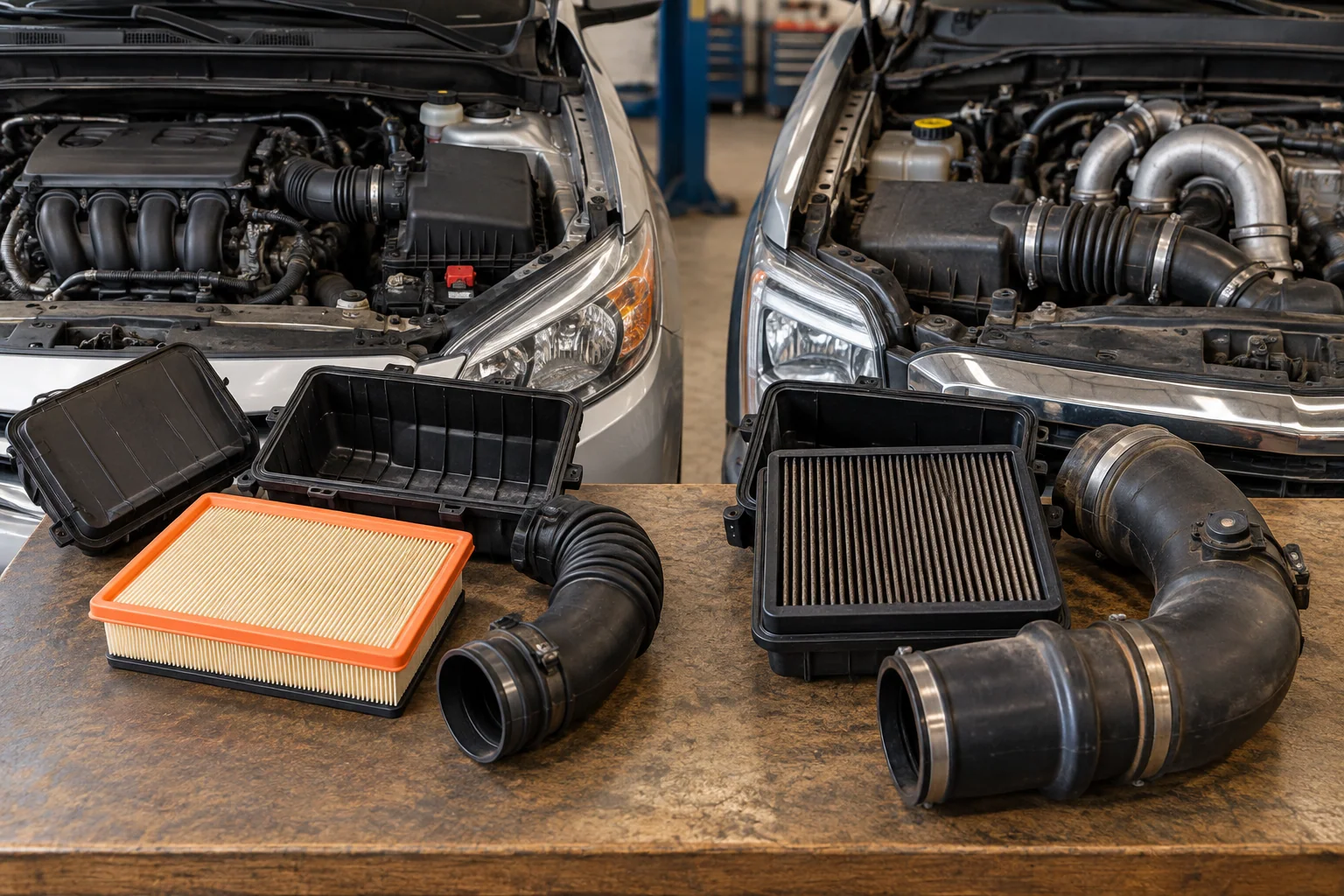
Check air-filter condition, intake plumbing and relevant sensor information. Motorservice explains that incorrect air-mass information can affect injected fuel quantity and, on diesel applications, EGR control.
An airflow-related code still does not prove the sensor is defective. Motorservice also lists intake leaks, a blocked filter, EGR faults and turbocharger problems among reasons a sound sensor can report abnormal information. Inspect the system before treating the reading as a parts order.
How should a shop confirm why the engine is smoking?
Save codes and available failure data, then compare operating information with the vehicle's specifications. On a gasoline engine, fuel-trim behavior can help guide checks of fuel delivery and mixture control. It is supporting evidence, not a universal numerical diagnosis.
Test pressure and injector operation where the evidence leads. A dark spark plug or rich code alone cannot establish that an injector leaks. Electrical supply, wiring and sensor plausibility also need the correct tests before replacement.
Avoid generic sensor voltages or full-throttle experiments copied from another engine. A technician should reproduce the relevant conditions safely and use the engine's actual diagnostic procedure.
What should you do before driving further or authorizing repairs?
Arrange inspection for persistent black smoke, especially with rough running or reduced power. If the engine stalls, a serious warning appears or vehicle control is affected, stop safely and arrange help.
Ask which finding explains the smoke and how the repair will be verified under the original conditions. An additive, cleared code or replaced sensor is not proof of a fix. Smoke rising from under the hood is a separate complaint: stop and follow the under-hood smoke guide rather than treating it as tailpipe smoke.
Sources & further reading
- MOTOR — Fuel Trim Data: A Powerful Diagnostic Tool
- AA1Car / Larry Carley — Diagnose Exhaust Smoke
- Motorservice / Pierburg — Air mass sensor: Faults, causes and testing
Vehicle designs and maintenance requirements vary. Consult the owner’s manual for your exact vehicle and seek a qualified inspection for a specific fault.