Electrical
Battery Light On: Causes and Diagnostic Steps
Published:
Edited and fact-checked by: Jacob Bowen
General information; vehicle-specific diagnosis requires an inspection. How we prepare our guides · This page reserves space for ads. Advertising policy · Privacy choices
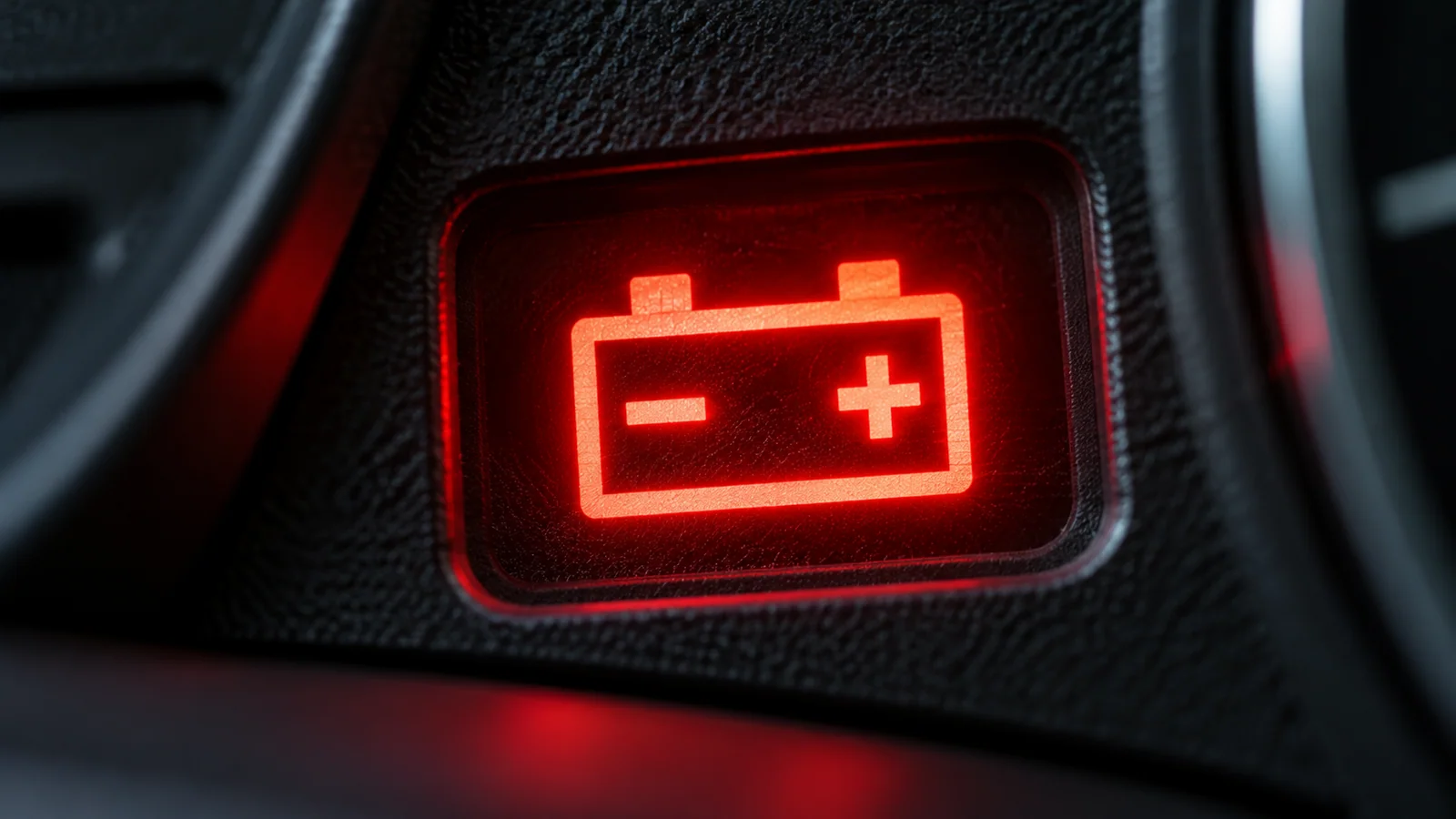
The quick answer
A battery light that comes on while the engine is running usually indicates a charging-system problem, not simply a battery that needs replacing. The belt drive, alternator, wiring, connections or battery may be involved. Stop in a safe place and arrange prompt assessment rather than assuming the car can complete the trip because it still runs normally.
Why can the battery light be on while the car still runs?
The battery can temporarily support electrical loads when charging is inadequate. That does not establish how much usable reserve remains or how long the engine will keep running. HELLA warns that a charging failure can eventually leave the vehicle's electronics unable to function.
The exact warning behavior depends on the vehicle. Identify the symbol and message in the owner's manual, including whether it appears during the startup check or remains on while running. Do not apply one generic voltage threshold to every charging system.
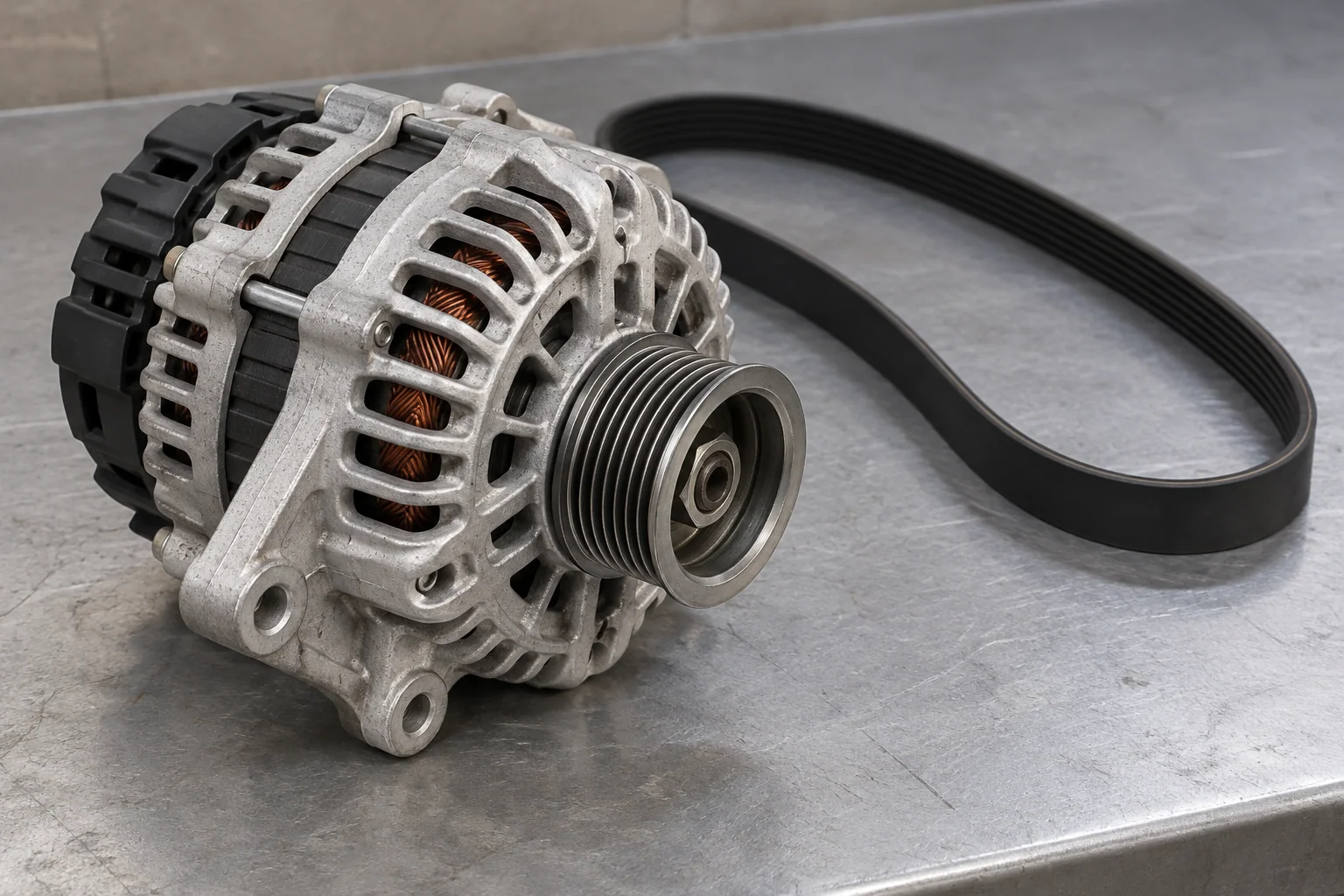
What should be checked before buying an alternator?
DENSO recommends checking the battery, belt, wiring and voltage drops before condemning the alternator. A loose or damaged connection can interfere with charging, and a belt or tensioner fault can prevent correct drive.
A technician should assess charging performance and battery condition using the required operating conditions and electrical load. A reading with the engine off answers a different question from a charging-system test.
If the belt has failed, other symptoms depend on which accessories it drives. An overheating warning or loss of steering assistance adds urgency. Do not continue driving to use up a guessed number of minutes of battery reserve.
What if the light flickers or comes on only sometimes?
An intermittent light still needs investigation. DENSO identifies belt tension, grounding and loose connections among relevant checks before internal alternator faults. Note whether the light follows engine speed, weather, electrical loads or recent repairs.
Save any warning messages and tell the shop exactly when the symptom occurs. A normal test after the light goes out may not capture an intermittent failure, so the verification plan should address those conditions.
Why is the light still on after replacing the battery?
A replacement battery will not correct a damaged belt, poor charging connection or alternator fault. Have the installation and the complete charging system checked instead of replacing another battery or clearing warnings on guesswork.
Report whether the light was present before the replacement and whether cables or other electrical parts were disturbed. Use any required vehicle-specific service and setup instructions. A universal battery-light reset is not a substitute for diagnosis.
What should you do when other warning lights are also on?
Treat each warning according to the owner's manual. A brake-system or engine-temperature warning must not be dismissed as merely another consequence of the battery light. Stop safely and arrange assistance if braking, steering or engine operation is affected.
After repair, the shop should verify charging, connection integrity and warning behavior under the relevant conditions. HELLA specifically warns against disconnecting a battery while the engine is running: voltage spikes can damage electronics. Do not use that old alternator test.
Sources & further reading
- Midtronics — What the Battery Warning Light Could Be Telling You | Midtronics
- DENSO — DENSO TechTip: Diagnosing Alternator Faults the Right Way
- HELLA — Checking the alternator
- Mazda: example of charging and other urgent warning instructions
Vehicle designs and maintenance requirements vary. Consult the owner’s manual for your exact vehicle and seek a qualified inspection for a specific fault.