Electrical
How to Test an Alternator
Published:
Edited and fact-checked by: Jacob Bowen
General information; vehicle-specific diagnosis requires an inspection. How we prepare our guides · This page reserves space for ads. Advertising policy · Privacy choices
The quick answer
Test the charging system as a whole: battery condition, belt drive, connections, voltage, loaded output and the vehicle's charging commands. One voltage reading cannot prove every alternator good or bad, especially with smart charging. Never disconnect a battery cable while the engine is running to test the alternator; that can cause damage.
What should you check before measuring output?
With the engine off, look for obvious damage or loose connections and inspect the accessible belt drive. Keep tools and hands clear of moving belts and fans, and do not disturb high-current alternator wiring casually.
Establish the battery's condition and state of charge. A discharged battery, a failing battery and an alternator fault are different findings. HELLA recommends assessing the surrounding drive and electrical components before condemning the regulator or alternator.
Why isn't one charging-voltage range enough?
Smart charging can vary alternator output with battery temperature, estimated charge and operating conditions. Pico explains that an engine-controlled alternator may reduce output when it is not needed. The same voltage can therefore mean different things under different conditions.
Use the exact vehicle's charging strategy and test specifications. A generic rule that every running engine must show a fixed voltage can reject a working system or overlook a fault under load.

What can a multimeter tell you at home?
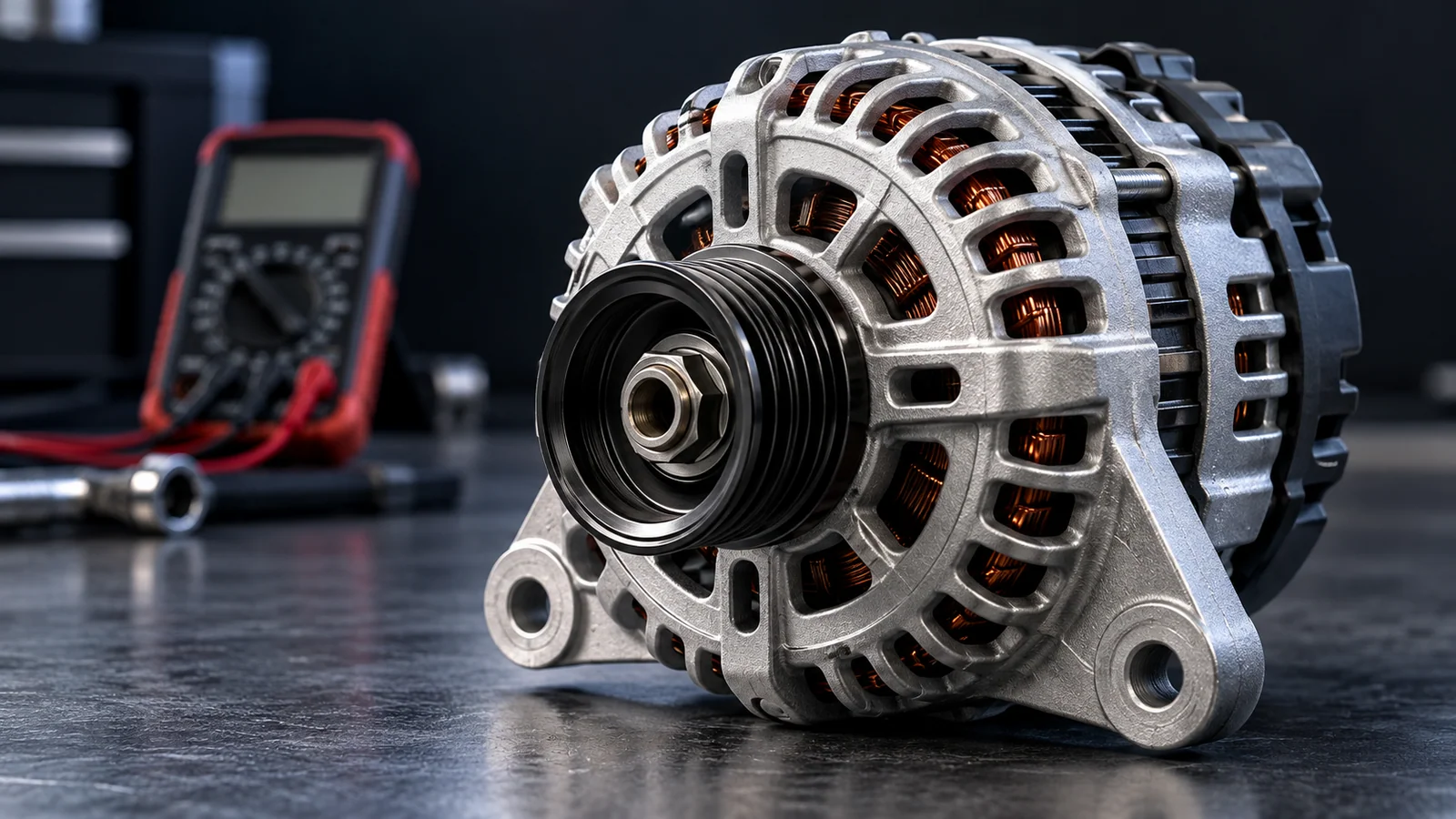
If you can safely access the specified 12-volt test points, set a suitable meter to DC voltage and connect it across the battery with correct polarity. Record the conditions along with the reading. Use the vehicle procedure for any running or loaded check and keep the leads secured away from moving parts.
Voltage is only part of the assessment. Pico's loaded-output test combines voltage with current measured by a suitable clamp while electrical demand changes. Do not put an ordinary multimeter's current input across the battery or in the alternator output path.
What do cable-drop and ripple tests add?
A poor cable or ground connection can prevent otherwise available charging output from reaching the battery correctly. HELLA includes voltage-drop checks when connections or wiring are suspect. The technician should use the vehicle's procedure and relevant load, not infer cable health from appearance alone.
Pico's ripple test examines the rectified output with an oscilloscope. Missing or irregular pulses can reveal diode or winding trouble. Measurement location matters because the battery can damp the waveform. A basic voltage reading, or a meter's AC reading without the correct method, is not equivalent to that analysis.
How do the results determine the repair?
Ask whether the fault is in the drive, battery, connections, control system or alternator itself. A low battery reading alone does not justify replacing all of them. If a regulator is implicated, serviceability also depends on the alternator's design.
After repair, verify operation under the conditions that exposed the fault. If you lack a meter or safe access, arrange a charging-system test rather than using battery disconnection. Whether the engine keeps running after a cable is removed is neither a safe nor a complete assessment.
Sources & further reading
- HELLA — Checking an alternator regulator
- Pico Technology — Alternator voltage and current (12 V system) | Automotive oscilloscope test
- Pico Technology — Alternator AC ripple (with ECM control) | Automotive oscilloscope test
Vehicle designs and maintenance requirements vary. Consult the owner’s manual for your exact vehicle and seek a qualified inspection for a specific fault.