Diagnostics and warning lights
How to Use an OBD-II Scanner Without Losing Diagnostic Evidence
Published:
Edited and fact-checked by: Jacob Bowen
General information; vehicle-specific diagnosis requires an inspection. How we prepare our guides · This page reserves space for ads. Advertising policy · Privacy choices
The quick answer
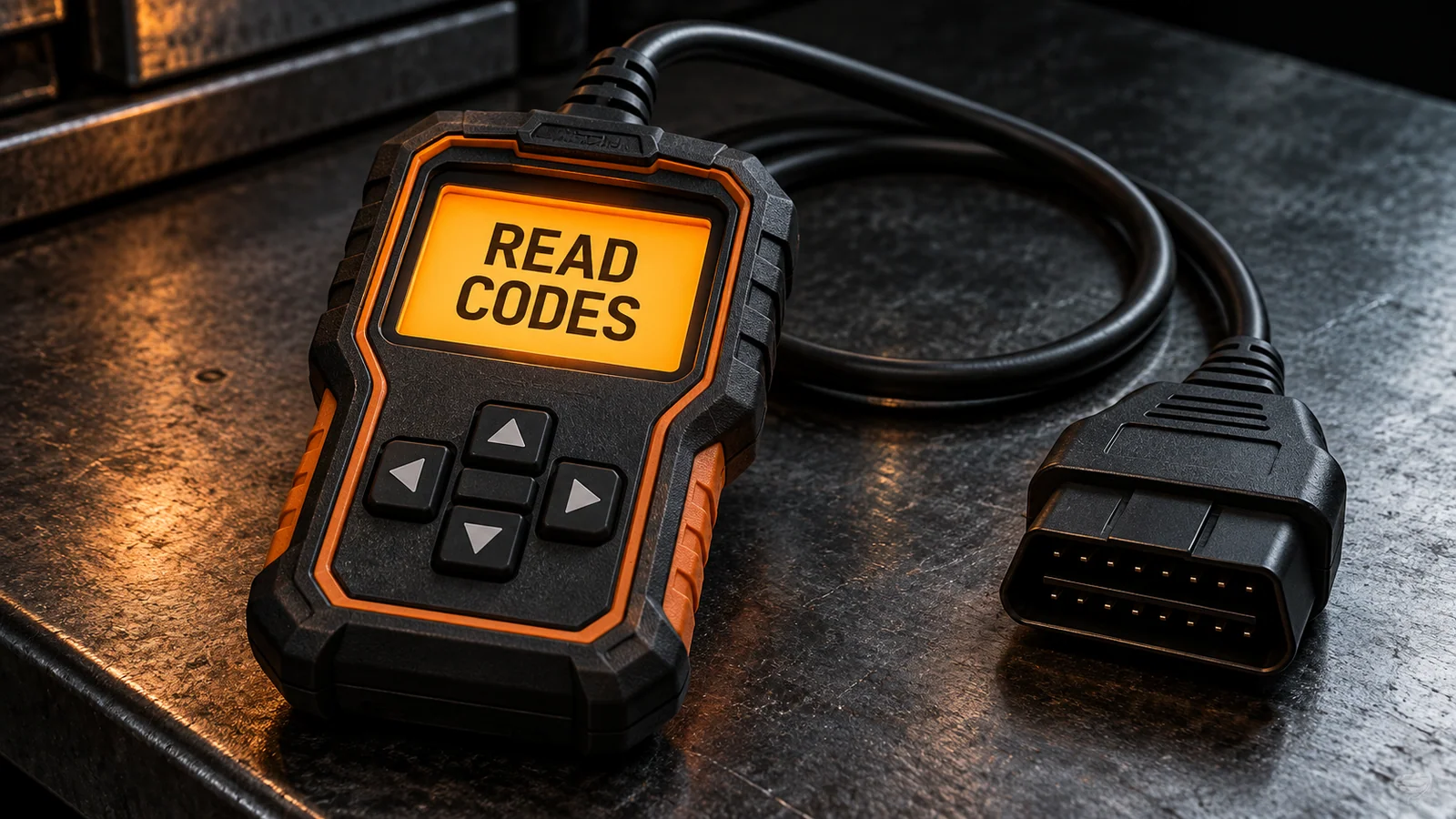
Use an OBD-II scanner to read and save information before selecting any clear or erase command. Record the exact codes, their status, freeze-frame data and readiness results. A code identifies a detected condition, not necessarily a failed part. Preserving the original report gives you or the repair shop a better starting point for diagnosis.
How do you connect the scanner and read the codes?
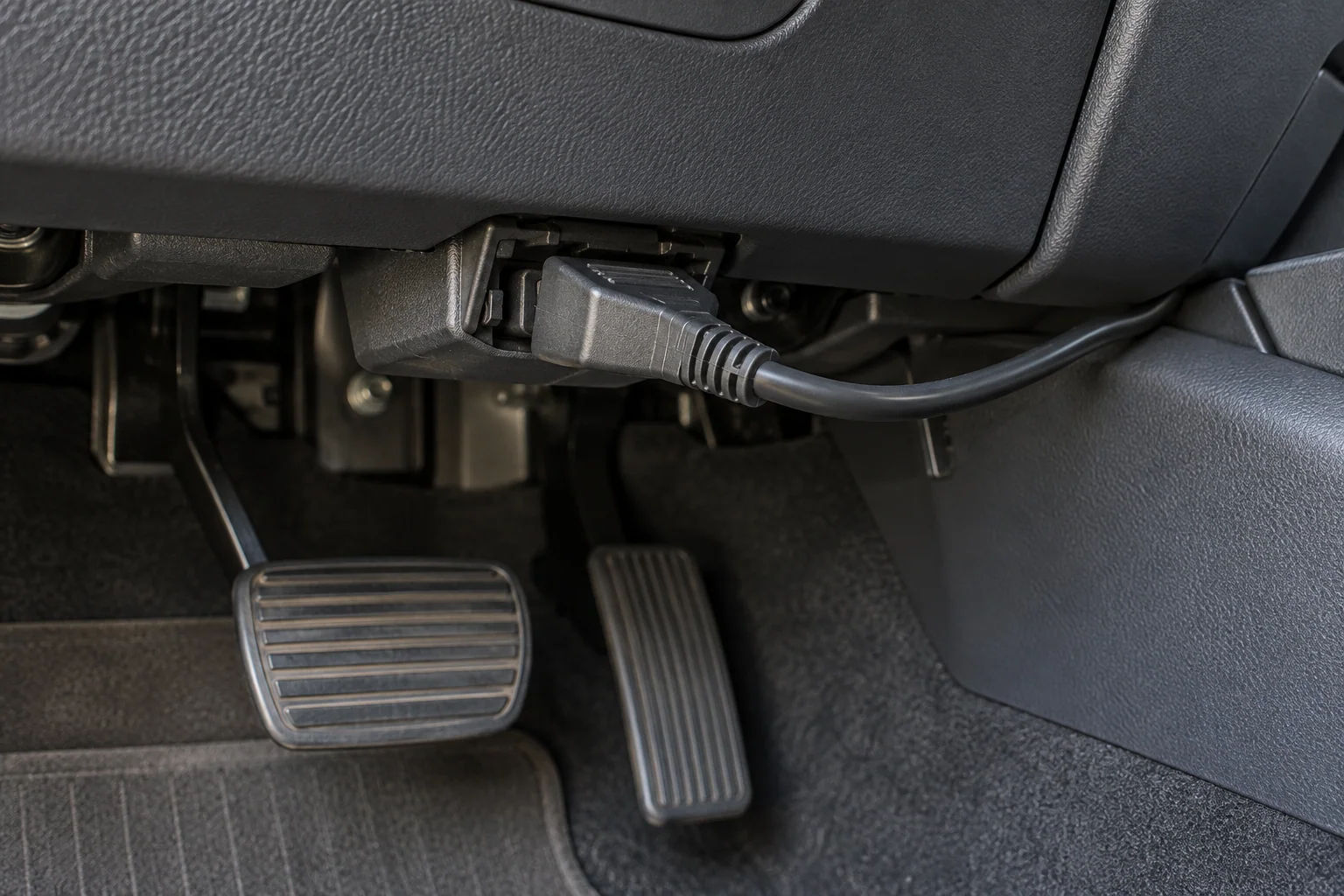
Park safely and read the scanner's instructions first. Confirm that its vehicle and system coverage matches your car. Locate the diagnostic connector using the vehicle's information; do not force a plug into a similar-looking socket.
Connect with the ignition off unless the equipment or vehicle procedure specifies otherwise. Turn the ignition to the state requested by the tool, select the correct vehicle or generic OBD mode and choose the read-codes function. Follow its prompts rather than assuming the engine must always be running.
If a running-engine check is required, work in a properly ventilated area. Keep the cable clear of pedals and moving parts, and do not operate the screen while driving. Finish according to the tool's instructions and switch the ignition off before disconnecting.
What should you save before clearing anything?
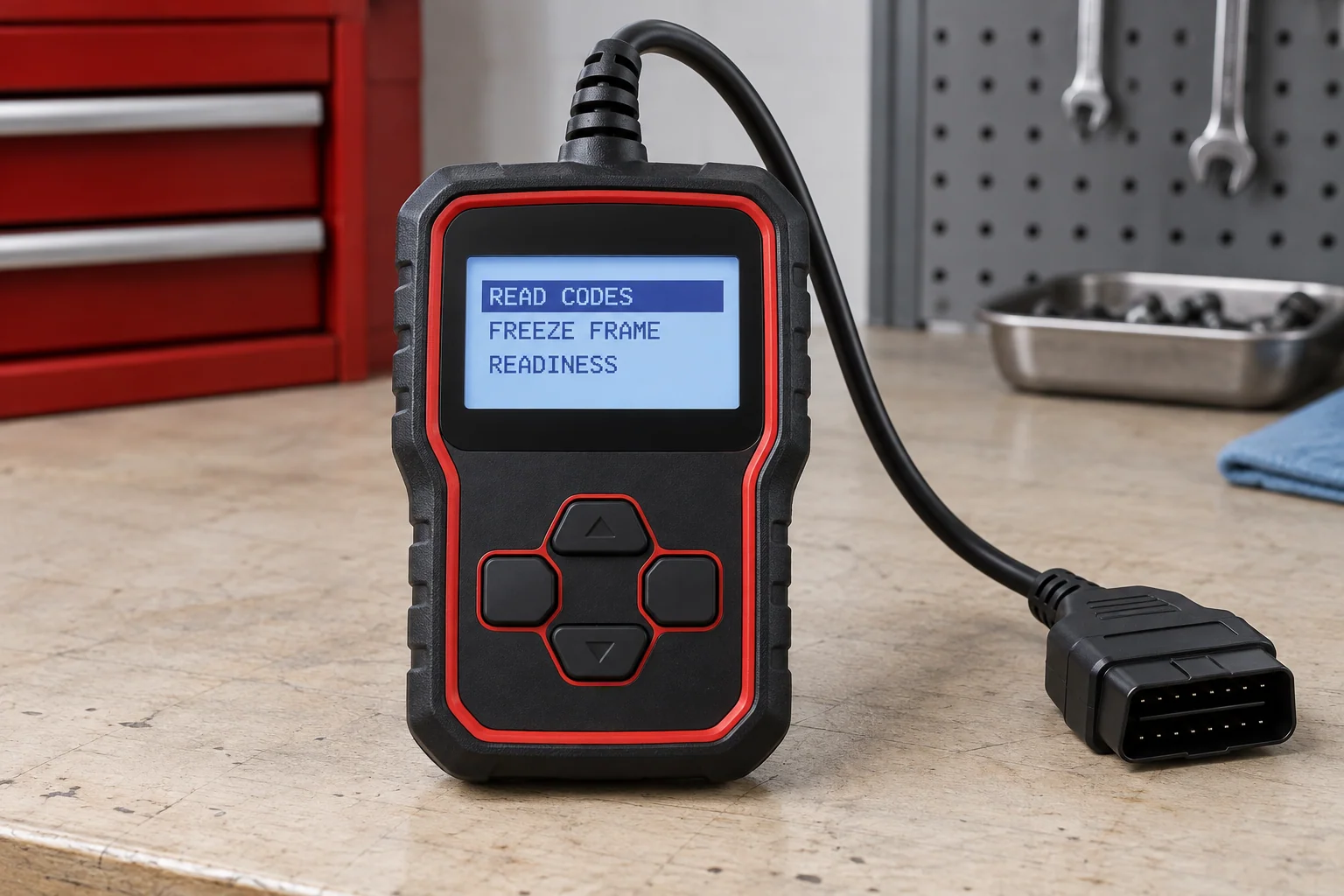
Export the report or take clear photos of every relevant screen. Save the date, mileage and a brief description of the symptom alongside the scan.
- Exact code, description and the module reporting it.
- The displayed status, including stored, pending and permanent entries where supported.
- Available freeze-frame or failure-record information.
- Check-engine lamp status and supported-monitor readiness.
- Any inability to communicate with a system you intended to scan.
Why can clearing codes make diagnosis harder?
Freeze-frame information records operating conditions associated with a detected fault and can help investigate an intermittent problem. Erasing information before the cause is understood can remove that context.
EPA's technical guidance specifically emphasizes preserving codes and associated freeze-frame data before repair. It also explains that clearing fault memory resets readiness information. A monitor marked not ready has not completed its relevant check; that status does not itself prove that a component failed.
California's Bureau of Automotive Repair explains that permanent codes cannot be erased with a scanner or battery disconnect. On systems supporting them, the vehicle clears them after it verifies that the underlying problem is no longer present. Permanent does not mean unrepairable.
Does a basic code reader check the whole car?
Not necessarily. Generic OBD coverage and manufacturer-specific access are different capabilities. AA1Car advises checking support for the exact year, make, model and required information. ABS, airbag, body and other systems can require additional coverage.
A no-codes result from a basic reader therefore does not establish that every system is healthy. If the scanner will not communicate, check its setup and compatibility first. A technician may need to investigate the connector, power supply or network; do not jumper connector pins or assume the computer has failed.
What should you do with the scan results?
Use them to choose the correct diagnostic procedure or give the unaltered report to the shop. Explain the symptom as well as the code. Clearing a light is not a repair, and a parts recommendation generated by an app still needs testing.
After a confirmed repair, follow the appropriate verification and monitor procedure. There is no universal driving distance that proves every repair or makes every vehicle ready for an emissions inspection. Check your program's current requirements before arranging a test.
Sources & further reading
- MOTOR — Bob Speaks OBD II | Data Link Connector | DMM
- US EPA — Performing Onboard Diagnostic System Checks as Part of a Vehicle Inspection and Maintenance Program
- AA1Car / Larry Carley — OBD II Engine Diagnostics
- California Bureau of Automotive Repair: OBD test reference and permanent codes
Vehicle designs and maintenance requirements vary. Consult the owner’s manual for your exact vehicle and seek a qualified inspection for a specific fault.