Diagnostics and warning lights
Dashboard Warning Lights: Meanings, Urgency and Next Steps
Published:
Edited and fact-checked by: Jacob Bowen
General information; vehicle-specific diagnosis requires an inspection. How we prepare our guides · This page reserves space for ads. Advertising policy · Privacy choices
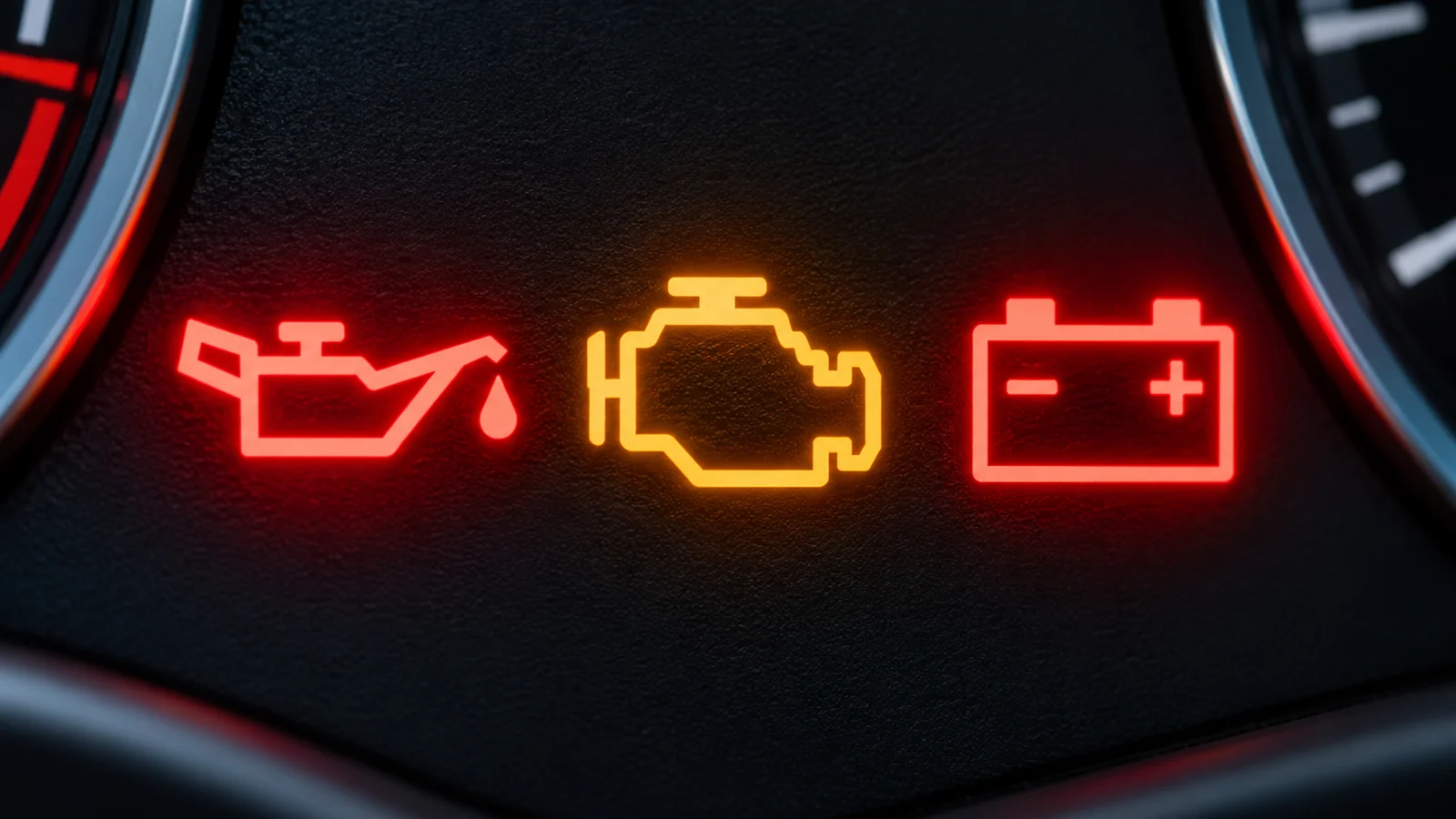
The quick answer
Identify a dashboard light using your exact vehicle's owner's manual, including the accompanying message and whether the light is steady or flashing. An oil-pressure or overheating warning needs an immediate safe stop and the specified engine-shutdown response. If braking or steering becomes abnormal, stop safely and seek assistance. Color helps attract attention, but color alone does not determine what you should do.
How do you identify an unfamiliar symbol?
When safely parked, photograph the symbol and record the message, color and behavior. Note whether it appeared during startup, stayed on while driving or came on after you selected a feature.
Match the illustration and description in the manual for the exact model year and equipment. A triangle or exclamation mark is not a complete diagnosis; it may direct you to a message explaining the concern.
Which common warnings need prompt action?
Use this as an initial guide while checking the vehicle's instructions. The warning identifies a system or condition, not necessarily the part that has failed.
| Warning | What to do next |
|---|---|
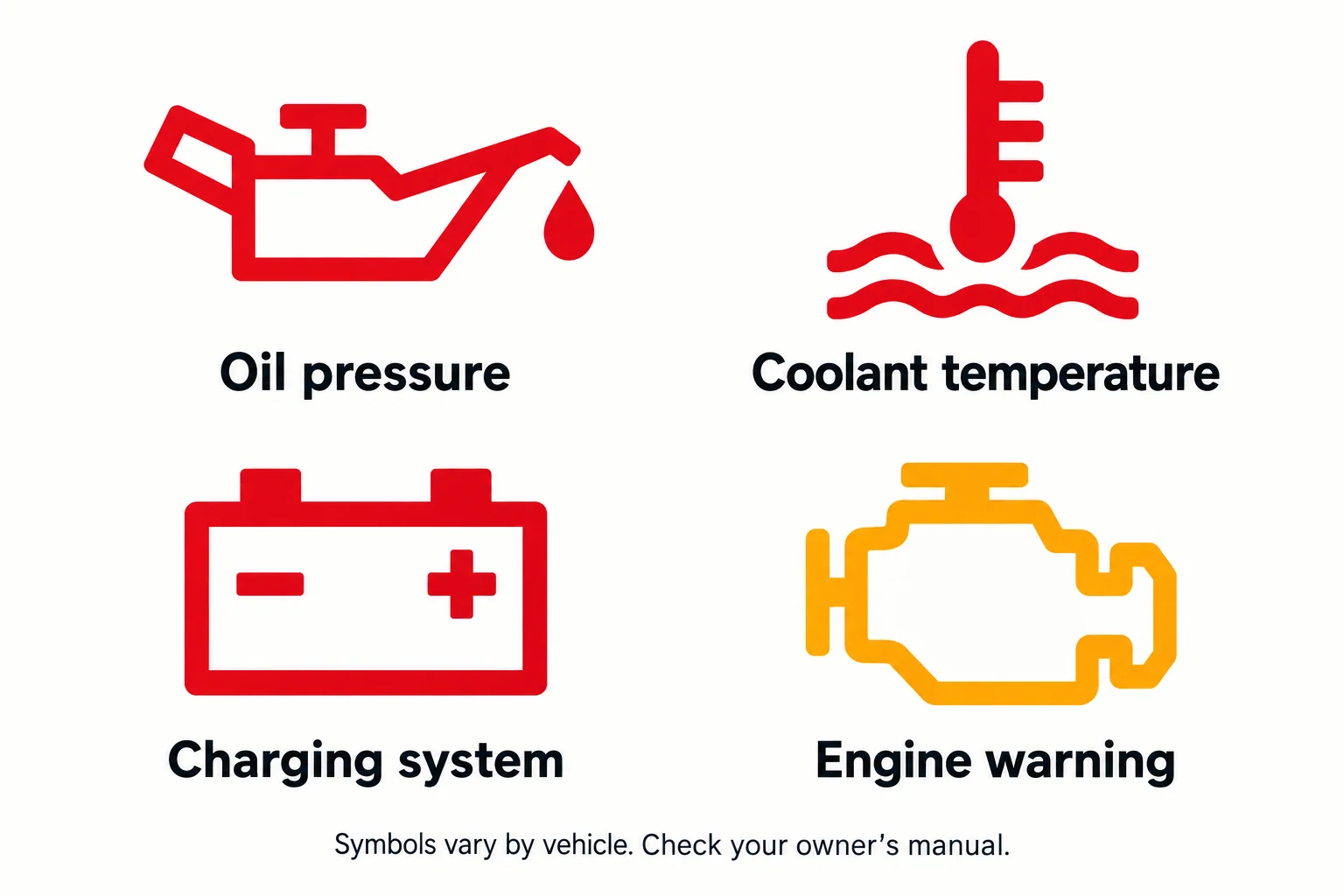
| Engine oil pressure | Stop safely and shut the engine off. Checking oil level does not by itself confirm safe pressure. |
| High coolant temperature | Stop safely and follow the overheating instructions. Never open a hot cooling-system cap. |
| Brake-system warning or changed braking | Check the manual's immediate instructions. If braking is abnormal, stop and arrange assistance. |
| Charging-system warning | Arrange prompt diagnosis; a battery-shaped icon does not prove the battery itself failed. |
| ABS, airbag or power-steering fault | Read the message and get the affected safety system inspected; respond immediately to any loss of control or braking. |
| Tire-pressure warning | Check tire condition and pressures as directed. A system fault can also produce a warning; the lamp is not a pressure gauge. |
Does a flashing light always mean the same thing?
No. A flashing traction-control indicator can describe the system actively working, while a persistent fault indicator can mean assistance is unavailable. Read the exact description rather than applying one flashing-light rule to every symbol.
A security indicator can also flash normally while a parked vehicle's immobilizer is armed. Toyota's guidance describes that behavior on applicable systems. The same symbol staying on with a no-start complaint needs a different response.
Why do lights appear briefly when you start the car?
Some indicators illuminate as a system check. The expected sequence depends on the vehicle. A light that remains on, appears during driving or fails to perform its expected check should be assessed according to the manual.
Not every illuminated symbol reports a fault. Cruise-control, turn-signal and other status indicators can show that a feature is selected or operating. Confirm the meaning before attempting a reset or repair.
What information helps the shop diagnose the warning?
Provide the photo, full message, driving symptoms and timing. Include all warnings that appeared together and any recent repairs. The technician can then retrieve relevant fault information and test the affected system.
Clearing a message does not correct its cause. Ask what was confirmed and how normal operation was verified afterward, especially when a safety feature was unavailable.
Sources & further reading
- Toyota — Toyota Dashboard Symbols & Warning Lights Meaning | MyToyota
- Chevrolet / GM — Identify Warning Lights | Vehicle Support | Chevy
- Chevrolet / GM — Dashboard Lights and Signals | Vehicle Support | Chevy
Vehicle designs and maintenance requirements vary. Consult the owner’s manual for your exact vehicle and seek a qualified inspection for a specific fault.