Exhaust
Exhaust Leaks: Causes and Diagnostic Steps
Published:
Edited and fact-checked by: Jacob Bowen
General information; vehicle-specific diagnosis requires an inspection. How we prepare our guides · This page reserves space for ads. Advertising policy · Privacy choices
The quick answer
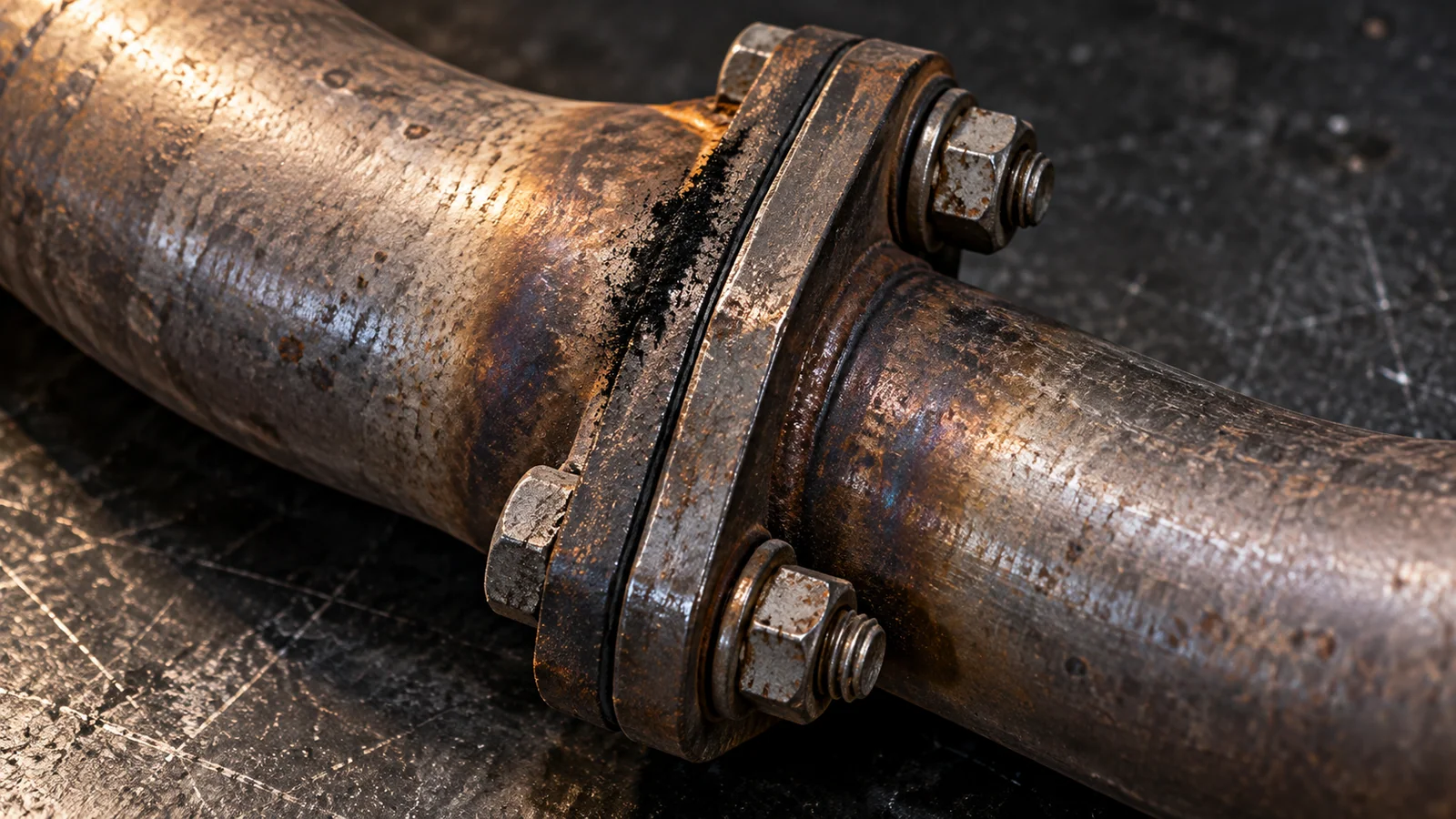
An exhaust leak needs its location and cause confirmed before repair. Noise, soot or a check-engine light can provide clues, but none identifies the failed joint or component by itself. If exhaust fumes enter the cabin, stop safely, shut the engine off and move to fresh air; arrange inspection before using the vehicle again. Carbon monoxide has no smell, so the absence of an odor does not establish safety.
What symptoms can suggest an exhaust leak?
Report new ticking, puffing or unusually loud exhaust noise, any odor in the cabin, and whether the problem changes as the engine warms. Mention recent exhaust work or an impact underneath the car.
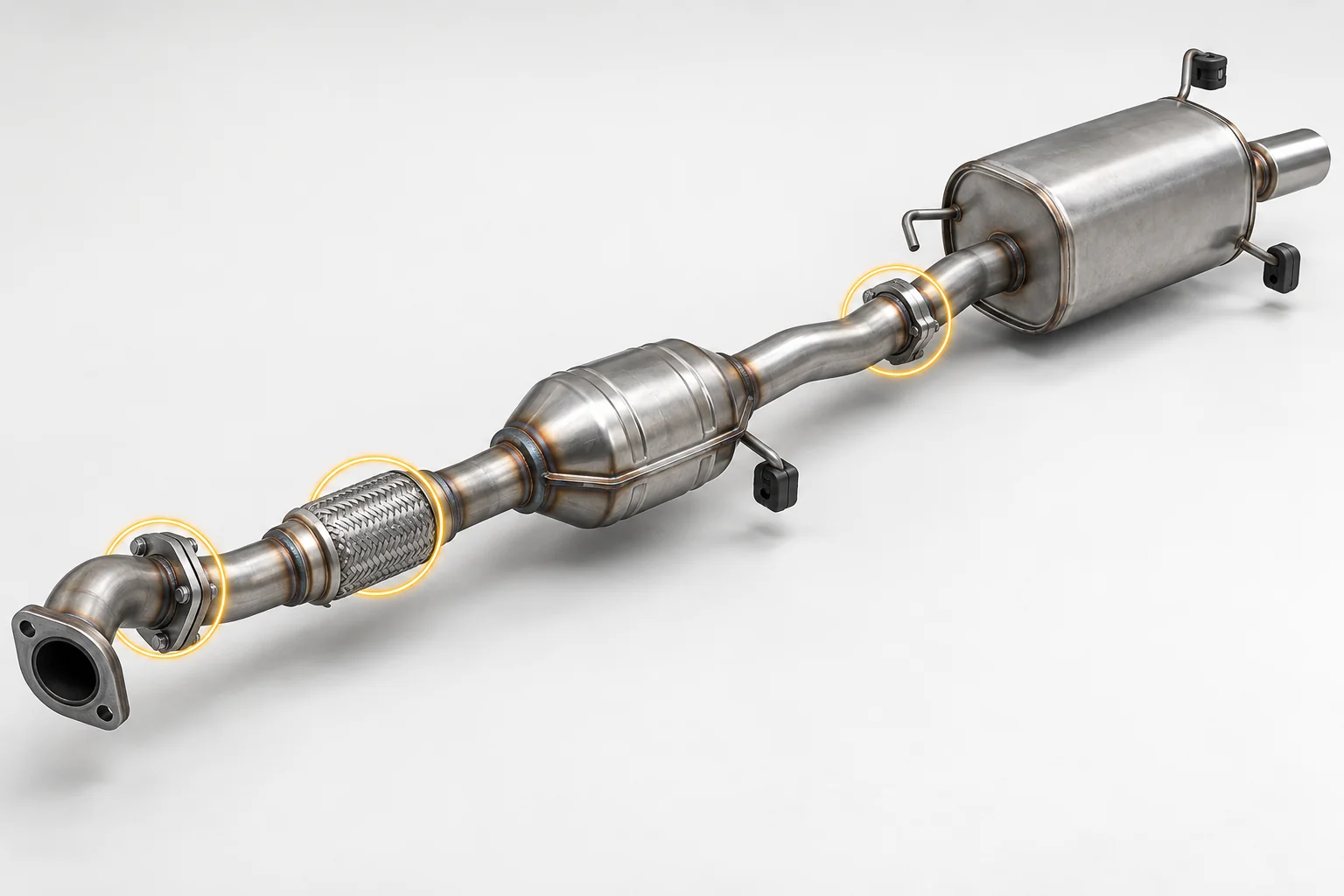
The technician should inspect the whole system, including pipe joints, welds, flex sections, gaskets and supports. A sound near the engine does not prove a manifold gasket is the only fault, and a damaged hanger can place stress on another part of the system.
How does a shop find a small leak?
Visual inspection and suitable leak-testing equipment can help locate a leak that is difficult to hear or see. Walker recommends checking for leakage under both cold and warmed operating conditions because the behavior can change.
The inspection needs safe access and appropriate procedures. Exhaust parts can burn you, and a running engine produces hazardous gases. Do not crawl under a vehicle supported only by a jack or run a car in an attached garage, even with the door open.
Can an exhaust leak affect oxygen-sensor readings?
Yes, depending on its location and conditions. Air entering near the sensing or catalyst-monitoring area can distort the information used to assess fueling or converter performance. That makes leak checks relevant before condemning a sensor or converter.
Repair the demonstrated leak and verify the relevant system operation. A converter-efficiency code is not proof that replacing the converter will correct a leaking connection. Equally, finding a leak does not prove every other component is undamaged.
Does an exhaust leak require a whole new exhaust system?
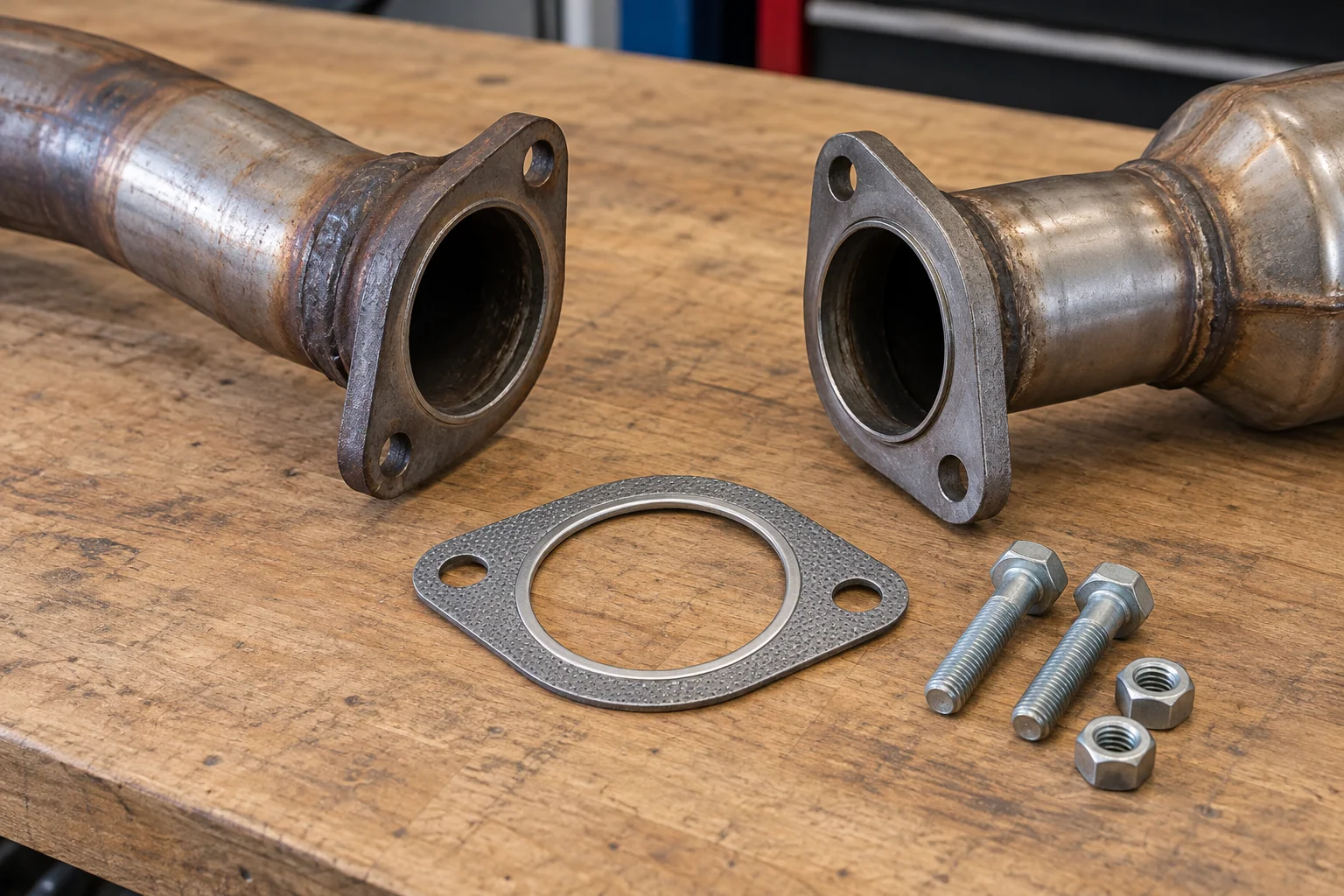
Not always. The repair depends on whether the fault is a gasket, connection, cracked component, corrosion or another confirmed defect. Inspect surrounding metal and supports to decide whether a localized repair is appropriate.
Ask for an estimate identifying the leak location, proposed parts, access labor and related damage. A manifold leak with difficult hardware access is different work from a simple pipe joint. These sources do not establish one reliable repair price for every exhaust leak.
What should be checked after the repair?
The shop should recheck sealing, clearance and support, then reassess the original noise and any relevant diagnostic information. If converter performance remains a concern, it needs the appropriate tests with the engine operating correctly.
Do not use smell as the final leak test. CDC warns that even a small exhaust leak can allow carbon monoxide to build up in a vehicle. The repair needs a proper inspection and verification, not a quieter sound alone.
Sources & further reading
- Walker Exhaust — Exhaust Leak Symptoms & Repair
- Walker Exhaust — Exhaust System Inspection
- Walker Exhaust — Simple Car Exhaust Testing
- Fel-Pro — Exhaust Flange & Exhaust System Gaskets
- CDC — Carbon monoxide safety, including vehicle exhaust
Vehicle designs and maintenance requirements vary. Consult the owner’s manual for your exact vehicle and seek a qualified inspection for a specific fault.