Exhaust
Blue Smoke From Exhaust: Causes and Diagnostic Steps
Published:
Edited and fact-checked by: Jacob Bowen
General information; vehicle-specific diagnosis requires an inspection. How we prepare our guides · This page reserves space for ads. Advertising policy · Privacy choices
The quick answer
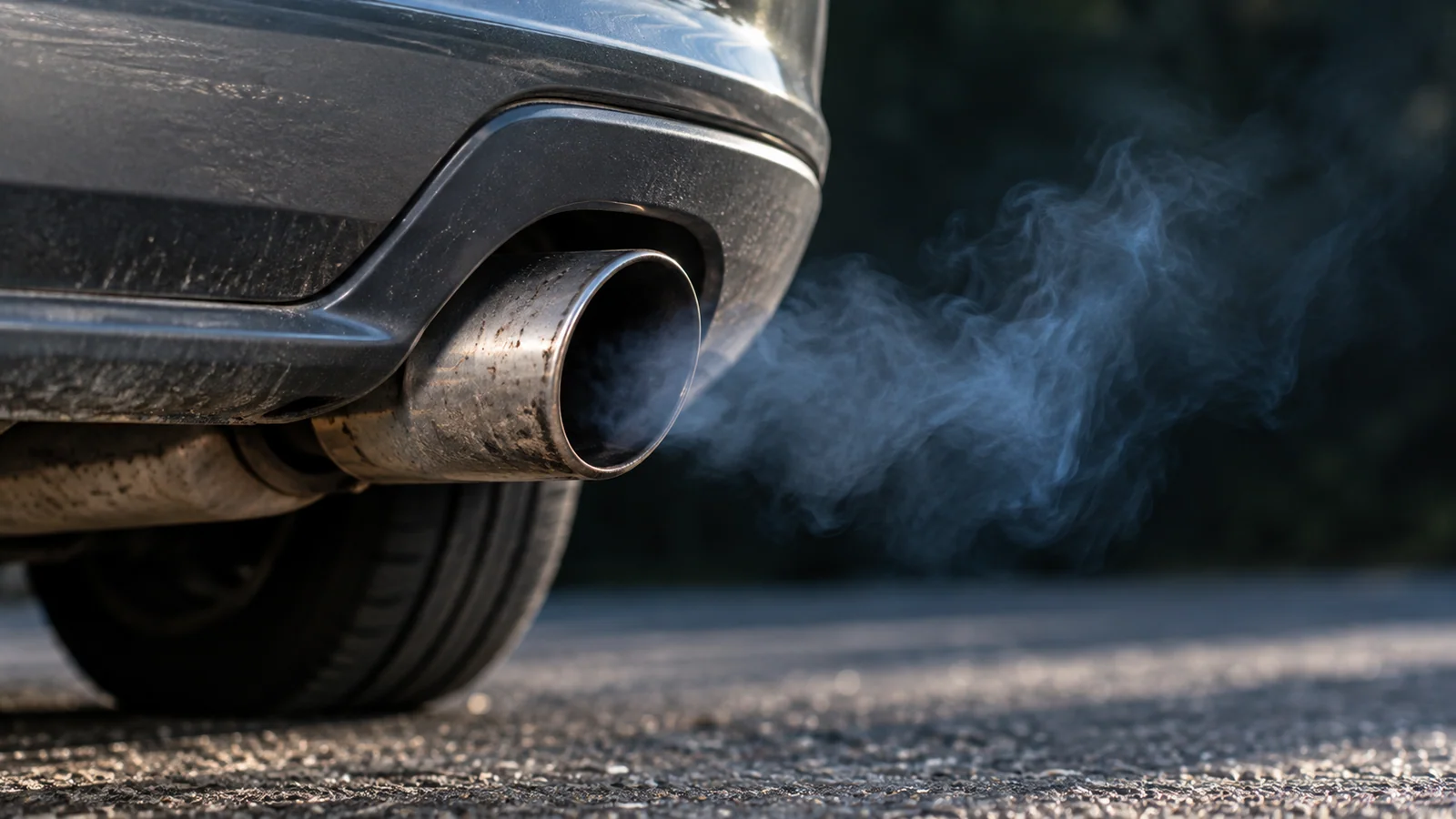
Blue or blue-gray exhaust smoke often indicates that engine oil is being burned. Check the oil level by your vehicle's procedure and arrange diagnosis, especially if the smoke repeats or oil use increases. Smoke color alone cannot tell you whether the source is valve sealing, piston rings, crankcase ventilation or a turbocharger-related problem.
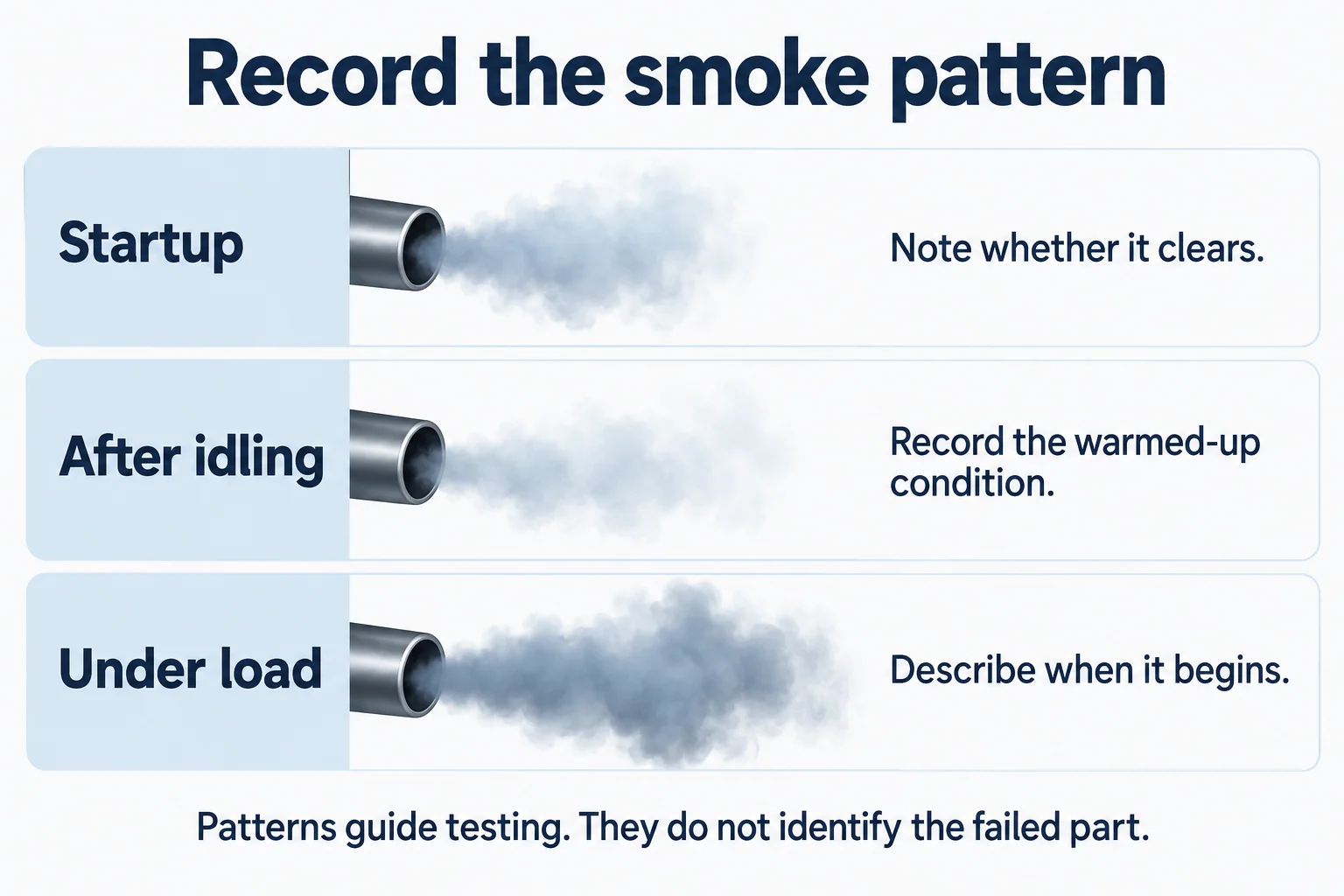
Does it smoke at startup, after idling or under load?
Record when the smoke appears and whether it clears or continues. A cold-start puff, smoke after idling and smoke during acceleration give the technician different conditions to investigate. Include recent oil service or engine work in that history.
Do not turn those patterns into a part diagnosis. A brief puff is useful information, but it does not establish that replacing valve seals will resolve the complaint.
Why can a turbocharged engine burn oil without a failed turbo?
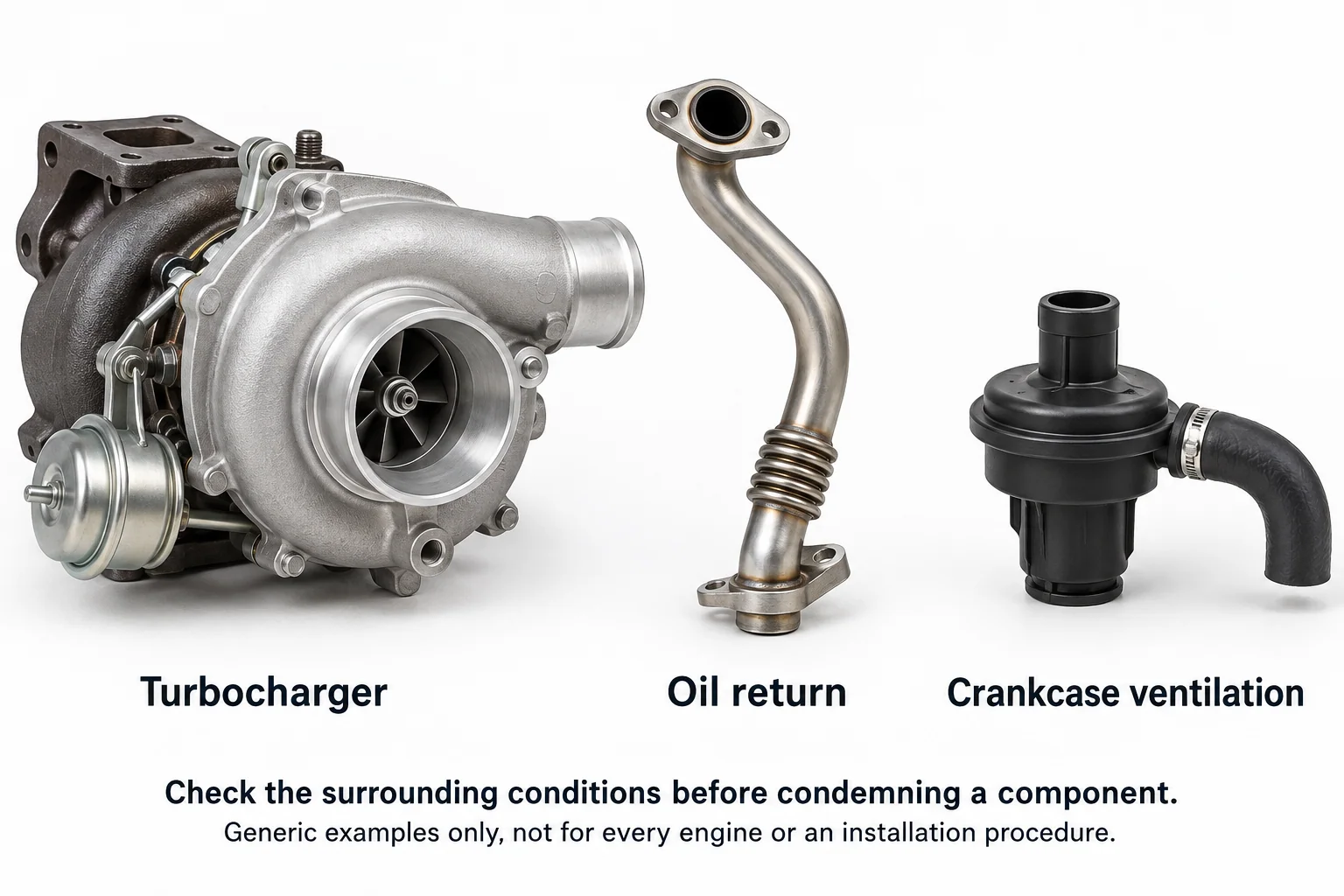
Motorservice explains that oil escape at a turbo can result from a restricted oil-return path, an excessively high oil level or elevated crankcase pressure. Crankcase-ventilation failure is one possible reason for that pressure.
The turbo's oil supply, return and pressure conditions therefore need consideration before the unit is condemned. Replacing it while leaving a blocked return or ventilation fault unresolved can leave the underlying condition in place. This branch applies to a turbocharged engine, not every smoking vehicle.
What checks should come before major engine work?
First establish the level and actual oil use, using the correct checking method and keeping a record of additions and mileage. Check for external leakage too; oil lost underneath the car and oil entering the exhaust path need different investigation.
For internal sealing concerns, compression or cylinder-leakage testing can contribute evidence. Interpret those results with the engine's specifications and other findings. Ask what evidence identifies the oil path rather than accepting smoke alone as proof of worn rings or a complete engine rebuild.
What would a repair need to address?
The repair depends on the verified source. Correct an identified ventilation or oil-return problem, or repair confirmed wear in the appropriate components. A new turbo or a valve-seal repair should follow that finding, not substitute for it.
Ask how the shop will assess oil use and repeat the original smoke-producing condition afterward. An additive that reduces visible smoke is not proof that the underlying fault has been corrected.
When should you stop driving?
Stop safely and shut the engine off if an oil-pressure warning appears, oil loss becomes rapid or the engine runs severely abnormally. Heavy smoke also calls for stopping rather than continuing a trip while monitoring it.
Use the specified oil if a top-up is needed and do not overfill. Maintaining the level reduces the immediate risk of running low, but it does not establish that continued driving is safe or repair the cause.
Sources & further reading
- AA1Car / Larry Carley — Diagnose Exhaust Smoke
- Motorservice / Pierburg — Oil consumption caused by unfavourable operating conditions for turbocharger
- MOTOR — Dealing With Oil Consumption Issues
Vehicle designs and maintenance requirements vary. Consult the owner’s manual for your exact vehicle and seek a qualified inspection for a specific fault.