Brakes
Brake Fluid Leak: Symptoms, Diagnosis and Repair Options
Published:
Edited and fact-checked by: Jacob Bowen
General information; vehicle-specific diagnosis requires an inspection. How we prepare our guides · This page reserves space for ads. Advertising policy · Privacy choices
The quick answer
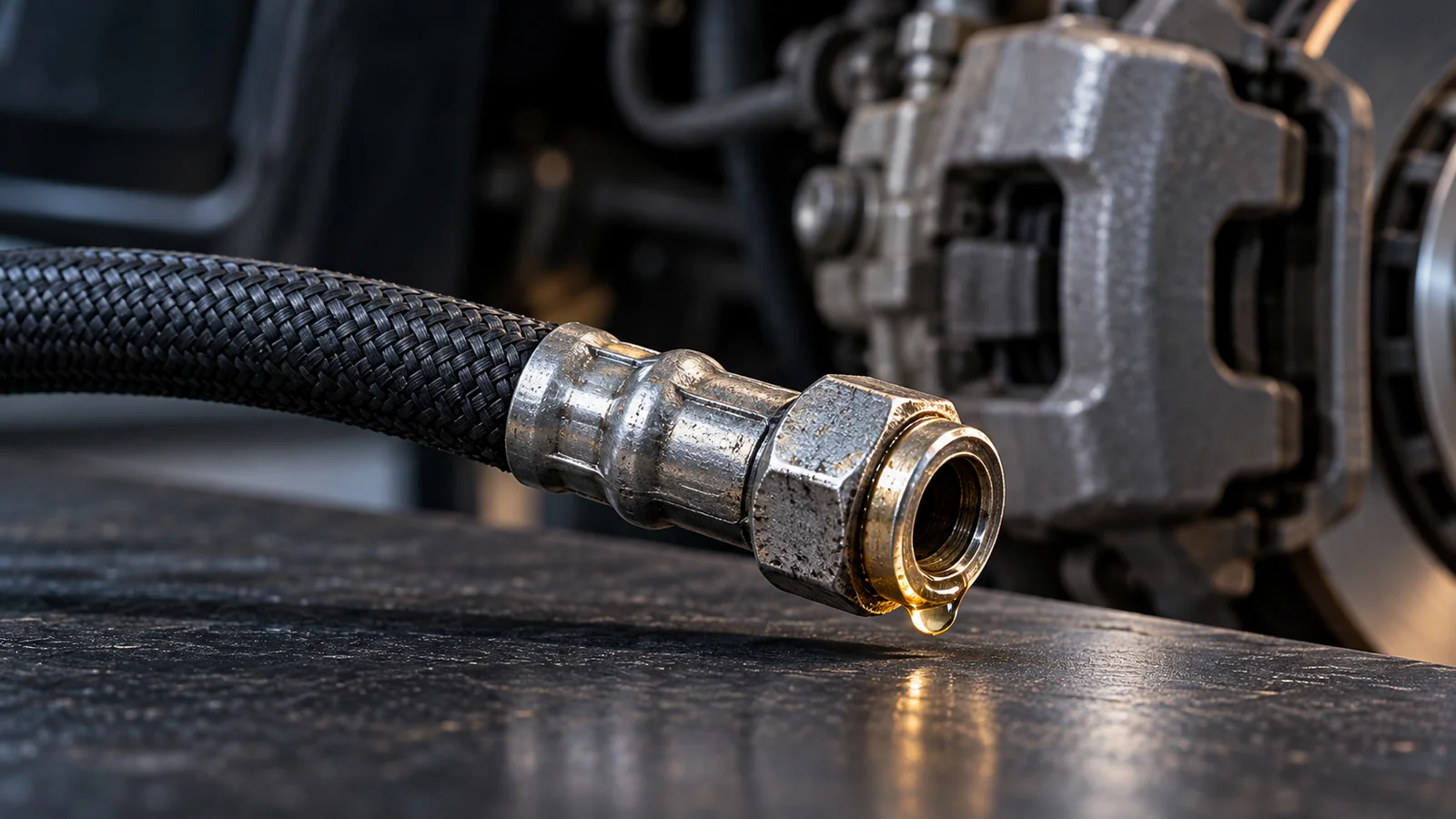
Do not drive a vehicle with a suspected or confirmed brake-fluid leak. Stop safely and arrange transport for inspection. Hydraulic fluid loss can reduce braking, and topping up the reservoir does not fix the leak. A soft pedal, excessive pedal travel or a pedal that sinks also needs urgent assessment, even without a visible puddle.
Does low brake fluid always mean a leak?
No. The reservoir level can fall as disc brake pads wear, but fluid loss can also indicate a leak. Have the system checked rather than assuming either explanation from the reservoir alone.
A low or changing pedal and a brake warning deserve attention. If braking feels abnormal, do not take a test drive to see whether it improves. Report what changed and whether you noticed wetness near a wheel or underneath the car.
Where should the technician look for a leak?
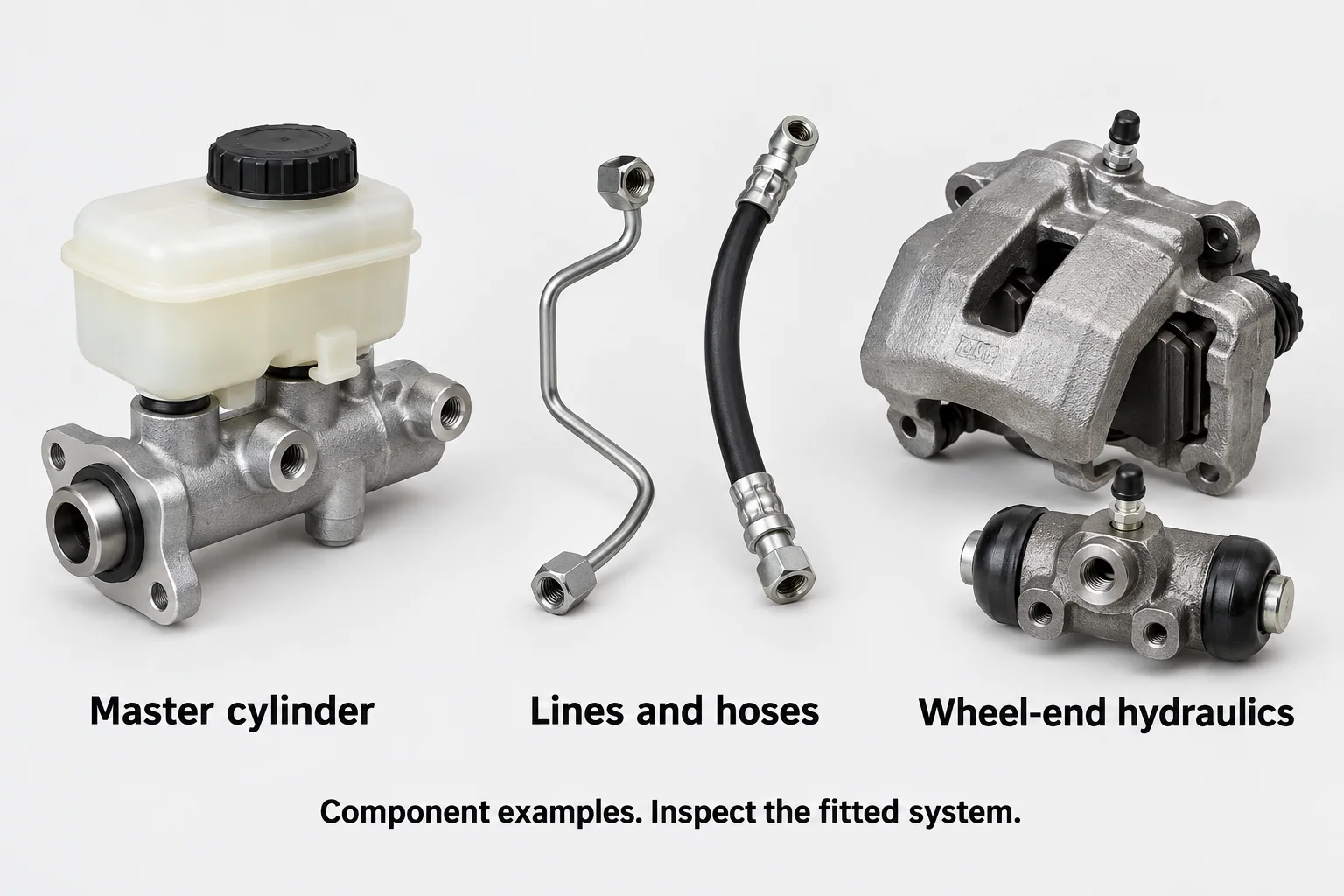
The hydraulic system includes the master cylinder, rigid lines, flexible hoses and the braking components at the wheels. Calipers and, where fitted, drum-brake wheel cylinders need inspection as well as visible pipes and connections.
HELLA explains that flexible hoses must accommodate steering and suspension movement while carrying hydraulic pressure. Cracks, bulges, chafing and damaged connections matter; metal lines also need checking for corrosion. A single visible wet spot should not substitute for inspecting the surrounding system.
Can the pedal sink without fluid dripping onto the ground?
Yes. A hydraulic fault can involve pressure bypass inside a component rather than an external fluid leak. A sinking pedal therefore needs testing even when the reservoir has not obviously emptied.
The technician should distinguish external fluid loss from another cause of poor pedal feel. Do not use the absence of a puddle as evidence that the brakes are safe.
What should a proper leak repair include?
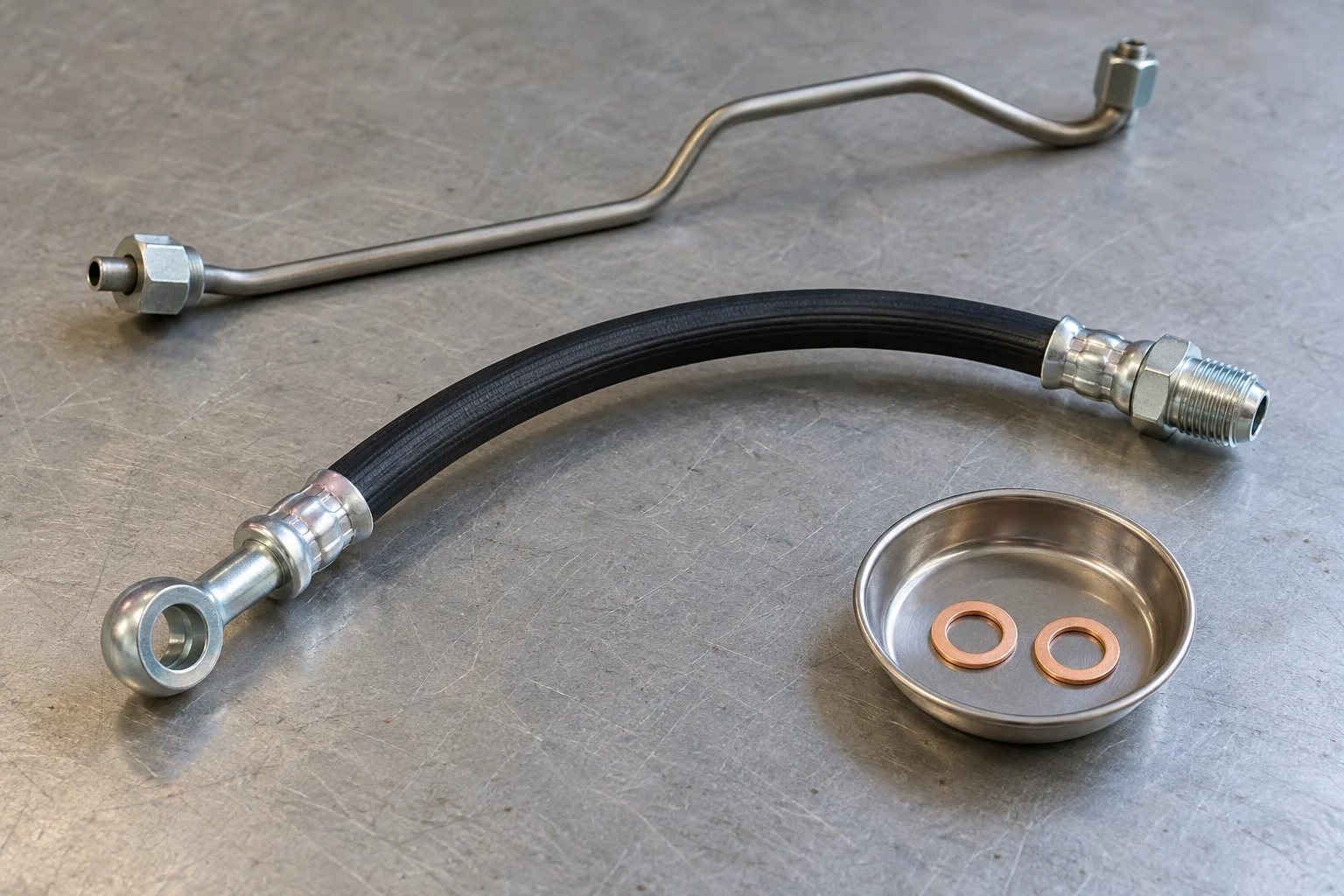
Repair or replace the verified failed component using the correct parts and service procedure. A leaking hydraulic line or hose needs a proper brake-system repair, not an improvised patch.
HELLA specifies that hoses should be fitted without twist, tension or rubbing, and kept away from mineral oil and grease. Follow the vehicle maker's installation requirements and use the specified brake fluid and bleeding procedure. AA1Car notes that air remaining in the hydraulic system can cause a soft pedal; opening a circuit is not a complete repair until correct operation has been restored.
What should you ask before the car returns to use?
Request the identified leak location, the condition of related lines and hoses, and the parts and labor included. A hose replacement and a repair involving multiple corroded lines have different scopes, so a single generic leak-repair price can mislead.
Ask how the shop verified leak-free operation and satisfactory braking after repair. The important result is restored braking and a sound hydraulic system, not merely a refilled reservoir or an extinguished warning.
Sources & further reading
- HELLA — Brake hoses and brake lines
- MOTOR — Brake Shop: Brake Hydraulic System Inspection
- AA1Car / Larry Carley — FIXES FOR COMMON BRAKE PROBLEMS
Vehicle designs and maintenance requirements vary. Consult the owner’s manual for your exact vehicle and seek a qualified inspection for a specific fault.