Brakes
Brake Master Cylinder: Symptoms, Diagnosis and Repair Options
Published:
Edited and fact-checked by: Jacob Bowen
General information; vehicle-specific diagnosis requires an inspection. How we prepare our guides · This page reserves space for ads. Advertising policy · Privacy choices
The quick answer
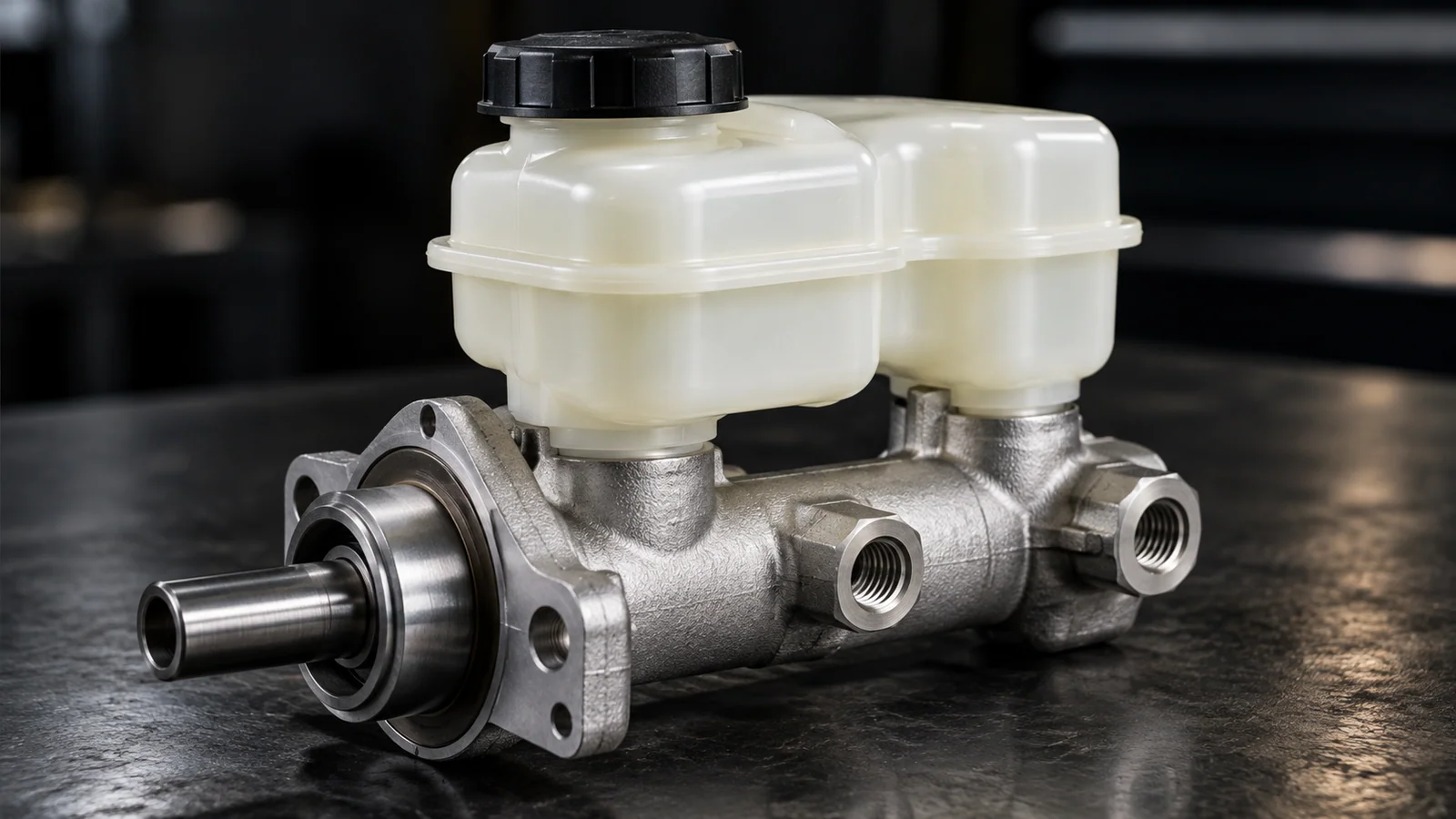
A brake master-cylinder fault can cause fluid leakage or failure to maintain hydraulic pressure, including a sinking pedal. Similar pedal symptoms can come from leaks elsewhere or trapped air. Keep the vehicle parked if braking is unreliable and arrange transport. Replacement should follow a confirmed diagnosis of the actual brake system.
Which symptoms make the master cylinder worth checking?
A pedal that slowly sinks under steady pressure, unusually long travel or unexplained brake-fluid loss calls for inspection. AA1Car identifies a pressure-holding fault as one possible cause, alongside hydraulic leaks and other brake problems.
Report whether it began suddenly, after hydraulic work or only under particular conditions. Do not assume pumping the pedal makes the vehicle safe, and do not drive it to demonstrate the concern. An abnormal pedal needs its cause established before further use.
How is a master-cylinder fault separated from a leak or trapped air?
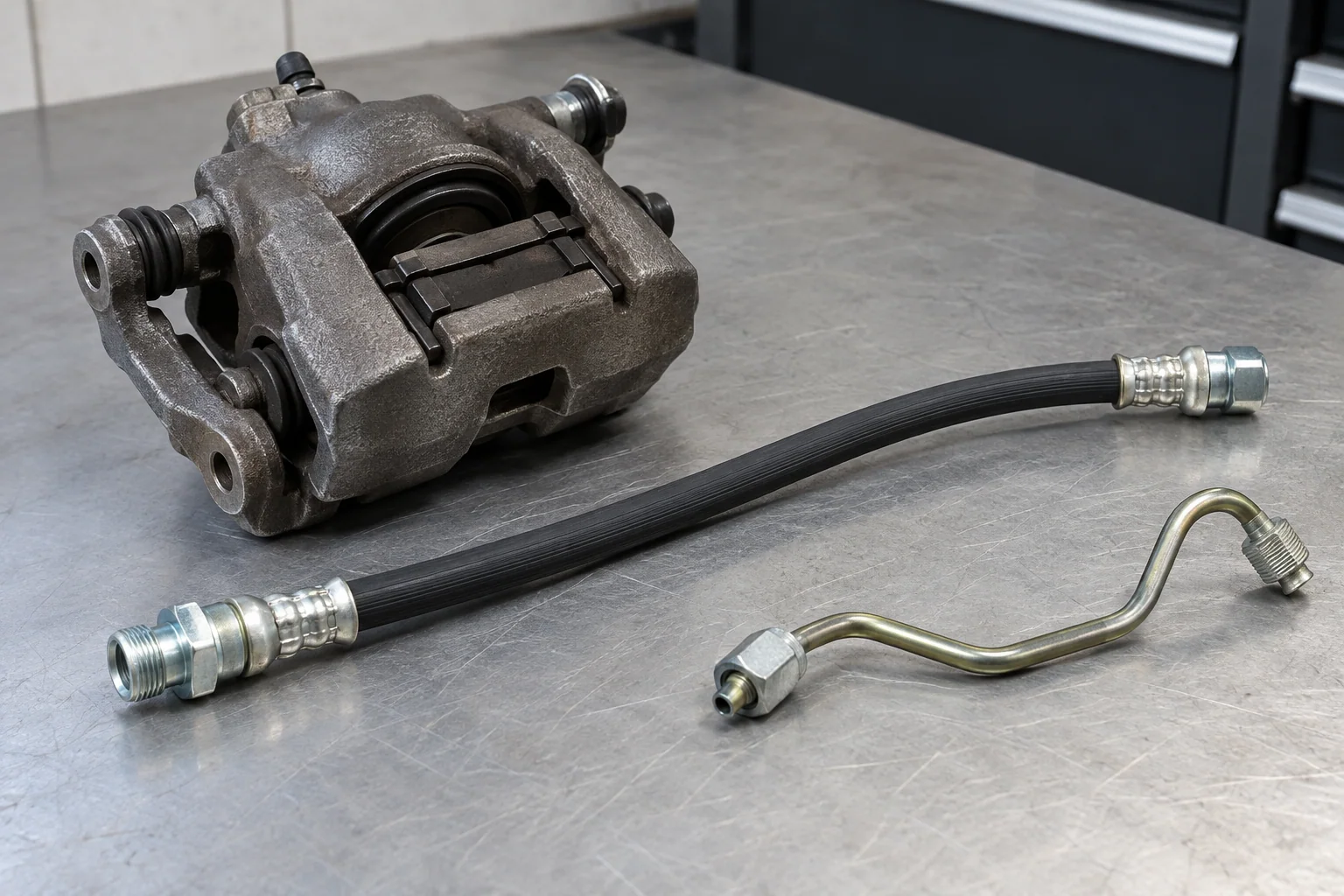
The shop should inspect the complete hydraulic circuit, including lines, hoses, calipers and any wheel cylinders, rather than judging only the reservoir level. The system-specific test then checks whether pressure is being maintained and where the loss occurs.
A soft pedal after component replacement may involve air left in the master cylinder or elsewhere in the system. Wilwood describes returned tandem cylinders that were serviceable but had not been bled correctly. That experience does not mean every new-cylinder complaint is air; it makes correct preparation an important part of the investigation.
Identify the actual brake and assist design before applying a test. A general mechanical procedure cannot cover every ABS or electronically controlled system.
What should replacement include when it is justified?
Use the correct application-specific cylinder, specified fluid and required seals and hardware. Brembo's installation guidance includes checking the connection to the assist unit or pedal linkage, correct pushrod positioning, matching brake-line threads and the manufacturer's tightening values.
Its instructions also call for the vehicle's bleeding procedure, close attention to ABS requirements and a complete leak check. A cylinder that bolts in place is not fully verified until the hydraulic system has been properly serviced and tested.
Keep fluid away from paint and friction surfaces and protect the system from contamination. This is safety-critical work for someone with the correct equipment and service information.
Does bench bleeding replace bleeding the rest of the brakes?
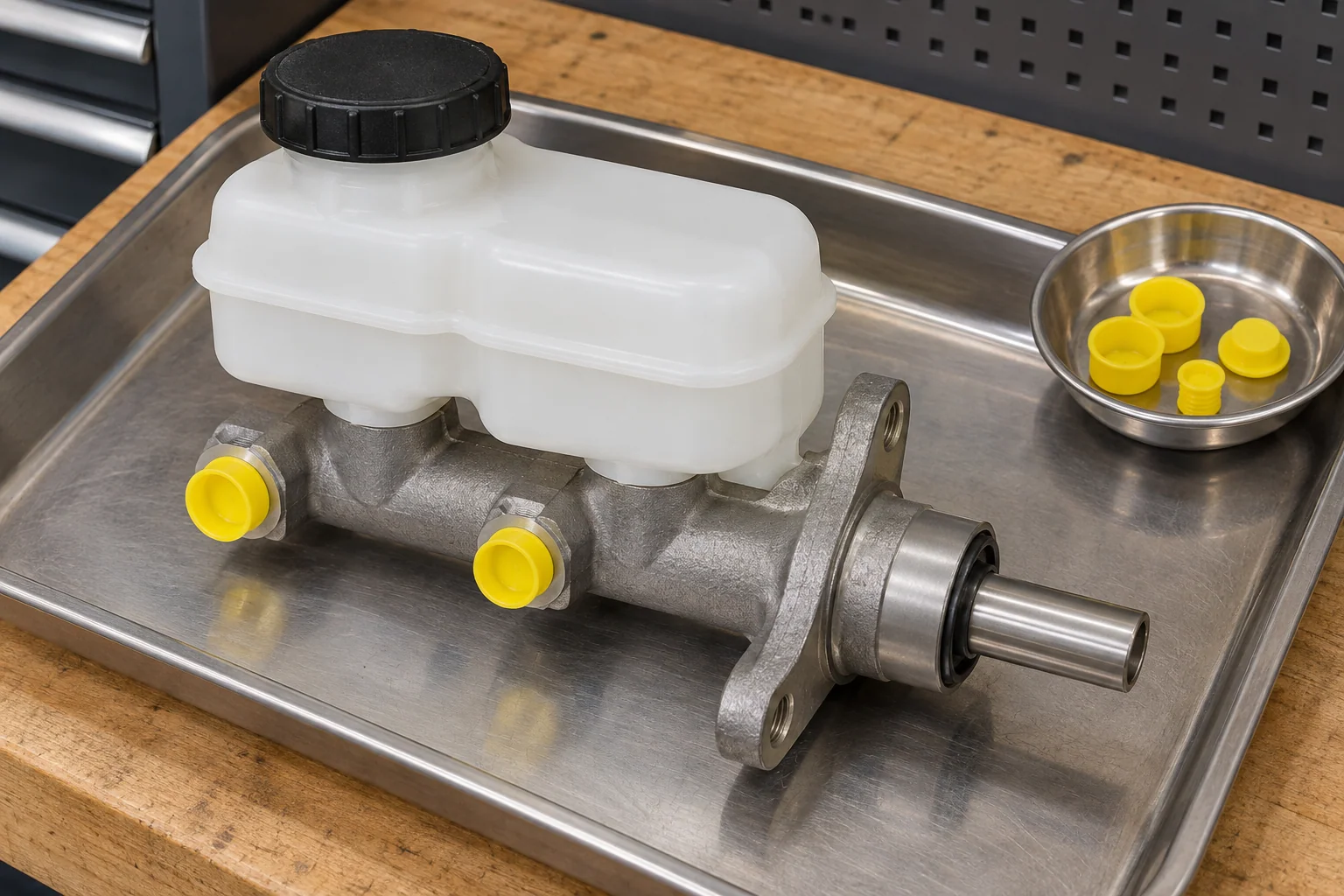
No. Preparing the master cylinder and removing air from the installed hydraulic system are separate parts of the work. Wilwood's guidance explains how mounting angle can trap air in the tandem cylinders it describes and why its recommended preparation uses a level bench setup.
Follow the exact cylinder's instructions. Do not copy an aftermarket unit's piston strokes, orientation or fittings as a universal procedure. The required vehicle-level bleed, including any ABS routine, still needs completion.
What if the pedal still sinks after a new master cylinder?
Have the diagnosis, installation, remaining circuit and bleeding process checked again. Ask what test shows the new unit is defective before authorizing another replacement.
The final checks must establish correct pedal operation, pressure retention and absence of leakage before a qualified technician verifies braking safely. Request the findings and repair scope in writing; a new part or cleared warning light alone does not establish a repaired brake system.
Sources & further reading
- Brembo — How to change a master brake cylinder. Brembo instruction
- Wilwood — How to Bench Bleed a Master Cylinder – Wilwood Store
- AA1Car: hydraulic leaks and abnormal brake-pedal diagnosis
Vehicle designs and maintenance requirements vary. Consult the owner’s manual for your exact vehicle and seek a qualified inspection for a specific fault.