Brakes
Brake Rotor Replacement vs. Resurfacing: Measurements and Costs
Published:
Edited and fact-checked by: Jacob Bowen
General information; vehicle-specific diagnosis requires an inspection. How we prepare our guides · This page reserves space for ads. Advertising policy · Privacy choices
The quick answer
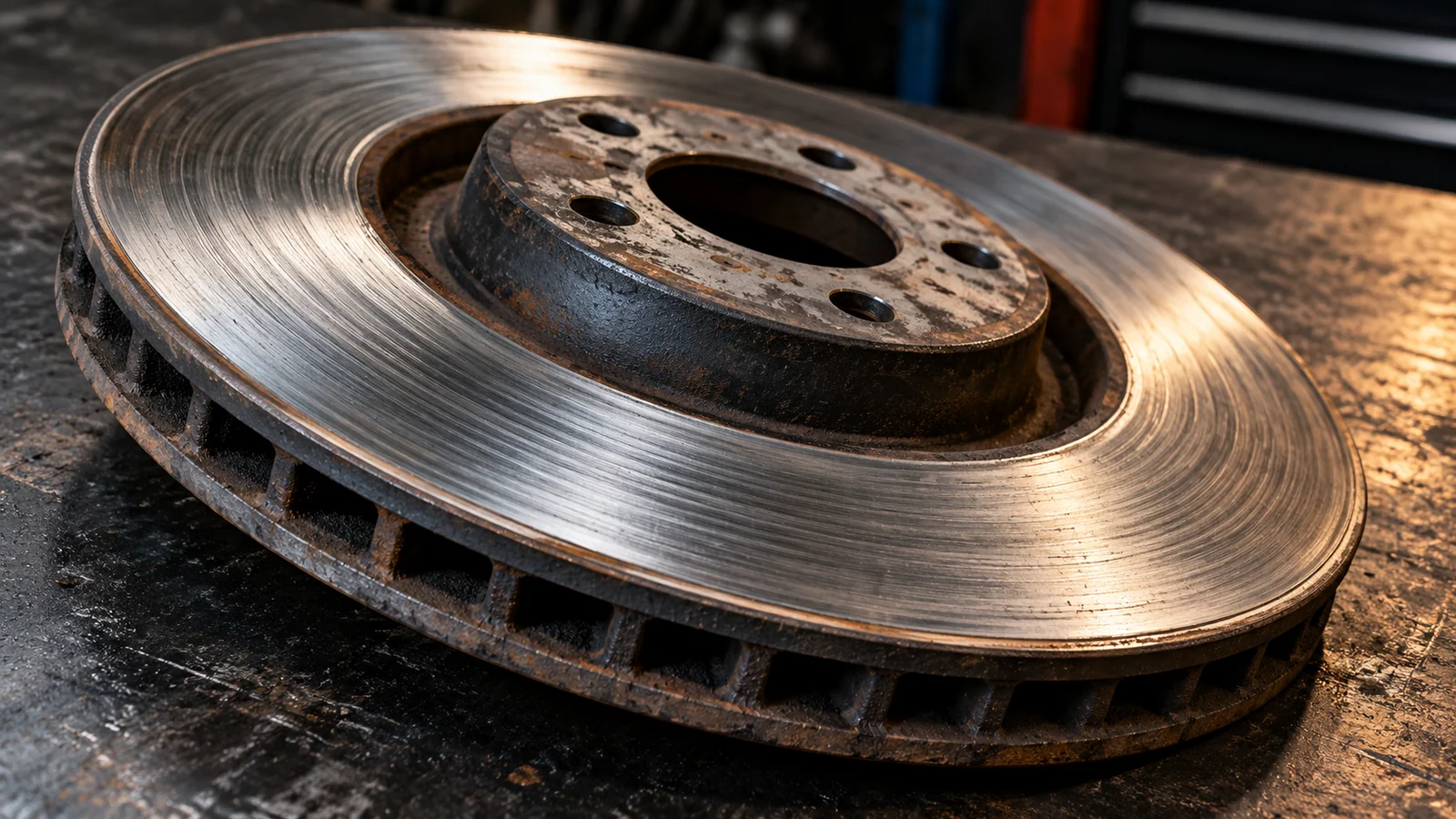
Resurface a brake rotor only when the vehicle's procedure permits it and enough material will remain to meet the applicable machining and service limits. Replace it when wear or damage makes it unsuitable for reuse. Ask for the measurements and the exact limits; appearance and the phrase warped rotors are not enough to choose the repair.
Do new brake pads always mean new rotors?
The rotor decision should follow inspection. A usable rotor, one that can be machined within its limits and one requiring replacement are different findings. Ask the shop to explain which condition applies to your brakes.
If braking performance has changed, have the system inspected promptly. Do not assume that vibration identifies a rotor-only problem or that machining is automatically the answer.
Which brake rotor measurements matter?
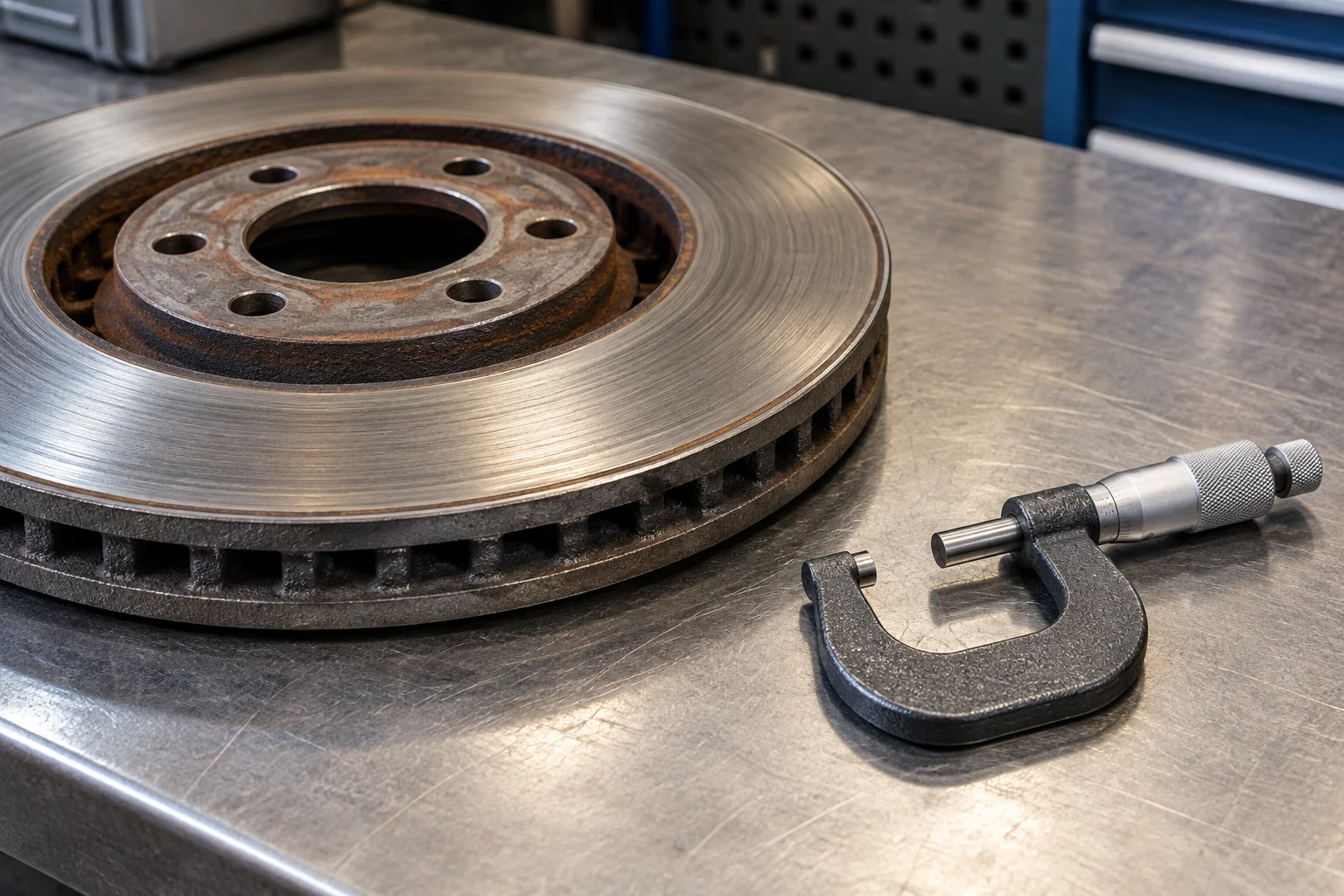
Thickness must be checked against the correct specifications for the installed rotor and vehicle. A machining limit and a discard limit serve different purposes; a rotor cannot simply be cut to the discard limit and treated as newly serviceable.
Thickness variation means the disc is not equally thick around its circumference. Lateral runout describes sideways deviation as the installed rotor turns. These are different measurements, so ask which one is outside its applicable limit.
Can the hub or bearing affect rotor runout?
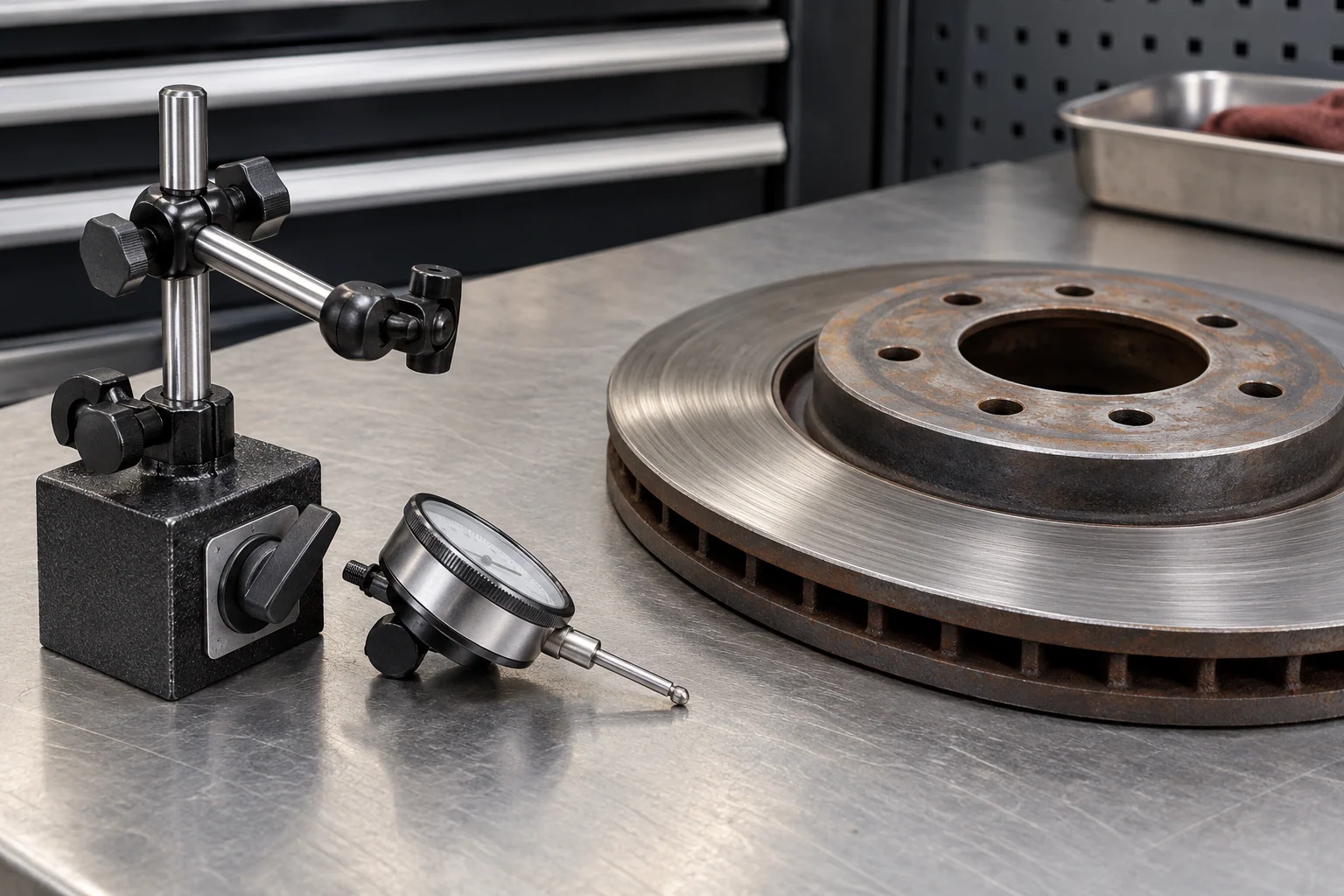
Yes. HELLA's installed-disc test uses a dial indicator and directs technicians to consider the wheel hub and bearing when results are out of tolerance. The vehicle manufacturer's specification takes priority over a general guide value.
The mounting surface also matters. Debris or corrosion between the hub and rotor can interfere with correct seating. Fitting another rotor without addressing the cause can leave the same complaint.
When is replacement more appropriate than resurfacing?
Replacement is required when the rotor is too thin or cannot be machined within the relevant limit. Cracks, severe corrosion or other damage can also rule out reuse. Ask for an assessment of the actual friction surfaces, rather than a decision based solely on cosmetic rust.
The replacement must match the application. Installation includes correct surface preparation, the specified tightening procedure and checks of the affected brake components. Do not use a generic torque value from another car.
How much do replacement rotors or resurfacing cost?
RepairPal's general US brake rotor replacement estimate is $574–$698, updated September 3, 2026. Its breakdown is $168–$247 labor and $406–$452 parts, excluding taxes, fees and location differences. This is a replacement-service benchmark, not a resurfacing price.
Ask which axle, how many rotors and whether pads are included. Compare the complete resurfacing and replacement options for your vehicle, including shared labor, rather than adding separate service estimates that may overlap.
What should be checked after the rotor work?
The shop should confirm correct installation and relevant measurements, then check braking operation and the original complaint safely. A new rotor can still need an installed-runout check. If vibration remains, request further diagnosis rather than assuming another set of discs will solve it.
Sources & further reading
- MOTOR — Let the Chips Fly: On-Car & Off-Car Brake Rotor Service
- AA1Car / Larry Carley — Brake Rotor Replacement: Why, When and How
- HELLA — Checking the lateral runout of the brake disc
- RepairPal — Brake Rotor Replacement Cost Estimate
Vehicle designs and maintenance requirements vary. Consult the owner’s manual for your exact vehicle and seek a qualified inspection for a specific fault.