Brakes
How to Bleed Brakes
Published:
Edited and fact-checked by: Jacob Bowen
General information; vehicle-specific diagnosis requires an inspection. How we prepare our guides · This page reserves space for ads. Advertising policy · Privacy choices
The quick answer
Bleed car brakes by moving the specified fresh brake fluid through the hydraulic system in the manufacturer's required sequence while preventing air from entering again. The correct method depends on the vehicle; some ABS systems require a scan-tool routine. Get the service procedure before opening the system. If the pedal is soft, sinks or braking is reduced, do not drive until the fault is corrected and the brakes are verified.
What should you check before bleeding the brakes?
Find the exact fluid specification, wheel sequence, approved method and any electronic service requirements. Do not assume that starting at the wheel farthest from the master cylinder works for every car. Use suitable equipment and support the vehicle correctly if wheel removal is required.
Understand why bleeding is needed. Opening a hydraulic line or replacing a caliper can introduce air. A low reservoir or persistent soft pedal also calls for checking leaks and other faults; bleeding cannot repair a leaking component.
Can you bleed brakes by yourself?
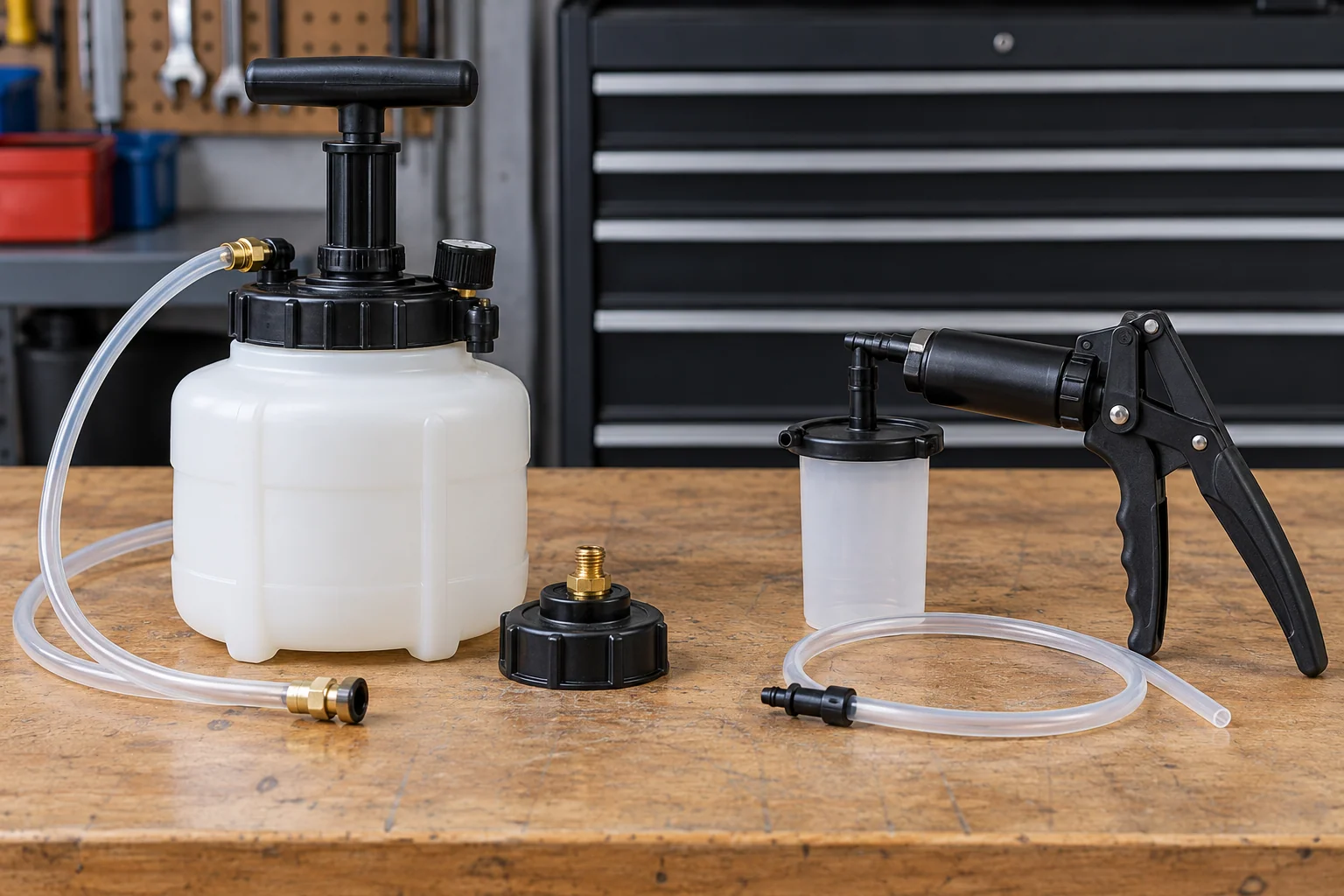
Pressure equipment pushes fluid from a sealed reservoir adapter through the system. Vacuum equipment draws it from the wheel bleeders. Either can allow one-person work when the vehicle procedure permits it, but the correct adapter, tool settings and reservoir monitoring still matter.
In a conventional two-person method, a helper operates and holds the pedal while the other person controls the bleeder and collects fluid. Coordination prevents air being drawn back during pedal release. Follow the vehicle procedure for pedal travel and valve operation rather than improvising a sequence.
What is the basic bleeding process?
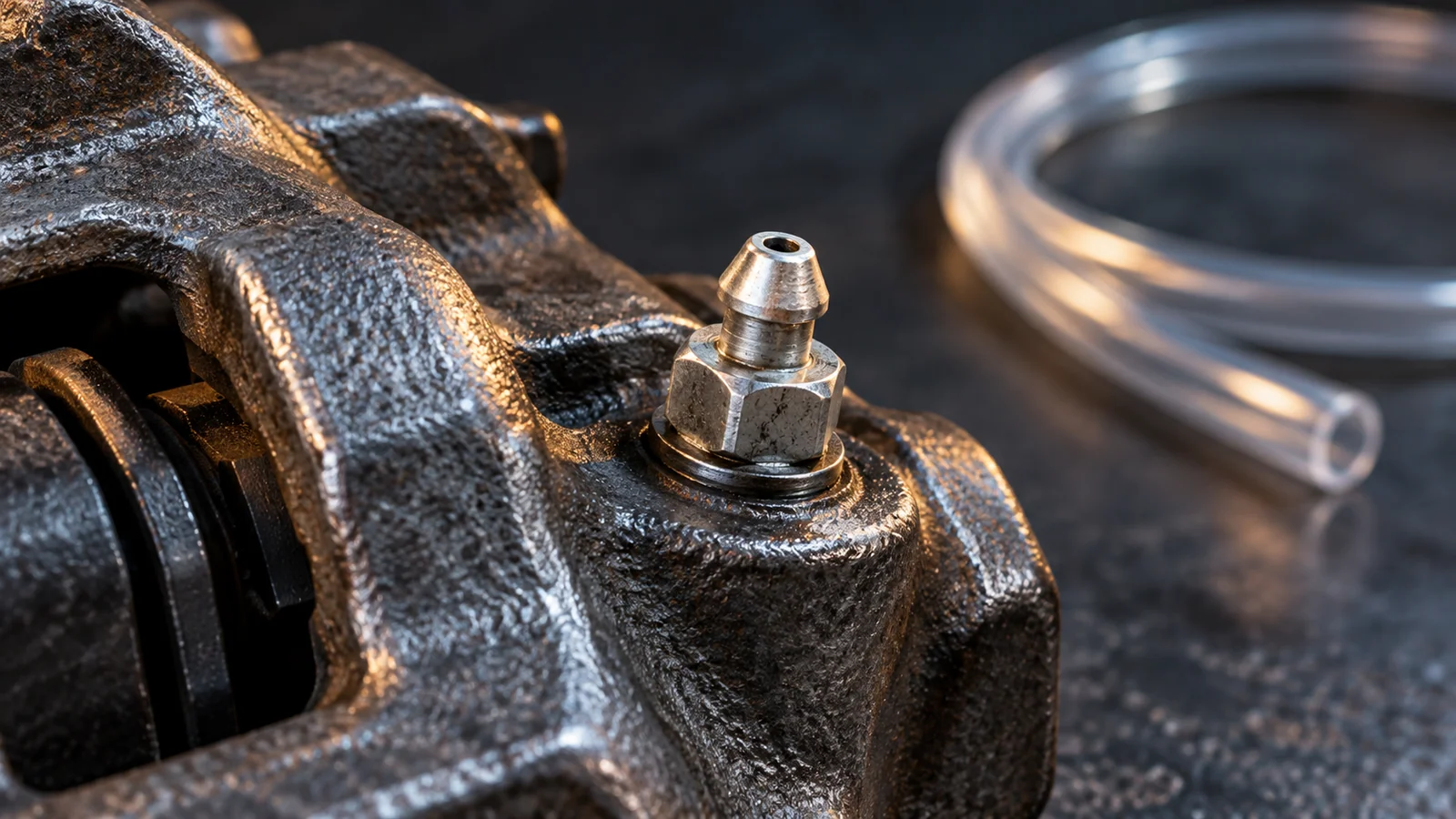
Using the approved setup, collect the outgoing fluid at the specified bleeder, move fresh fluid through the circuit, and close the bleeder as directed. Continue through the required locations and any additional service stages. Calipers and drum-brake wheel cylinders can both have bleed points.
Keep the reservoir supplied so the procedure does not introduce more air. Use fresh fluid of the required specification and keep contamination out. Bleeder tightening requirements are vehicle-specific; overtightening is not a substitute for checking a leak.
Do ABS brakes need a different procedure?
They may. Air can remain in the hydraulic unit, especially after work on that part of the system. The manufacturer's procedure determines whether diagnostic equipment must activate valves or a pump as part of bleeding.
A basic code reader is not automatically capable of that routine. If the required equipment or instructions are unavailable, have a suitably equipped shop finish the job. This car-brake overview does not cover bicycle brakes or trailer surge-brake systems.
How do you know the job is finished?
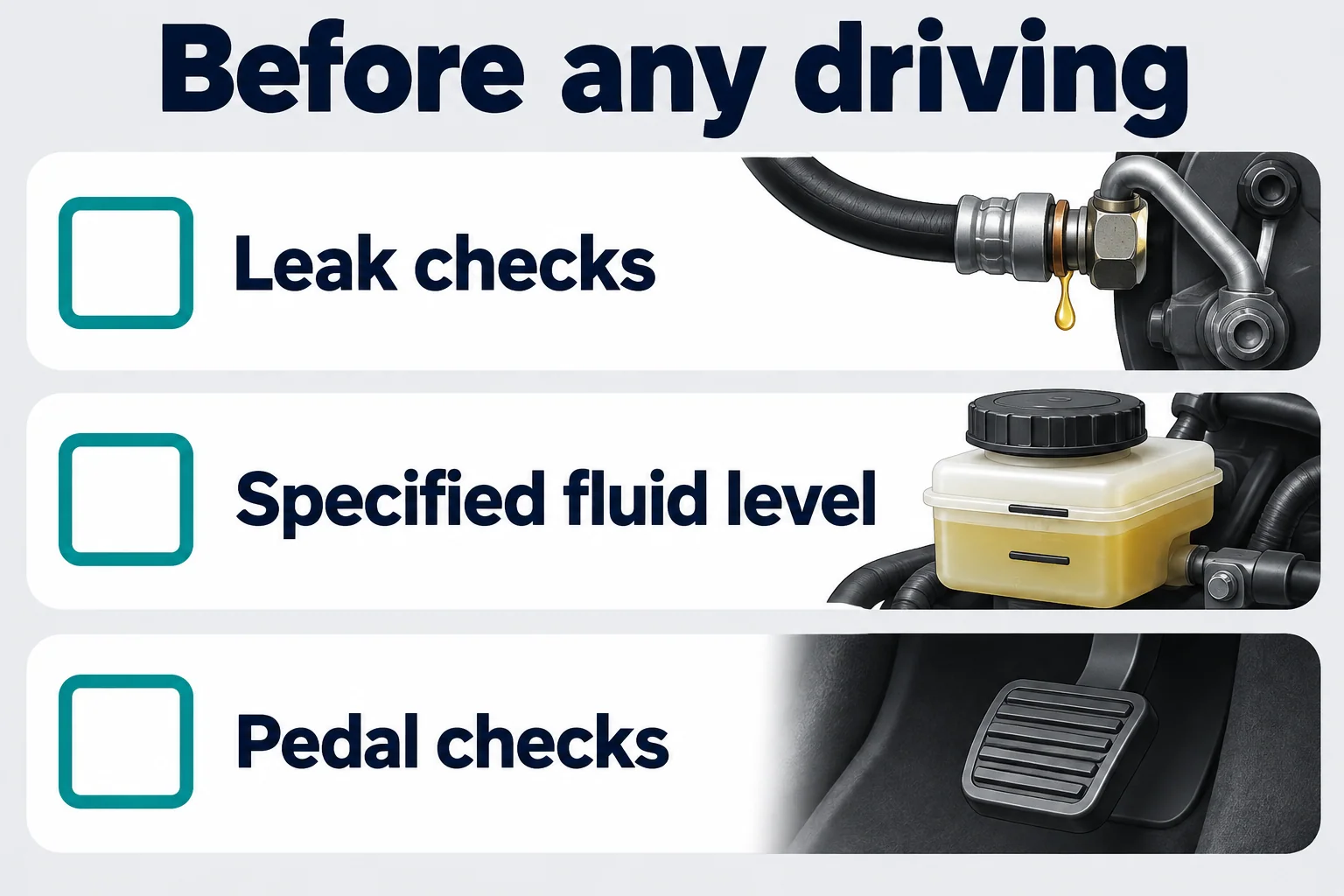
Complete the specified leak, fluid-level and pedal checks before any driving. Fluid appearing clear at a bleeder is not a complete safety check. An abnormal pedal after bleeding needs further diagnosis rather than a road test to see whether it improves.
For a service quote, ask whether it includes the required ABS routine, fluid and verification, and whether separate repairs are needed. There is no single verified bleeding price for every vehicle in these sources.
Sources & further reading
- MOTOR — Brake Shop: Brake Bleeding Tips
- AA1Car / Larry Carley — How to Bleed Brakes
- HELLA — Changing the brake fluid: testing and maintenance
Vehicle designs and maintenance requirements vary. Consult the owner’s manual for your exact vehicle and seek a qualified inspection for a specific fault.