Ignition and engine control
How to Find an Engine Vacuum Leak
Published:
Edited and fact-checked by: Jacob Bowen
General information; vehicle-specific diagnosis requires an inspection. How we prepare our guides · This page reserves space for ads. Advertising policy · Privacy choices
The quick answer
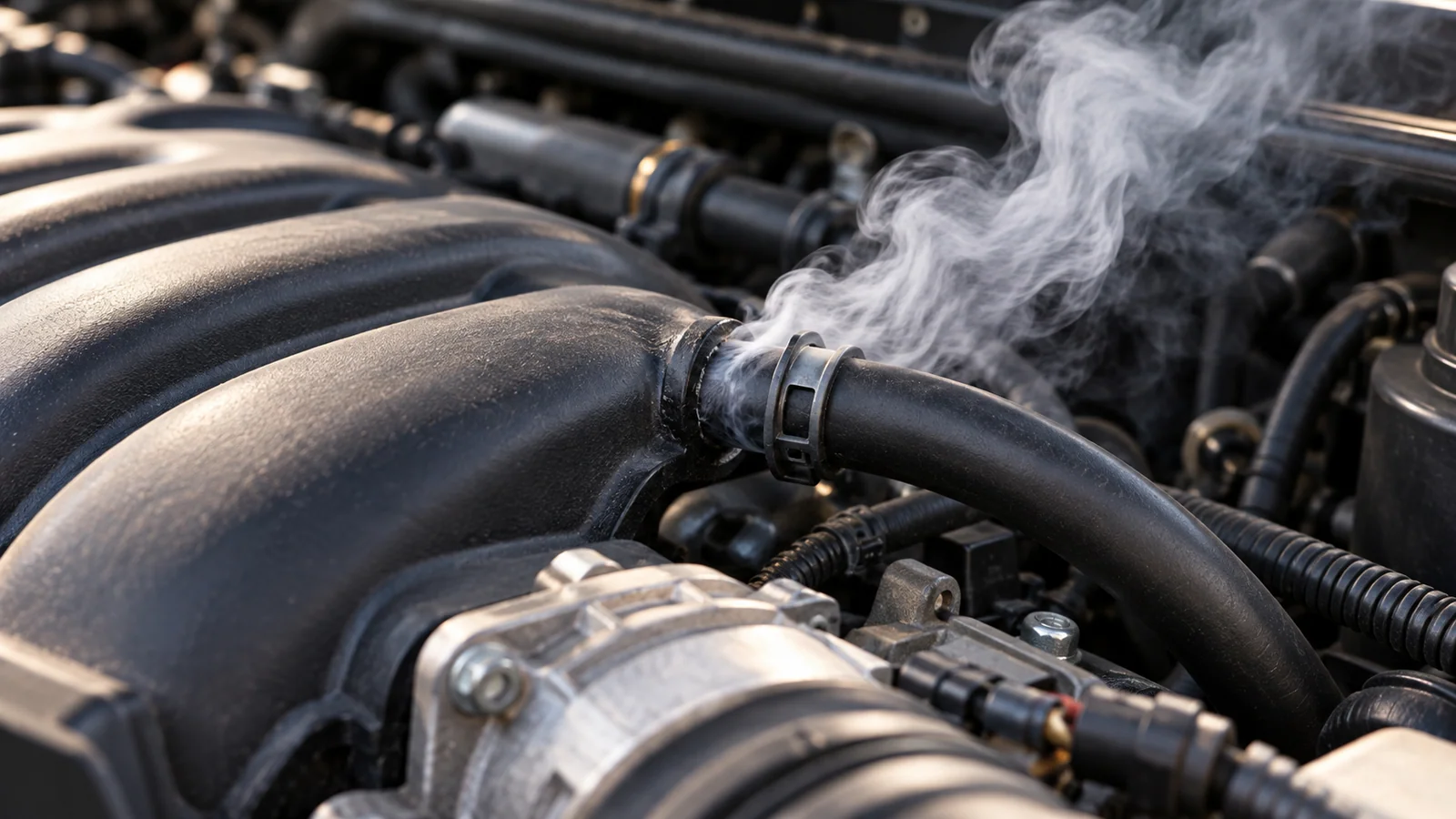
Start with an engine-off inspection for loose, split or disconnected intake and vacuum hoses. If the leak is not obvious, a suitable automotive smoke test can reveal the escape point. Scan data helps establish whether extra intake air explains the complaint, but a lean code or rough idle alone does not prove a vacuum leak.
Where should you look for a vacuum leak first?
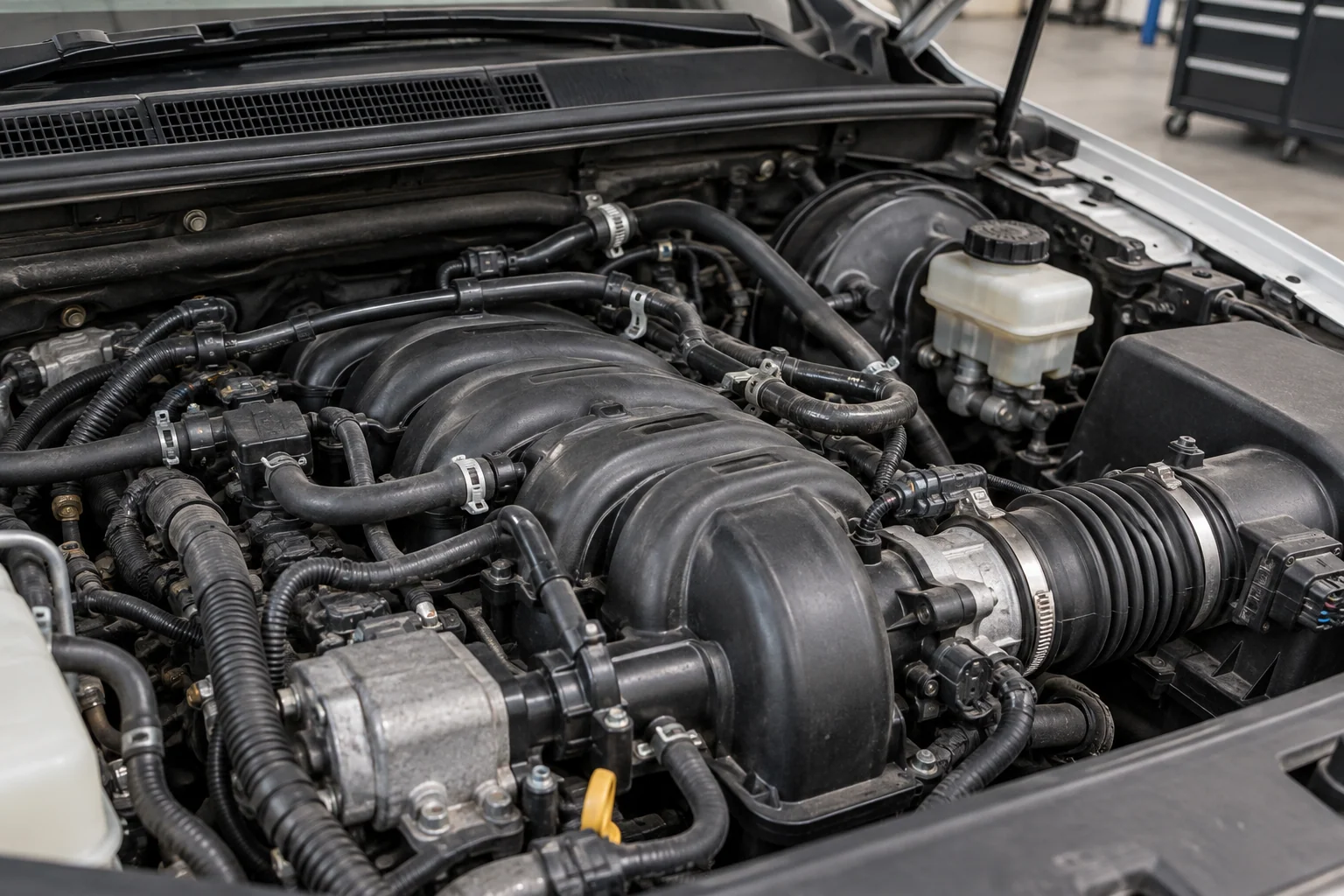
Check the intake duct and connections, vacuum hoses, PCV plumbing and accessible manifold joints. Inspect the brake-booster vacuum supply where fitted. Look for broken plastic fittings or a hose disturbed during recent work, with the engine off and safe to approach.
Use the vehicle's routing information. Vacuum-operated accessories and intake arrangements differ, and some hidden leaks will not be visible from above. Do not pull off unfamiliar hoses and leave them disconnected.
Can fuel trims or a vacuum gauge locate the leak?
Fuel trims show how the engine controller is adjusting fuel. Extra unmetered air can produce a lean-running pattern that is more noticeable at idle. A technician can compare readings under appropriate operating conditions, while checking other causes of lean operation.
A vacuum gauge or transducer provides supporting evidence, not a street address for a leak. Interpret readings with engine design, speed and test conditions in mind. Do not use one generic vacuum or trim number as proof that a manifold gasket has failed.
How does an automotive smoke test find the leak?
With the engine off, the technician connects approved leak-detection equipment at a suitable access point, closes the required openings and introduces controlled vapor. Escaping vapor can pinpoint a leaking connection, gasket or component.
Follow the vehicle and equipment instructions for pressure, isolation and test fluid. Redline's Smoke Pro manual warns against dyes, solvents and other contaminants in intake or exhaust systems and notes that not every system is designed to be completely sealed. A normal vent path must not be mistaken for a failed part.
Do not improvise with unregulated shop air, burning material or flammable cleaner sprayed around a running engine. If you lack the correct equipment and system information, have a shop perform the test.
What should happen after the leak is found?
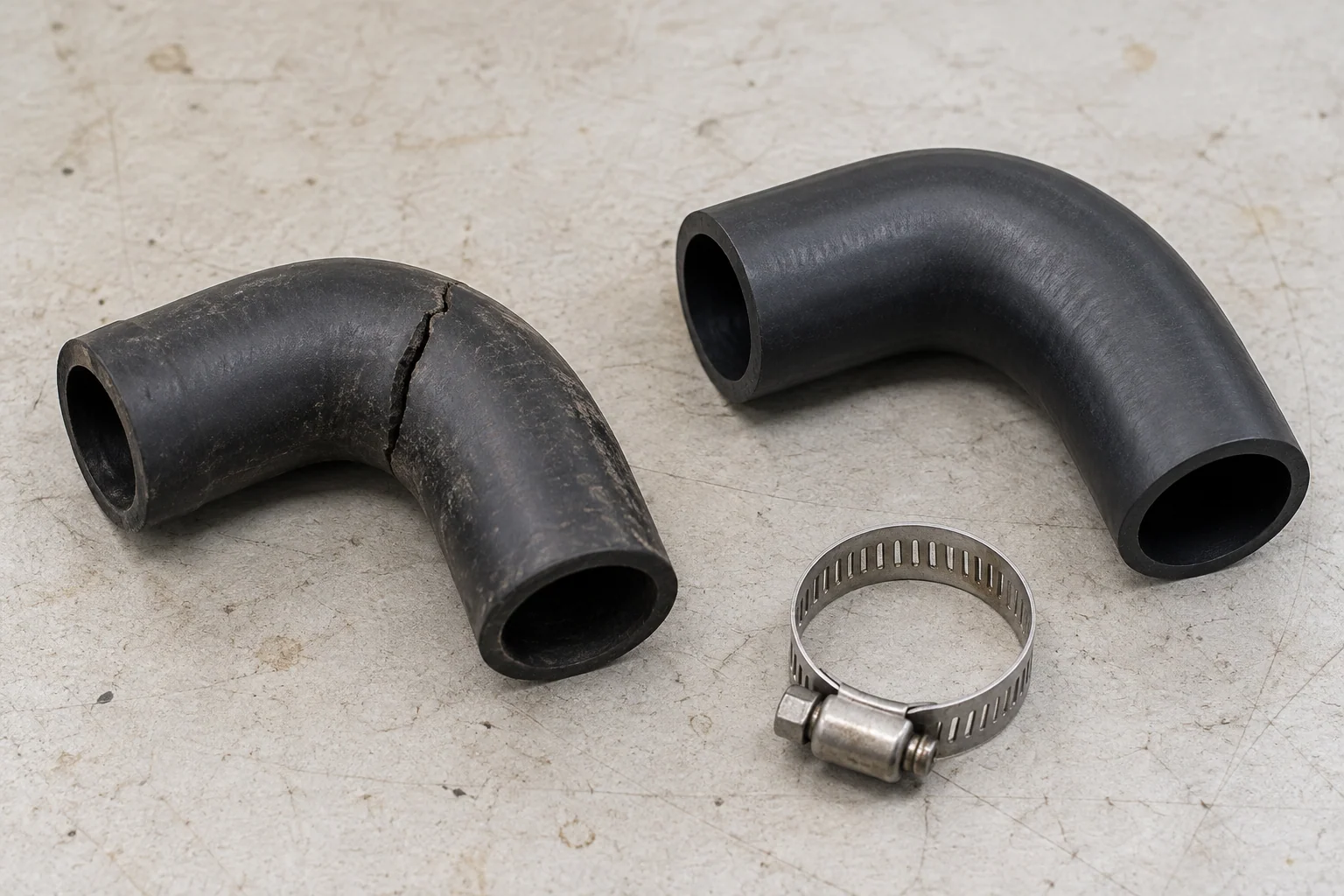
Replace a damaged hose with the correct material and routing, or repair the demonstrated gasket or component fault. A brake-booster-related leak needs checks that distinguish the hose and check valve from the booster itself.
Restore every connection used for testing, repeat the appropriate leak check and verify the original symptom and fuel-control data. If the engine still stalls, misfires or has abnormal brake assistance, continue diagnosis. Finding one leak does not establish that it was the only fault.
Sources & further reading
- MOTOR — Smoke Signals
- AA1Car / Larry Carley — Engine Vacuum Leaks
- MOTOR — Vacuum Gauge & Transducer Testing
- Redline Detection: Smoke Pro Total-Tech operating manual
Vehicle designs and maintenance requirements vary. Consult the owner’s manual for your exact vehicle and seek a qualified inspection for a specific fault.