Ignition and engine control
Rough Idle: Causes and Diagnostic Steps
Published:
Edited and fact-checked by: Jacob Bowen
General information; vehicle-specific diagnosis requires an inspection. How we prepare our guides · This page reserves space for ads. Advertising policy · Privacy choices

The quick answer
A rough idle needs diagnosis of the way the engine runs and the way vibration reaches the car. Uneven combustion, an intake-air leak or an idle-control problem can make the engine run poorly; a mount problem can transmit vibration even when engine speed stays steady. Start by noting the conditions and checking the data rather than replacing parts by symptom alone.
What should you notice before visiting the shop?
Does the shaking occur only on a cold start, after warming up, in Park, while stopped in Drive, or when the air conditioning engages? Note whether the tachometer fluctuates, the engine seems to skip, or the vibration is mainly felt through the seat or steering wheel.
A useful description might be: 'It is smooth in Park when warm, but shakes at a light with the A/C on.' That gives the technician a condition to reproduce. It does not identify the failed component.
How does your engine control idle speed?
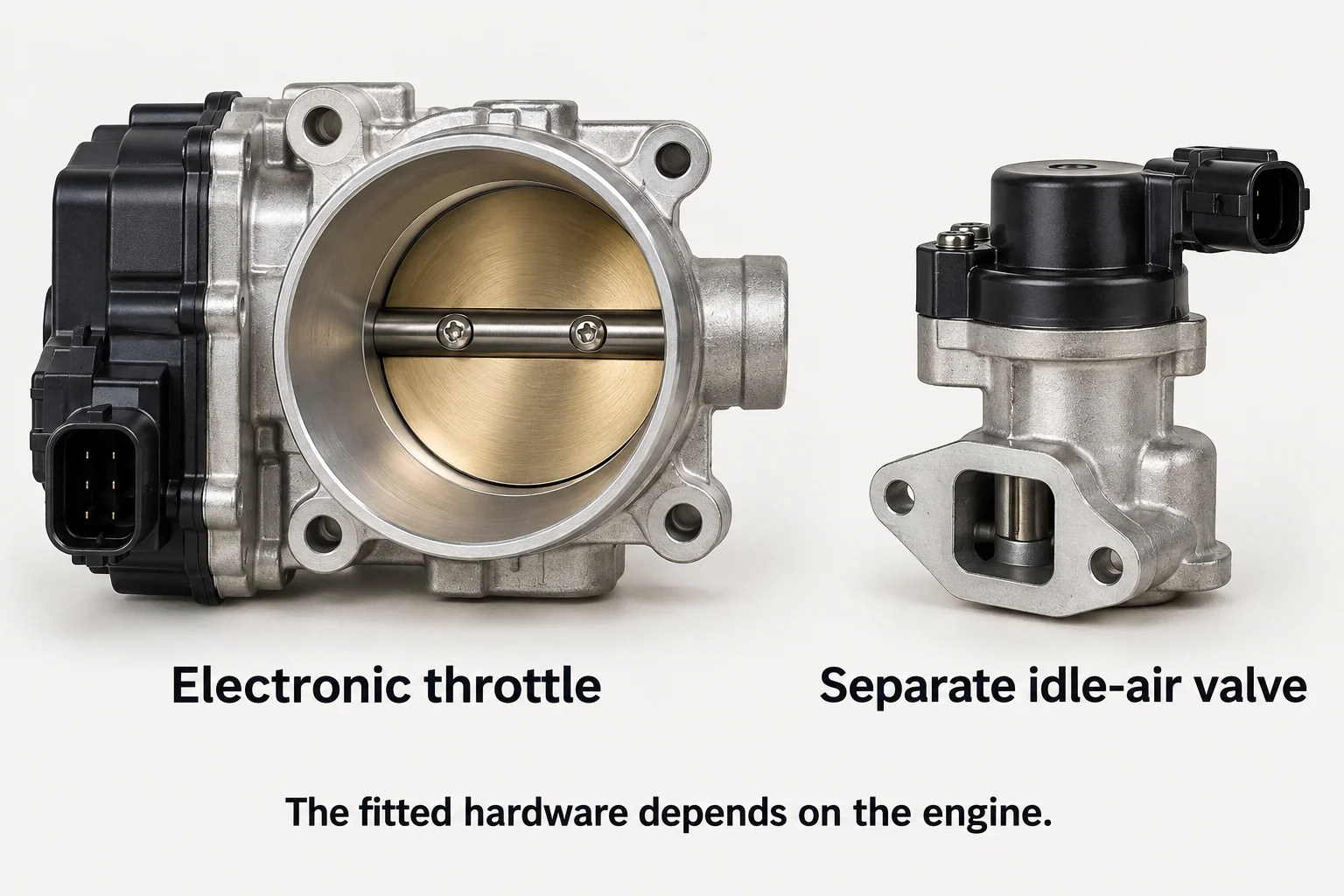
Some engines use a separate idle-air valve to bypass the closed throttle. Others regulate idle with the electronic throttle itself. A search result recommending an idle-air-control valve may therefore refer to hardware your vehicle does not have.
HELLA explains that idle control must respond to changing loads, including air conditioning and electrical consumers. A small change as a load engages is different from persistent stumbling or stalling. Compare the actual behavior with the exact engine's specified operation, not a universal idle RPM.
Which checks separate an air leak from a misfire?
Codes and misfire counters can help establish whether combustion is uneven and whether particular cylinders are involved. Fuel-trim data shows how the computer is correcting the mixture. These findings should guide the inspection rather than become a shopping list of sensors.
An intake leak can matter more at idle, when the unwanted air is a larger share of the engine's airflow. Comparing fuel correction under different operating conditions can support that possibility, but the leak still needs locating. Check relevant intake and PCV connections; do not assume every rough idle is a vacuum leak.
When should the idle valve or mounts be investigated?
On a vehicle with a separate idle actuator, sticking, contamination or an electrical fault can interfere with airflow. HELLA's test approach includes checking its supply, electrical condition and mechanical operation against manufacturer information. A dirty-looking part alone does not establish that it caused the complaint.
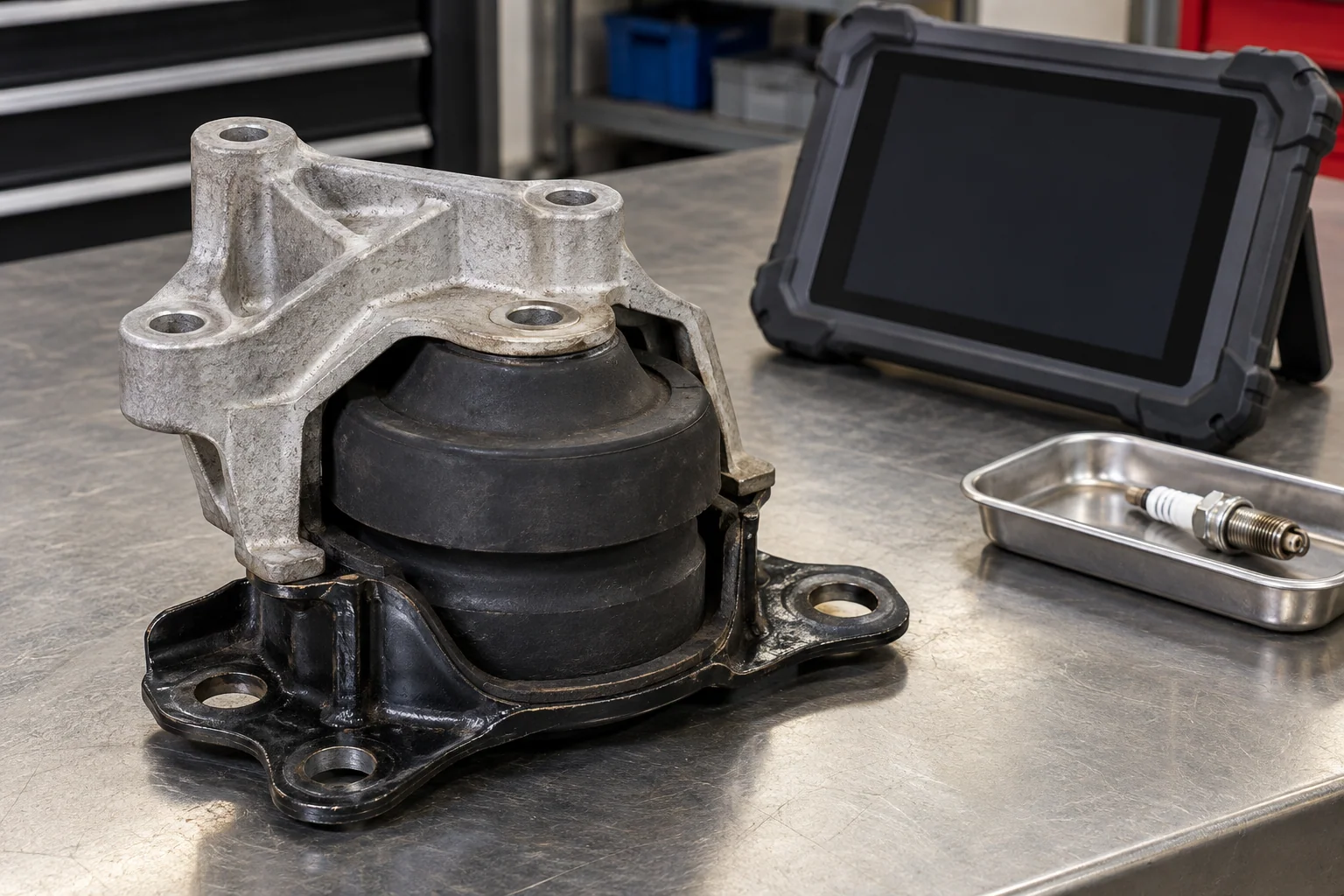
If engine operation is otherwise smooth, investigate how vibration is being transmitted, including the mounts. If combustion is uneven, resolve that fault rather than assuming new mounts will make it disappear. Ask the shop which observation separates those branches on your car.
Can you drive, and how should the repair be verified?
Arrange diagnosis for a new, persistent rough idle even if the car feels smoother at road speed. If it stalls, shakes severely or loses reliable power, stop safely and arrange assistance rather than trying to keep it running with the accelerator.
The final check should recreate the original condition: cold start, warm idle, gear selection or A/C load as appropriate. Ask whether the relevant engine data and the felt vibration both improved. A cleared code by itself does not establish a successful repair.
Sources & further reading
- Underhood Service — Understanding Idle Quality
- AA1Car / Larry Carley — Engine Vacuum Leaks
- HELLA — Idle speed controller & actuator - function & check
Vehicle designs and maintenance requirements vary. Consult the owner’s manual for your exact vehicle and seek a qualified inspection for a specific fault.