Engine
Serpentine Belt Replacement: Procedure, Costs and Common Mistakes
Published:
Edited and fact-checked by: Jacob Bowen
General information; vehicle-specific diagnosis requires an inspection. How we prepare our guides · This page reserves space for ads. Advertising policy · Privacy choices
The quick answer
RepairPal lists a general serpentine belt replacement estimate of $154–$212, updated September 3, 2026, before taxes, fees, and location differences. A proper repair also checks why the belt wore out. Pulley misalignment, a faulty tensioner, or fluid contamination can damage the replacement if the underlying problem remains.
When does a serpentine belt need replacing?
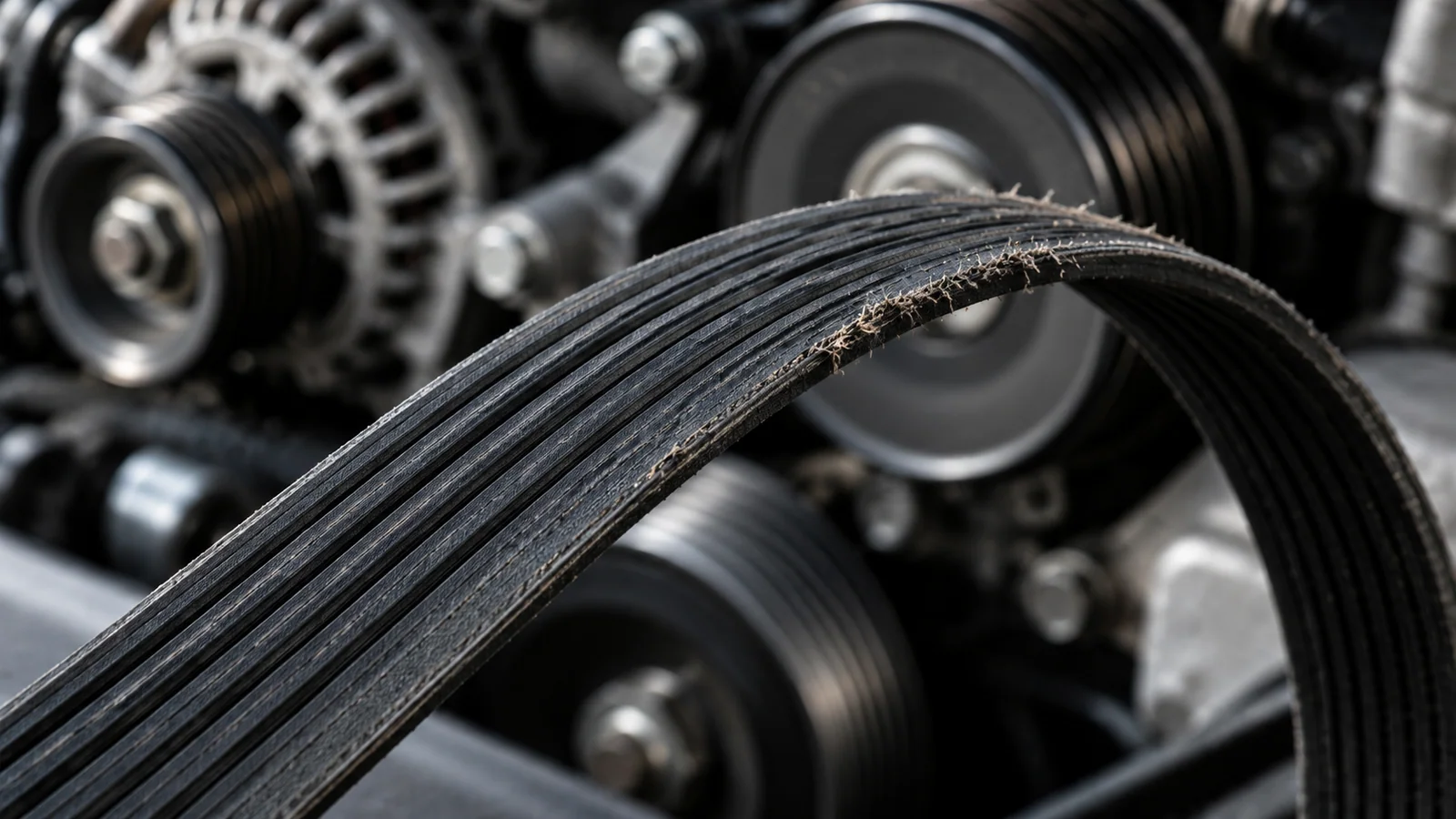
Fraying, missing rib material, significant wear, and oil contamination warrant attention. Follow the maintenance instructions for your vehicle rather than adopting a mileage number from a general article.
Modern EPDM belts can lose rib material without developing the obvious cracks associated with older belt compounds. Looking for cracks alone can miss a worn belt.
Is an alternator belt the same as a serpentine belt?
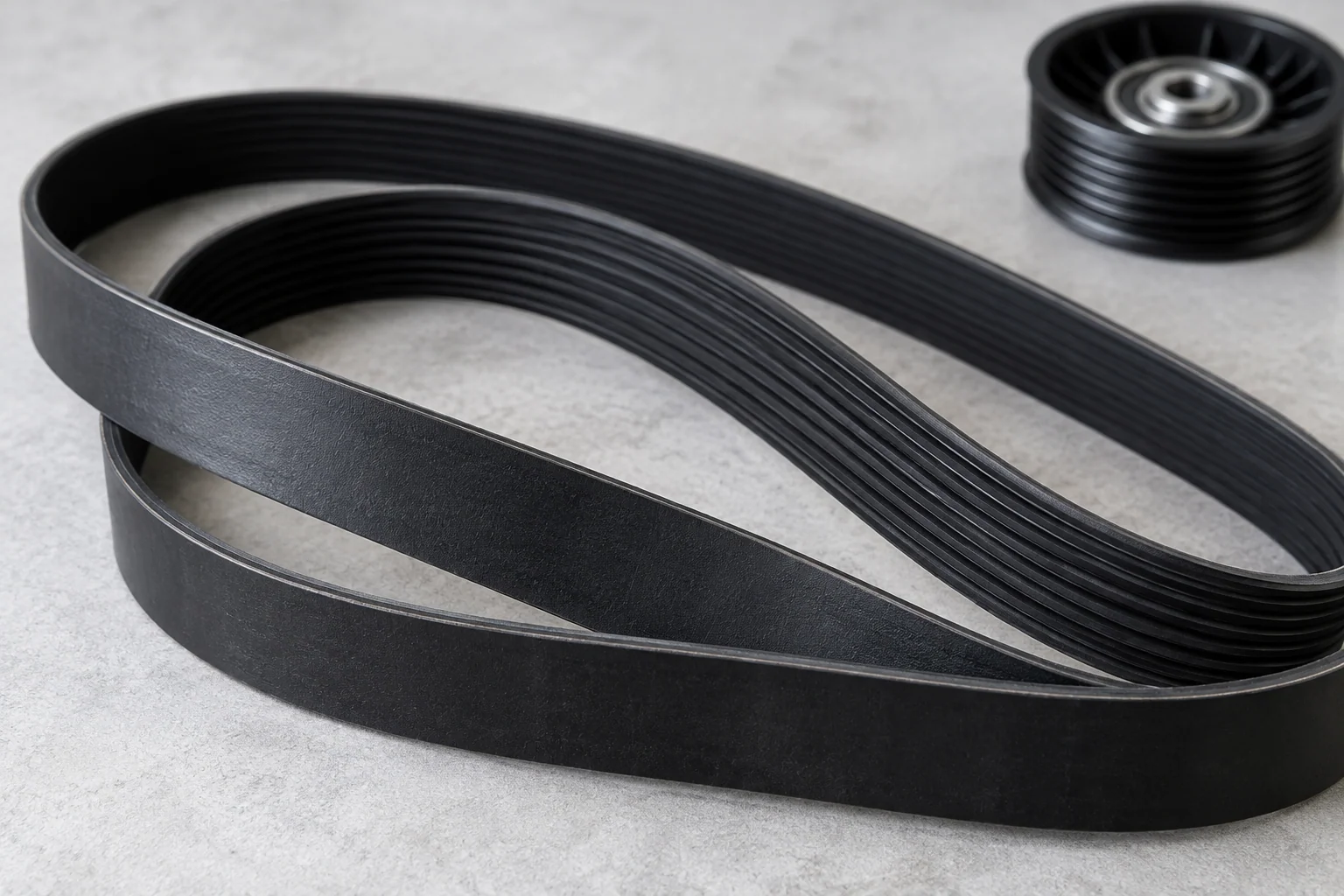
Sometimes the names refer to the same accessory-drive belt, but the arrangement depends on the engine. A belt may drive several accessories or serve a more limited role. Identify the actual belt before ordering parts or comparing quotes.
Its length, rib count, routing, and application must match the vehicle. Equipment differences, including air conditioning, can change the required part. The serpentine belt is also a different service item from an engine’s timing belt.
Will a new belt stop squealing?
It may, but noise can also come from incorrect tension, pulley alignment, or a worn pulley or accessory bearing. Describe whether the sound occurs at startup, during steering, or when an accessory switches on.
A useful inspection covers the drive system, not just the rubber belt. Ask the technician to explain any tensioner movement, pulley wear, or contamination found. Do not reach near a running belt to investigate a sound.
How should belt wear and the tensioner be checked?
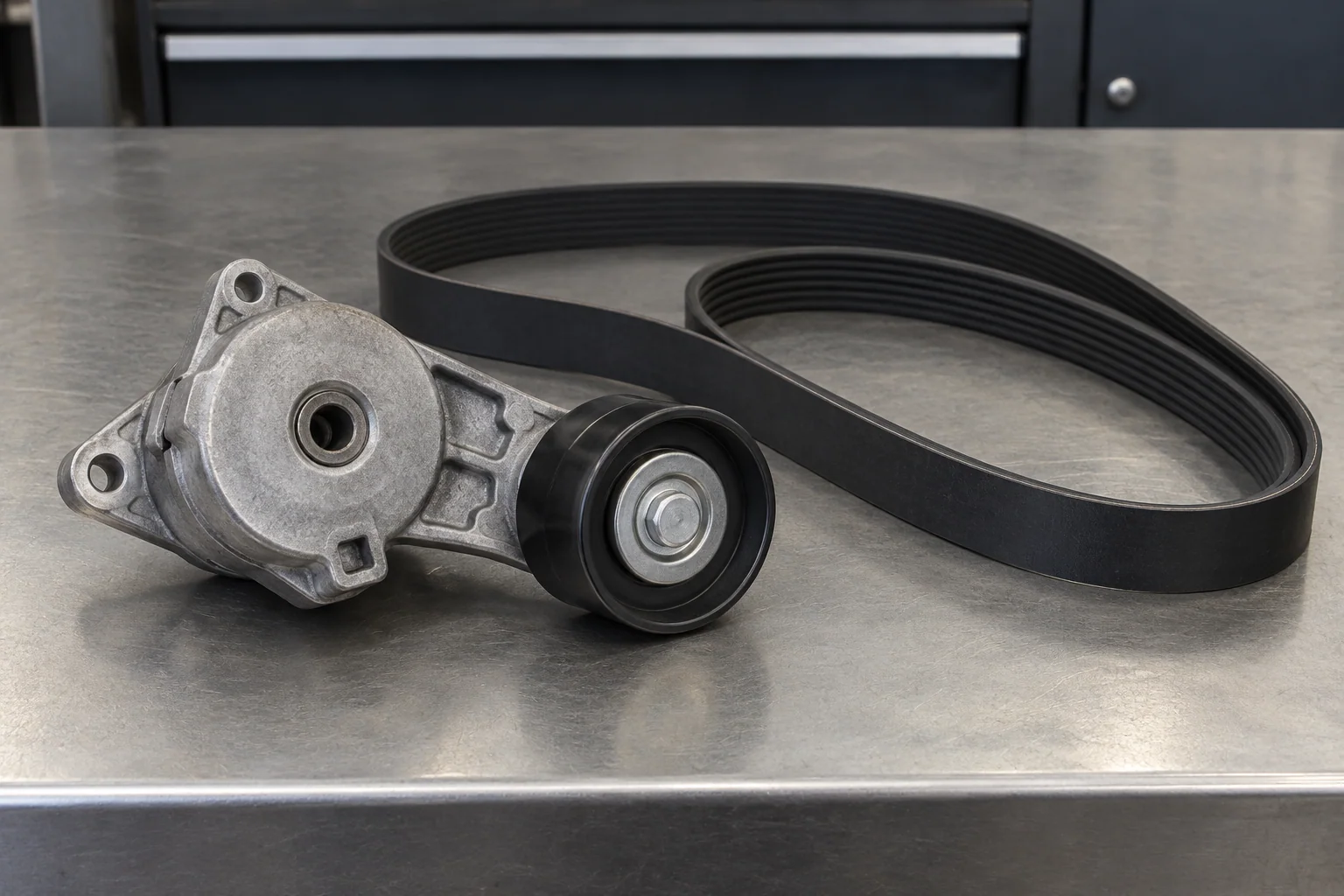
A suitable wear gauge can help assess rib material that is difficult to judge visually. The tensioner and pulleys should also be examined for their applicable operating limits and signs of trouble.
For example, a recently fitted belt that becomes noisy again calls for a renewed look at the drive system. Replacing that belt repeatedly without identifying the cause can leave the original fault in place.
What matters when fitting the replacement belt?
The technician follows the routing diagram for the exact engine, releases or adjusts tension using the specified method, and confirms that the belt is correctly seated. Limited access can make an apparently simple replacement more involved.
Stretch-fit belts require their own installation method and may need a dedicated tool; they should not be forced into place like a conventional tensioned belt. Any applicable one-use requirement must be followed.
Why might your belt replacement quote be higher?
RepairPal’s general estimate includes a belt and replacement labor, with a published breakdown of $65–$82 for parts and $89–$130 for labor. It does not establish the price of a tensioner, pulley, or other repair your vehicle may need.
Ask for separate line items for additional components and the findings supporting them. Include the vehicle’s year, engine, and equipment when requesting an estimate; a generic “car belt” price may cover a different job.
What should the shop check afterward?
Correct routing, seating, tracking, and operation need to be confirmed, along with the original complaint. A replacement that immediately squeals or runs off a pulley needs investigation.
If the old belt was contaminated, the leak also needs attention. If a bearing or alignment problem caused the damage, the repair should address that finding rather than relying on a fresh belt to tolerate it.
Can you drive with a broken serpentine belt?
Stop safely and arrange assistance. Depending on the design, belt failure can interrupt charging, hydraulic steering assistance, or the drive to the water pump. Not every engine uses the belt for the same components.
If you are considering a home replacement, obtain the exact routing and service procedure first. Leave the job to a qualified technician if it requires unfamiliar lifting, engine-support work, special tools, or a tensioning method you cannot verify.
Sources & further reading
- Underhood Service — Tech Tip: Diagnosing a Squealing Serpentine Belt
- AA1Car / Larry Carley — How To Inspect & Replace a Serpentine Belt
- Underhood Service — VIDEO: Inspecting The Serpentine Belt
- RepairPal — Serpentine Belt Replacement Cost Estimate
Vehicle designs and maintenance requirements vary. Consult the owner’s manual for your exact vehicle and seek a qualified inspection for a specific fault.