Engine
Serpentine Belt Symptoms: How to Test and Confirm the Fault
Published:
Edited and fact-checked by: Jacob Bowen
General information; vehicle-specific diagnosis requires an inspection. How we prepare our guides · This page reserves space for ads. Advertising policy · Privacy choices
The quick answer
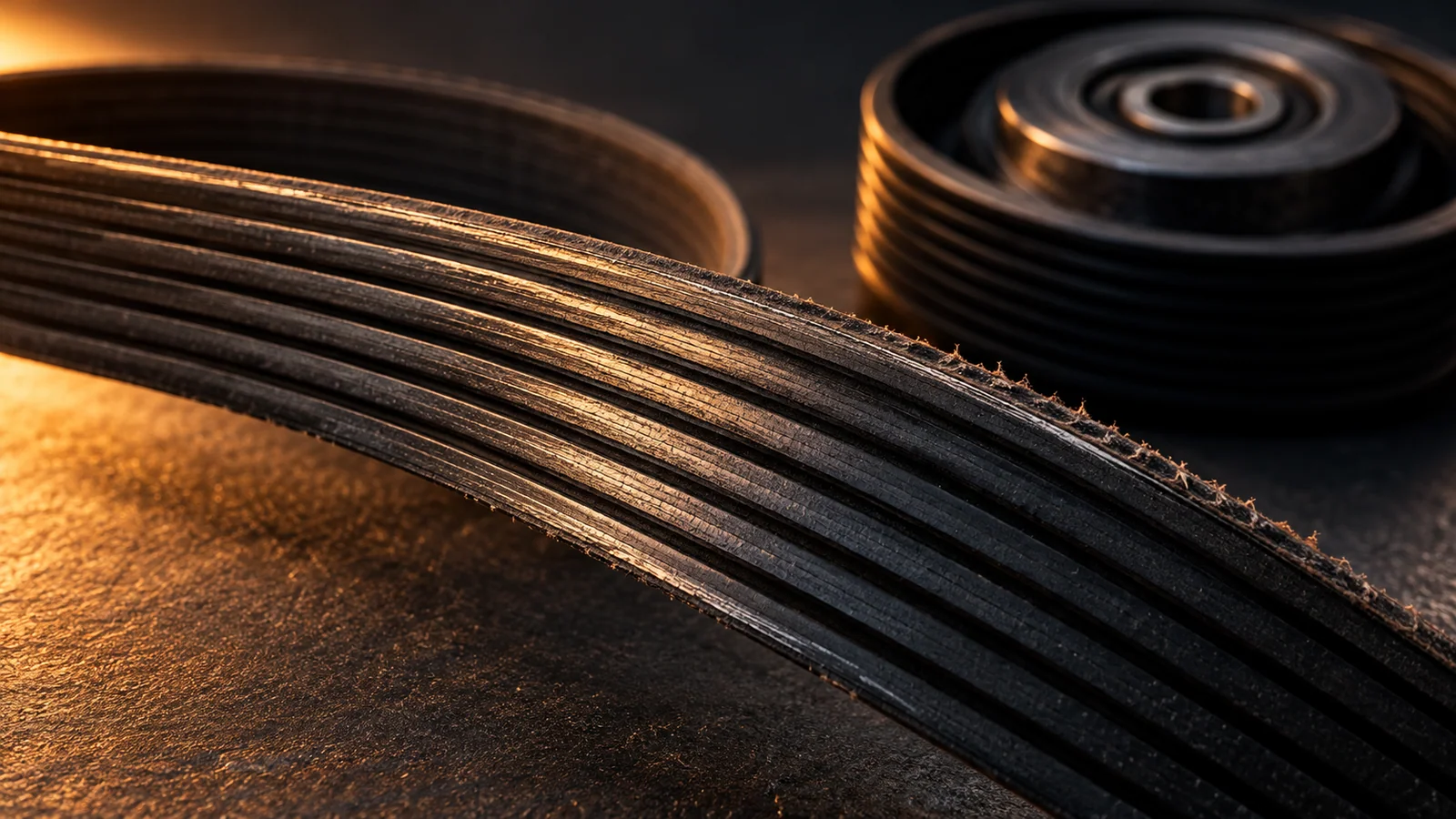
A squealing or chirping serpentine belt needs a check of the whole accessory drive, not just the rubber belt. Slippage, worn ribs, fluid contamination, poor pulley alignment, a faulty tensioner or an accessory bearing can cause similar noises. If a new belt still squeals, verify its fit and routing and investigate the remaining drive components before replacing it again.
Which belt is making the noise?
Terms such as fan belt, alternator belt and drive belt may refer to different arrangements. Identify the actual belt, driven accessories and routing for the engine. A Toyota Corolla, Camry or Ford Focus can have different layouts depending on model year and engine.
Some drives use an automatic tensioner, others a manual adjustment, and some use a stretch-fit belt. The correct belt and installation method depend on that design. Do not force an ordinary belt into a stretch-fit application or assume every noisy belt can be tightened.
What belt damage should you look for?
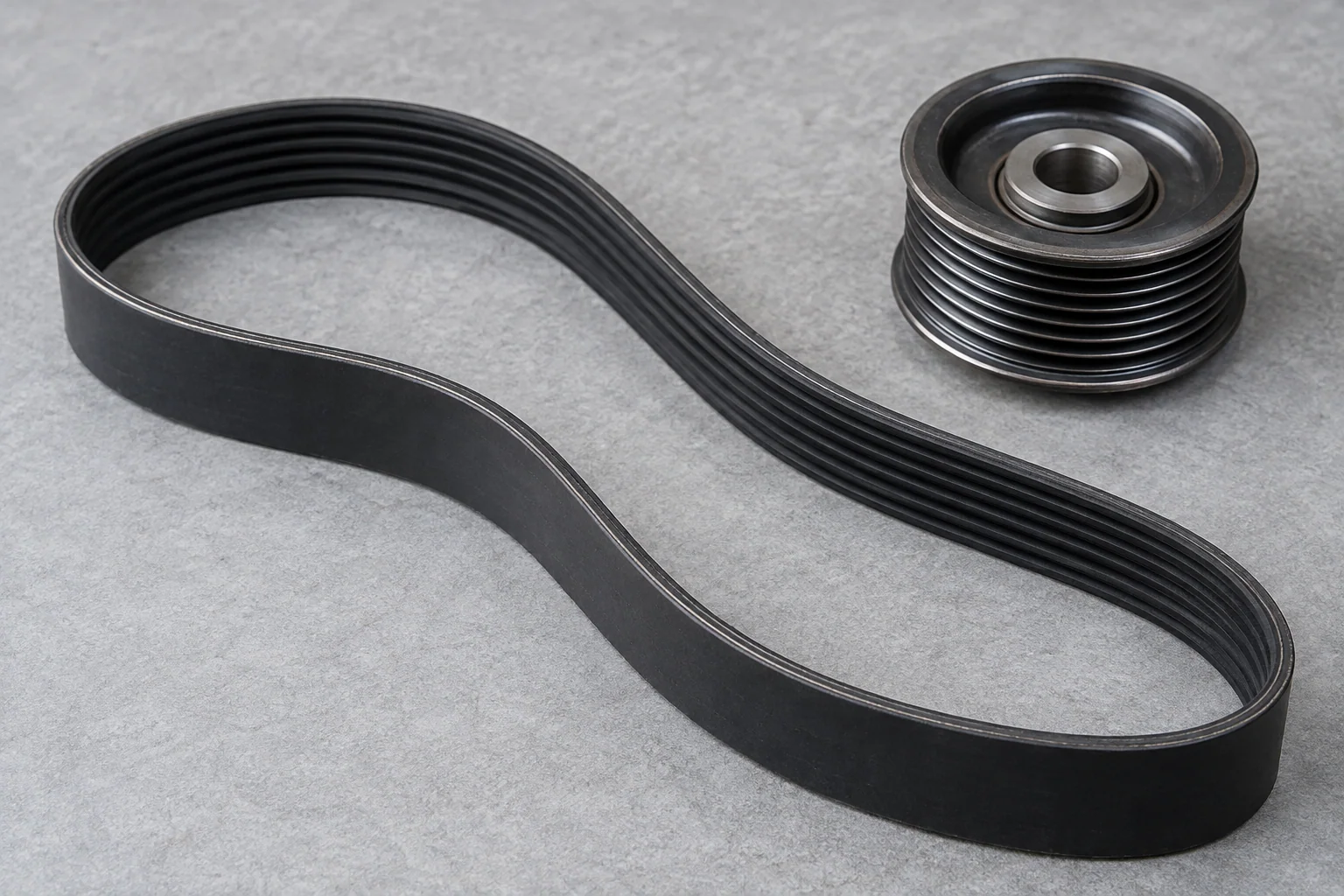
With the engine off and safe to approach, check accessible sections for fraying, missing ribs, exposed reinforcement and oil or grease contamination. Have significant damage inspected promptly rather than waiting for the belt to break.
Modern EPDM belts can lose rib material without the obvious cracking associated with older belts. The written inspection transcript from Underhood Service emphasizes measuring wear with the appropriate method. A crack-free belt is not proof that it still grips correctly.
If fluid has contaminated the belt, trace and correct the leak as well. Replacing the belt while leaving oil or coolant on the drive can leave the cause of slippage or deterioration untouched.
Why can a new belt squeal at startup or under load?
Check that the part, rib count and routing are correct and that the belt is seated properly. Then inspect pulley alignment, the tensioner, idlers and driven accessories. A worn or binding component can stress the replacement belt.
An automatic tensioner's movement and indicator position need interpretation against the drive's specifications. Excessive movement can warrant further checks, including an alternator decoupler where fitted; it is not a universal verdict that one part has failed.
Leave running-system observations to a technician using safe procedures. Keep hands, clothing and tools clear of the belt and pulleys. Do not spray lubricant onto the belt to disguise the noise.
What should the repair fix?
Replace a worn or damaged belt, correct the demonstrated alignment or tension fault, and replace other drive parts when inspection justifies it. Do not assume every pulley needs replacement solely because the belt is old.
Verify tracking and noise under the conditions that produced the complaint. The related belt-replacement guide covers installation. If the belt comes off or breaks, stop safely: the affected accessories depend on the vehicle and may include charging, hydraulic steering assistance or the water pump. An overheating or steering problem needs assistance, not continued driving.
How much does belt-only replacement cost?
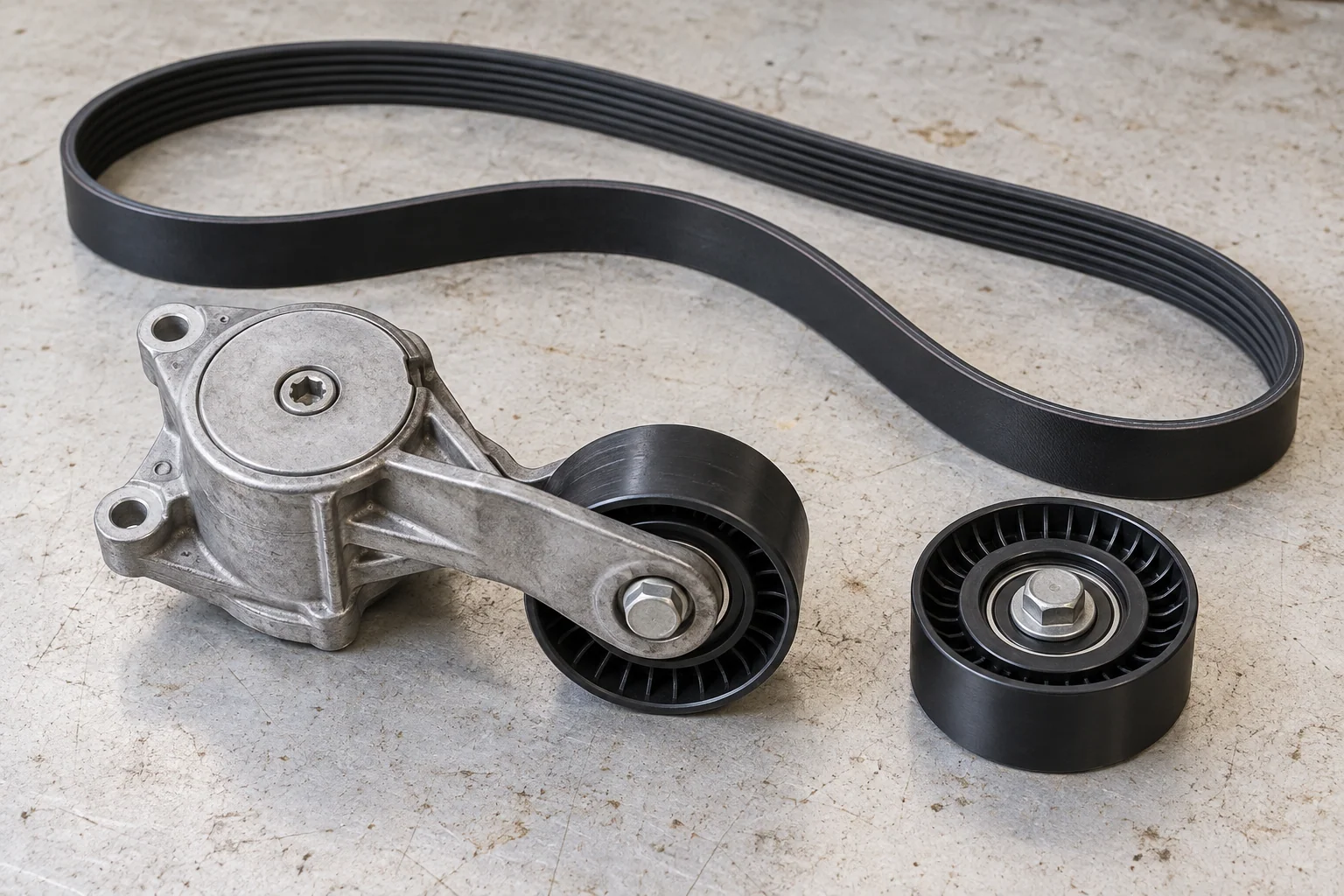
RepairPal's broad US estimate, updated September 3, 2026, is $154–$212: labor of $89–$130 and parts of $65–$82, excluding taxes, fees, location and related repairs.
That is belt replacement, not a price for every squeal. Ask whether the quote also includes a tensioner, pulley, accessory repair or leak correction, and compare the same confirmed work.
Sources & further reading
- Underhood Service — Tech Tip: Diagnosing a Squealing Serpentine Belt
- AA1Car / Larry Carley — How To Inspect & Replace a Serpentine Belt
- Underhood Service — VIDEO: Inspecting The Serpentine Belt
- RepairPal — Serpentine Belt Replacement Cost Estimate
Vehicle designs and maintenance requirements vary. Consult the owner’s manual for your exact vehicle and seek a qualified inspection for a specific fault.