Exhaust
Rotten Egg Smell From a Car: Causes and Diagnostic Steps
Published:
Edited and fact-checked by: Jacob Bowen
General information; vehicle-specific diagnosis requires an inspection. How we prepare our guides · This page reserves space for ads. Advertising policy · Privacy choices
The quick answer
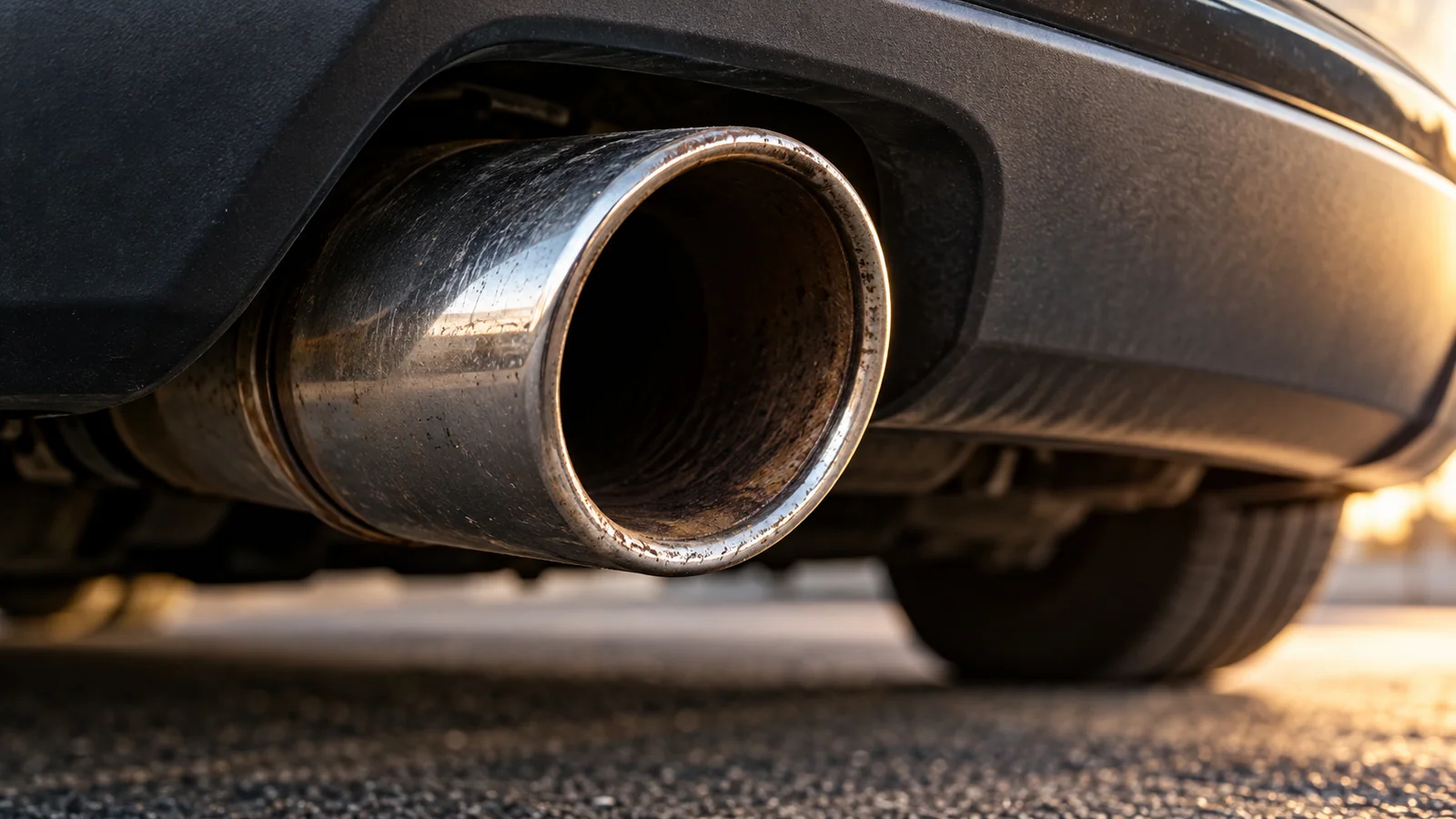
A rotten-egg smell can come from sulfur-related exhaust odor or a battery/charging problem, among other sources. It does not automatically mean the catalytic converter needs replacement. Stop safely if the odor is strong, enters the cabin or comes with smoke, poor running or battery distress, and arrange investigation before continuing.
What details help identify where the smell comes from?
Tell the shop whether you noticed it near the exhaust, under the hood, while the vehicle was charging or through the vents. Record when it began, any recent refueling and any warning lights or loss of performance. Do not lean over a battery or deliberately breathe exhaust to locate it.
An odor coming through the ventilation system may have originated elsewhere. An A/C deodorizer or cabin filter cannot correct a fuel, exhaust or battery fault. If fumes enter the cabin, stop using the vehicle and arrange assistance.
Can the exhaust smell like sulfur without a failed converter?
Yes. AA1Car explains that sulfur in gasoline can produce a sulfurous odor through reactions in the converter. Underhood Service's Mazda service discussion likewise describes a fuel-related exhaust odor for which replacing the converter would not solve the cause.
That service discussion does not establish that every Mazda or every sulfur smell is harmless. Ask the shop to match the actual vehicle and current service information, and investigate abnormal running or warning lights. Do not commit to a long drive simply to see whether the odor disappears.
What should be checked before approving a catalytic converter?
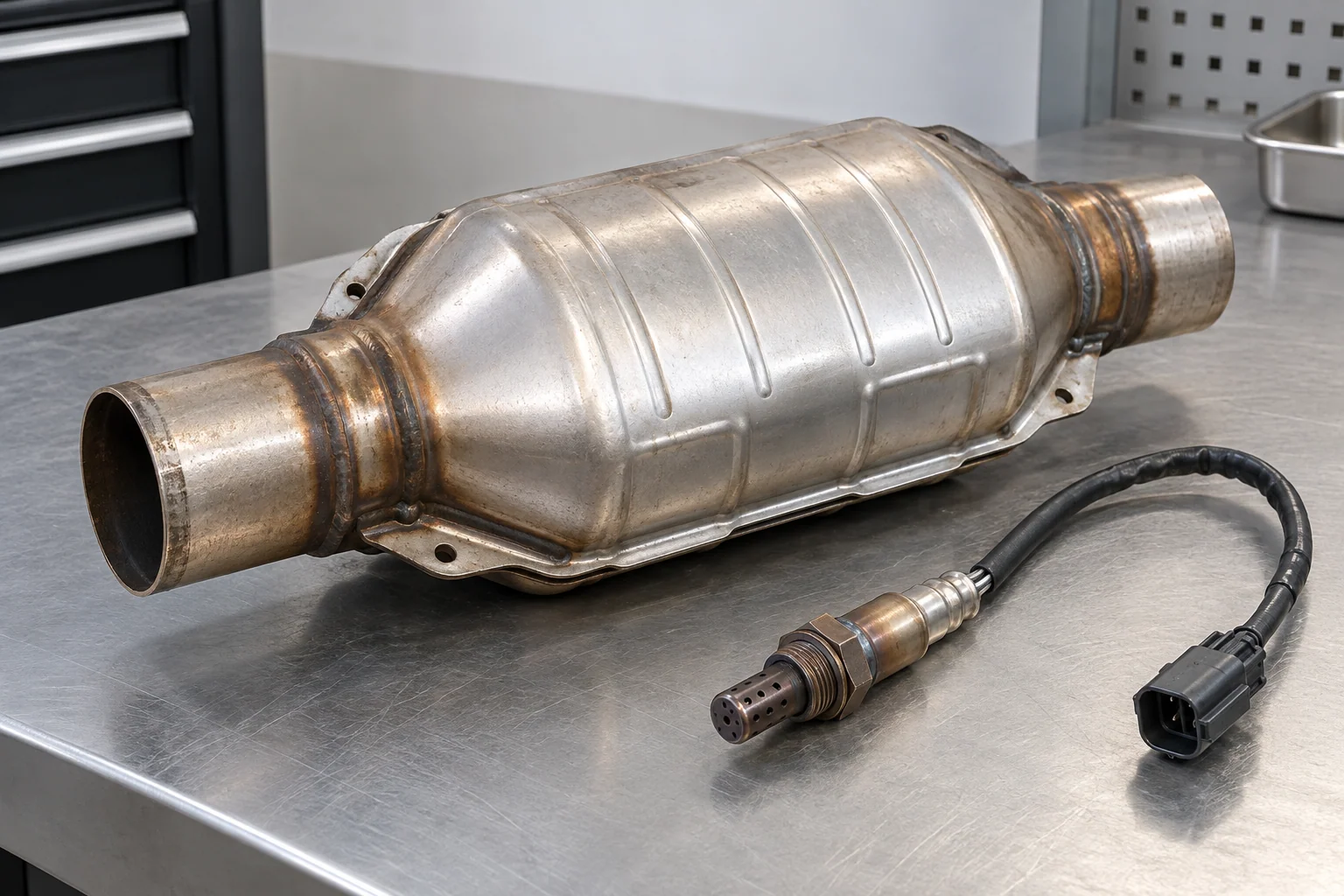
Walker recommends checking the engine's operation and exhaust sealing as part of converter diagnosis. Misfires, mixture problems and other faults can affect converter performance. Relevant history includes oil or coolant loss, recent repairs and fuel-economy changes.
Testing should follow the complaint and exact codes. The shop may need fuel-control data, sensor checks or other measurements to establish the cause. An odor alone does not prove that the converter is restricted, overheated or below its efficiency threshold.
If a converter is damaged, ask what caused it and how that cause will be corrected. Replacing it without addressing a contributing engine problem can leave the vehicle with another expensive failure.
What if the smell is near the battery?
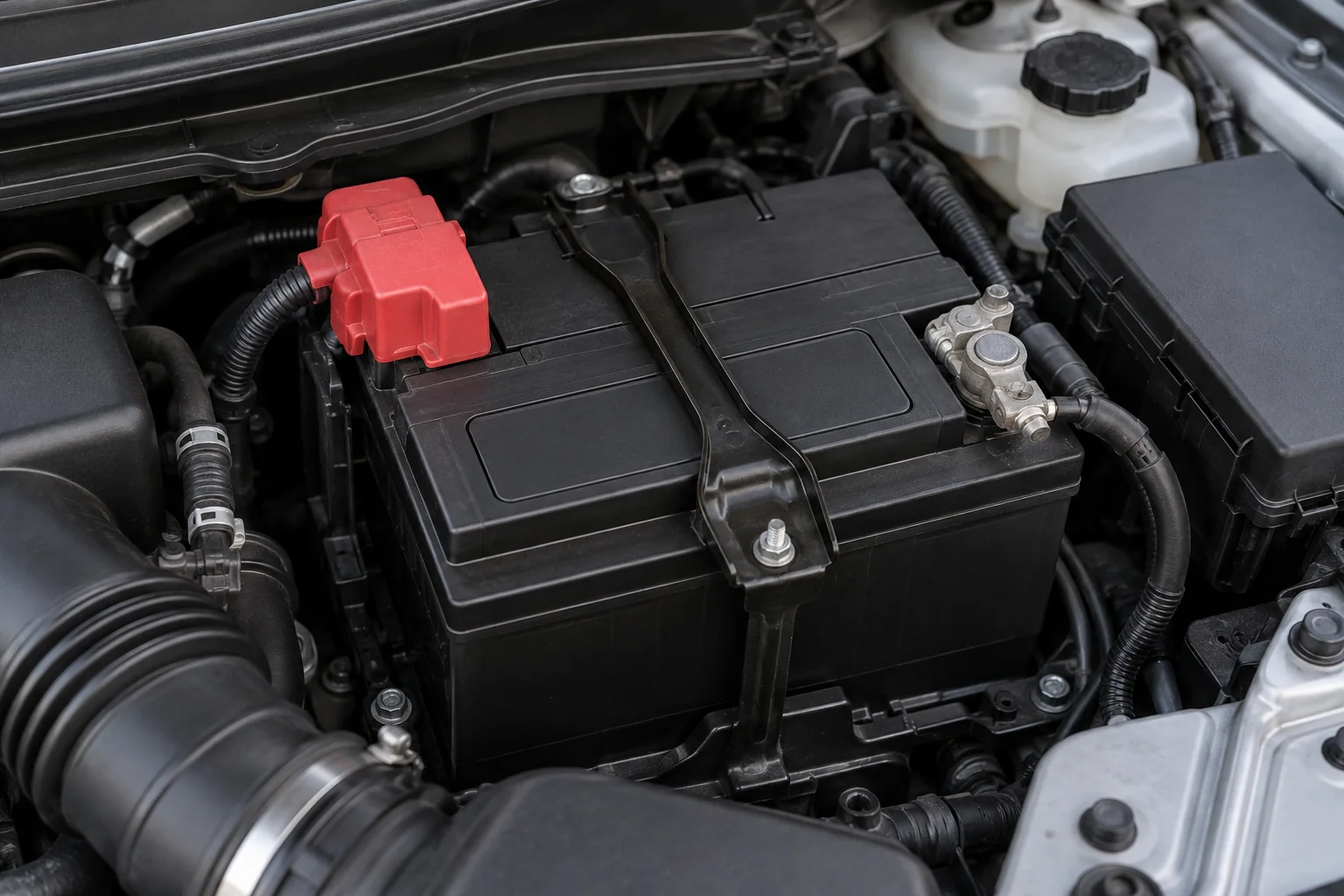
Interstate Batteries identifies rotten-egg odor during charging as a possible overcharging warning, alongside a hot or swollen battery. Keep ignition sources away and have the battery and charging system assessed. Do not try a jump-start or casual terminal-disconnection experiment on a distressed battery.
The confirmed cause determines whether the work involves the battery, charging control or another component. Do not assume a new battery alone resolves excessive charging.
What should you ask the repair shop to verify?
Request the identified source, relevant code or measurement and an explanation of the proposed repair. If the smell is actually raw gasoline, treat it as a separate possible fuel-leak problem rather than sulfur exhaust odor.
After the repair or a verified manufacturer-directed correction, have the original operating condition checked again. A temporary absence of odor does not by itself establish that an intermittent fault has been resolved.
Sources & further reading
- Underhood Service — Mazda Exhaust - Sulfur or Rotten Egg Smell/Odor
- AA1Car / Larry Carley — Troubleshoot Odors & Smells In Your car
- Walker Exhaust — Diagnosing Catalytic Converter Problems
- Interstate Batteries: overcharging warning signs and battery precautions
Vehicle designs and maintenance requirements vary. Consult the owner’s manual for your exact vehicle and seek a qualified inspection for a specific fault.