Exhaust
P0420: Causes, Diagnostic Tests and Repair Options
Published:
Edited and fact-checked by: Jacob Bowen
General information; vehicle-specific diagnosis requires an inspection. How we prepare our guides · This page reserves space for ads. Advertising policy · Privacy choices
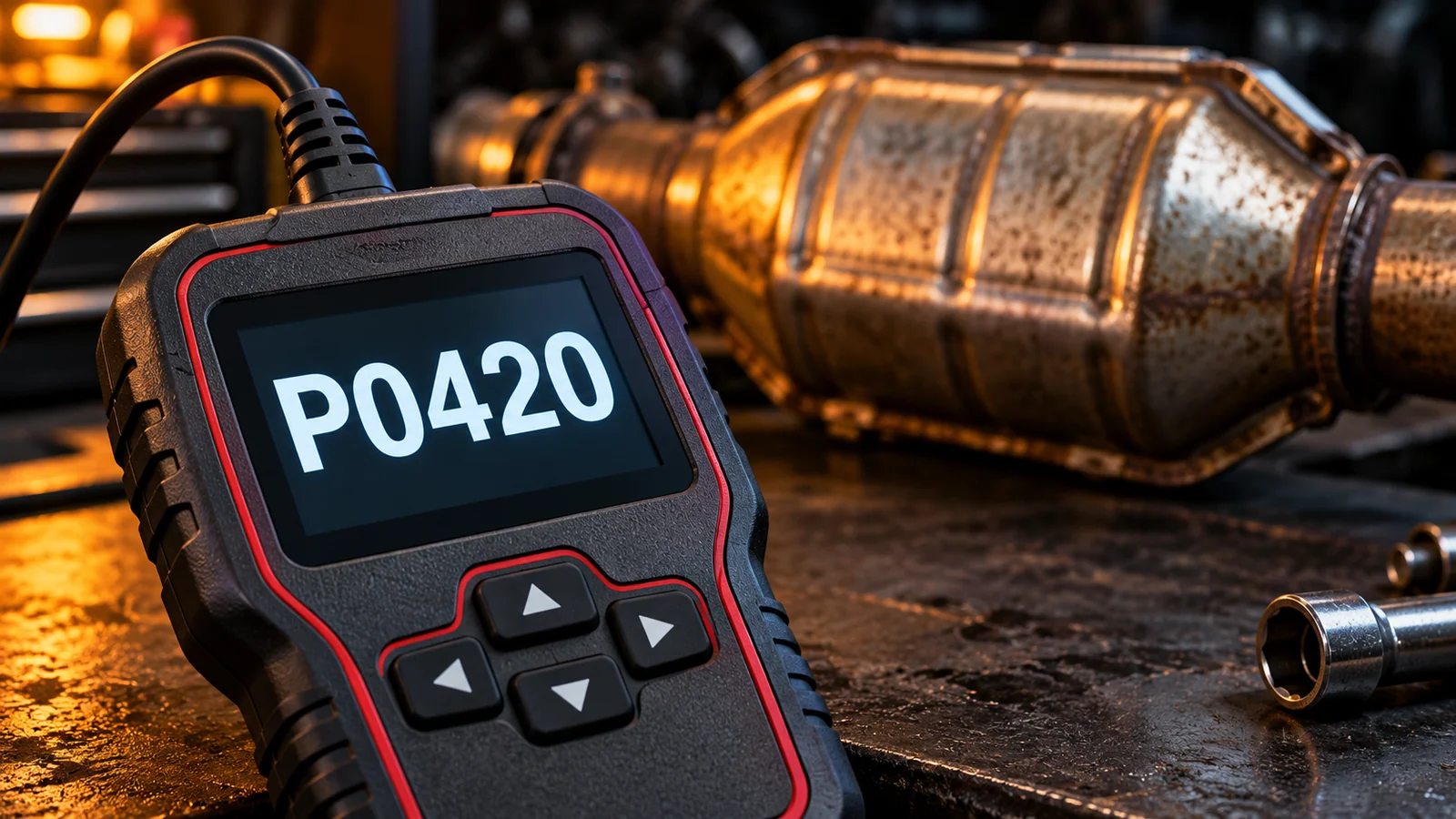
The quick answer
P0420 means the engine computer detected catalyst efficiency below its threshold on bank 1. It does not, by itself, prove that the catalytic converter or an oxygen sensor needs replacing. Start with the other fault codes, exhaust leaks and engine-running problems, then test the catalyst using the procedure for your vehicle.
What should you do when P0420 appears?
Save the scan report and note whether the engine runs normally, uses oil or coolant, or has recently had exhaust work. Those details help a technician separate a catalyst problem from a problem affecting its operation.
If the engine runs badly, loses power or develops an unusual hot smell, stop somewhere safe and seek assistance. A code reader cannot establish that the vehicle is safe to keep driving.
What does bank 1 mean on your car?
P0420 identifies bank 1; P0430 is the corresponding bank 2 efficiency code. Use the engine's service information to locate the affected bank and its sensors. Do not order a converter from a generic left-side or right-side assumption.
A P0420 search for a Honda, Toyota, Chevrolet or another make starts with the same broad definition. The applicable diagnostic procedure, sensor design and replacement part still depend on the exact engine and emissions configuration.
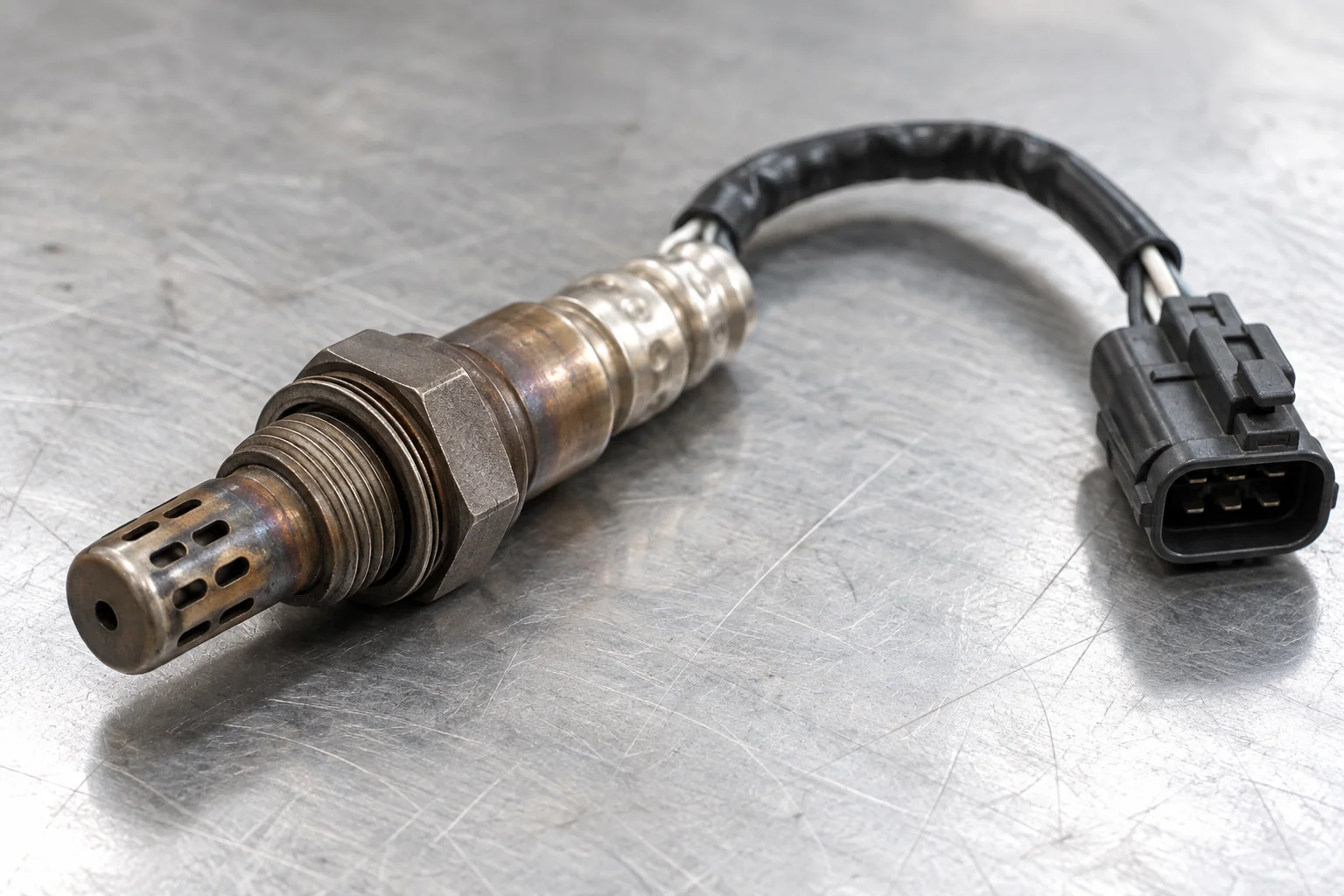
Can an exhaust leak or engine problem cause P0420?
Yes. Walker explains that leaks can interfere with oxygen-sensor readings. Misfires, incorrect fueling and contamination from oil or coolant can also affect catalyst operation or damage it. Address those faults before judging the converter.
An efficiency code also differs from proof of an exhaust blockage. Restricted flow needs its own supporting test; the code alone does not establish it.
What should a shop test before replacing parts?
Ask for a diagnosis that includes the other stored codes, an exhaust-leak inspection and checks of fuel control and oxygen-sensor operation. Applicable manufacturer bulletins or software updates may change the diagnostic path.
Sensor results must be interpreted for the sensor type and test conditions. A generic voltage rule copied from a conventional oxygen-sensor example is not a universal test for every air-fuel sensor. Ask which result supports the proposed repair.
When is catalytic converter replacement justified?
Replacement makes sense when testing confirms a failed converter and any condition that damaged it has been addressed. Replacing a sensor simply because its signal appears in the diagnostic process is not the same as proving that sensor failed.
The replacement must match the vehicle and applicable emissions requirements. Have the shop verify the correct application before ordering.
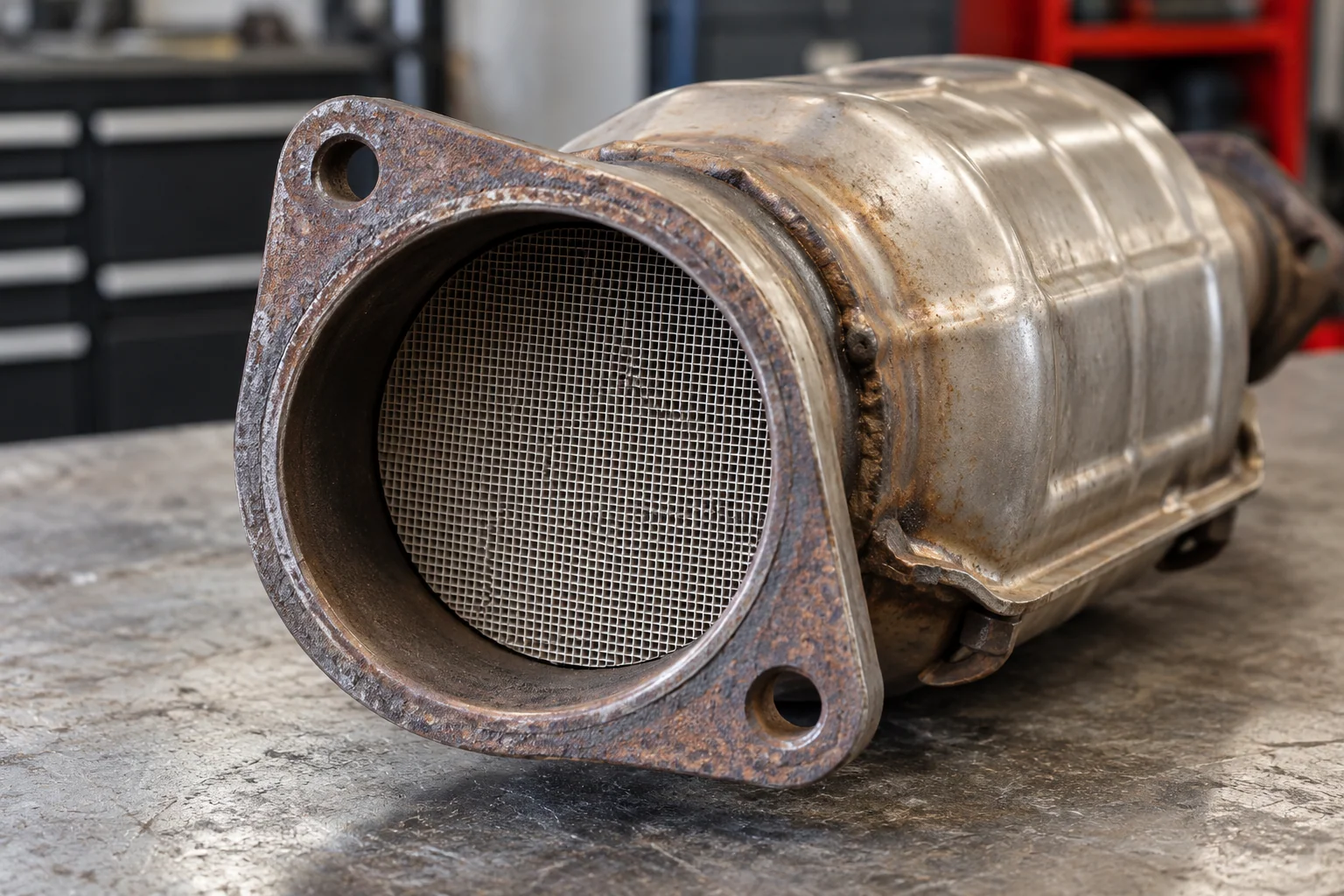
How much does fixing P0420 cost?
There is no single P0420 repair price. Repairing a leak, correcting an engine fault and replacing a converter involve different work. Get an itemized estimate after diagnosis, with testing, parts and labor identified separately.
How do you know the repair worked?
Ask how the shop will repeat the failed test and confirm the vehicle's catalyst check has completed. Erasing the code alone does not demonstrate that the underlying problem is fixed.
Should you try a cleaner before diagnosis?
The technical guidance calls for testing the engine, exhaust and sensors. It does not establish a bottle additive as a reliable cure for P0420. Get the cause identified before spending money on a treatment or replacement parts.
Sources & further reading
- HELLA — OBD-II powertrain DTC definitions (English)
- Walker Exhaust — Diagnosing Catalytic Converter Problems
- Walker Exhaust — Do I Need to Replace My Catalytic Converter?
Vehicle designs and maintenance requirements vary. Consult the owner’s manual for your exact vehicle and seek a qualified inspection for a specific fault.