Ignition and engine control
Engine Vacuum Leaks: Causes and Diagnostic Steps
Published:
Edited and fact-checked by: Jacob Bowen
General information; vehicle-specific diagnosis requires an inspection. How we prepare our guides · This page reserves space for ads. Advertising policy · Privacy choices
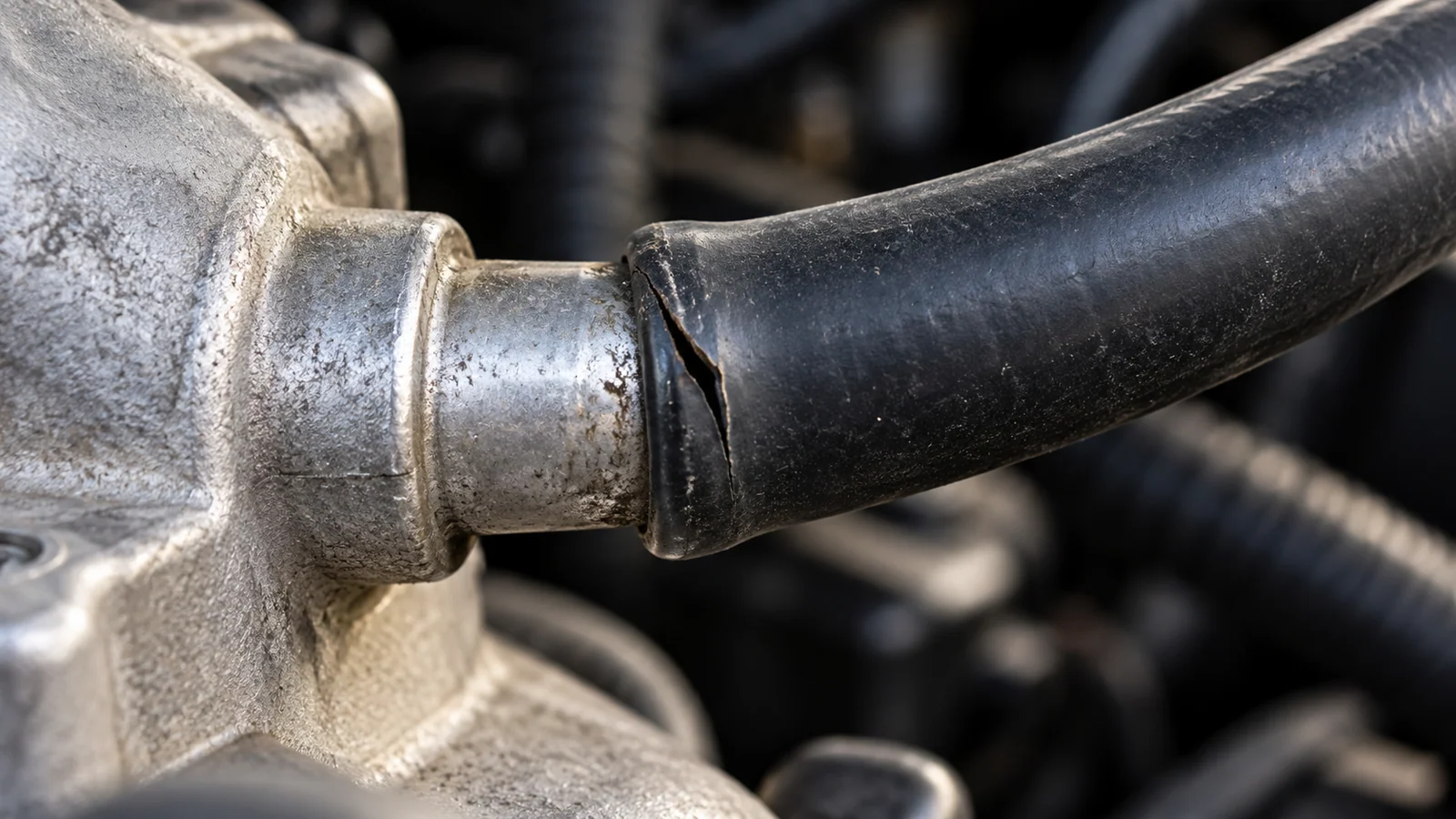
The quick answer
An engine vacuum leak lets unintended air enter the intake or a connected vacuum circuit. It can cause rough idle, hesitation, stalling or lean-condition codes, but those symptoms also have other causes. Start with a visual inspection, then use the appropriate leak and operating-data tests to identify the actual fault before replacing a manifold or sensor.
Where can an engine vacuum leak occur?
Possible paths include cracked or disconnected hoses, intake ducts, manifold or throttle-body seals, and relevant PCV connections. The layout and test points depend on the engine.
Tell the shop whether the engine is gasoline or diesel and identify any modifications. A gasoline intake-manifold test or reference reading is not automatically appropriate for every engine or separate vacuum-operated accessory.
Do a hiss, a lean code or low vacuum prove there is a leak?
No. Low manifold vacuum can also reflect mechanical, ignition or fueling problems. Engine condition and the test setup matter.
Inspect accessible hoses and ducts with the engine off, and record the complete fault report. A vacuum leak may have a greater effect at idle, so the symptom pattern and operating data can help direct testing. Neither the sound nor a lean code identifies a particular failed gasket.
What does an intake smoke test show?
With an appropriate setup, controlled smoke can reveal an external leak point. The technician must use equipment, connections and pressure suited to the system being tested. An open connection created by the setup is not automatically a vehicle fault.
Avoid spraying flammable cleaners around a running engine to chase an idle change. A suitable smoke test offers a way to look for the leak without that spray method. Do not copy a machine's maximum pressure as the safe test pressure for your vehicle.
How should a confirmed vacuum leak be repaired?
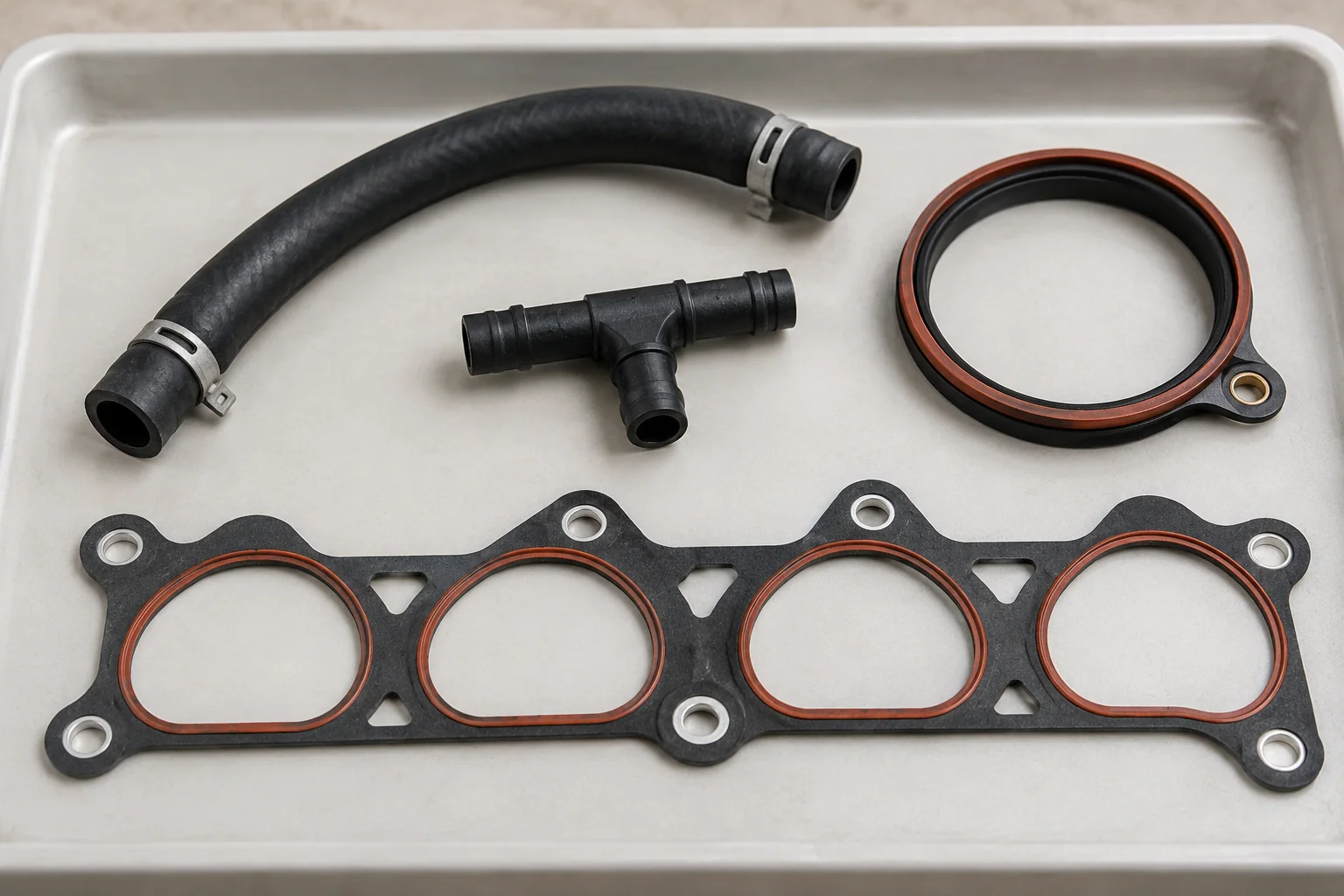
Repair the identified hose, duct, fitting or sealing fault using the correct materials and procedure. A replacement hose needs the right fit and service suitability; shortening a damaged hose can create strain or rubbing.
Ask what supports manifold removal or component replacement. A temporary patch used during diagnosis does not establish a durable repair, and replacing a sensor will not close a demonstrated air leak.
How do you know the repair worked?
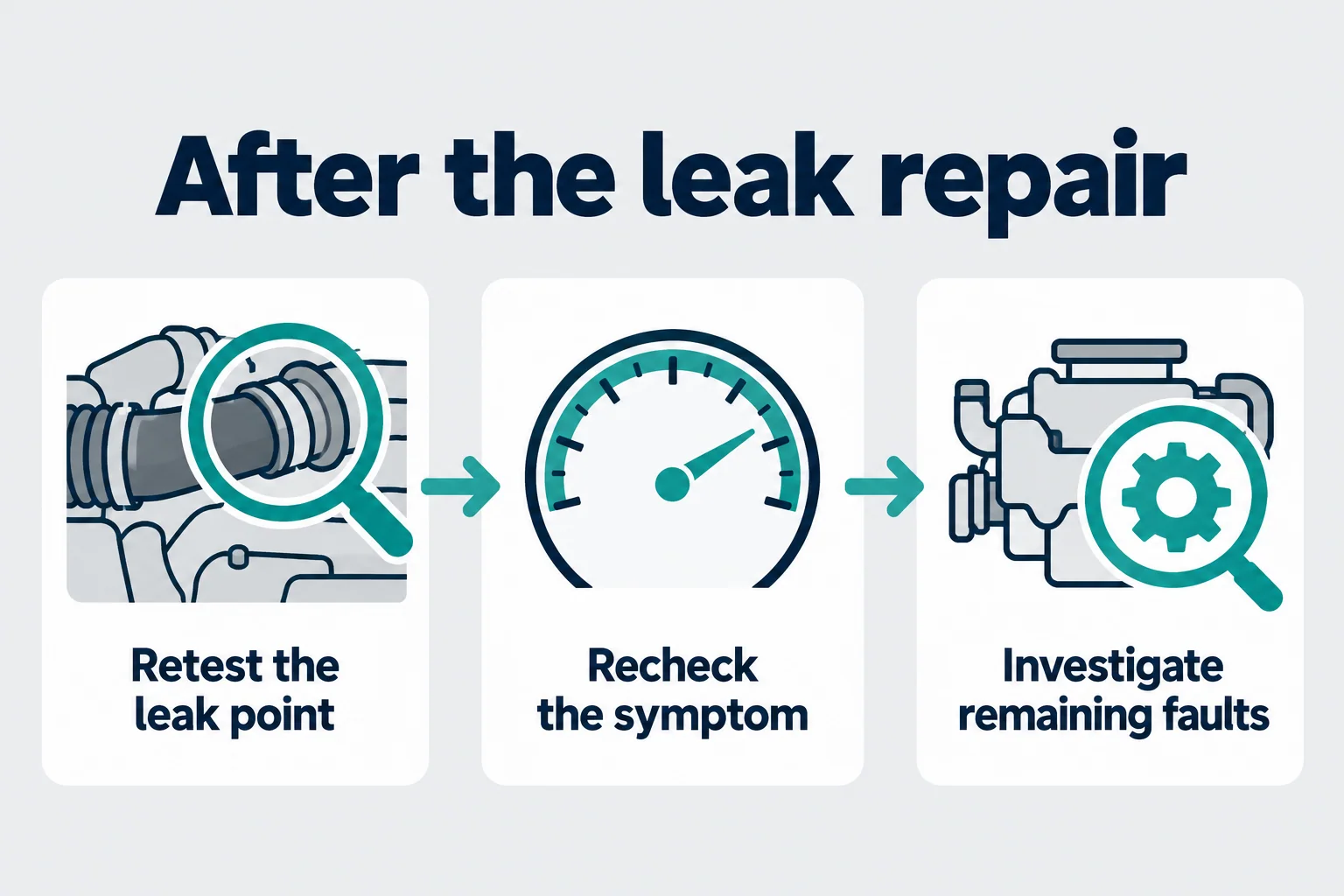
Retest the leak point and reassess the original idle or running complaint. If symptoms or relevant codes remain, investigate the unresolved branch rather than assuming every issue came from the first leak found.
Request a price for the confirmed work. Replacing a hose and resealing a hard-to-access manifold involve different parts and access labor.
Sources & further reading
- AA1Car / Larry Carley — Engine Vacuum Leaks
- MOTOR — Vacuum Gauge & Transducer Testing
- MOTOR — Smoke Signals
- AutoLine Pro — Intake and vacuum leak diagnosis
Vehicle designs and maintenance requirements vary. Consult the owner’s manual for your exact vehicle and seek a qualified inspection for a specific fault.