Ignition and engine control
Reduced Engine Power: Symptoms, Diagnosis and Repair Options
Published:
Edited and fact-checked by: Jacob Bowen
General information; vehicle-specific diagnosis requires an inspection. How we prepare our guides · This page reserves space for ads. Advertising policy · Privacy choices
The quick answer
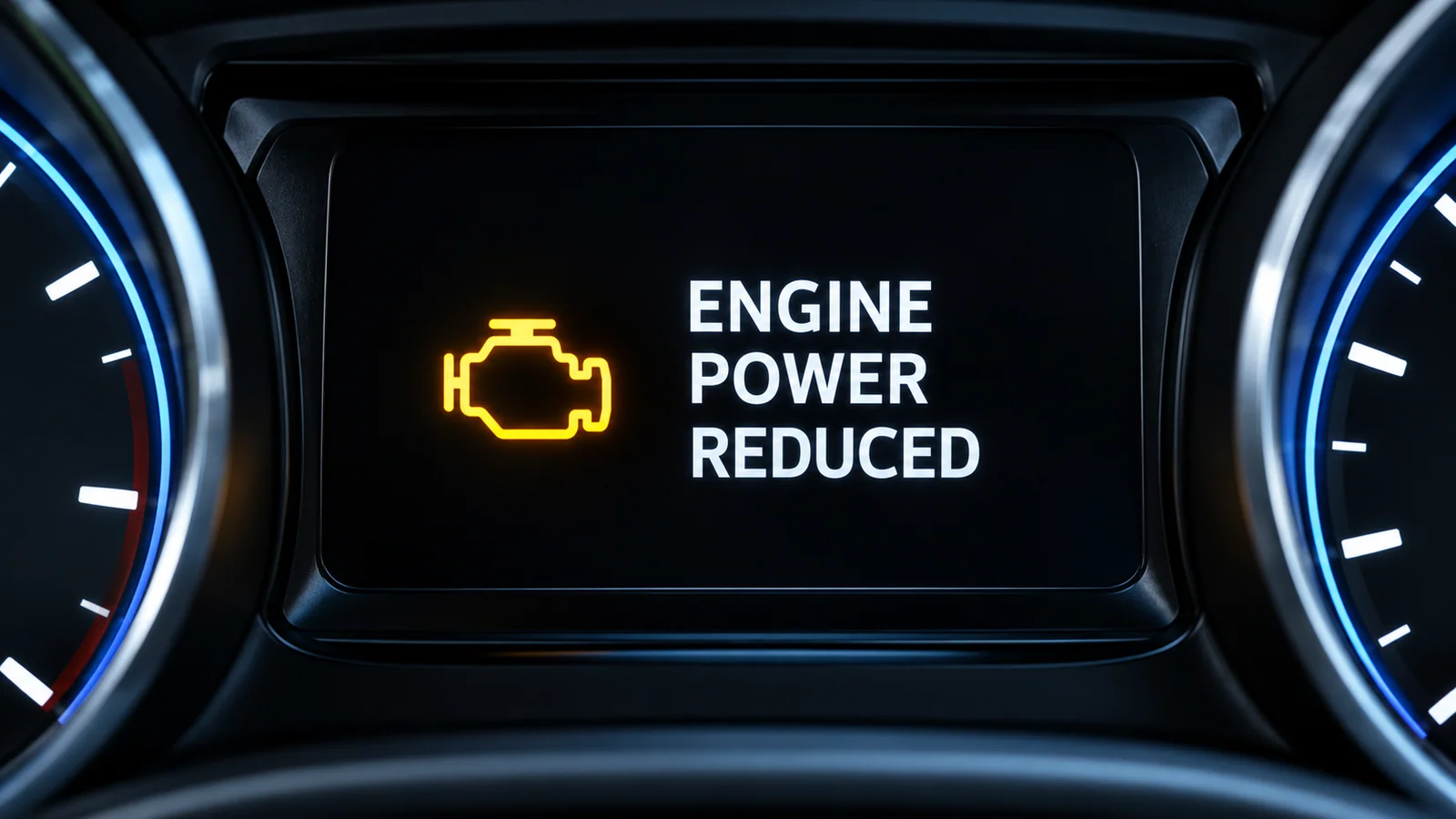
A reduced-engine-power message means the vehicle has limited available performance. It describes the vehicle's response, not the failed part. Record the exact warning and arrange diagnosis. If you cannot accelerate safely with traffic, the engine runs severely rough, or an overheating or oil-pressure warning appears, pull over safely and seek assistance. Follow the instructions for the warnings in your owner's manual.
What should you do when the message appears?
Avoid situations that depend on full acceleration, such as passing or entering fast traffic. Tell the shop whether the warning appeared at startup, during acceleration, after warming up or following recent work.
If restarting temporarily restores power, that does not establish that the fault is fixed. Save a photo of the message when safely parked and have stored diagnostic information checked before codes are cleared.
Does reduced power mean the throttle body has failed?
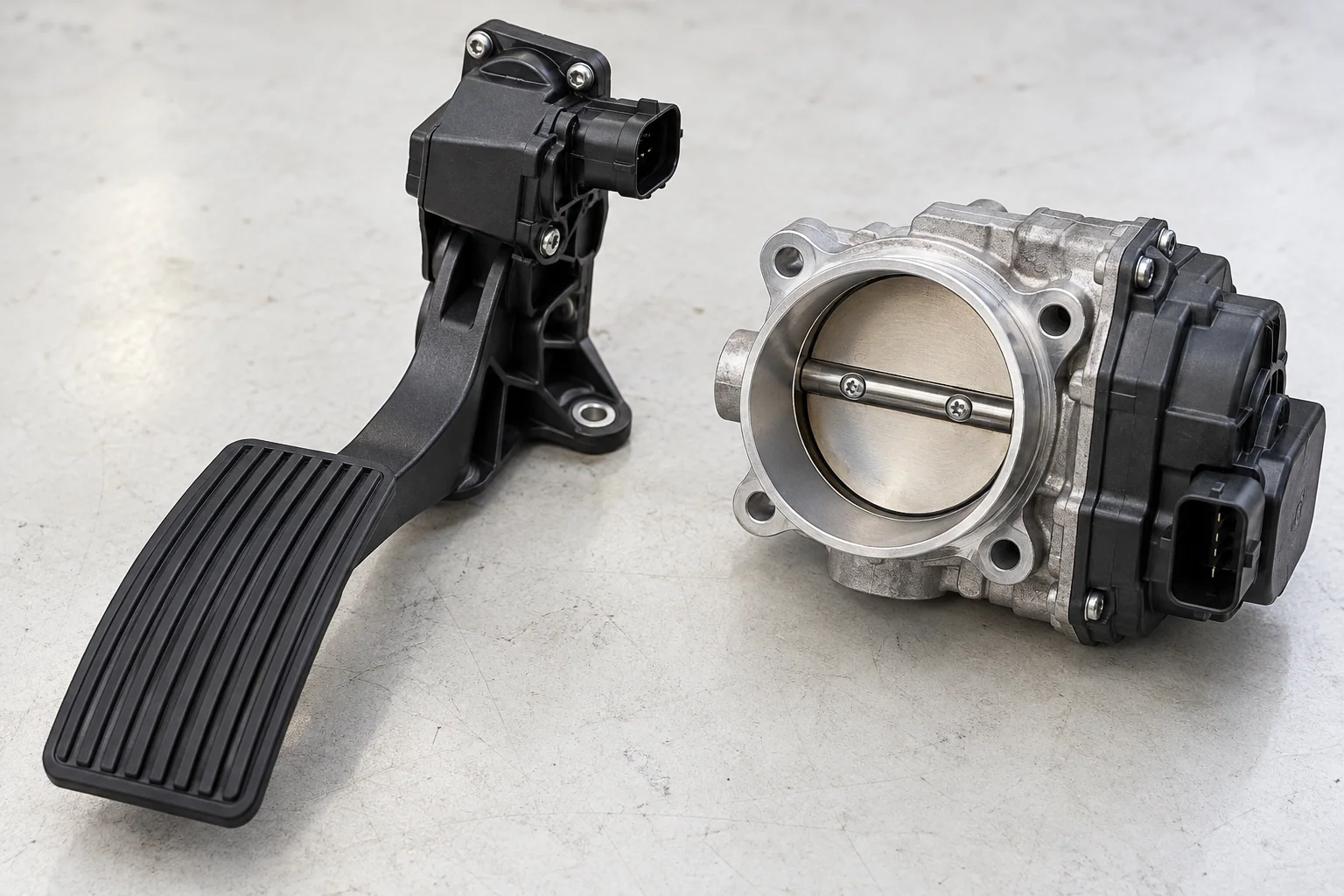
Not necessarily. In an electronically controlled throttle system, the computer needs reliable information about the accelerator request and throttle operation. A sensor, connector, wiring or power-supply fault can interfere with that information.
The relevant codes and electrical tests distinguish those possibilities. For a Malibu or Cruze, start with the exact engine and model year rather than buying the part named in another owner's repair story.
What should the diagnosis include?
Ask the technician to record the complete fault information and compare pedal and throttle data under the relevant conditions. Wiring, connector fit, supply and ground checks should follow the circuit diagram and service procedure.
An oscilloscope can help evaluate throttle-motor control and position signals. Pico's guided test is an example of that comparison, not a universal pinout or waveform specification. A signal fault needs to be located before choosing a sensor, motor or assembly.
For an intermittent complaint, describe the circumstances carefully. A shop visit when the warning is absent may require a plan to capture the fault rather than immediate replacement of another part.
When is a throttle-body replacement actually supported?
HELLA describes a 2007–2014 Nissan Rogue example with rough idle, reduced power and P1121/P1122 in which a defective throttle housing is diagnosed. Its repair includes the manufacturer's installation and learning procedure, followed by verification.
That example does not establish the cause on a Chevrolet or on every Rogue with reduced power. The diagnostic findings and current service information must match before the repair is applied.
What should you ask after the repair?
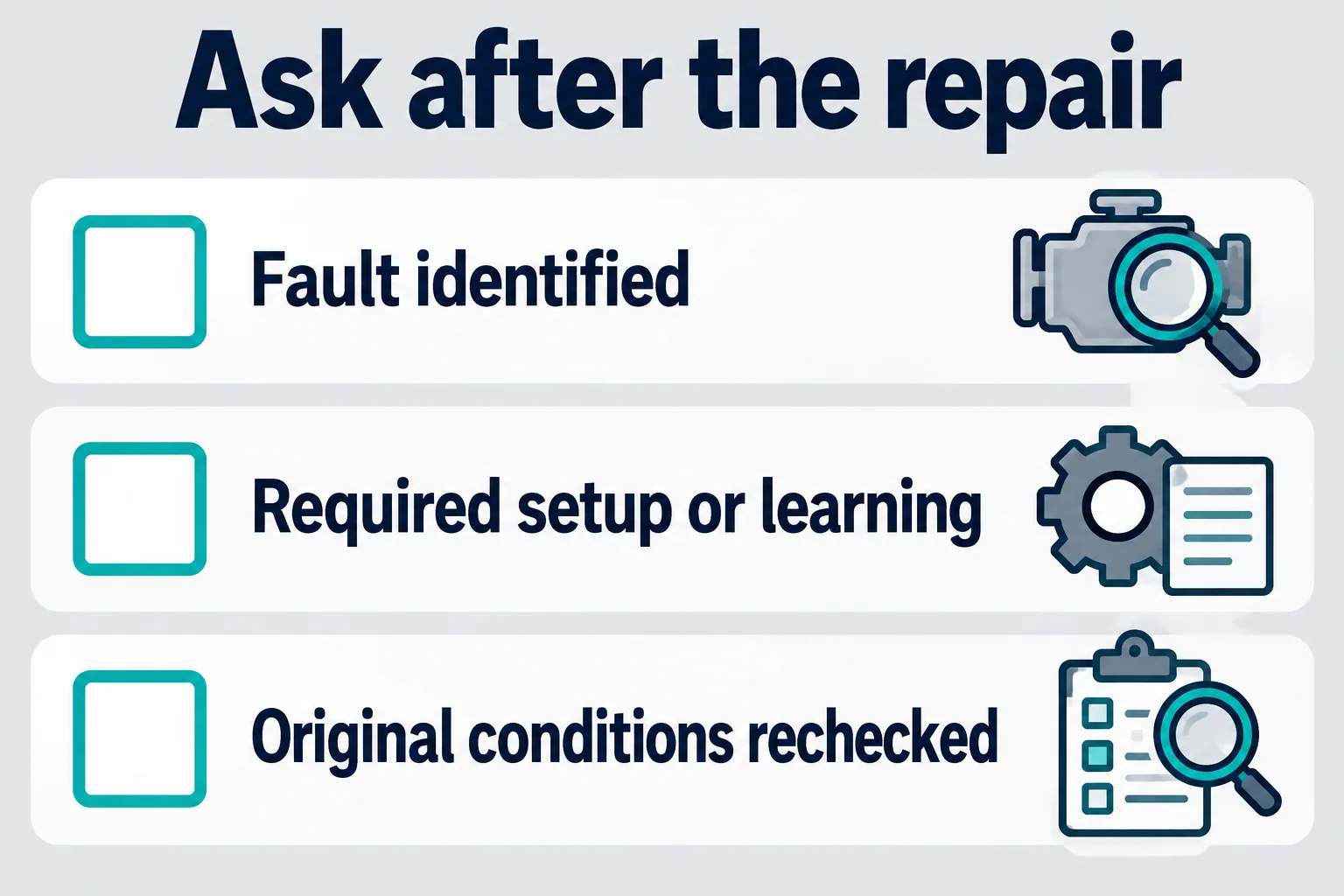
Ask what identified the fault, whether any required setup or learning was completed, and how the original operating conditions were checked afterward. The report should explain more than which part was fitted.
If the warning returns, keep the previous codes and repair details available. Repeatedly clearing the message or replacing the same assembly without new evidence can leave an intermittent connection or another underlying fault unresolved.
Sources & further reading
- MOTOR — Trouble Shooter | Intermittent Reduced Power
- HELLA — Nissan Rogue - problem with idling & engine power
- Pico Technology — Throttle servomotors | Automotive oscilloscope test
- HELLA — Accelerator pedal sensor function and checks
Vehicle designs and maintenance requirements vary. Consult the owner’s manual for your exact vehicle and seek a qualified inspection for a specific fault.