Ignition and engine control
Knock Sensor: Causes and Diagnostic Steps
Published:
Edited and fact-checked by: Jacob Bowen
General information; vehicle-specific diagnosis requires an inspection. How we prepare our guides · This page reserves space for ads. Advertising policy · Privacy choices
The quick answer
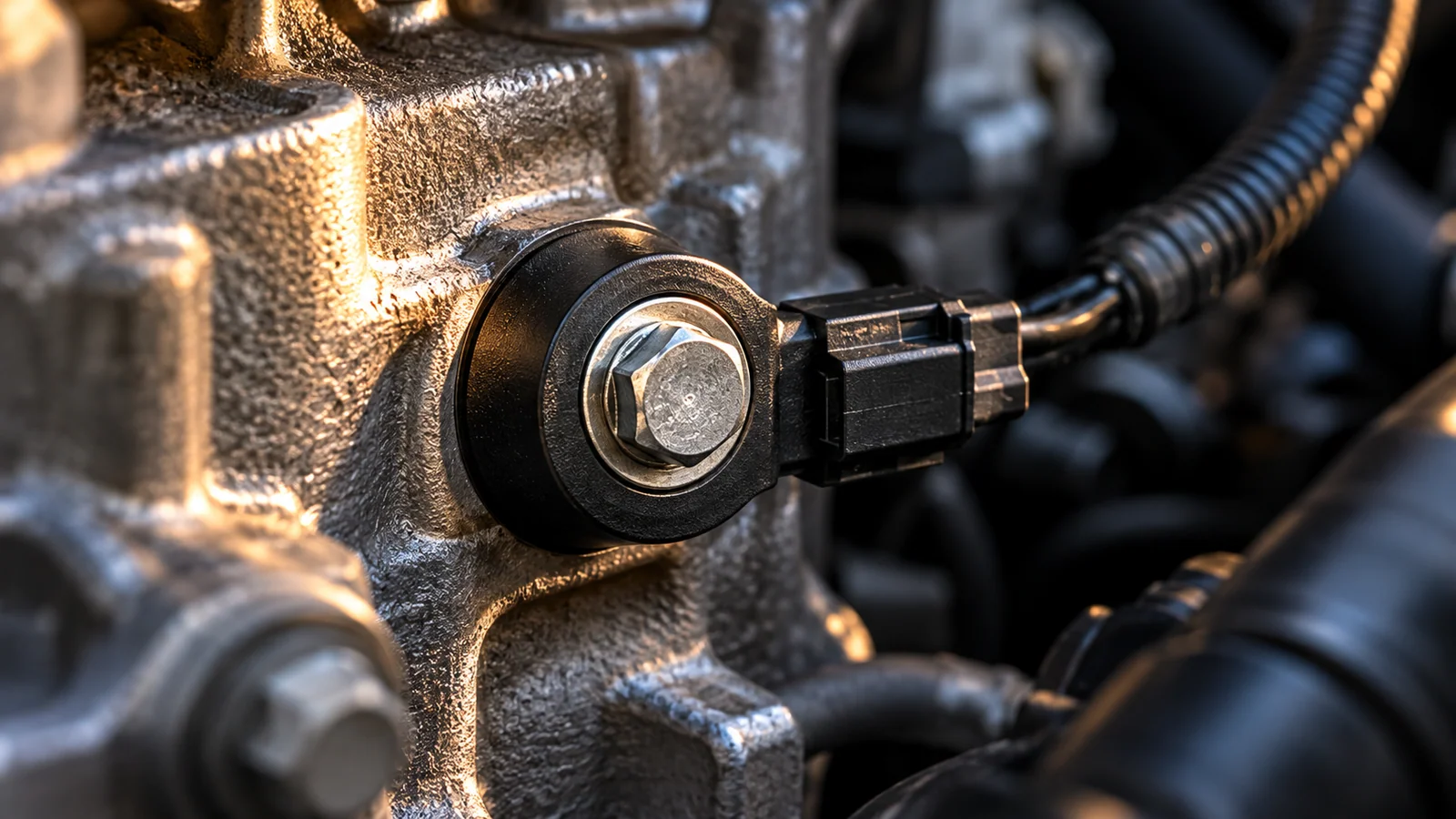
A knock sensor detects engine-block vibrations and sends a signal the engine computer uses to help control damaging combustion knock. A knock-sensor fault needs checks of the circuit, connector and installation as well as the sensor itself. A warning code is a starting point for diagnosis, not an instruction to replace the part. Actual knocking or major power loss needs prompt attention.
Does a knock sensor cause or prevent engine knock?
The sensor reports vibration; the engine computer evaluates the signal and can adjust ignition timing. Replacing the sensor does not correct every combustion problem or mechanical noise in the engine.
Tell the technician whether you hear a noise, see a warning light, notice reduced performance or have only a stored code. Those are different pieces of evidence. A Silverado or Cruze search result does not identify the correct repair for another year or engine.
What can make a knock-sensor signal unreliable?
Damaged wiring, corrosion, a poor connection, sensor damage or incorrect mounting can affect the signal. Because the sensor reads vibration through its mounting, the specified location, contact condition and tightening torque matter.
This is why a fault that returns after replacement deserves a circuit and installation check. Tightening the sensor harder or replacing another sensor without testing is not a reliable next step.
How should a technician test a suspected knock-sensor fault?
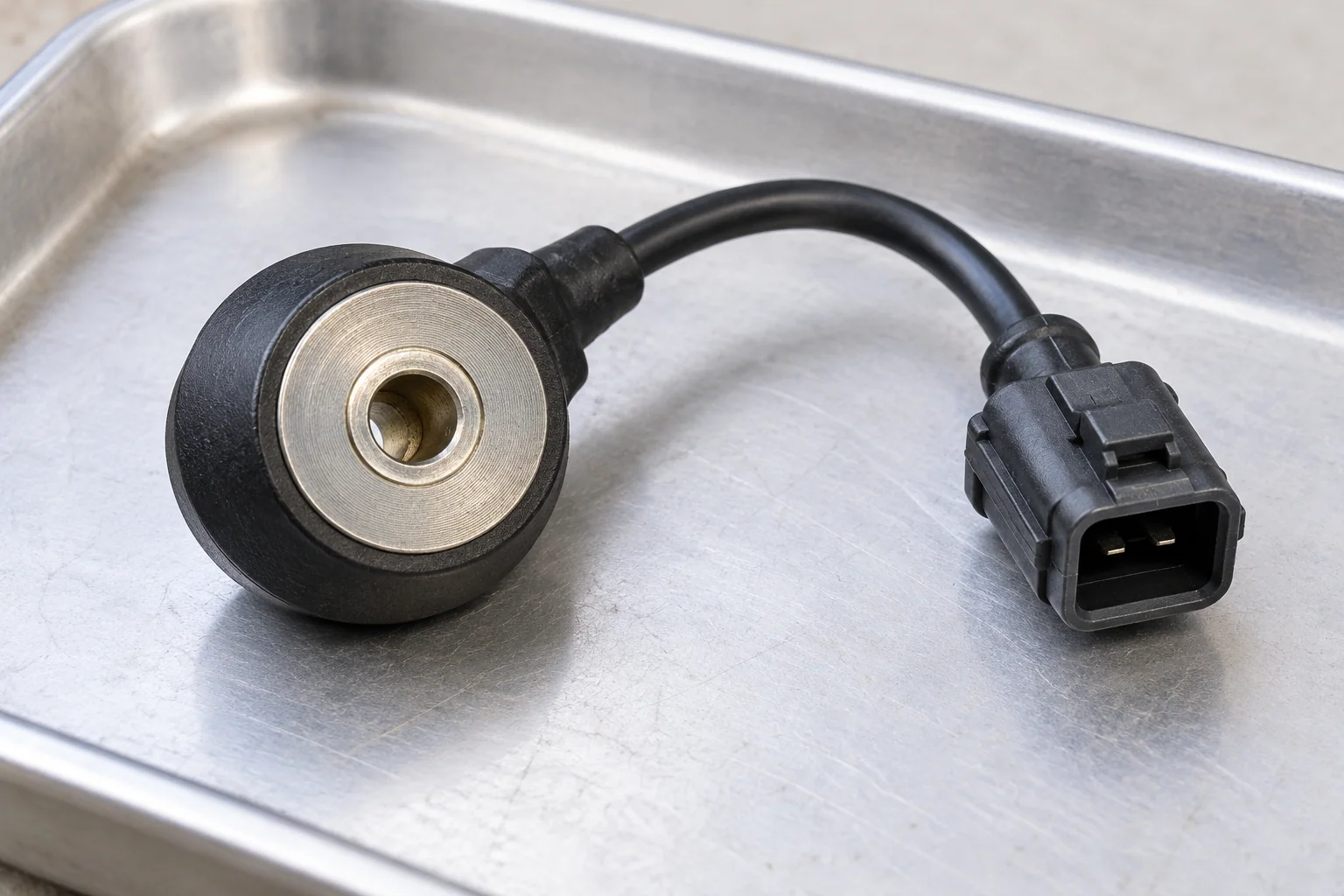
Start with the exact stored code and the vehicle's diagnostic procedure. A circuit malfunction, an unusually low or high input, and a range/performance complaint do not necessarily call for identical tests.
The shop can inspect connections, test the relevant wiring and assess the sensor signal with suitable equipment. Pin assignments, shielding, test conditions and expected readings must match the circuit. There is no single resistance value or waveform amplitude that diagnoses every knock sensor.
If the engine is actually knocking, the investigation also needs to distinguish a genuine combustion problem or another source of vibration from an electrical reporting fault. Changing the sensor alone does not establish that this has been done.
What should a confirmed sensor replacement include?
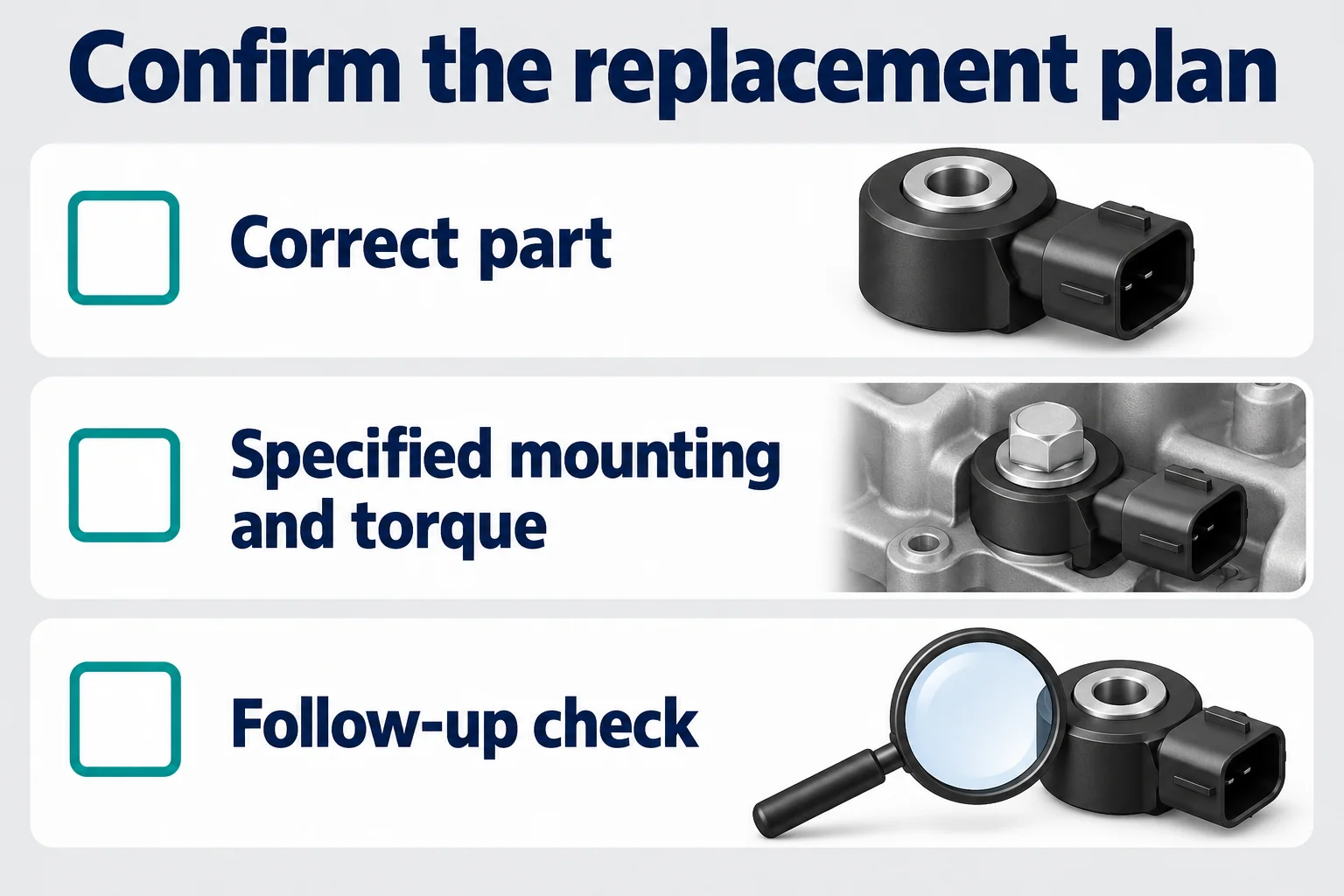
Confirm the correct part and access procedure for the engine. Some sensors are hidden behind other components, so labor can vary substantially. Ask which sensor failed and what testing supports replacement; the presence of multiple sensors does not by itself establish that all have failed.
Installation should follow the manufacturer's mounting and torque requirements, with any required electronic procedure and a follow-up check under the relevant conditions. Keep the original code and findings with the repair record.
Arrange diagnosis promptly rather than ignoring the warning. If the engine develops loud knocking, severe roughness or substantial power loss, stop safely and seek assistance. Follow the owner's guidance for the warning displayed instead of assuming the car's protective strategy makes continued driving harmless.
Sources & further reading
- HELLA — Car knock sensor - function & troubleshooting
- Delphi — How to diagnose a faulty knock sensor
- Delphi — How to replace a knock sensor (current guide)
Vehicle designs and maintenance requirements vary. Consult the owner’s manual for your exact vehicle and seek a qualified inspection for a specific fault.