Electrical
Key Not Detected: Causes and Diagnostic Steps
Published:
Edited and fact-checked by: Jacob Bowen
General information; vehicle-specific diagnosis requires an inspection. How we prepare our guides · This page reserves space for ads. Advertising policy · Privacy choices
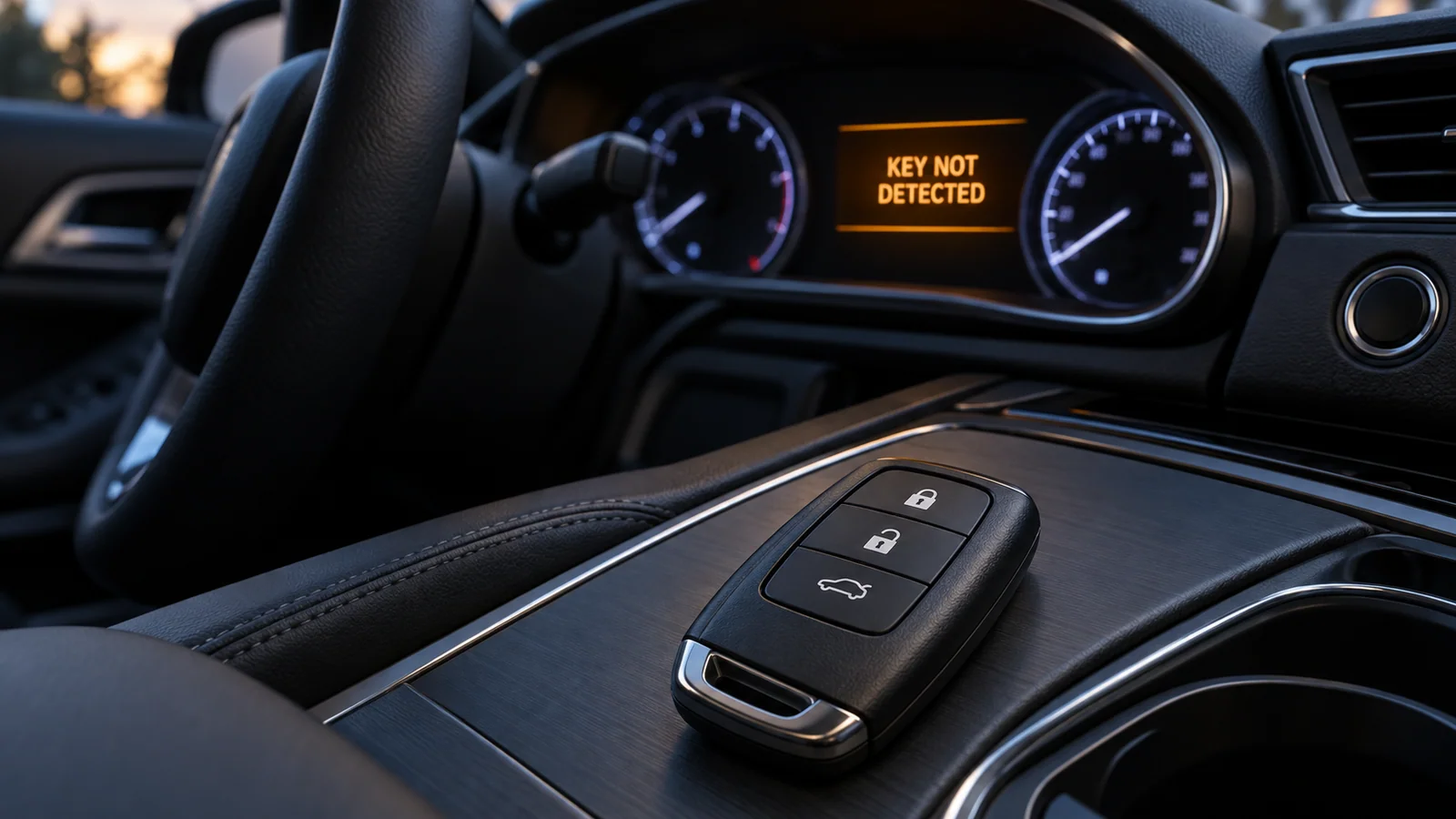
The quick answer
If your car says key not detected, first make sure the correct key is inside, then try the backup-start method in your owner's manual and a known-working spare. A weak fob battery is one possibility, but vehicle battery or detection-system problems can produce similar trouble. The warning alone does not mean you need a new key.
What can you try while safely parked?
Check that the fob belongs to this vehicle and is actually with you. If you have a working spare, compare it under the same conditions. Note whether the buttons unlock the doors, whether the message appears only during starting and whether other electrical functions are abnormal.
Follow the manual's start instructions, including the required pedal and transmission position. Chevrolet notes that pressing its start button without the brake can select accessory mode. Lights and accessories coming on therefore do not necessarily mean the vehicle completed a start attempt.
On some Chevrolet vehicles a fob left motionless can go to sleep; Chevrolet suggests moving it before retrying. Treat this as an equipment-specific check, not a reset sequence for every brand.
How do you start it if the fob battery is weak?
Use the manufacturer's backup detection position and procedure. Chevrolet's support guide describes placing the fob in a designated key pocket, then using the brake and start button. It explicitly says the pocket location varies by model.
Do not assume that holding the fob against the start button works on every vehicle. Nissan, Jeep, Honda, Mazda and other vehicles need their own manual instructions. If entry is also a problem, check the manual for the mechanical key and lock-cylinder access method before prying a door-handle cover.
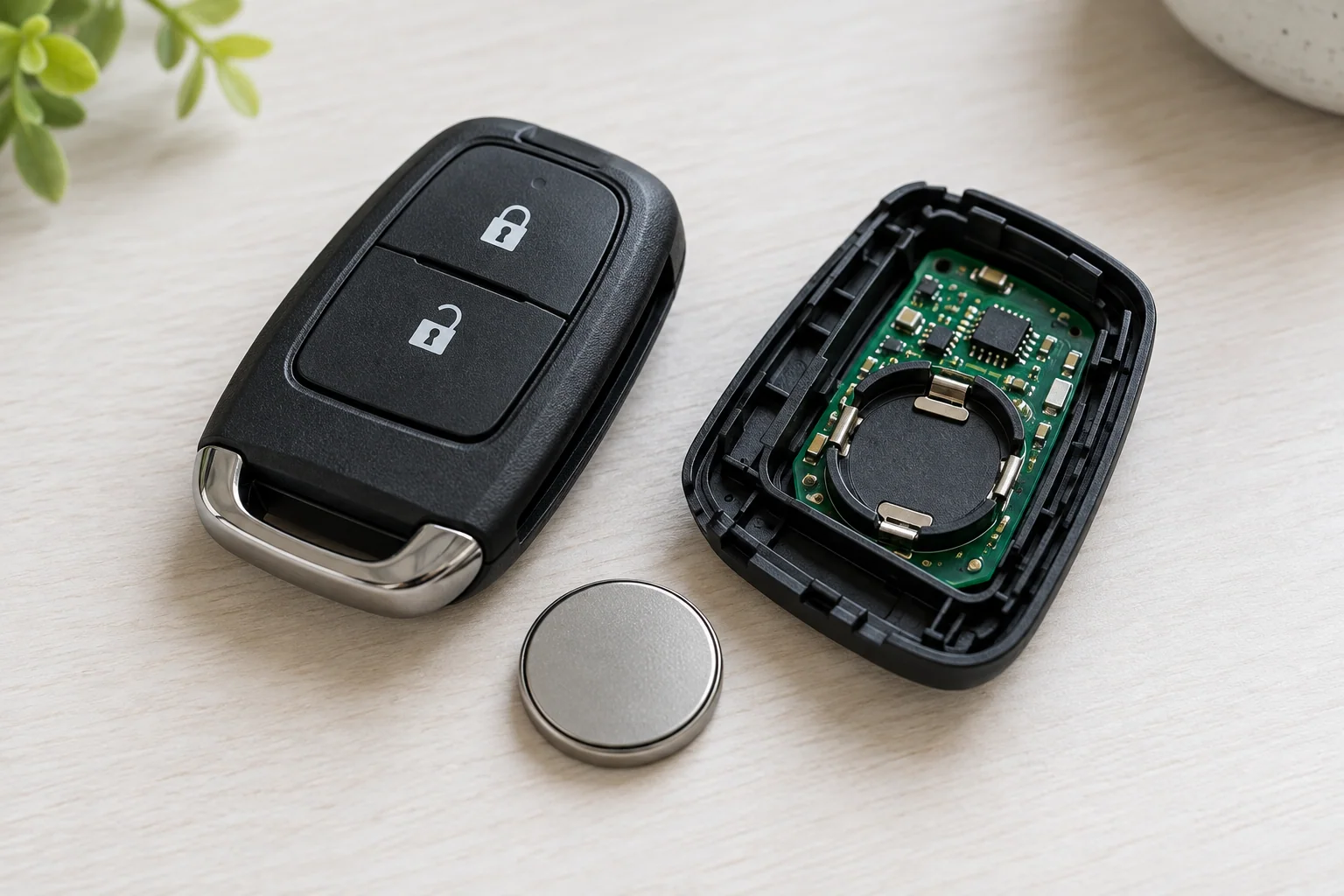
Check the fob battery type, installation direction and replacement instructions for that exact fob. If replacing it does not solve the complaint, move on to diagnosis instead of repeatedly fitting batteries or trying unrelated programming instructions.
Could the vehicle battery cause a key-detection problem?
Yes. Midtronics explains that unstable low-voltage power can interrupt authentication in digital-key vehicles and can mimic key or module trouble. That is a reason to test the vehicle's battery and power supply, not proof the battery is the cause.
Tell the shop about delayed unlocking, a no-start after sitting, multiple warnings or other recent battery symptoms. Smartphone or card-based digital keys and conventional fobs are different systems, so specify which one failed. A charged EV traction battery does not by itself confirm that its separate low-voltage system is healthy.
What should happen if both keys fail or the warning returns?
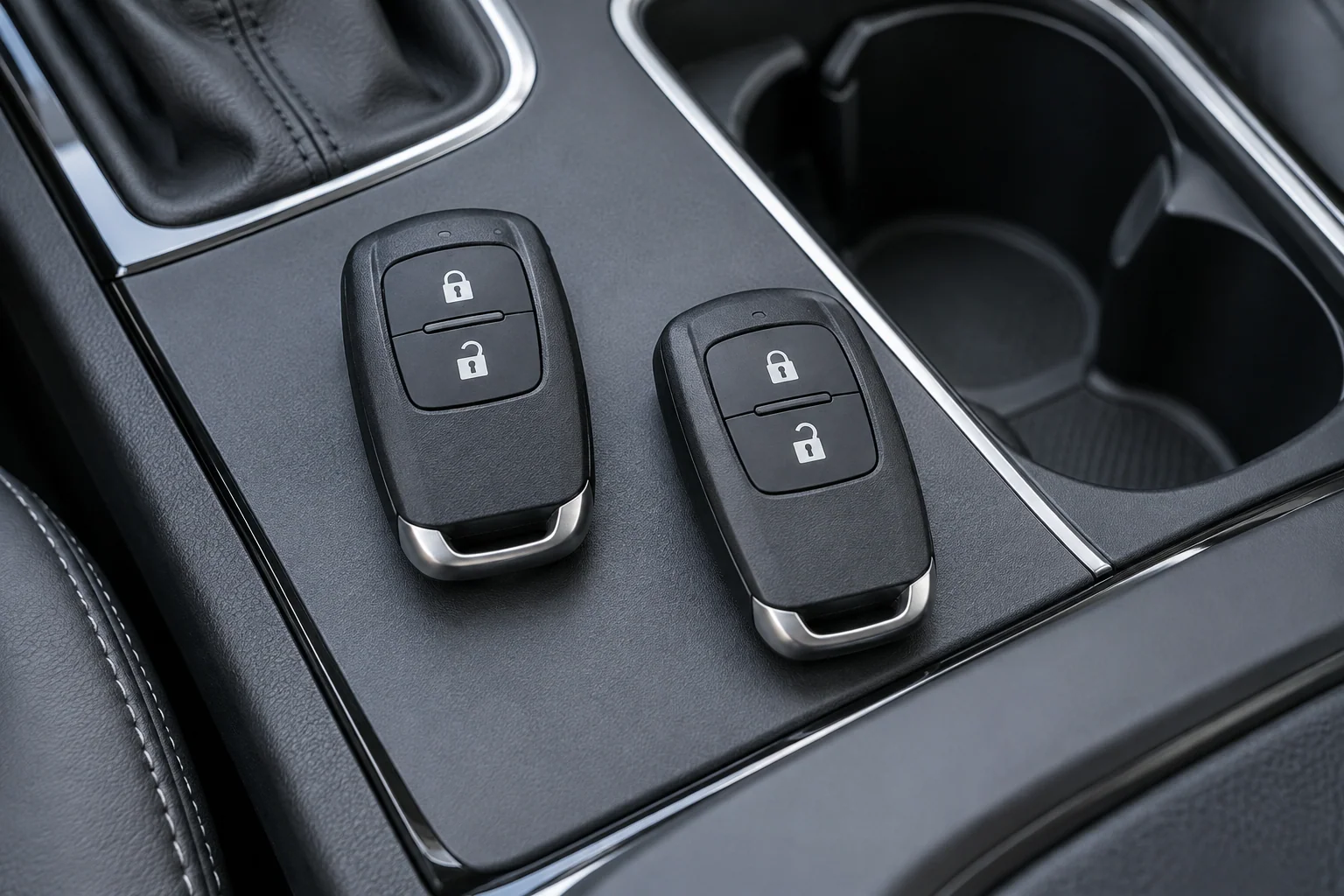
If only one verified key fails, that comparison helps focus the investigation on that key. If both fail, the shop should also investigate the vehicle's power, detection and communication systems. Neither result is a complete diagnosis on its own.
A qualified automotive locksmith or dealer can check the appropriate system and determine whether a key, battery, circuit repair or programming is required. Ask what test supports the recommendation before approving a replacement module.
If the specified backup method fails, arrange assistance. Avoid repeated start attempts and random battery-disconnect resets. After repair, verify normal locking and starting with each intended key rather than relying only on the disappearance of the message.
Sources & further reading
- Midtronics — Diagnosing Battery Issues in Vehicles with Digital Keys | Midtronics
- Chevrolet / GM — Keyless Open and Start | Vehicle Support | Chevy
- Chevrolet / GM — How to Operate Keyless Start | Vehicle Support | Chevy
Vehicle designs and maintenance requirements vary. Consult the owner’s manual for your exact vehicle and seek a qualified inspection for a specific fault.