Brakes
Brakes Squeaking: Symptoms, Diagnosis and Repair Options
Published:
Edited and fact-checked by: Jacob Bowen
General information; vehicle-specific diagnosis requires an inspection. How we prepare our guides · This page reserves space for ads. Advertising policy · Privacy choices
The quick answer
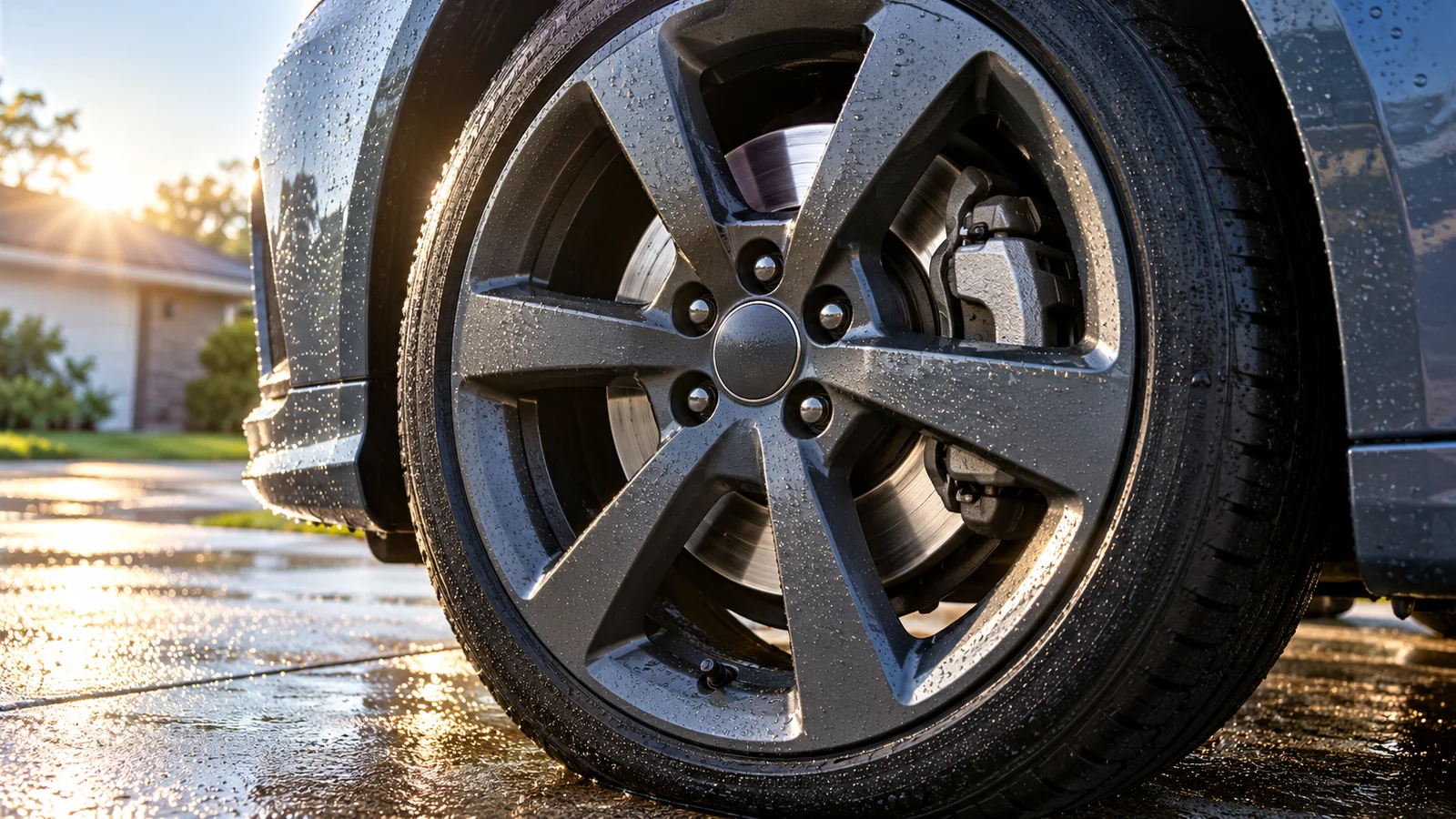
Squeaking brakes can involve wear, pad vibration, fit, hardware, restricted movement or contamination. The sound alone does not tell you which repair is needed. Arrange an inspection for persistent or new noise, and seek prompt assistance if braking performance changes, the car pulls or grinding accompanies it.
What should you note before the brake inspection?
Tell the shop whether the noise happens cold, after wet weather, in reverse, while stopping gently or after repeated braking. Note whether it started after a brake repair and whether the pedal or stopping behavior changed.
A noise that occurs only under one condition still needs that condition considered. Do not treat reverse-only or low-speed squeal as proof that the brakes are either worn out or harmless.
Why can brakes squeak when the pads still look thick?
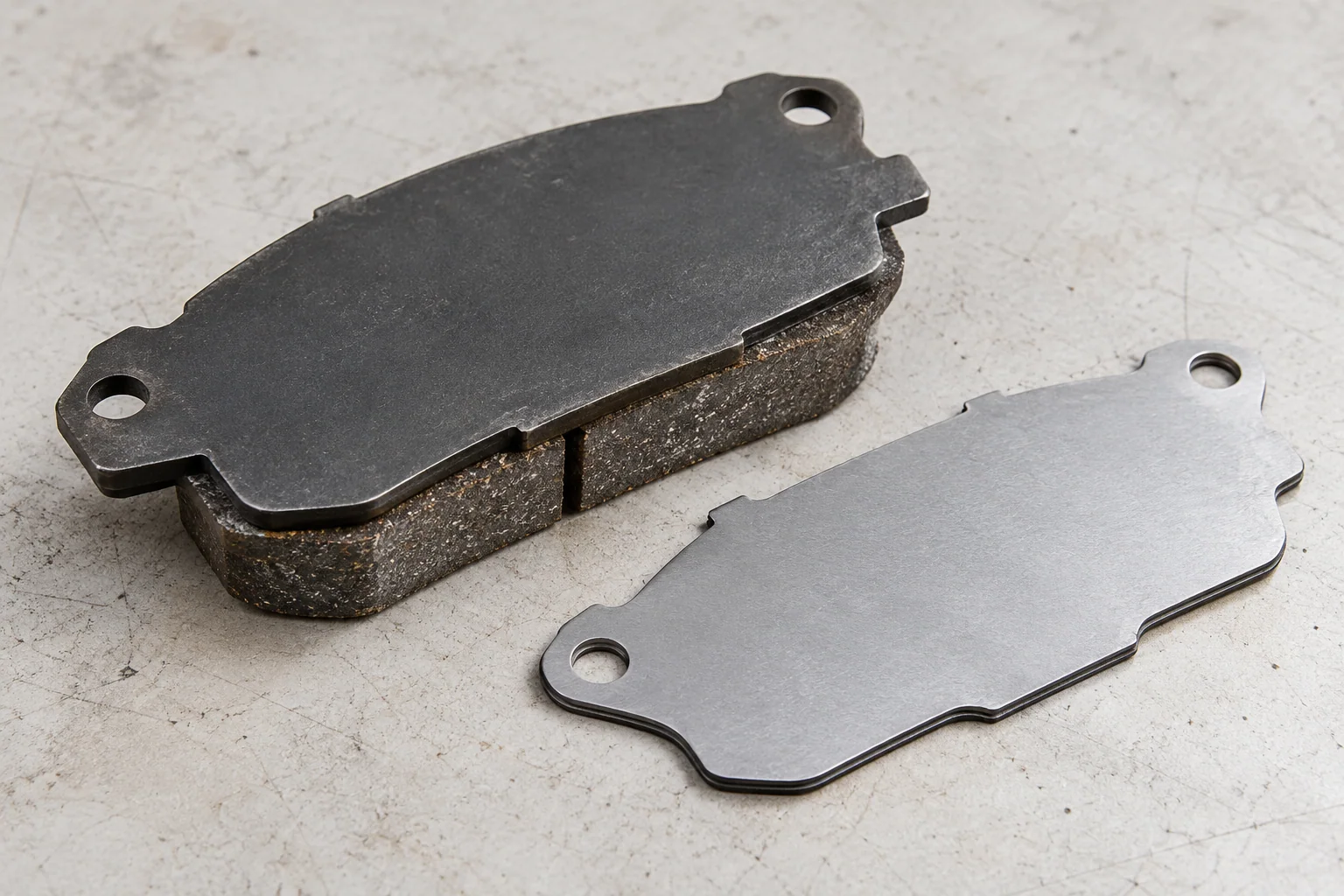
Noise can come from vibration and the way parts fit and move, not just from the amount of friction material remaining. HELLA describes noise-control features such as damping layers, shims, chamfers and weights that vary by brake design.
Pad thickness is only one inspection item. Glazing, uneven wear, damaged lining, a binding guide or contamination can matter even when a visible portion of the pad appears substantial.
What should the technician inspect?
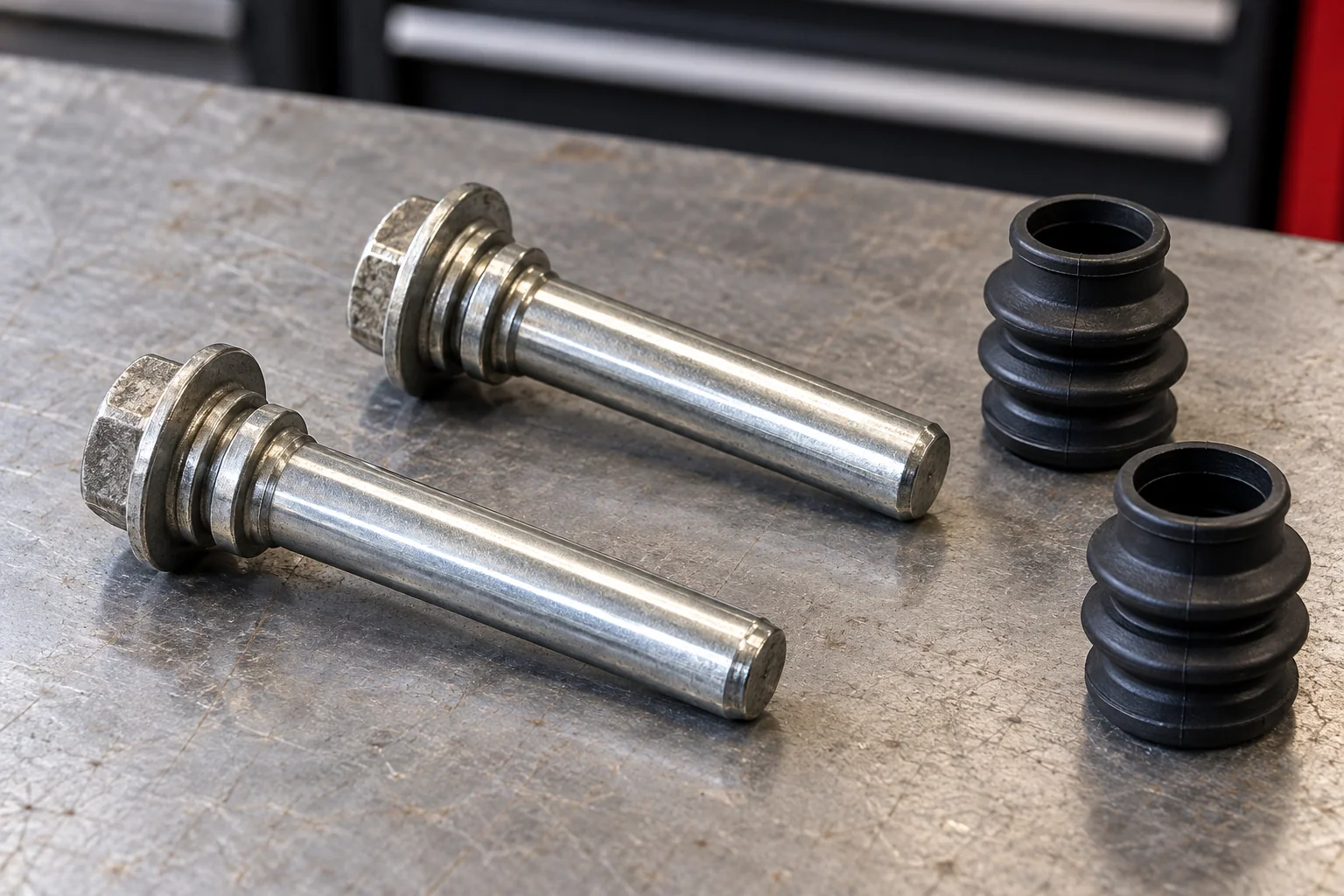
Ask for a check of the pads and rotors, wear indicators where fitted, hardware and caliper movement. The findings should distinguish normal wear from damage or a component that is sticking.
HELLA's failure examples link restricted movement with uneven wear and thermal damage. Replacing friction parts without checking the cause can leave the conditions that produced the problem.
Will cleaning or anti-squeal paste fix the noise?
Only if the identified problem calls for that treatment. Use the vehicle and product instructions for any permitted lubricant and contact locations. Do not put grease, oil or a general-purpose spray onto the friction surfaces to quiet the brakes.
If contamination is found, identify and correct its source and assess the affected friction parts. A surface spray is not proof that contaminated or damaged pads are serviceable.
What if the brakes squeak after replacement?
Return with the conditions that reproduce the noise and the repair invoice. Ask the shop to check part fit, installation, hardware and operation rather than assuming another pad set is the answer.
Follow the installed parts' and vehicle's bedding instructions. There is no one universal sequence of hard stops that should be prescribed for every car and brake material.
How should a brake-noise repair be verified?
The shop should check safe braking operation and try to reproduce the original noise under appropriate conditions. Ask what was found and what changed. Cost depends on that finding; squeal alone cannot supply a pad, rotor or caliper replacement price.
Sources & further reading
- HELLA — Failure modes of brake discs and brake pads
- HELLA — Checking the brakes
- HELLA — Repairing brakes: Important tips
- MOTOR — Brake Shop: Pedal Pulsation & Brake Noise
Vehicle designs and maintenance requirements vary. Consult the owner’s manual for your exact vehicle and seek a qualified inspection for a specific fault.