Brakes
Brake Shoe Replacement: Inspection, Procedure and Costs
Published:
Edited and fact-checked by: Jacob Bowen
General information; vehicle-specific diagnosis requires an inspection. How we prepare our guides · This page reserves space for ads. Advertising policy · Privacy choices
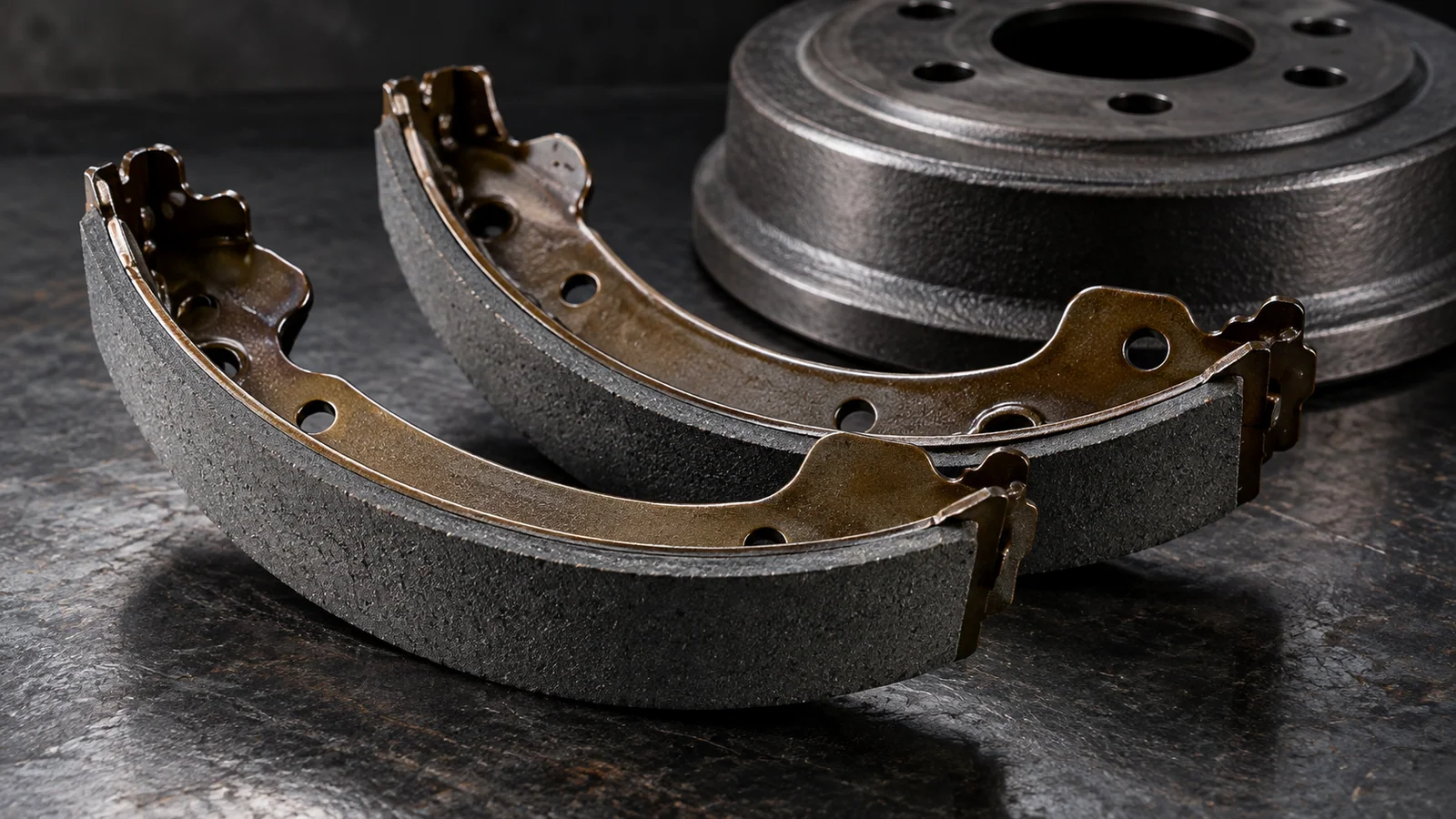
The quick answer
Replace brake shoes when inspection shows worn-out, damaged or contaminated linings. A proper repair also checks the drums, wheel cylinders, springs and adjusters. RepairPal lists a broad US brake-shoe replacement estimate of $314–$397, but drums, leak repairs and other work can change the total. Ask for a quote based on the condition of both brakes on the axle.
What do brake shoes do?
In a hydraulic drum brake, the wheel cylinder pushes the shoes outward against the drum's inner surface. Springs pull them back, and an adjuster maintains the working clearance as the linings wear.
That clearance matters. Excessive space between the shoes and drums can increase pedal travel. Replacing shoes without checking adjustment and the other components may leave the original complaint unresolved.
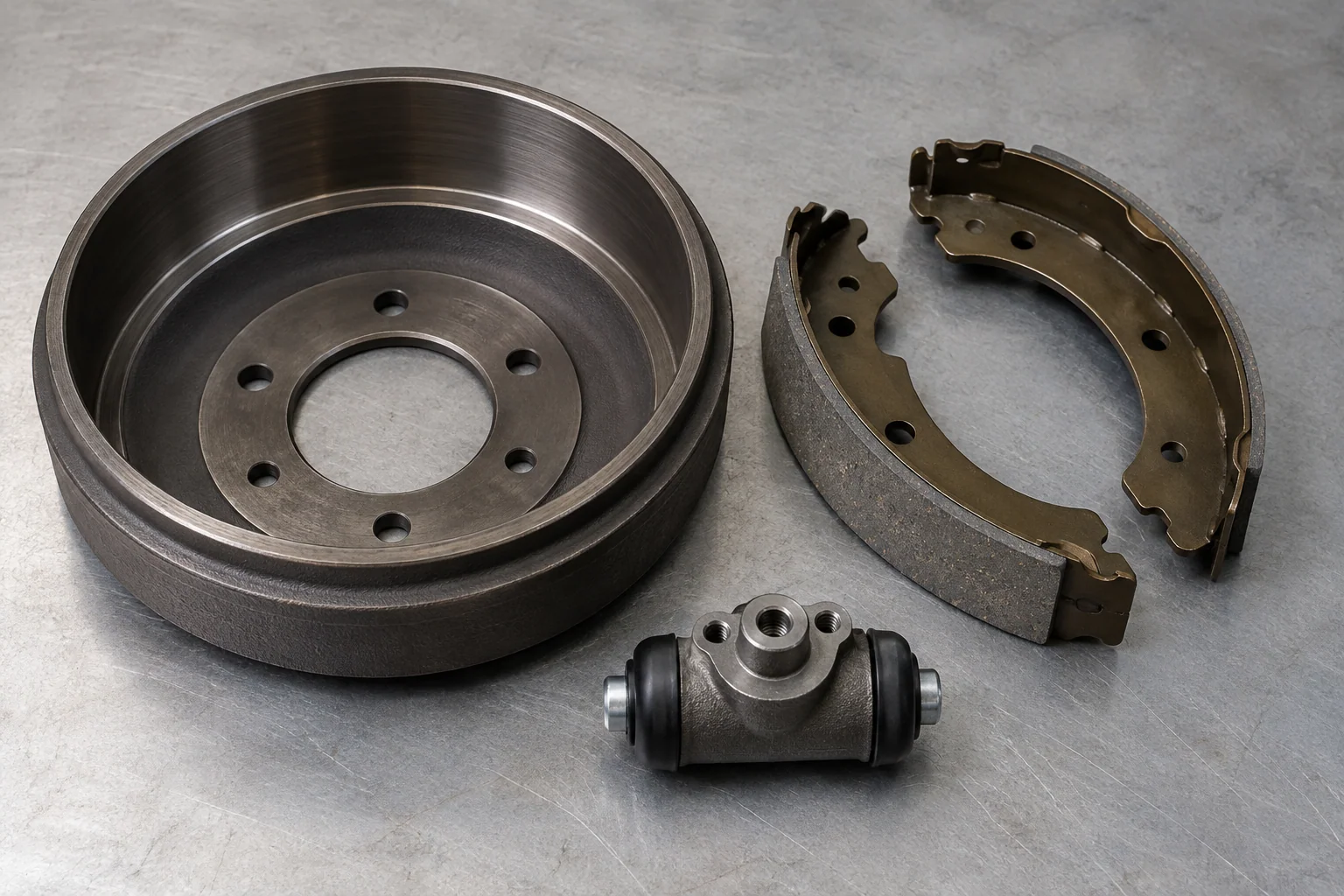
What should be inspected before replacing brake shoes?
The drum needs to come off for a proper inspection. Ask the technician to show the lining condition and compare wear with the vehicle's service limits. Check for uneven contact, damage and contamination, rather than judging the job from mileage alone.
- Measure drum diameter and check for distortion, cracks and surface damage. Compare the findings with the applicable machining and discard limits.
- Inspect wheel cylinders for leakage or sticking, and axle seals where a leak could contaminate the brakes.
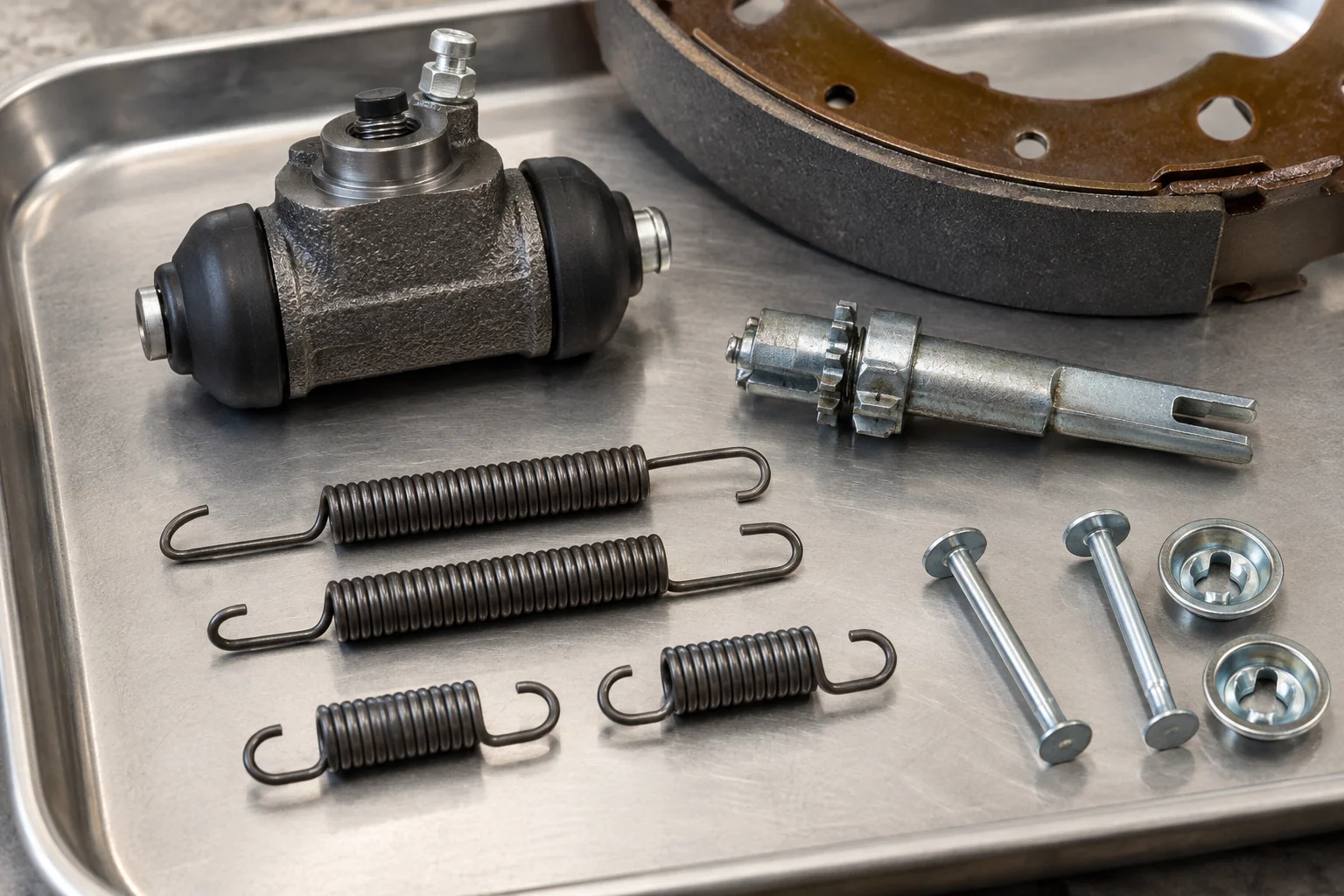
- Check springs, hold-down hardware, the adjuster and backing-plate contact points.
- Check the parking-brake mechanism and its release.
What does a complete brake-shoe replacement involve?
Replace the shoes on both sides of the axle as a matched service. Repair any contamination source and deal with damaged or worn hardware. The shoe positions, spring arrangement and adjuster orientation must match the specific brake design.
Drums need a usable surface within specification. Resurfacing removes material and increases the inside diameter; it cannot rescue a cracked or oversized drum. Ask for the measured condition and proposed finish rather than assuming every drum can be machined.
Monroe's installation guidance emphasizes clean backing-plate contact areas, suitable lubrication at the required points, inspection of cylinders and seals, and correct shoe adjustment. Keep lubricant off the friction material and braking surface. Follow the vehicle and brake manufacturer's installation instructions.
Brake dust must be controlled during service. Do not blow it out with compressed air. If you lack the equipment and knowledge to handle the springs, adjustment and hydraulic system safely, have a qualified technician do the work.
How much does brake-shoe replacement cost?
RepairPal's estimate, updated September 3, 2026, is $314–$397 for brake-shoe replacement: approximately $173–$253 in labor and $142–$144 in parts. It excludes taxes and fees and does not account for your location or related repairs.
Treat that as a starting comparison, not a quote for a complete drum-brake overhaul. Ask whether the estimate covers both sides of the axle, new hardware, drum machining or replacement, wheel-cylinder work and any necessary bleeding. Compare quotes for the same work and your exact vehicle.
What should be checked before the car is returned?
The shop should verify adjustment, pedal feel, leak-free operation and parking-brake application and release. Monroe also recommends checking brake temperatures to help assess balanced operation and following the manufacturer's bedding instructions.
A low or sinking pedal, fluid leak, severe pulling or reduced stopping ability needs prompt attention. Do not drive the car to see whether those symptoms disappear as the new shoes wear in; arrange transport if braking is unreliable.
Sources & further reading
- Monroe: professional guide to brake service
- HELLA — Checking the brakes
- AA1Car / Larry Carley — How to Repair Drum Brakes
- RepairPal — Brake Shoes Replacement Cost Estimate
Vehicle designs and maintenance requirements vary. Consult the owner’s manual for your exact vehicle and seek a qualified inspection for a specific fault.