Engine
Head Gasket Symptoms: How to Test and Confirm the Fault
Published:
Edited and fact-checked by: Jacob Bowen
General information; vehicle-specific diagnosis requires an inspection. How we prepare our guides · This page reserves space for ads. Advertising policy · Privacy choices
The quick answer
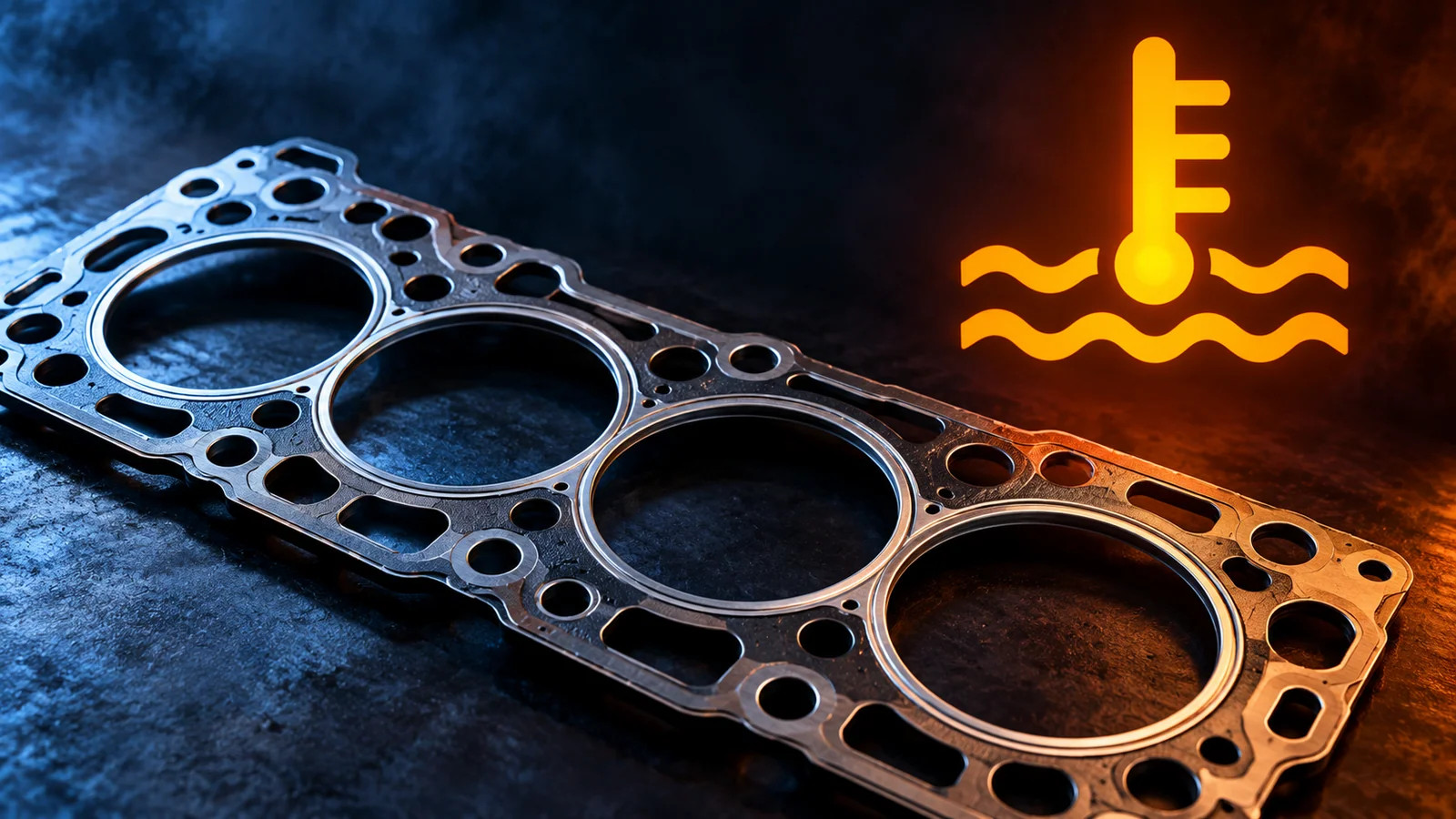
Overheating, unexplained coolant loss, persistent white exhaust, contaminated oil or rough running can justify testing for a head-gasket leak. None of those symptoms proves the gasket has failed: a cracked cylinder head and other faults can produce similar signs. Ask for evidence of the leak path before approving disassembly. Stop driving if the engine overheats or coolant loss is rapid, and never open a hot cooling-system cap.
Do all blown head gaskets cause the same symptoms?
No. The gasket seals combustion, oil and coolant passages between the head and block, so the symptoms depend on where sealing is lost. An external fluid leak is a different complaint from combustion gases entering coolant or a leak between cylinders.
Do not wait for every symptom on a checklist to appear. Equally, a rough idle, white exhaust or oil leak deserves investigation beyond the gasket. Give the technician the sequence of events, including whether overheating started before or after the fluid loss.
Which tests help investigate a suspected head-gasket leak?
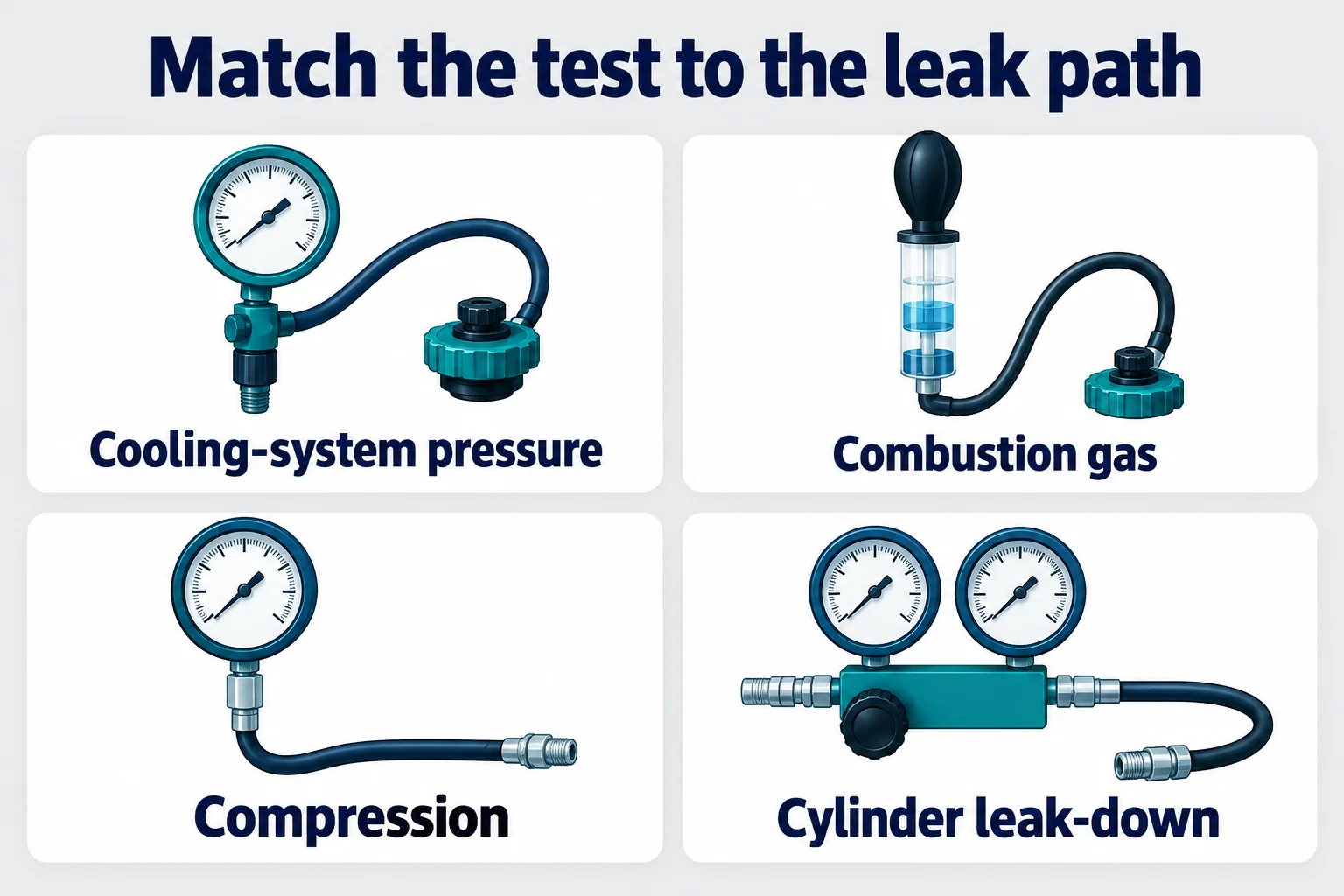
The technician chooses tests for the suspected path and follows the engine and tool instructions. Useful results include the operating conditions and actual readings, not simply a statement that the engine failed a test.
| Test | What it can help establish | What it does not establish alone |
|---|---|---|
| Cooling-system pressure test | Whether coolant escapes under the specified test conditions, and where it can be located | That a pressure drop must be a head-gasket failure |
| Combustion-gas test | Whether exhaust gases are detected in the sampled cooling-system air | Whether the path is through the gasket, a crack or another applicable fault |
| Compression test | How cylinder cranking pressures compare with the engine's requirements | A unique cause for every low reading |
| Cylinder leak-down test | Where air escapes from a cylinder during a controlled test | That coolant bubbles distinguish a gasket leak from a cracked head or block |
Can a negative test rule out every head-gasket problem?
A combustion-gas test addresses gases entering the cooling system while the test is taking place. It does not check every possible oil or coolant leak path. Sampling and test-fluid condition also matter; drawing coolant into the tool can invalidate the test.
Compression and leak-down results need interpretation alongside the symptoms. Low compression can involve valves or piston sealing as well as a gasket problem. There is no universal compression number or leakage percentage that diagnoses every engine.
How is a failed gasket distinguished from a cracked head?
Testing can establish a strong reason to investigate internal leakage, but separating gasket damage from casting damage may require removing the head and further inspection. Fel-Pro notes that a machine-shop pressure test may be needed to find a crack.
Ask what is already confirmed, what remains uncertain until disassembly, and how the estimate changes if the head or engine has additional damage. This helps you compare a gasket repair with other options without treating an initial estimate as a complete diagnosis.
What matters if a gasket repair is needed?
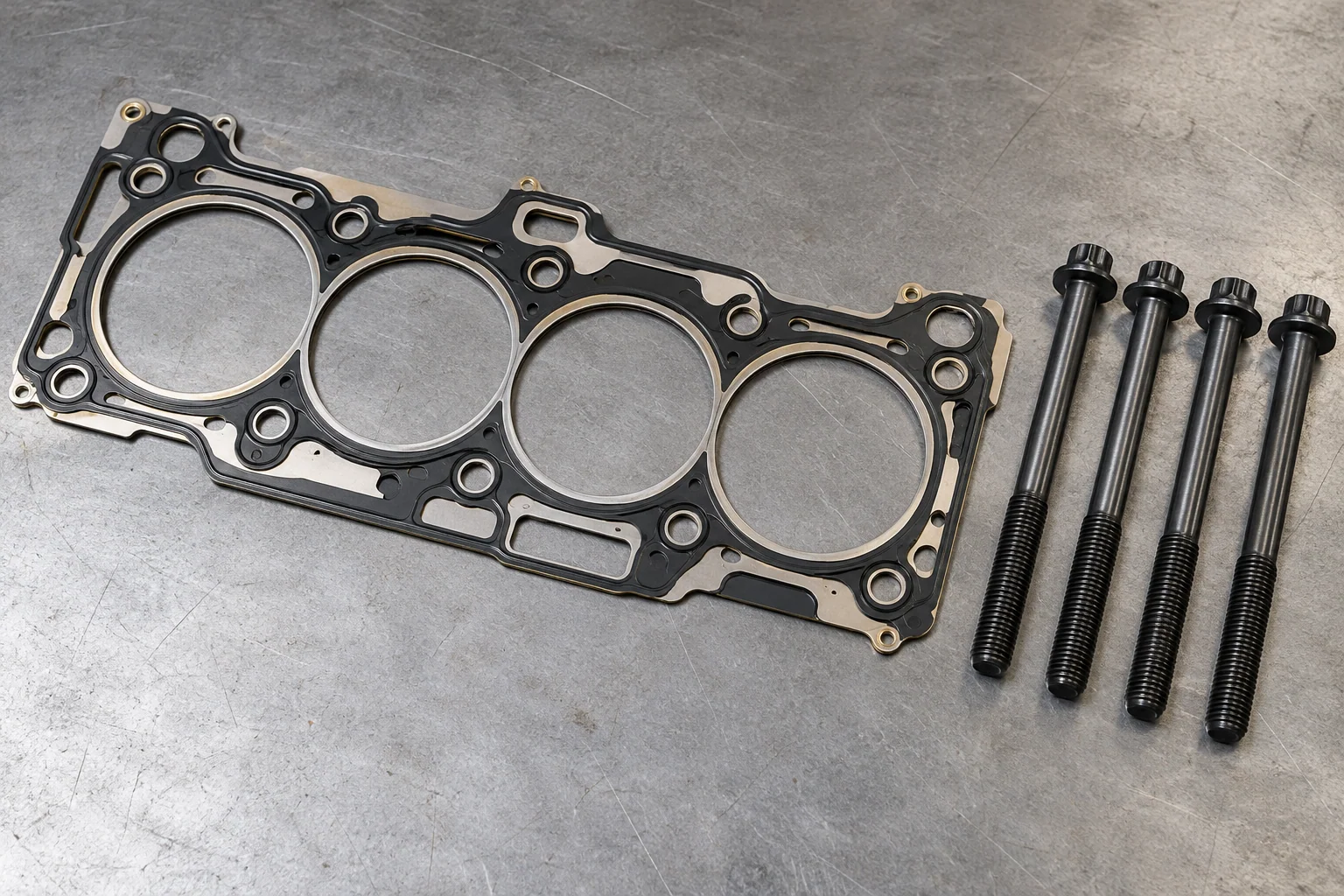
A new gasket needs suitable mating surfaces and the correct fastening procedure. Flatness, surface finish, gasket selection and bolt requirements depend on the engine and gasket. Torque-to-yield bolts must not be reused; an angle-tightening instruction alone does not identify every bolt as that type.
The repair also needs to address the cause of the damage and any overheating fault. Ask how the cooling system and original leak path will be checked after assembly. Replacing a gasket without those checks can leave an underlying problem unresolved.
Sources & further reading
- Fel-Pro — Identifying Blown Head Gaskets & Cracked Heads
- Fel-Pro — How To Clean a Cylinder Head Mating Surface
- Fel-Pro — Comparing TTA & TTY Bolts
- Elring — Professional installation of the cylinder-head gasket in seven steps
- OTC — 5609 Cylinder Leakage Tester instructions
- OTC — Compression Tester user's manual
- Block Tester — Combustion leak tester operating instructions
Vehicle designs and maintenance requirements vary. Consult the owner’s manual for your exact vehicle and seek a qualified inspection for a specific fault.