Cooling
Engine Overheating: Causes and Diagnostic Steps
Published:
Edited and fact-checked by: Jacob Bowen
General information; vehicle-specific diagnosis requires an inspection. How we prepare our guides · This page reserves space for ads. Advertising policy · Privacy choices
The quick answer
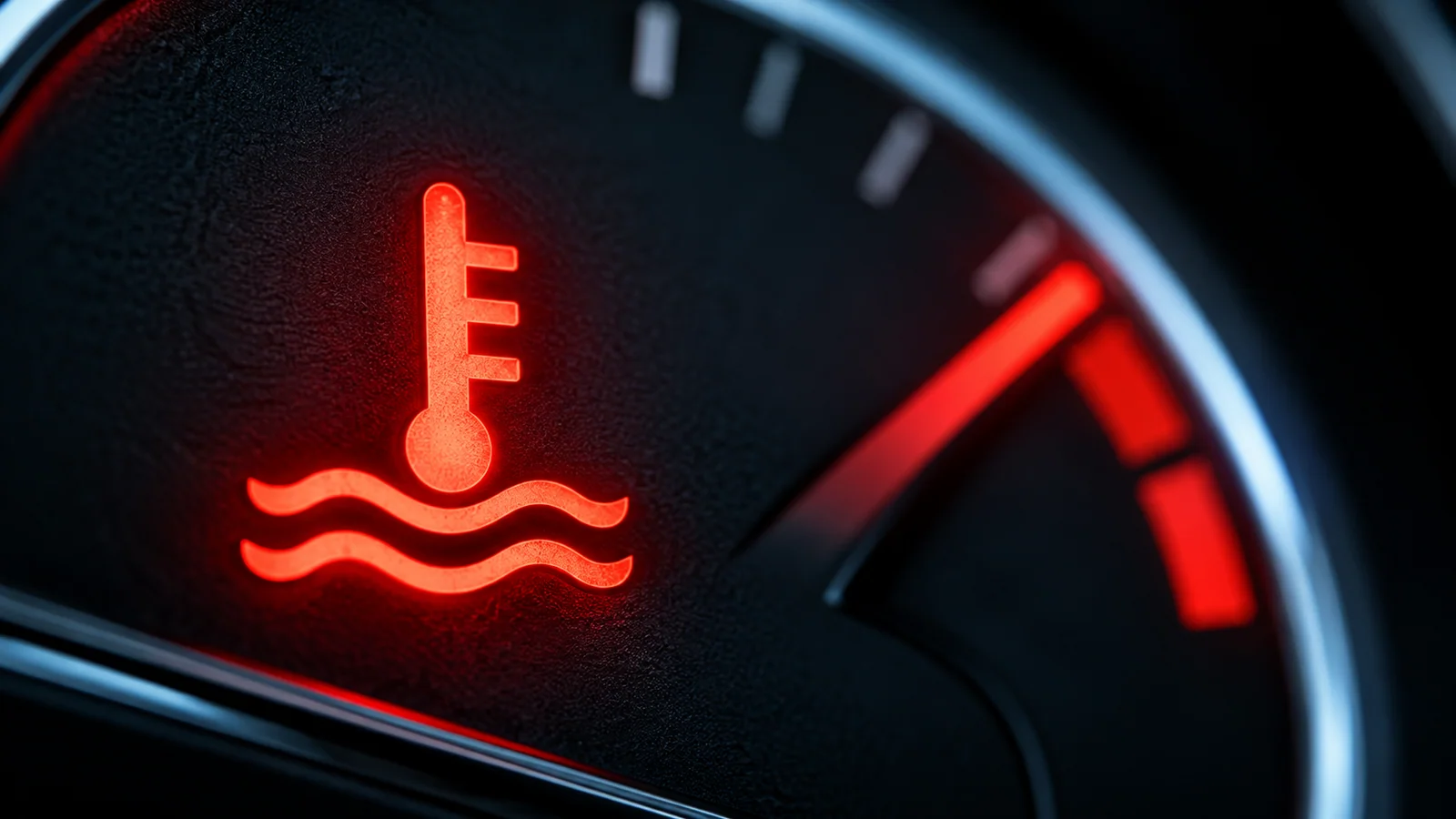
If the temperature warning indicates overheating or steam appears, pull over as soon as it is safe and shut the engine off. Do not keep driving to see whether it cools down. Never open a hot radiator or pressurized coolant-reservoir cap. Let the system cool fully and arrange assistance; adding coolant does not explain or repair the cause.
What should you do while finding a safe stopping place?
If you cannot stop immediately, switch off the A/C to reduce engine load. AAA describes turning on the heater as a temporary way to help shed heat while reaching safety. It is not permission to continue a journey with an overheating engine.
Keep clear of steam and hot components. Do not treat a fixed waiting time as proof that a cap is safe to open. If the cause is unknown, the system is leaking or the warning returns, arrange transport rather than repeatedly restarting the engine.
Can an engine overheat with a full coolant reservoir?
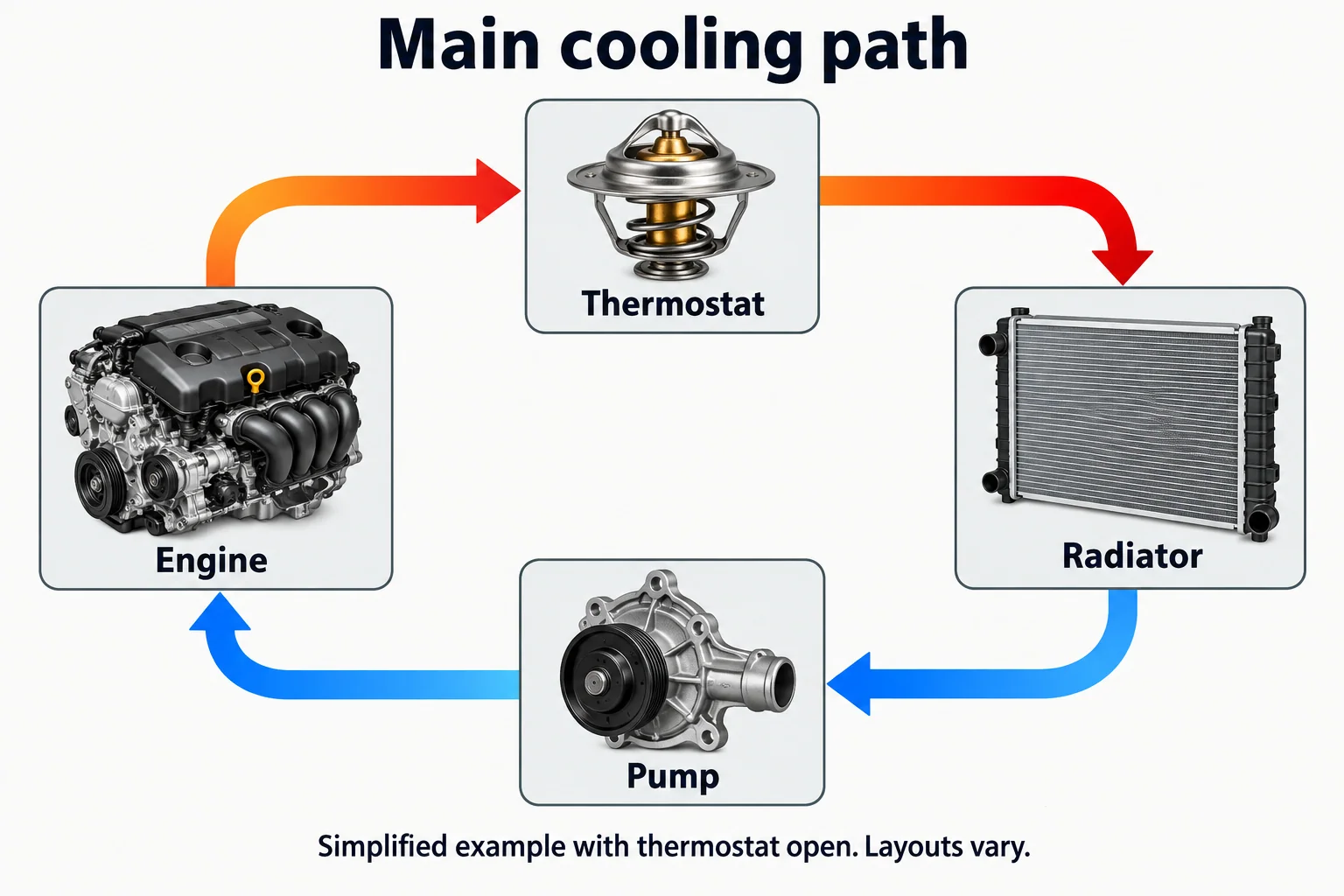
Yes. Coolant level is only one part of cooling performance. HELLA's diagnostic path also checks airflow, fan operation, thermostat opening, radiator flow, pump operation and the pressure-cap valves.
The reservoir's appearance cannot establish that coolant is circulating correctly or that the radiator receives enough air. Use the vehicle's specified checking and filling procedure once cold; do not add an arbitrary coolant type or concentration.
What should the shop check before replacing parts?
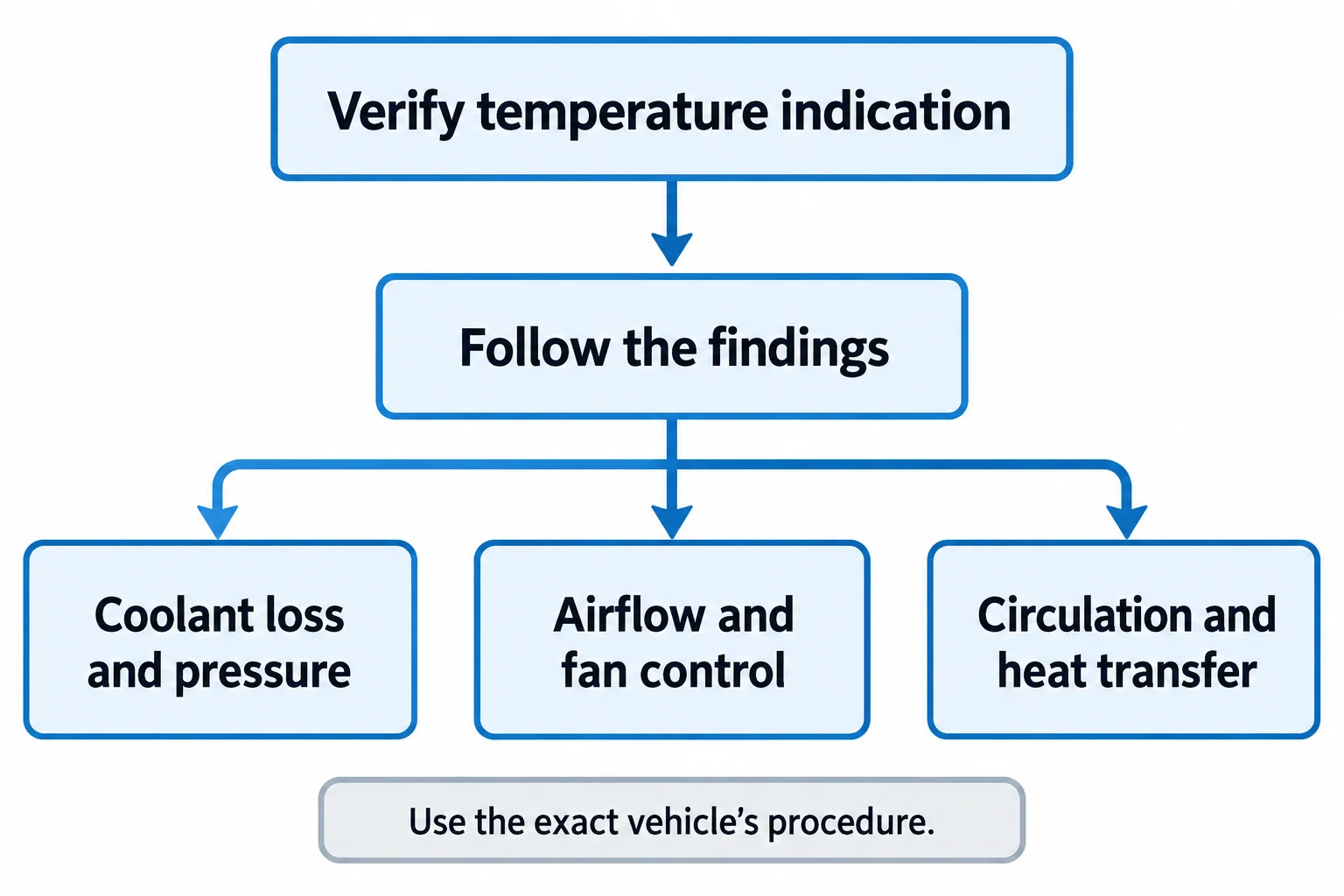
First establish whether the displayed temperature is plausible and inspect for coolant loss or obvious damage. HELLA includes checking the temperature sensor and display where necessary, rather than assuming the gauge or the engine must be wrong.
The next tests should follow the operating condition: fan control and airflow, thermostat behavior, radiator flow or pump function as indicated. Pressure integrity and the cap also need assessment using the correct procedure. Do not substitute one generic pressure or hose-temperature difference for vehicle-specific information.
What if it overheats at idle or the heater blows cold?
Tell the technician whether the problem appeared in traffic, under load, with A/C or after cooling-system service. Describe the exact warning and any change in cabin heat. Those observations help reproduce the condition; they do not identify a fan, pump or thermostat by themselves.
Cold air from the heater does not mean an overheating engine is safe to run. Likewise, the absence of visible steam does not cancel a temperature warning. Stop first and let diagnosis determine the fault.
Does overheating mean the head gasket has failed?
No. Overheating can damage the engine, but the event alone does not establish a head-gasket failure. Ask what evidence supports any proposed internal-engine testing or repair, after the cooling-system findings have been assessed.
The repair should address the confirmed fault, followed by correct filling and verification under the original conditions. Ask whether the temperature remains controlled and whether any fluid loss or further engine symptoms require follow-up. There is no single overheating repair cost without that diagnosis.
Sources & further reading
- MOTOR — Cooling System Service You're Getting Warmer: Diagnosing Overheating Problems
- HELLA — Cooling system check - Troubleshooting & diagnostics
- MOTOR — Hot Tips for Cooling System Service
- AAA Oregon/Idaho: what to do when your car overheats
Vehicle designs and maintenance requirements vary. Consult the owner’s manual for your exact vehicle and seek a qualified inspection for a specific fault.