Cooling
Radiator Replacement: Leak Diagnosis, Costs and Repair Steps
Published:
Edited and fact-checked by: Jacob Bowen
General information; vehicle-specific diagnosis requires an inspection. How we prepare our guides · This page reserves space for ads. Advertising policy · Privacy choices
The quick answer
Replace a radiator when inspection confirms damage, leakage or a restriction that requires replacement—not simply because the engine overheats. RepairPal estimates radiator replacement at $1,368–$1,550, updated September 3, 2026, before taxes, fees, location differences and related repairs. If coolant is escaping rapidly or an overheating warning appears, stop safely and shut the engine off. Never open a hot cooling-system cap.
What does a radiator-replacement estimate cover?
The RepairPal benchmark includes estimated labor of $375–$550 and parts of $993–$1,001. Your quote needs the exact vehicle, engine and equipment. Access requirements and related repairs can change the total.
A coolant flush, a reservoir replacement and a radiator-support repair are different jobs. Ask the shop to separate them on the estimate and explain why any additional work is needed rather than using the replacement average to price every radiator-related service.
How is the radiator identified as the leak source?
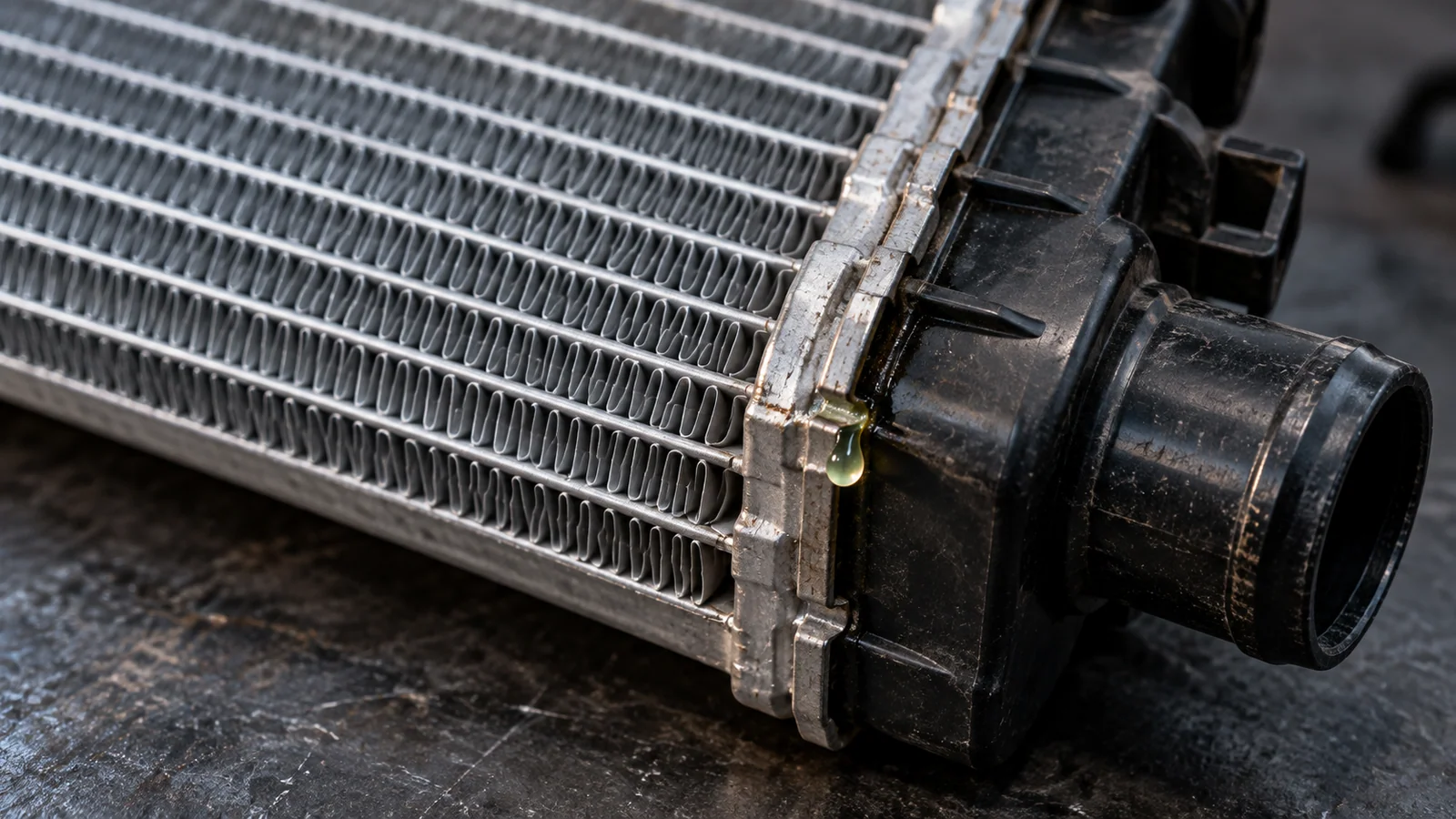
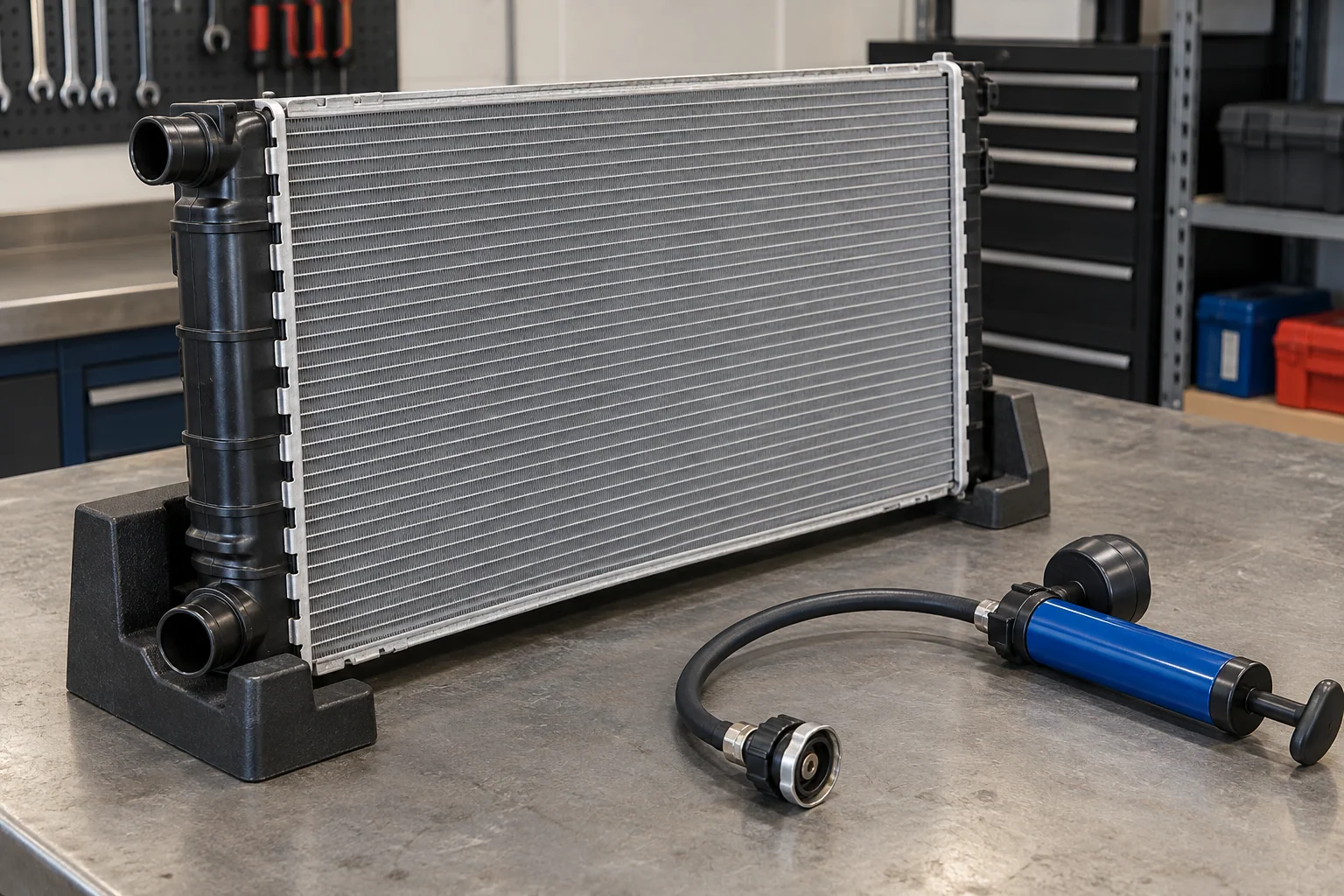
Inspect the core, end-tank seams, fittings, drain and hose connections, using the appropriate cooling-system leak test where needed. Coolant found below the radiator may have traveled from another point.
Ask the technician to show the leak's origin. A leaking hose or fitting can require a different correction from a damaged radiator core. Bubbling in a reservoir also needs a diagnosis; it does not identify the radiator as the failed component.
What if the car overheats but the radiator does not leak?
Check the rest of the cooling system before approving replacement. Airflow, fan operation, coolant circulation, thermostat operation, system pressure and temperature indication can all be relevant to an overheating complaint.
HELLA's diagnostic guidance includes checking radiator flow and temperatures when restriction is suspected. The test conditions and interpretation must match the vehicle. A hot gauge or steam alone does not establish that a new radiator will correct the cause.
What should radiator replacement involve?
The shop needs the correct radiator and the vehicle's removal and installation procedure. Depending on the design, access involves surrounding shrouds and other components, and suitable parts may need transferring.
Inspect the hoses, connections and mounts and address actual damage. Do not assume every thermostat, pump or hose must be replaced because the radiator is being changed. If contamination or overheating occurred, include the relevant cleanup and damage assessment in the plan.
How should the cooling system be checked afterward?
Refill with the specified coolant and complete the required air-removal procedure. The shop should recheck for leaks and verify operating temperature and cooling performance under appropriate conditions.
Ask which finding confirmed the original fault and what was checked after the work. A full reservoir immediately after installation is not a substitute for correct filling, bleeding and verification.
Sources & further reading
- AA1Car / Larry Carley — How To Find & Fix Coolant Leaks
- MOTOR — Cooling System Diagnosis
- HELLA — Cooling system check - Troubleshooting & diagnostics
- RepairPal — Radiator Replacement Cost Estimate
Vehicle designs and maintenance requirements vary. Consult the owner’s manual for your exact vehicle and seek a qualified inspection for a specific fault.