Cooling
Radiator and Heater Hose Replacement: Procedure and Cost Drivers
Published:
Edited and fact-checked by: Jacob Bowen
General information; vehicle-specific diagnosis requires an inspection. How we prepare our guides · This page reserves space for ads. Advertising policy · Privacy choices
The quick answer
Replace a radiator or heater hose when inspection confirms leakage, deterioration or damage, using the hose and connection system specified for the vehicle. Check the adjoining fittings and the rest of the cooling system too. A wet hose connection can involve a clamp, seal or cracked fitting rather than the hose itself, and an overheating engine needs a safe stop before repairs are considered.
Which hose findings justify replacement?
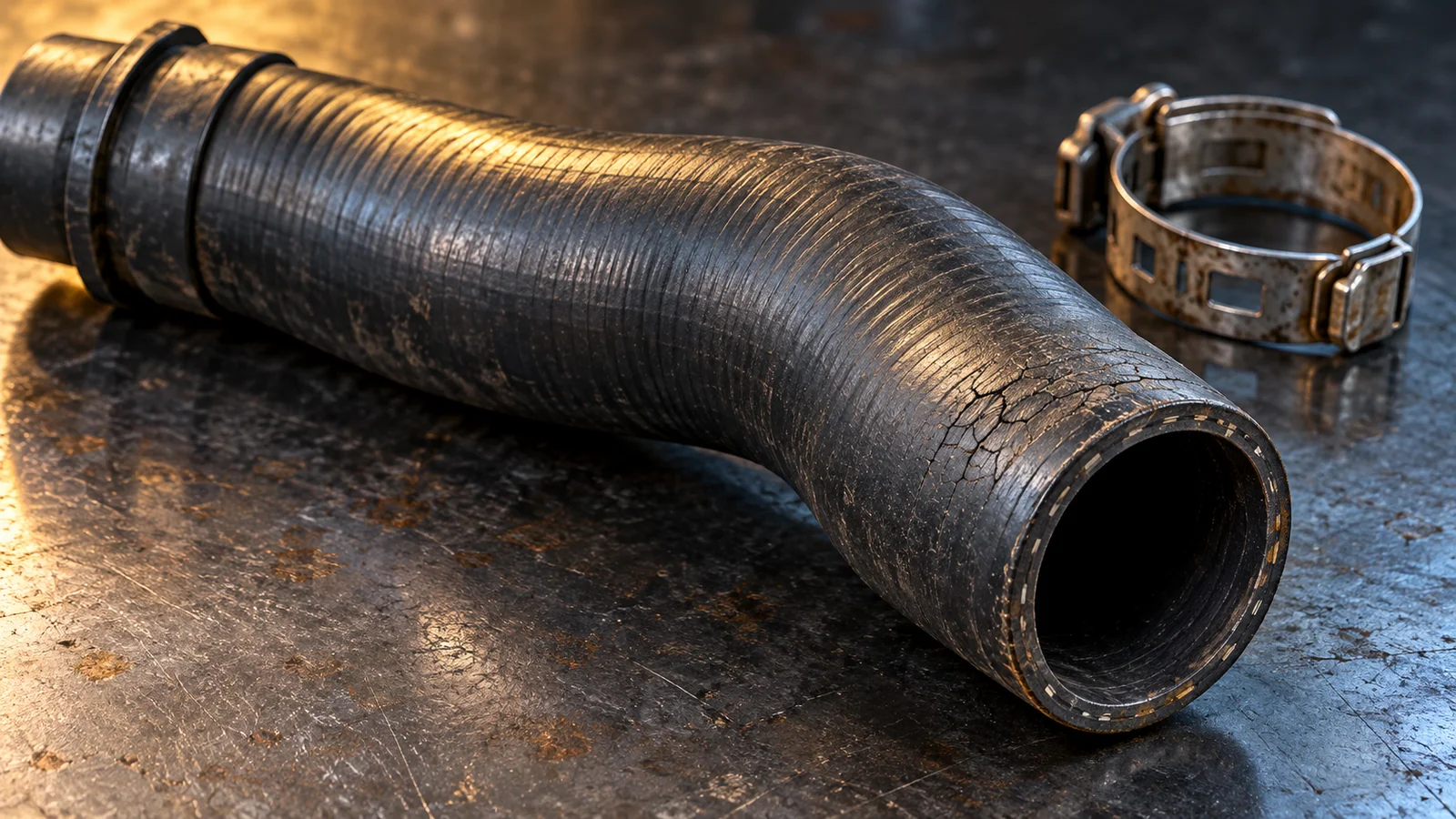
Inspect for leakage, cracks, bulges, chafing and abnormal softness or hardening when the system is safely cold. Underhood Service's hose-inspection transcript notes that deterioration can also develop internally, so the outside appearance does not tell the whole story.
A suitable pressure test can help locate leakage. Ask where fresh coolant originates and whether the adjoining connector or neck is sound. A collapsed hose also warrants checking the pressure cap and recovery path; replacing the hose alone may leave the cause unresolved.
Why does the exact hose and connector matter?
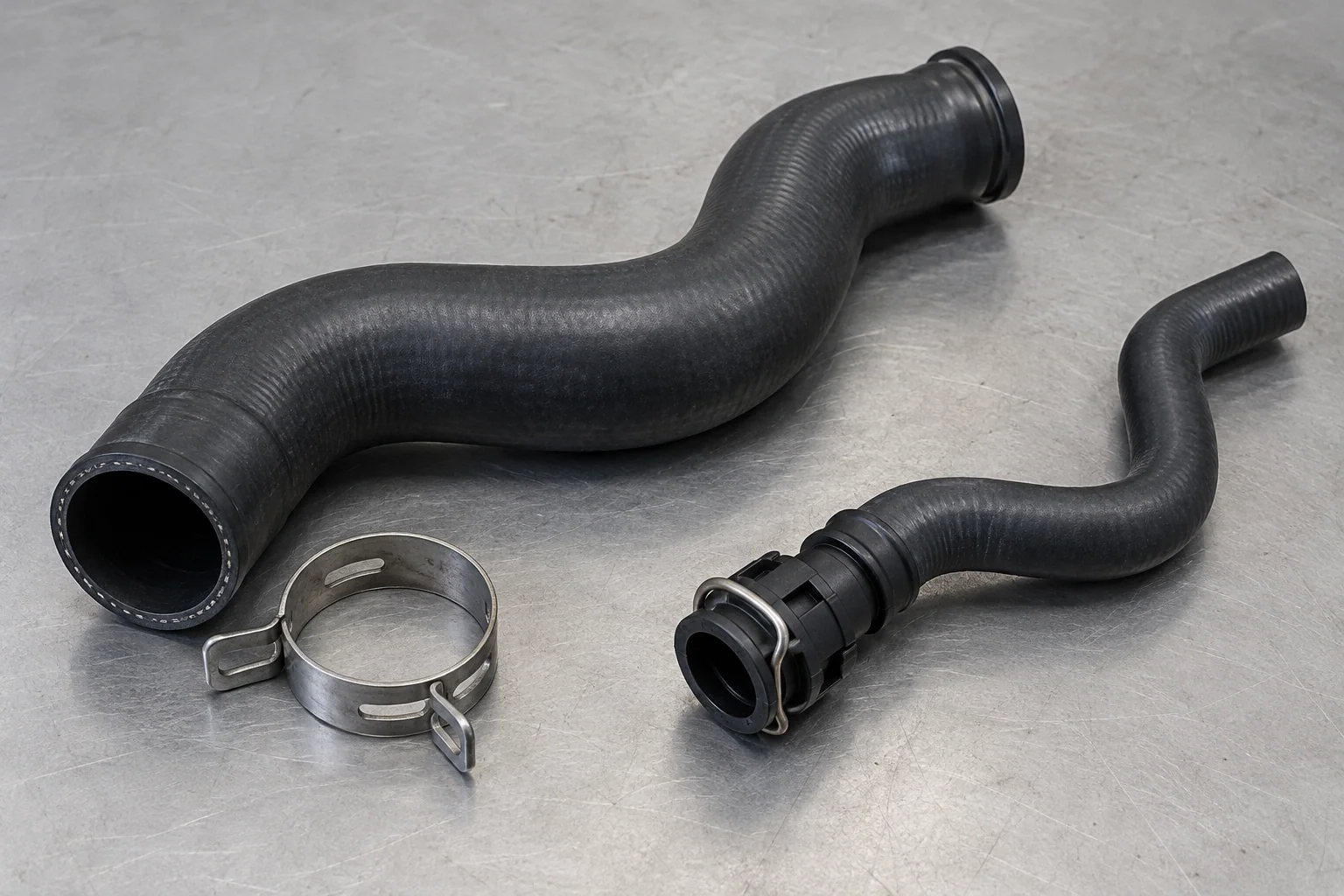
Match the coolant application, shape, branches and connections. Do not substitute a convenient piece of hose simply because its diameter looks right. Some repairs involve an assembly or connector rather than a plain length of rubber.
The estimate should identify the upper or lower radiator hose, heater hose or other coolant line being repaired. Ask whether the appropriate clamps, seals and connectors are included. Avoid an unsupported rule that every hose or every clamp must be replaced with the same generic design.
What should replacement and refilling involve?
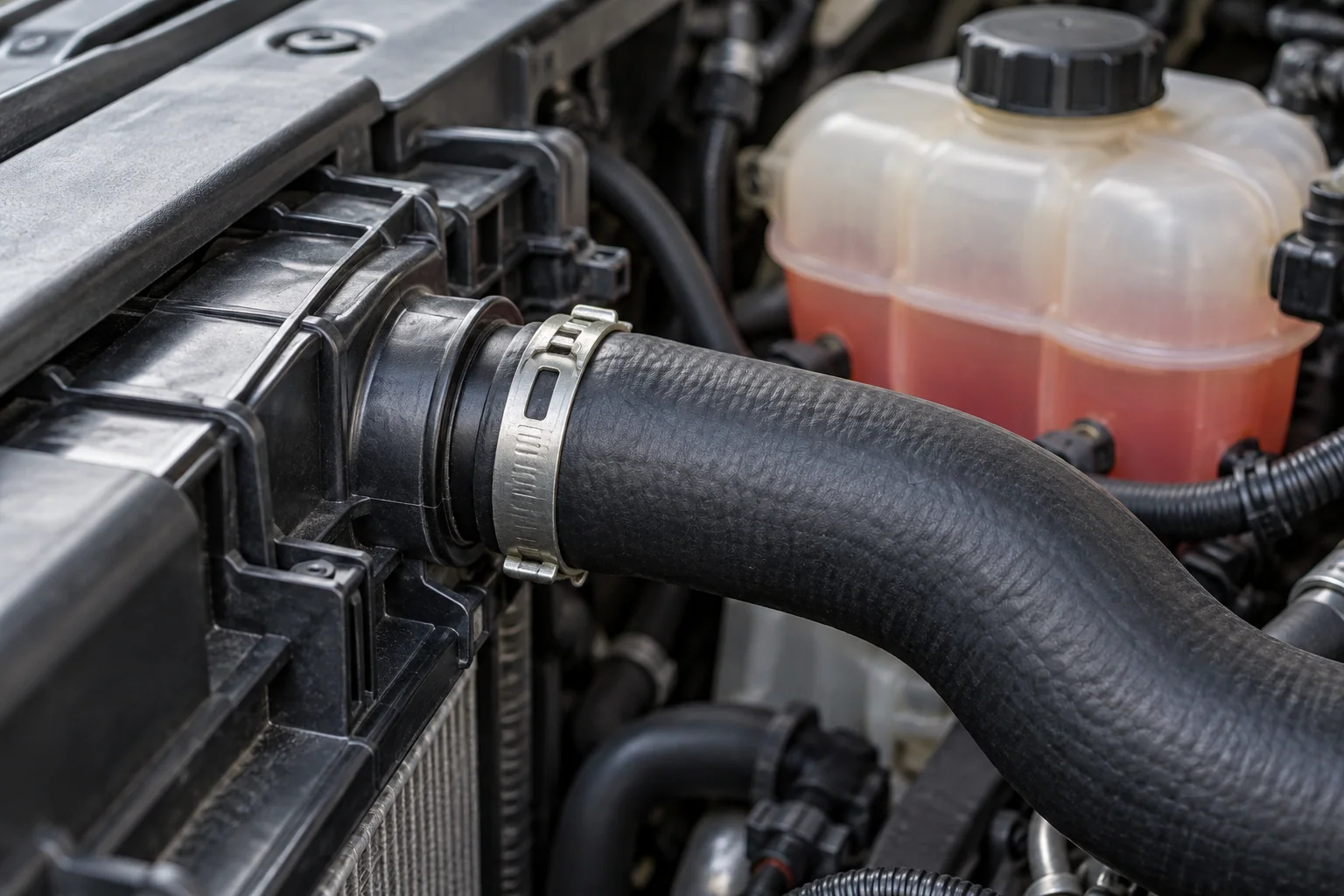
Let the system cool fully before service. Never open a hot radiator or pressurized reservoir cap. The repair requires draining as specified, removing the hose without damaging its fittings, inspecting the attachment points and fitting the correct replacement.
RepairPal warns that excessive removal force can damage otherwise usable plastic fittings. Follow the vehicle's instructions for releasing connectors and installing clamps; do not use extra clamp force to compensate for a damaged neck.
Refill with the specified coolant using the required air-removal procedure, then check for leaks. Filling and bleeding requirements vary, so a hose installed successfully is only part of completing the job.
How much does hose replacement cost?
RepairPal's radiator-hose replacement estimate, updated September 3, 2026, is $498–$558 in the US, with $126–$185 labor and parts around $372. Taxes, fees, location and related repairs are excluded.
That is a broad radiator-hose benchmark, not a heater-hose price or a quote for every upper or lower hose. Access, the required assembly, damaged connections, coolant and the filling procedure can change the scope. Compare estimates for the same identified repair.
How do you avoid another leak or overheating problem?
Have any contributing damage or contamination addressed. Inspect the other hoses and cooling components on their condition rather than inventing a universal replacement interval.
Ask how the shop verified correct coolant level, leak-free operation and controlled temperature afterward. If coolant loss or overheating returns, stop safely and seek assessment; repeated topping up is not a completed repair.
Sources & further reading
- MOTOR — How Well Do You Know Hoses?
- Underhood Service — Engine Cooling System: Hose Inspection and Replacement
- MOTOR — Cooling System Diagnosis
- RepairPal — Radiator Hose Replacement Cost Estimate
Vehicle designs and maintenance requirements vary. Consult the owner’s manual for your exact vehicle and seek a qualified inspection for a specific fault.