Cooling
Radiator and Heater Hose Problems: Leaks, Collapse and Testing
Published:
Edited and fact-checked by: Jacob Bowen
General information; vehicle-specific diagnosis requires an inspection. How we prepare our guides · This page reserves space for ads. Advertising policy · Privacy choices
The quick answer
A leaking, bulging, cracked or badly softened coolant hose needs inspection and usually replacement of the damaged part. A collapsed radiator hose also calls for checks of the hose and coolant-recovery system. Locate the actual leak before tightening a clamp or ordering a hose: the fitting, seal or plastic housing may be the source.
What signs point to a damaged radiator or heater hose?
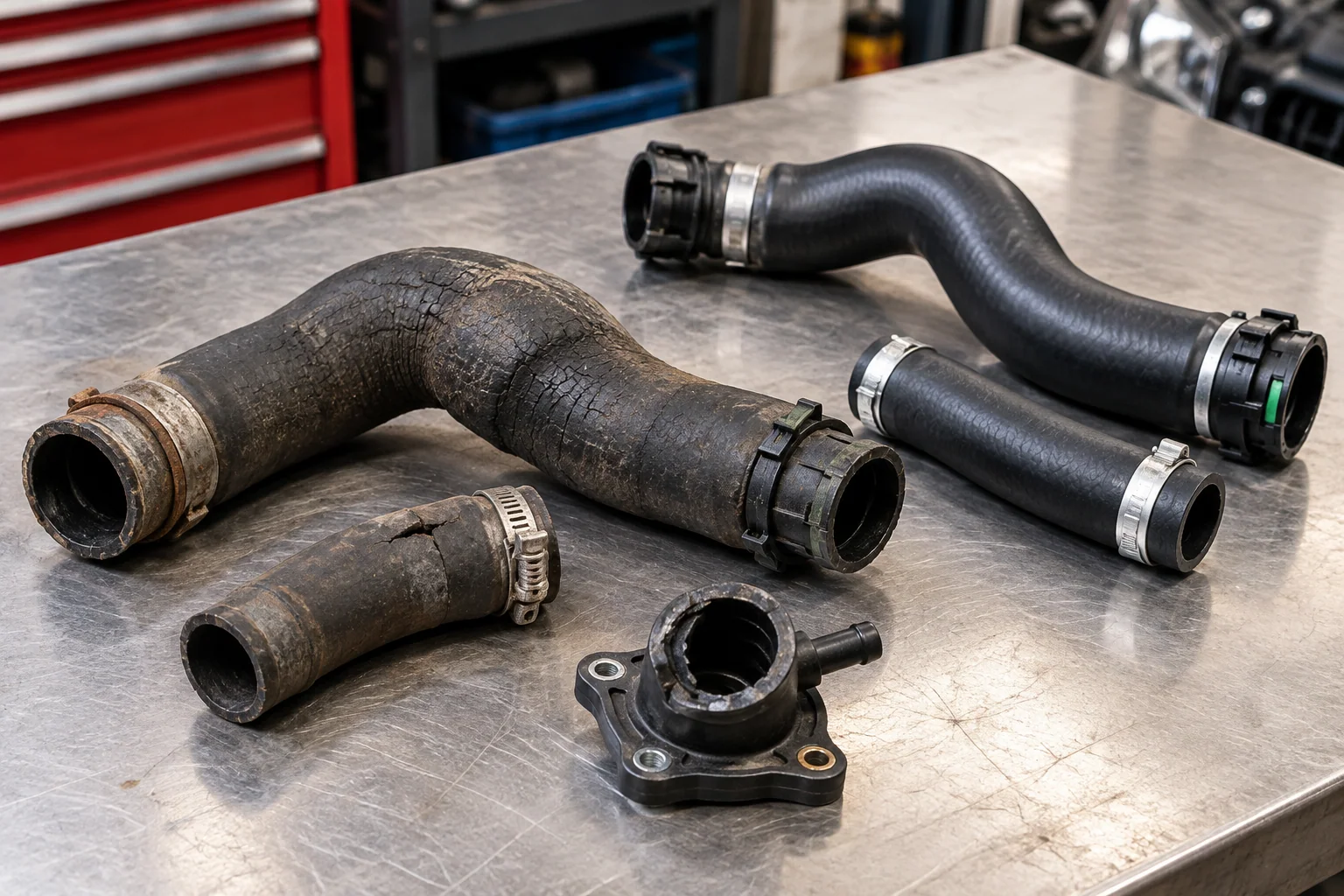
With the engine fully cooled, inspect accessible hoses for wetness or dried residue, cracking, bulges, abrasion and damage near connections. A brittle hose or an unusually soft, swollen area warrants attention. Avoid hot coolant and moving components.
The written Continental-sponsored inspection guidance published by Underhood Service notes that outside appearance cannot reveal every internal fault. Small leaks may need a pressure test. A hose that looks acceptable from above is not proof that the cooling circuit is leak-free.
Why does the hose leak near a clamp or coolant flange?
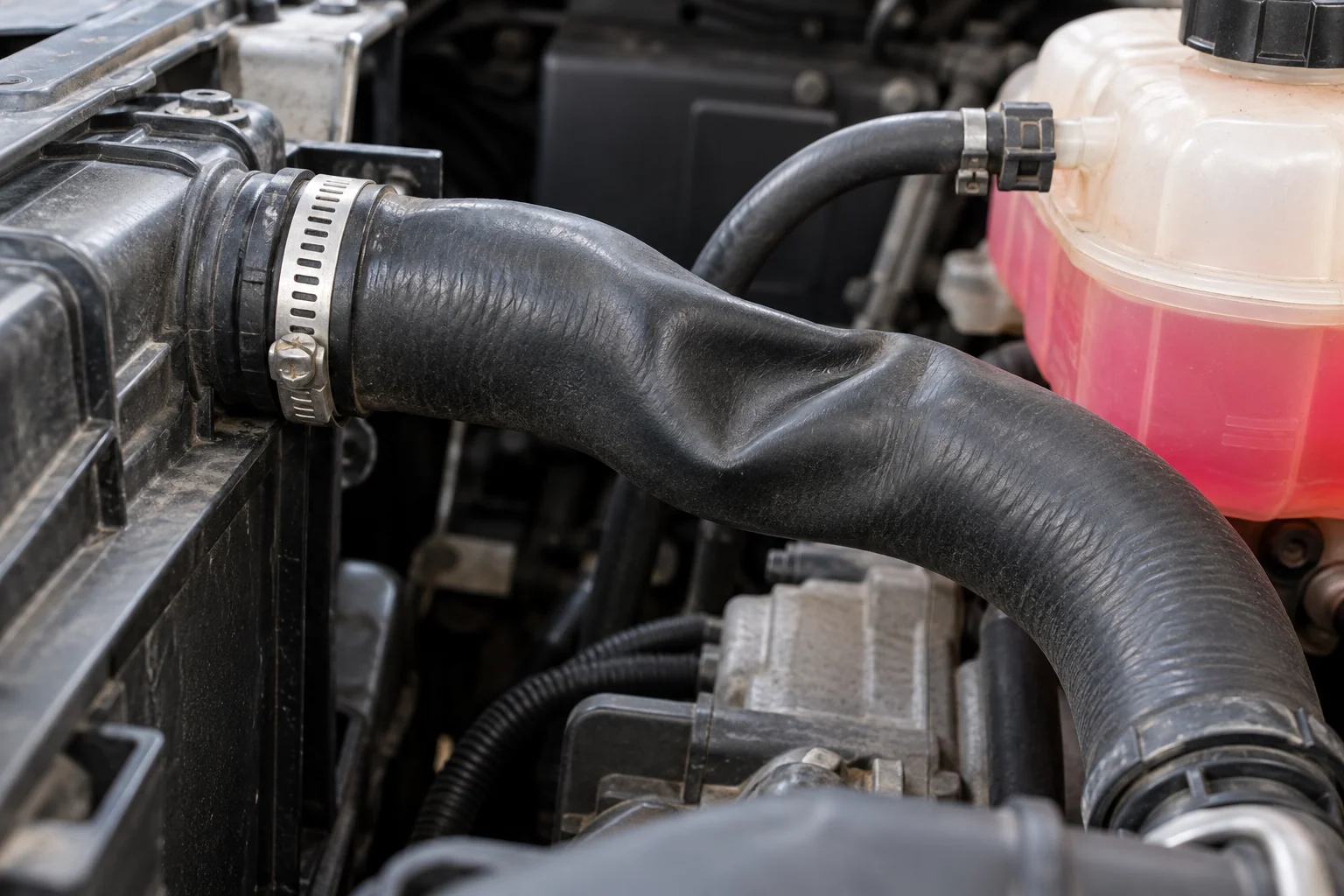
Check the complete connection: hose condition and seating, clamp condition, the fitting and any seals. Coolant can travel along a hose, so the wettest point is not always the origin.
Plastic radiator necks and housings can be damaged during removal or from excessive force. Do not keep tightening a clamp to compensate for a cracked connection. Ask the technician to identify whether the repair needs a hose, connector seal, flange or housing.
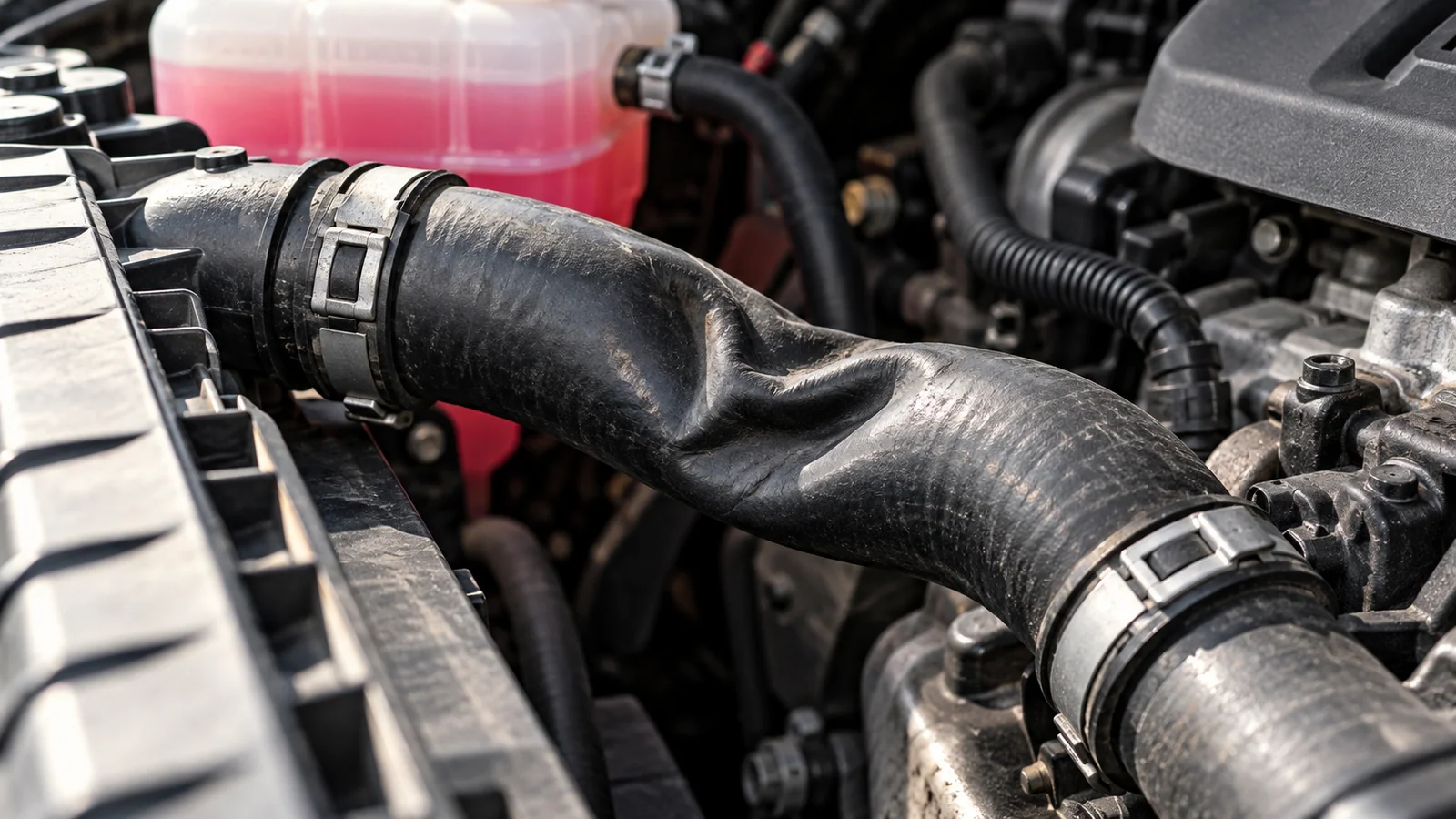
What does a collapsed radiator hose mean?
Record whether it collapses while running or remains flattened after cooling. The shop should check hose condition, routing and the pressure-cap/recovery path.
In a recovery system, coolant must be able to move back from the bottle as the engine cools. The cap's recovery function and connecting hose therefore matter, as well as the hose that visibly collapses. Replacing only that hose can leave a separate recovery fault unresolved.
What makes the replacement a complete repair?
Use the correct molded shape, size and coolant-compatible material, including required branches and connectors. Check routing for kinks, rubbing and heat exposure. A similar-looking piece of hose is not necessarily suitable.
Refill with the specified coolant, remove trapped air using the vehicle's procedure and verify the system retains coolant without leaking. The related replacement guide covers that work in more detail. Hoses should be inspected based on condition and vehicle guidance; there is no single replacement age for every application.
What should a hose-replacement quote include?
RepairPal's broad radiator-hose estimate, updated September 3, 2026, is $498–$558, with labor of $126–$185 and parts around $372. Taxes, fees, location and related repairs are excluded. This is not a universal heater-hose or coolant-flange price.
Ask which hose assembly, clamps or seals, coolant, filling procedure and leak checks are included. If a hose bursts, coolant loss is rapid or the engine overheats, stop safely and shut it down. Do not open a hot pressure cap or keep topping up to continue driving with a serious leak.
Sources & further reading
- MOTOR — How Well Do You Know Hoses?
- Underhood Service — Engine Cooling System: Hose Inspection and Replacement
- MOTOR — Cooling System Diagnosis
- RepairPal — Radiator Hose Replacement Cost Estimate
- AA1Car: coolant recovery system checks
Vehicle designs and maintenance requirements vary. Consult the owner’s manual for your exact vehicle and seek a qualified inspection for a specific fault.