Cooling
Coolant Leaks: Causes and Diagnostic Steps
Published:
Edited and fact-checked by: Jacob Bowen
General information; vehicle-specific diagnosis requires an inspection. How we prepare our guides · This page reserves space for ads. Advertising policy · Privacy choices
The quick answer
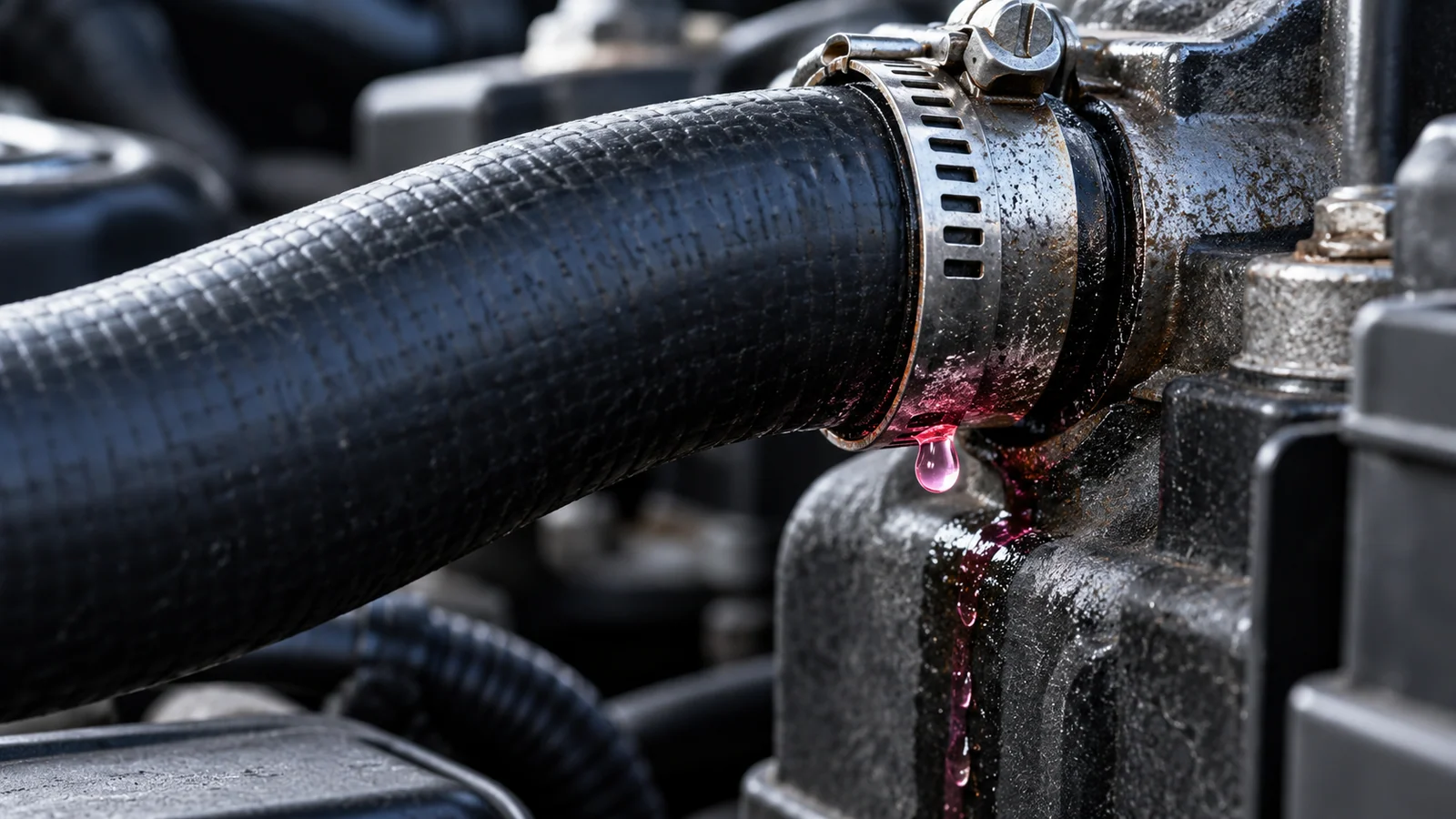
A coolant leak needs its source identified and repaired; repeatedly topping up the system does not fix it. If the engine overheats, steam appears or coolant is escaping rapidly, stop safely, shut the engine off and arrange assistance. Never open a hot cooling-system cap. For a slow leak, book an inspection before the coolant level falls far enough to cause overheating.
Is the liquid under the car definitely coolant?
Tell the shop where the liquid appeared, whether the coolant level has dropped, and whether you noticed an odor or temperature warning. A photo of the puddle and the parking location can help, but color alone is not a reliable diagnosis.
Fluid can travel along engine parts or an undertray before reaching the ground. A drip at the bottom of the engine does not prove that the engine block is leaking. The inspection needs to trace fresh leakage to its origin.
How does a technician find an external coolant leak?
The inspection covers the components fitted to your vehicle, including hoses and connections, the radiator, pump, reservoir, cap and coolant-carrying housings. Coolant inside the cabin also calls for checking the heater circuit.
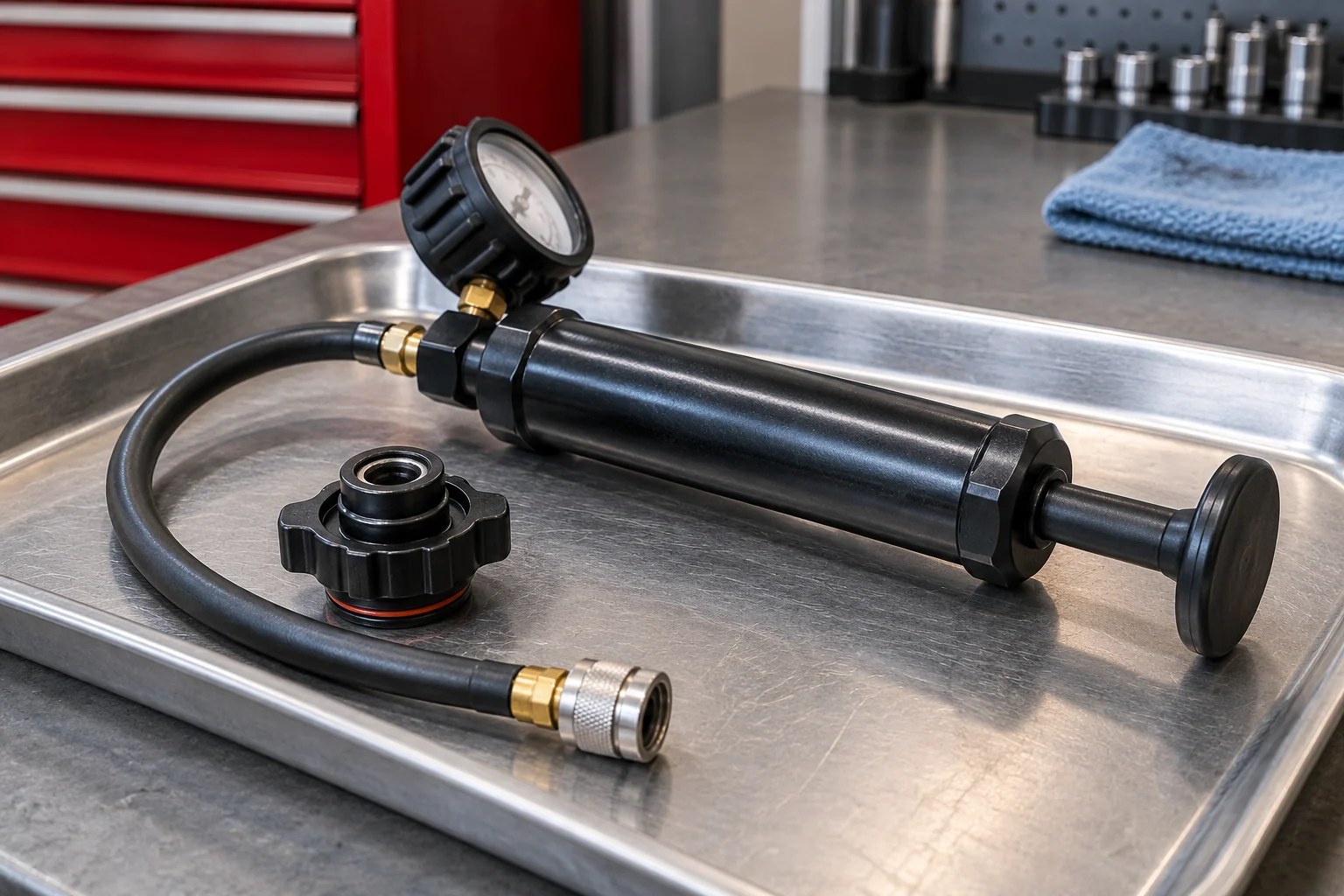
A cooling-system pressure test can help expose leakage, and suitable detection dye may help with an elusive seep. Test pressure and setup must follow the vehicle's service information. Ask the technician to show the actual leak rather than identify a part solely from stains nearby.
What if coolant disappears without a visible puddle?
The leak may be difficult to see, occur under particular conditions, or involve an internal path. Coolant entering engine oil, a cylinder or another fluid circuit needs further investigation. A pressure drop without an obvious external drip does not, by itself, prove a failed head gasket.
Persistent white exhaust, fluid contamination or unexplained coolant loss gives the shop reasons for targeted testing. Ask what evidence distinguishes the proposed failure from other possible paths before approving engine disassembly.
How much does a coolant-leak repair cost?
There is no useful single price for every coolant leak. A hose connection and an internal engine repair involve very different work. Ask for an estimate tied to the confirmed location, with diagnosis, parts, access labor, coolant and filling procedures identified.
The same approach applies to model-specific searches such as a Cruze, F-150 or BMW coolant leak. Engine, year and equipment determine the relevant components; the model name alone does not establish a common-failure diagnosis for your car.
What needs checking after the leak is repaired?
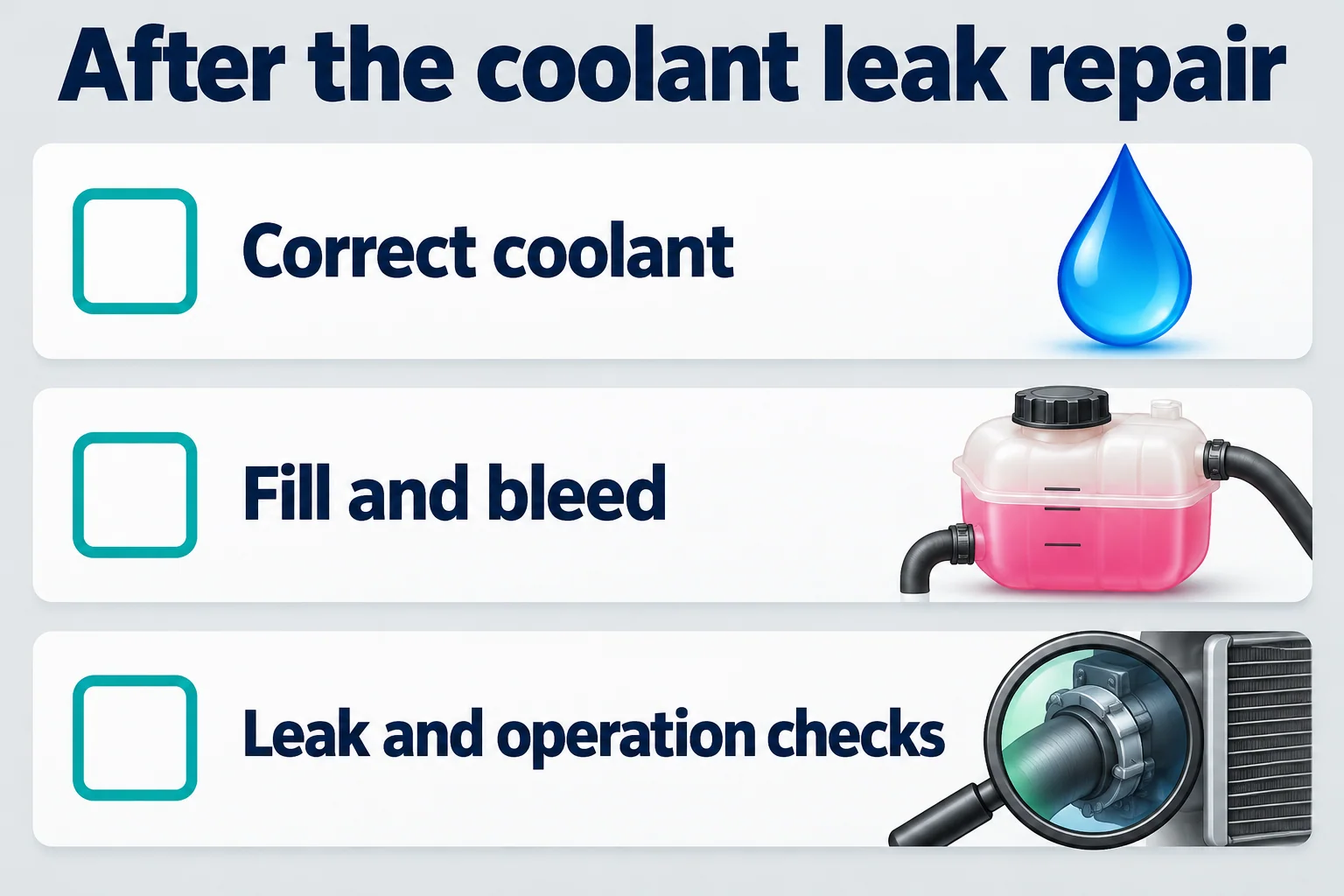
The system needs the correct coolant and the vehicle's filling and air-removal procedure, followed by a leak check and an operating check. If overheating occurred, ask whether there is evidence of further damage or another cooling-system fault.
A bottle of sealer is not evidence that the underlying failure has been resolved. Before adding anything, get advice for the actual fault and the manufacturer's requirements. Keep the repair findings so recurring loss can be compared with the original leak.
Sources & further reading
- AA1Car / Larry Carley — How To Find & Fix Coolant Leaks
- Fel-Pro — Engine Fluid Leak Inspection Checklist
- HELLA — Cooling system check - Troubleshooting & diagnostics
Vehicle designs and maintenance requirements vary. Consult the owner’s manual for your exact vehicle and seek a qualified inspection for a specific fault.