Cooling
Coolant Reservoir Bubbling: Causes and Diagnostic Steps
Published:
Edited and fact-checked by: Jacob Bowen
General information; vehicle-specific diagnosis requires an inspection. How we prepare our guides · This page reserves space for ads. Advertising policy · Privacy choices
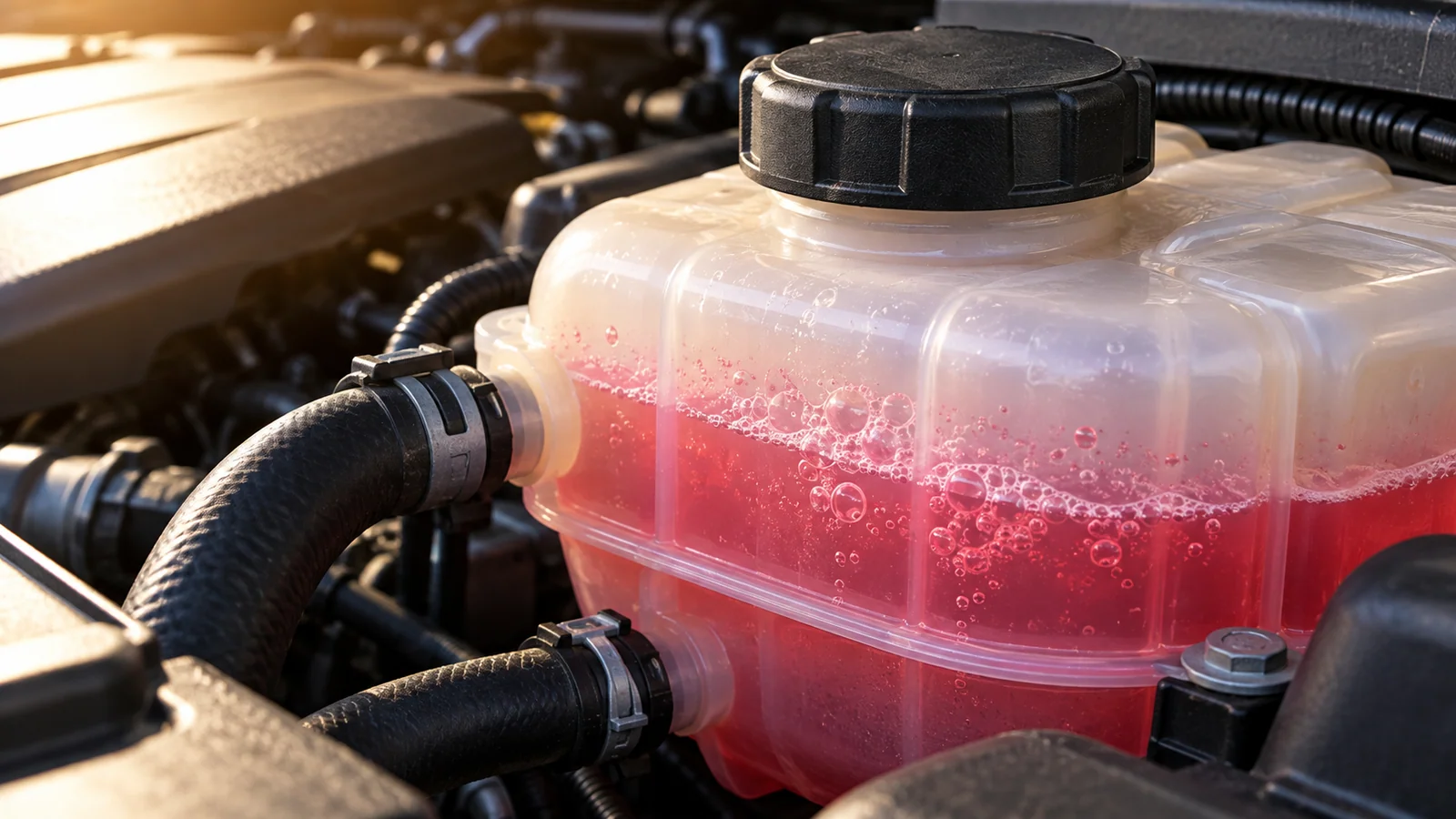
The quick answer
Coolant-reservoir bubbling can involve trapped air, boiling or combustion gases entering the cooling system. Bubbles alone do not confirm a blown head gasket. Note coolant loss, temperature warnings and recent cooling-system work, then have the cap, system sealing and relevant engine tests checked. If the engine overheats or releases steam, stop safely and shut it off.
Could air trapped after a repair cause bubbling?
Air can remain after the cooling system has been opened or refilled. Some vehicles require a specific filling and air-removal procedure. An incomplete refill can impair circulation and lead to overheating.
Tell the shop what work was done and when bubbling started. Do not assume it just needs more bleeding if coolant keeps disappearing or the temperature rises. The correct procedure depends on the cooling-system design.
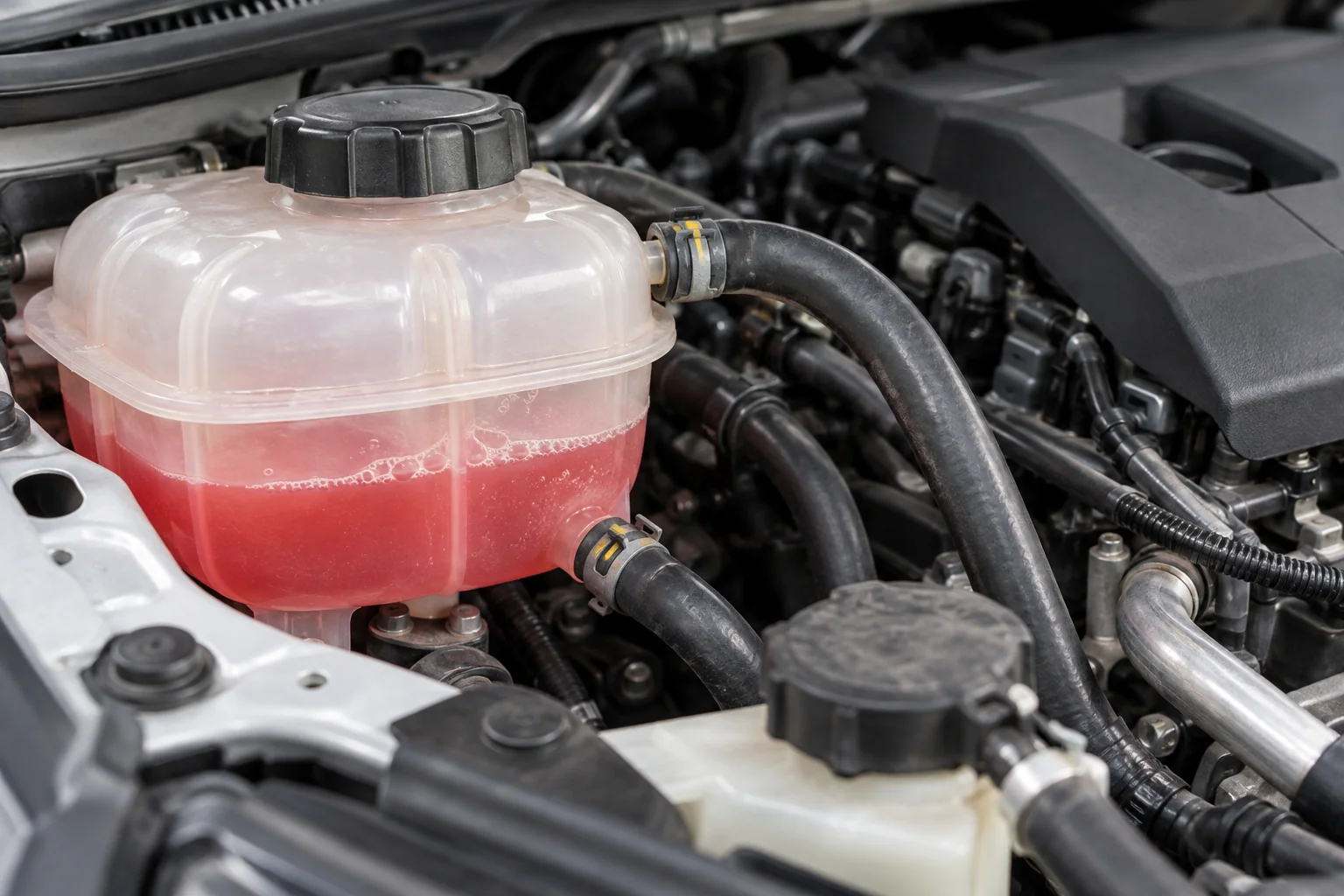
What if the coolant seems to be boiling?
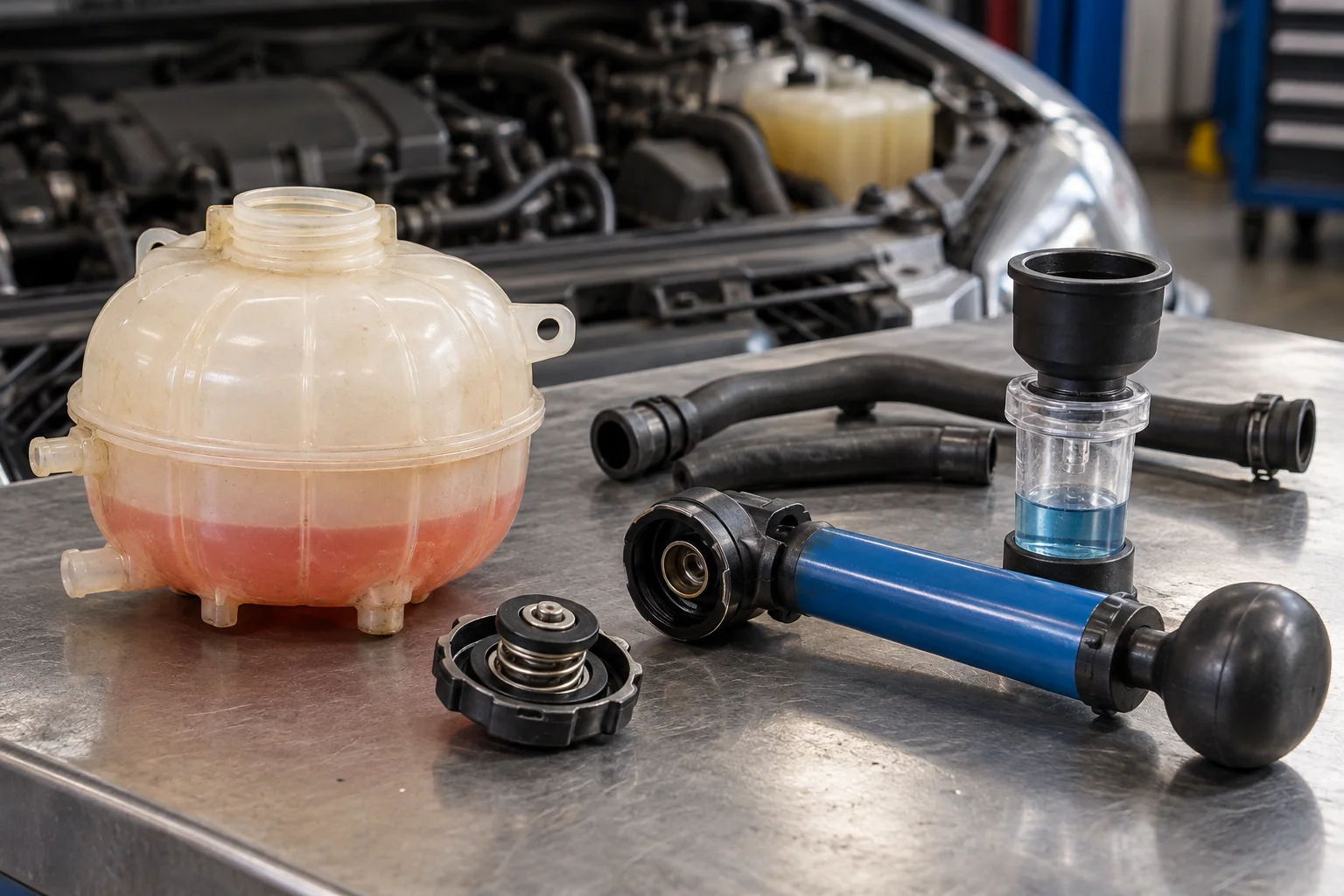
The cap and sealed cooling circuit help control operating pressure. A leak or cap fault can contribute to coolant loss and boiling. A technician should check the cap and system using the appropriate equipment and specifications.
Do not open a hot radiator or pressurized reservoir to see what happens. Escaping coolant and steam can burn you. Keep clear if steam is present and wait for the system to cool fully before any permitted inspection.
When do bubbles raise concern about a head gasket?
A failed head-gasket seal can allow combustion pressure into the cooling circuit. Fel-Pro lists bubbling among possible signs, along with unexplained coolant loss, overheating and other engine symptoms. Those observations warrant testing rather than an immediate replacement verdict.
The shop may use a combustion-gas test and other appropriate checks to investigate an internal leak. Ask what the results demonstrate and whether other damage or causes remain possible. A cooling-system pressure drop without an obvious external leak is not, by itself, proof of one particular failed gasket.
Bubbling without an overheating indication still deserves attention when it recurs or accompanies coolant loss. A dashboard gauge and the appearance of the reservoir cannot independently establish the cause.
What should the repair and final checks include?
Correct the demonstrated fault: for example, a leaking connection, failed cap, filling problem or confirmed engine-sealing failure. If overheating occurred, investigate its cause as well as any resulting damage.
Use the specified coolant and filling procedure, verify sealing and temperature control, and recheck the level under the proper cold conditions. Do not keep topping up and driving with persistent loss, active boiling or an overheating warning.
Sources & further reading
- AA1Car / Larry Carley — How To Find & Fix Coolant Leaks
- Fel-Pro — Blown Head Gasket Symptoms & Causes
- MOTOR — Cooling System Service You're Getting Warmer: Diagnosing Overheating Problems
Vehicle designs and maintenance requirements vary. Consult the owner’s manual for your exact vehicle and seek a qualified inspection for a specific fault.