Engine
Engine Oil Leaks: Causes and Diagnostic Steps
Published:
Edited and fact-checked by: Jacob Bowen
General information; vehicle-specific diagnosis requires an inspection. How we prepare our guides · This page reserves space for ads. Advertising policy · Privacy choices
The quick answer
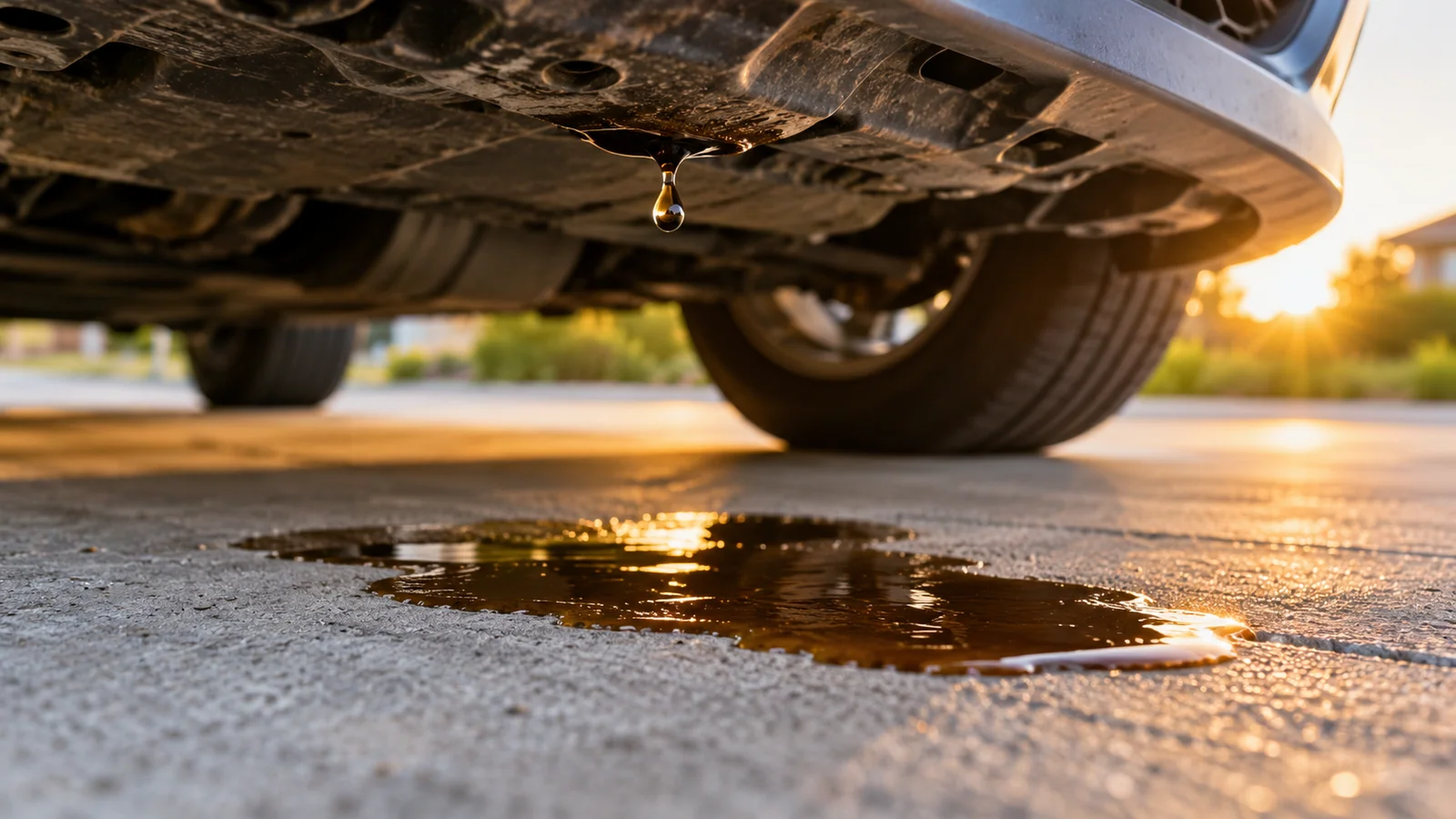
An engine-oil leak should be traced to its source before a gasket or seal is replaced. Check the oil level using your vehicle's instructions and arrange an inspection; oil can run down from another component before it drips underneath. If the oil-pressure warning comes on, stop safely and shut the engine off. A normal oil level does not prove that oil pressure is safe.
What can you check before the appointment?
When safely parked, record the oil level, where the drips land and whether they began after recent service. A photo can help the shop compare the leak later. Follow the owner's procedure for checking and adding the specified oil, and avoid overfilling.
Ask the technician to identify the fluid rather than relying only on its color. If the suspected leak is actually brake fluid or braking feels abnormal, that needs brake-system attention, not an engine-oil repair.
Why does oil near the transmission not prove a rear main seal leak?
Gravity and airflow can carry oil away from the original leak. Underhood Service's leak-tracing explanation gives the example of oil from a valve cover reaching the rear-main-seal area.
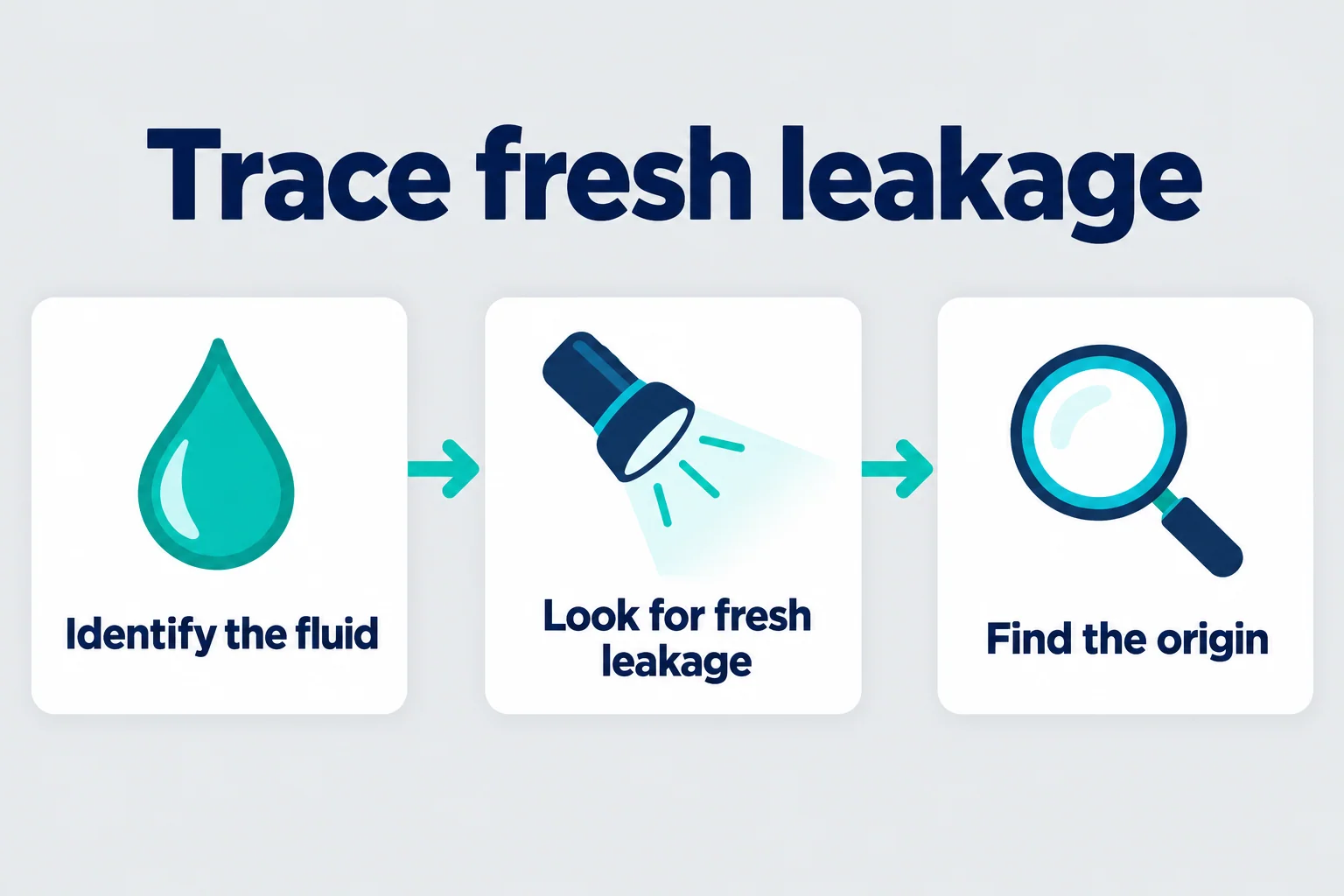
Cleaning residue and looking for fresh leakage can separate an active leak from an old coating. Suitable fluorescent dye and inspection lighting may help when access is poor. The goal is to locate the origin rather than replace whichever seal is closest to the final drip.
What else can make gaskets or seals leak?
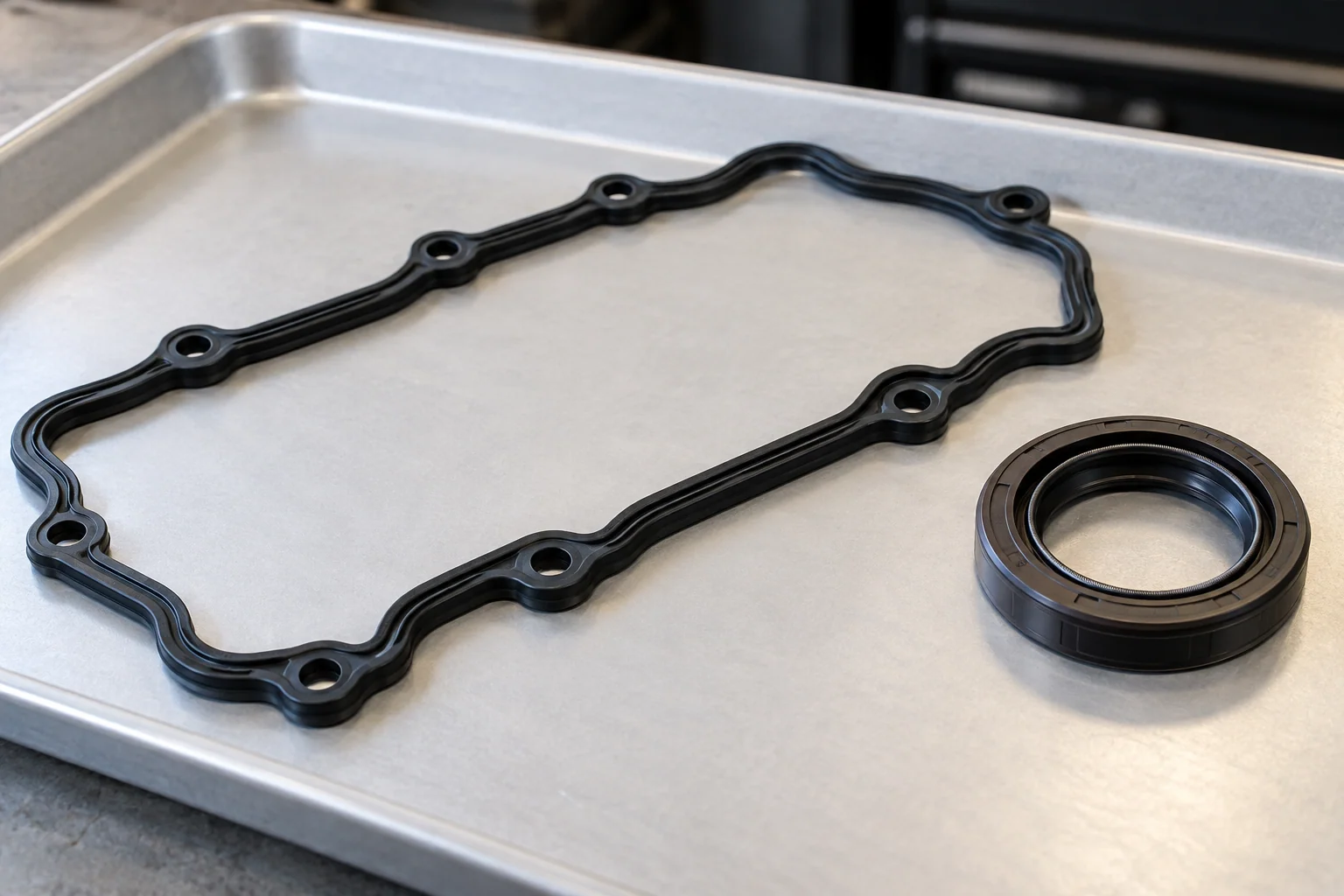
The inspection should consider the relevant crankcase ventilation system and oil level as well as the sealing joint. Abnormal crankcase pressure or overfilling can contribute to leakage. Replacing a seal without addressing a contributing fault can leave the problem unresolved.
A leak on a BMW, Power Stroke, Subaru or another engine still needs that vehicle's inspection path. A familiar model-specific complaint is a reason to look carefully, not proof that your car has the same failure.
How much does fixing an engine-oil leak cost?
The confirmed location and access requirements determine the work. A readily accessible cover and a seal requiring major component removal are different jobs. These references do not establish one reliable price for all oil leaks.
Ask for diagnosis, parts and labor to be itemized, including any related damage or overlapping access work. If several areas are wet, ask which leaks are confirmed and how the shop distinguishes them.
Can an additive or tighter bolts solve the problem?
Neither establishes a repair. A damaged gasket or worn sealing surface needs the appropriate correction, and overtightening can damage a cover or gasket. Sealant choice, surface preparation and tightening instructions must match the particular joint.
After the work, the shop should check for fresh leakage and confirm the correct oil level. Ask whether oil on hot components or other affected areas was addressed. If a leak returns, compare the new evidence with the documented original source before authorizing the same repair again.
Sources & further reading
- Underhood Service — How to Pinpoint an Oil Leak Source (VIDEO)
- AA1Car / Larry Carley — How to Find & Fix Engine Oil Leaks
- Fel-Pro — Engine Fluid Leak Inspection Checklist
- AA1Car — Engine oil-pressure warning light
Vehicle designs and maintenance requirements vary. Consult the owner’s manual for your exact vehicle and seek a qualified inspection for a specific fault.