Emissions
PCV Valve: Symptoms, Diagnosis and Repair Options
Published:
Edited and fact-checked by: Jacob Bowen
General information; vehicle-specific diagnosis requires an inspection. How we prepare our guides · This page reserves space for ads. Advertising policy · Privacy choices
The quick answer
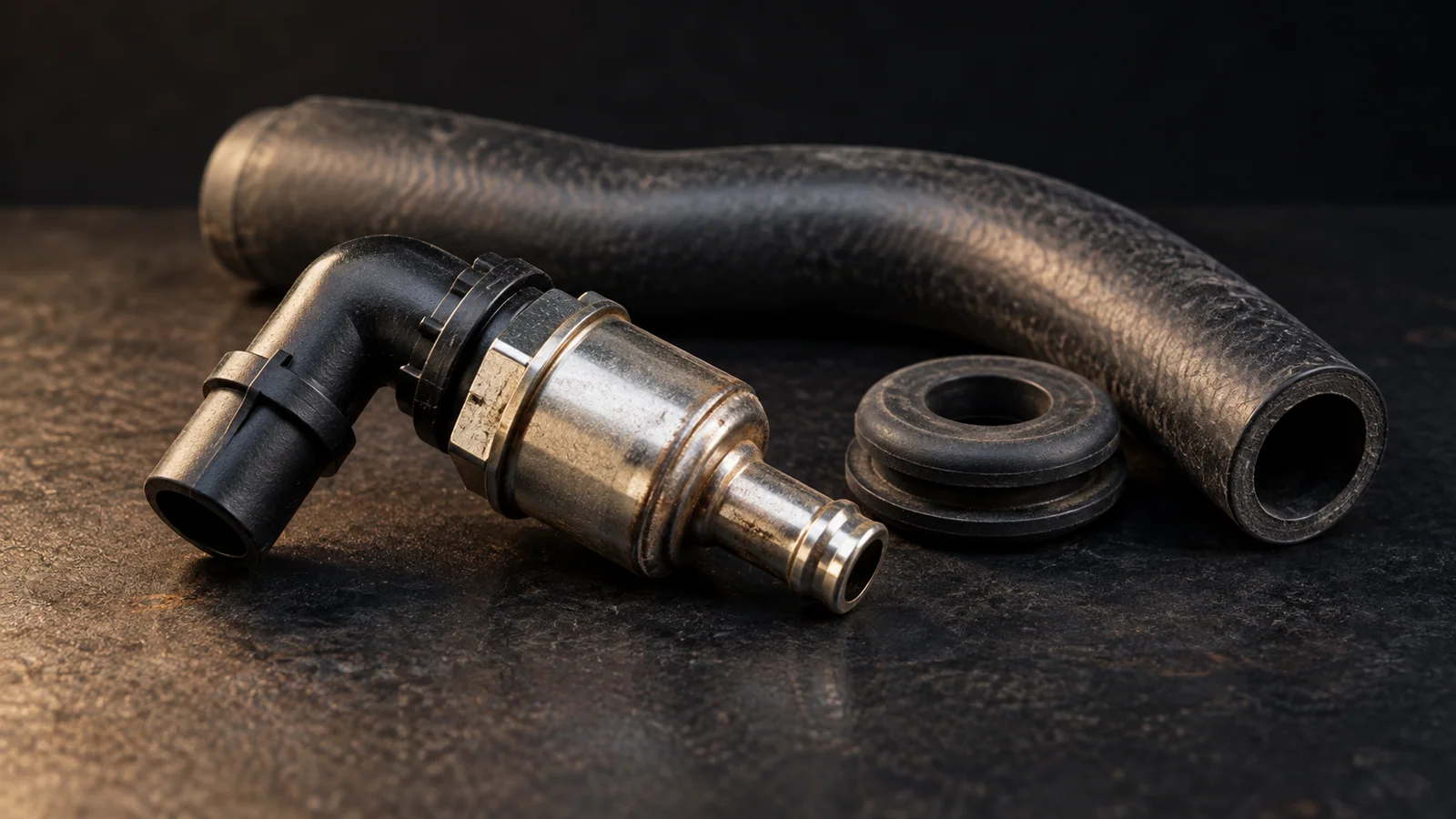
A PCV-system fault can contribute to rough idle, oil leaks or oil consumption, but those symptoms do not prove the valve failed. A restriction, leaking hose or incorrect replacement part can affect the system differently. Have crankcase ventilation checked as a complete system using the procedure for your engine.
How do blocked and leaking PCV systems differ?
Positive crankcase ventilation routes gases from the crankcase back into the intake. AA1Car explains that restricted ventilation can allow pressure to build and force oil past seals. Excessive flow or a leaking connection can disturb the fuel mixture and idle.
Those are possible effects, not diagnoses. An external oil leak still needs tracing, and a rough idle still needs its own checks. Note where oil appears, when the engine runs poorly and whether the concern began after work on the intake or valve cover.
Does every engine have a removable PCV valve?
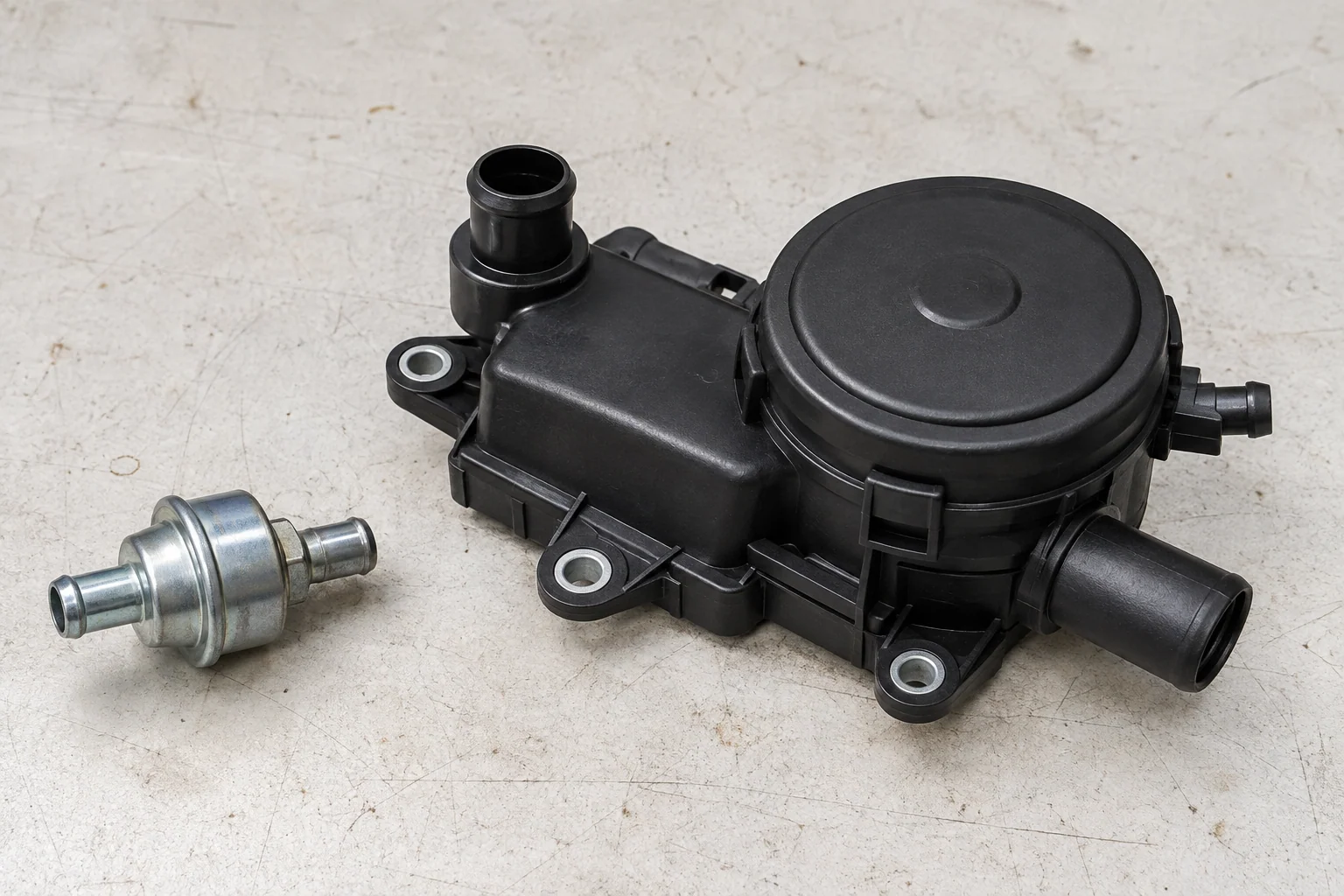
No. Some systems use a separate valve; others use a calibrated opening or breather/separator arrangement. Identify the installed design before buying parts or applying a test intended for a spring-loaded valve.
The correct flow characteristics matter. Underhood Service notes that requirements can differ even between platforms using the same engine. A valve with matching hose fittings is not automatically the correct replacement.
Does shaking the valve prove it works?
No. AA1Car explains that a rattle cannot establish that the spring and flow calibration are correct or that deposits are not restricting flow. Feeling vacuum at one opening is also an incomplete check.
Inspection should include the hoses, connections, breather path and relevant seals. A shop may measure crankcase pressure or vacuum and check flow under the manufacturer's specified conditions. These measurements assess crankcase ventilation, rather than engine oil-pump pressure.
Ask which result was outside specification and how the technician distinguished a ventilation restriction from other causes of excessive crankcase pressure. A generic paper-over-an-opening test is not enough to settle every design.
What should the repair and follow-up include?
Repair the confirmed fault: a split hose, blocked passage, unsuitable valve or defective assembly requires the corresponding correction. Use the correct part and hose specification. Cleaning is appropriate only where the service instructions allow it; it cannot restore a damaged component.
After repair, have ventilation operation and the original symptom checked again. If oil loss or abnormal pressure remains, continue diagnosis rather than repeatedly replacing the PCV valve.
Use the vehicle's maintenance schedule for inspection or replacement. There is no universal PCV replacement mileage, pressure target or price that covers every system. If oil loss is rapid or an oil-pressure warning appears, stop safely and arrange assistance.
Sources & further reading
- MOTOR — PCV Systems: Maintaining the Flow
- AA1Car / Larry Carley — The Basics of Positive Crankcase Ventilation (PCV)
- Underhood Service — Tech Tip: Don’t ‘Blow By’ PCV Inspections
Vehicle designs and maintenance requirements vary. Consult the owner’s manual for your exact vehicle and seek a qualified inspection for a specific fault.