Emissions
EVAP System Leaks: Causes and Diagnostic Steps
Published:
Edited and fact-checked by: Jacob Bowen
General information; vehicle-specific diagnosis requires an inspection. How we prepare our guides · This page reserves space for ads. Advertising policy · Privacy choices
The quick answer
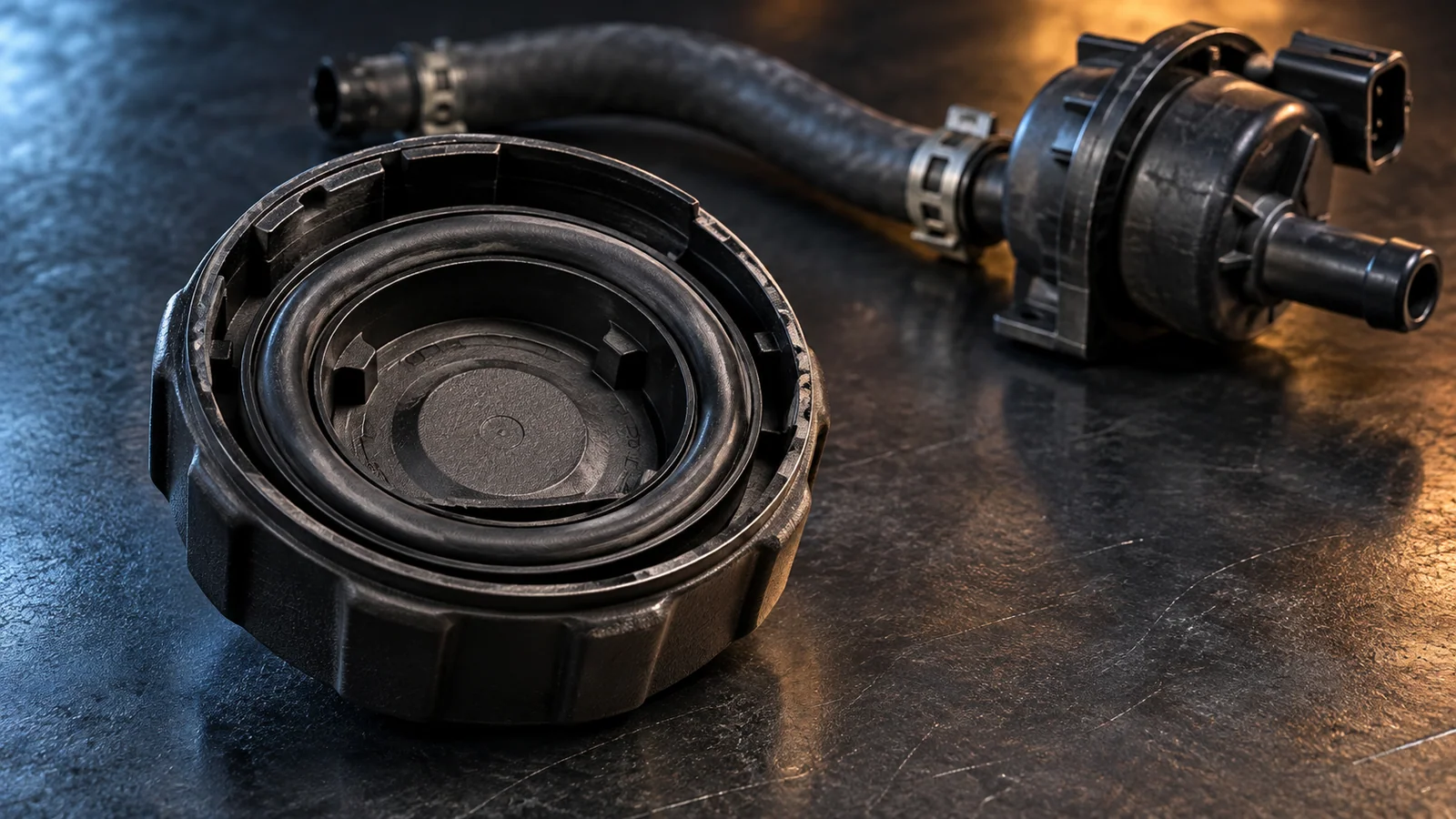
An EVAP leak complaint needs testing to determine whether the fuel-vapor system is actually leaking and where. A loose cap is one possibility on vehicles with a cap, but valves, lines, seals and monitoring faults also need consideration. Read the exact code before choosing a repair. A system reported as not ready has not completed its monitor; that status alone does not prove a leak.
Is the scanner reporting a leak, a circuit fault or an incomplete test?
These are different findings. Small- and large-leak codes concern system sealing behavior. A valve-circuit code directs electrical checks, while a flow complaint needs the applicable functional checks.
Not-ready status can occur when the monitor's required conditions have not been met. Fuel level, temperature and operating history can matter, depending on the design. Do not buy a supposed readiness sensor or assume that driving a fixed number of miles will complete every vehicle's test.
How does the car check for EVAP leaks?
Different systems monitor pressure, vacuum or the behavior of a leak-detection device. Some use a pump; others use the natural pressure change as the tank cools. The system's layout determines the diagnostic procedure.
Snap-on's DMTL example uses a 2010 BMW 335i to illustrate a scan-tool functional test. The result helps assess sealing behavior; it does not identify the failed component by itself. A pump fault or missing power supply needs a different correction from a cracked hose.
What can an EVAP smoke test actually show?
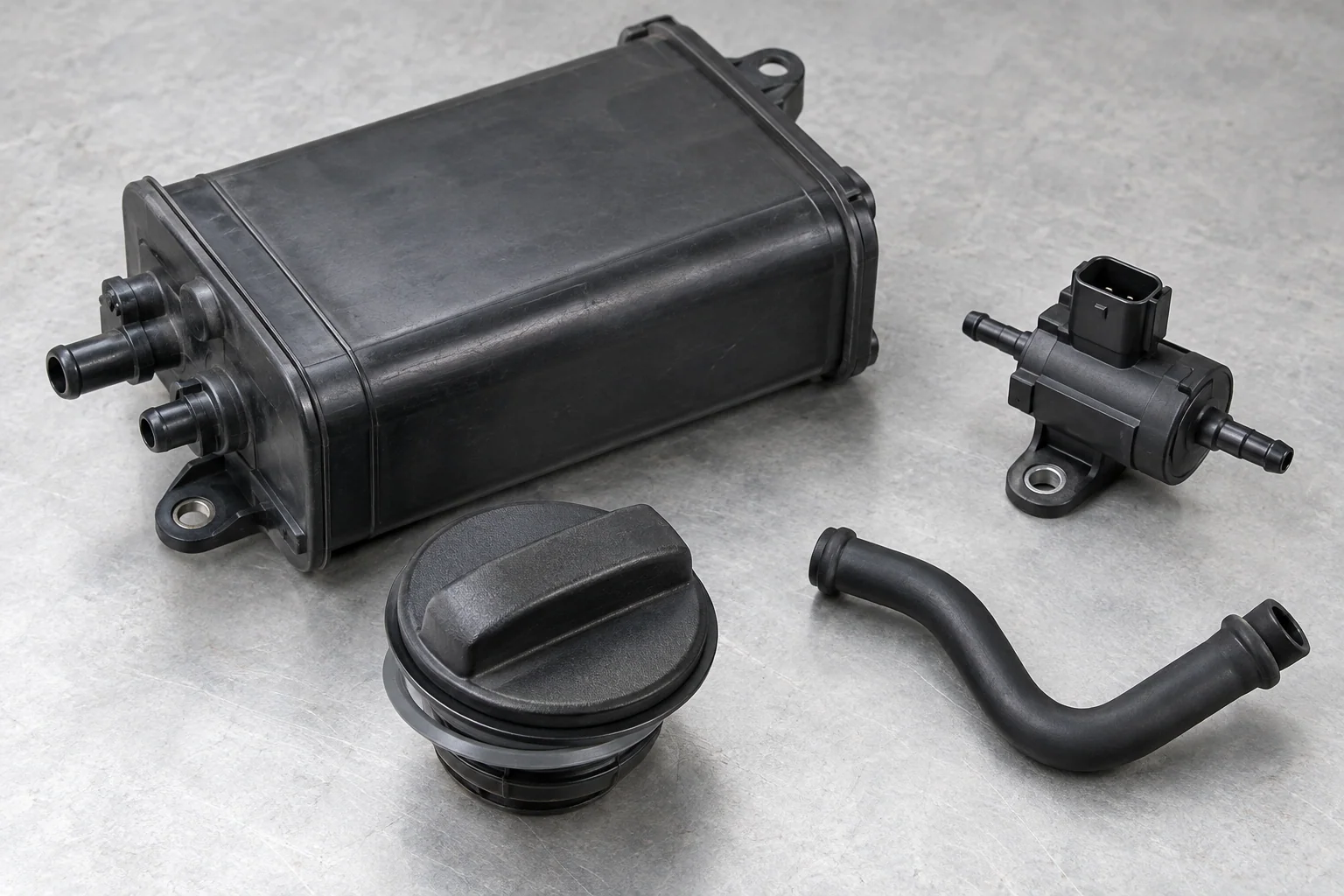
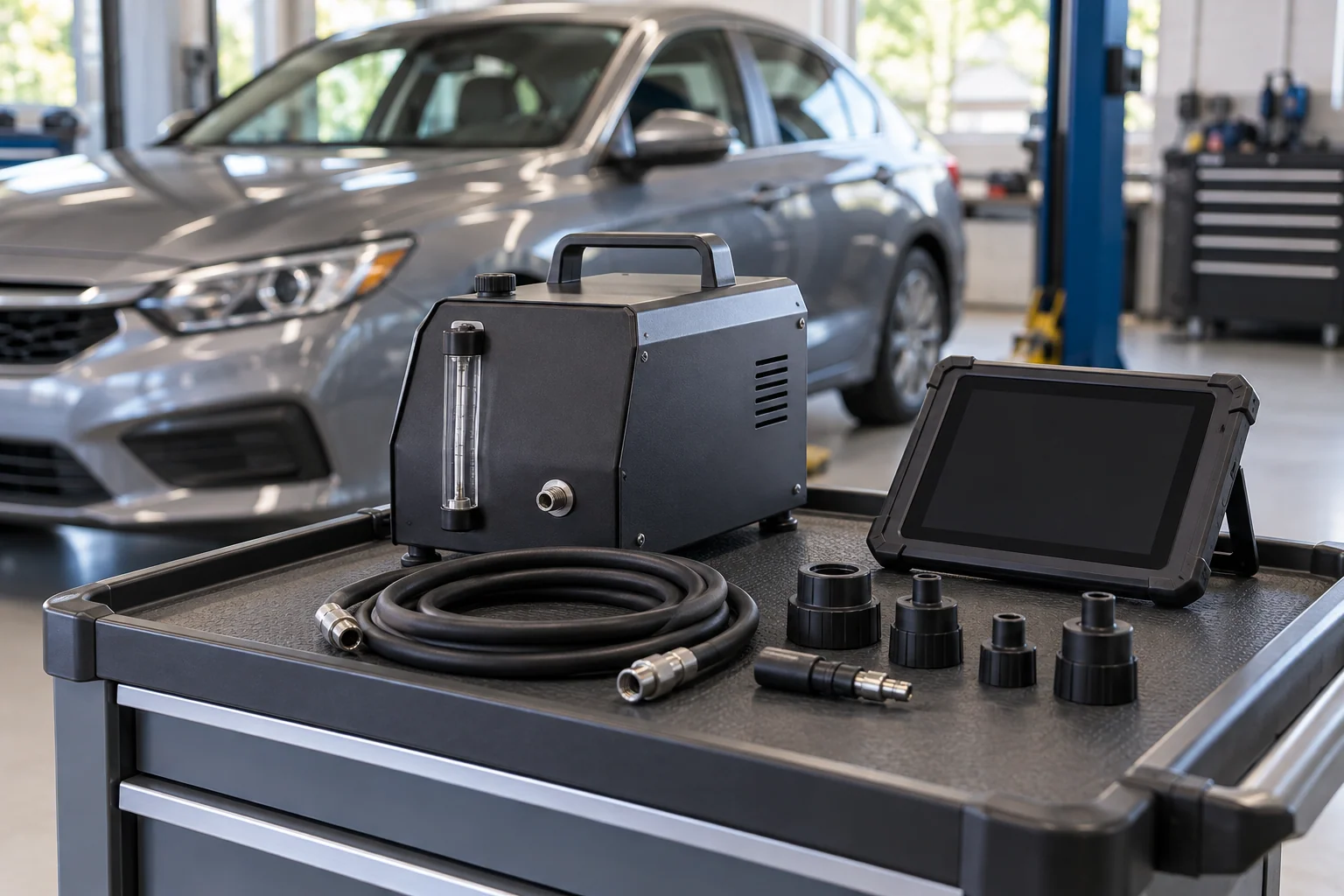
A properly prepared smoke test can help locate an escape path that is difficult to see otherwise. The technician must use suitable equipment, test medium, pressure and valve configuration for the vehicle.
Too much test pressure can create a misleading result by opening a seal or valve that would hold under the proper conditions. Do not use an improvised smoke source or unregulated shop air around fuel vapors. Ask which location was confirmed and whether a valve also needed a sealing or electrical test.
How much does an EVAP leak repair cost?
A diagnostic test and a confirmed repair are different line items. Cost depends on whether the fault involves an accessible connection, a valve, a tank-area component or another issue requiring more access.
Ask for an estimate tied to the findings, including diagnostic labor and the method used to verify the repair. These references do not provide one reliable price for all EVAP leaks. A complete canister replacement needs evidence that the assembly requires replacement.
How do you know the system is fixed?
Ask whether the applicable leak or functional check passed and whether the onboard monitor has completed. Clearing codes can remove useful context and leave readiness incomplete; an extinguished light immediately afterward is not verification.
If you notice liquid fuel leakage, a strong fuel smell or a significant running problem, arrange prompt attention rather than assuming an emissions code makes those symptoms minor.
Sources & further reading
- snapon.com — EVAP System Leak Diagnosis: Mastering the DMTL Pump Run Test
- Underhood Service — Leak Detection in EVAP and AC Systems
- snapon.com — EVAP System Operation and Testing
Vehicle designs and maintenance requirements vary. Consult the owner’s manual for your exact vehicle and seek a qualified inspection for a specific fault.