Emissions
Gas Cap and Check Engine Light: Causes and Diagnostic Steps
Published:
Edited and fact-checked by: Jacob Bowen
General information; vehicle-specific diagnosis requires an inspection. How we prepare our guides · This page reserves space for ads. Advertising policy · Privacy choices
The quick answer
A loose, missing or damaged gas cap can trigger a check engine or fuel-cap warning by preventing the EVAP system from sealing correctly. With the engine off, inspect and refit a removable cap according to the owner's manual. If the warning persists, have the codes and system checked rather than repeatedly buying caps or clearing the light.
Why can the fuel cap turn on the check engine light?
The cap is part of the sealing arrangement on vehicles that use one. The EVAP system manages fuel vapors and checks its integrity; a cap leak can affect that check.
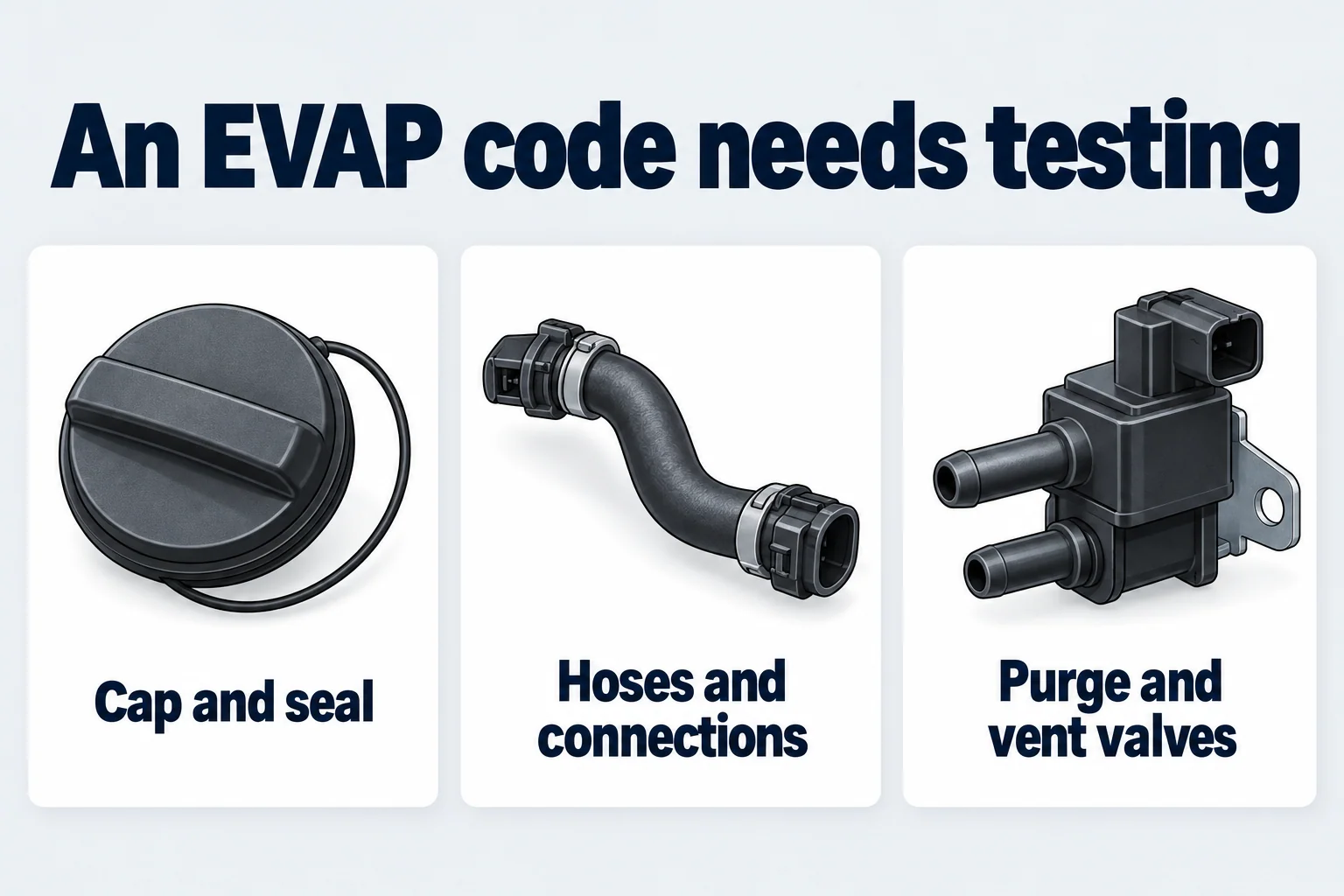
The system also includes hoses, a charcoal canister and controlled valves. A fault elsewhere can produce an EVAP warning even when the cap is correctly installed. Capless fillers need their own inspection instructions.
What should you inspect on a removable gas cap?
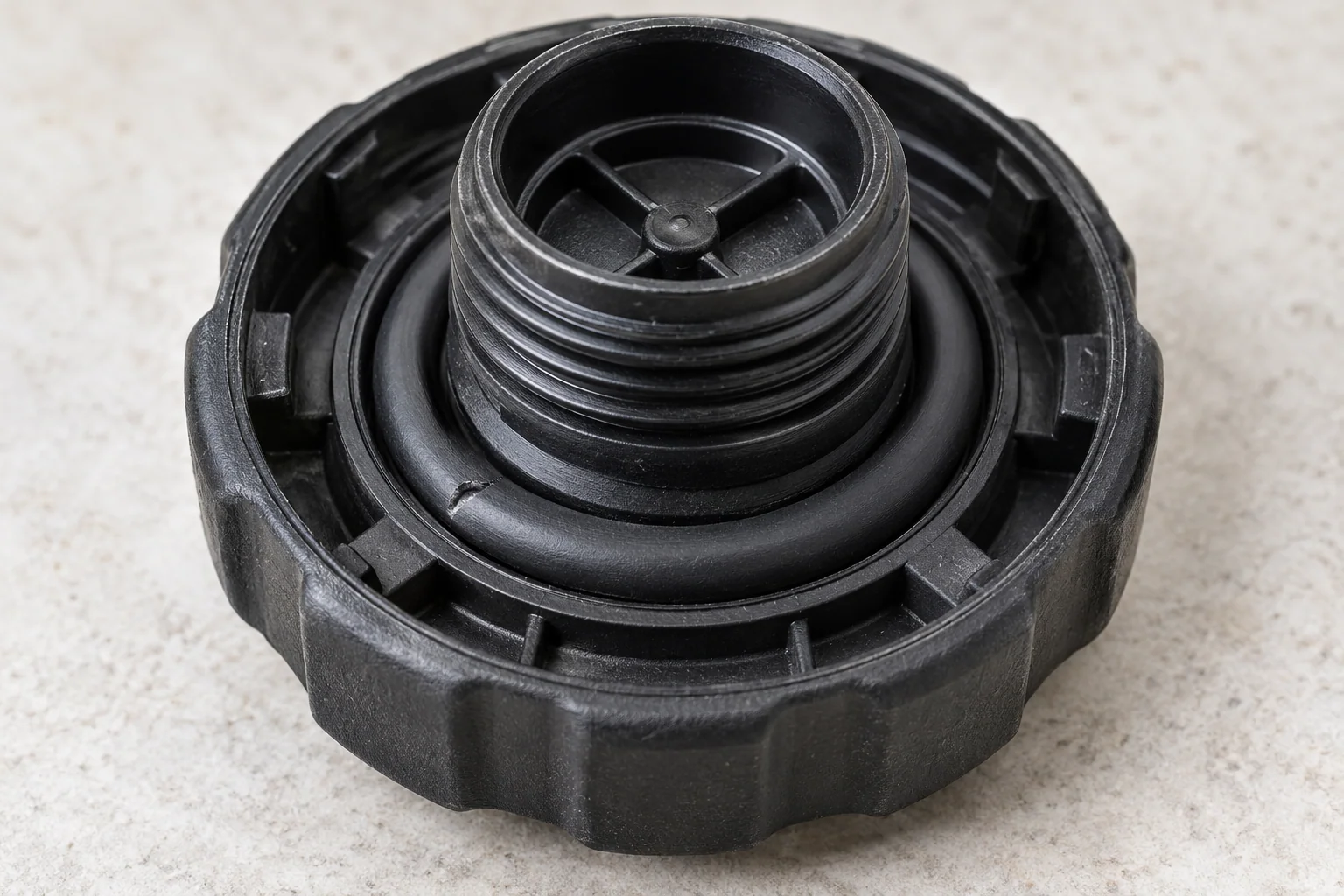
Look for a missing, damaged or deformed seal and visible damage where the cap seals against the filler neck. Refit it using the vehicle's instructions; there is no one click count for every cap.
If replacement is needed, confirm the correct application. A cap that physically screws on is not enough evidence that it is the right replacement. Do not try to overcome damaged sealing surfaces by tightening harder.
Why does the warning not disappear immediately?
The vehicle's leak check runs only when its required conditions are met. Correcting a loose cap does not necessarily produce an immediate dashboard change.
Avoid promises about a fixed number of miles or restarts. If the warning remains, returns or comes with other symptoms, arrange diagnosis rather than assuming it simply needs more driving.
Does an EVAP code prove the cap is bad?
No. Save the exact codes. Leak, flow and electrical faults need the appropriate checks. Hoses, connections and purge or vent components can need inspection or functional testing.
Ask what test identifies a defective cap or another failed component. A smoke or sealing test must use equipment and conditions suited to the vehicle; an internet code description is not a substitute.
When should you stop treating this as a simple cap issue?
A flashing engine warning, poor running or a strong fuel-leak smell calls for prompt assistance. Visible fuel leakage needs immediate attention. Do not keep driving on the assumption that every warning after refueling is harmless.
Once repaired, verify the affected system using the vehicle's procedure. Get a quote for the actual finding, including any required system tests.
Sources & further reading
- AA1Car / Larry Carley — Loose Gas Cap
- snapon.com — EVAP System Operation and Testing
- HELLA — Activated charcoal canister – facts & info
Vehicle designs and maintenance requirements vary. Consult the owner’s manual for your exact vehicle and seek a qualified inspection for a specific fault.