Brakes
Grinding Noise When Braking: Symptoms, Diagnosis and Repair Options
Published:
Edited and fact-checked by: Jacob Bowen
General information; vehicle-specific diagnosis requires an inspection. How we prepare our guides · This page reserves space for ads. Advertising policy · Privacy choices
The quick answer
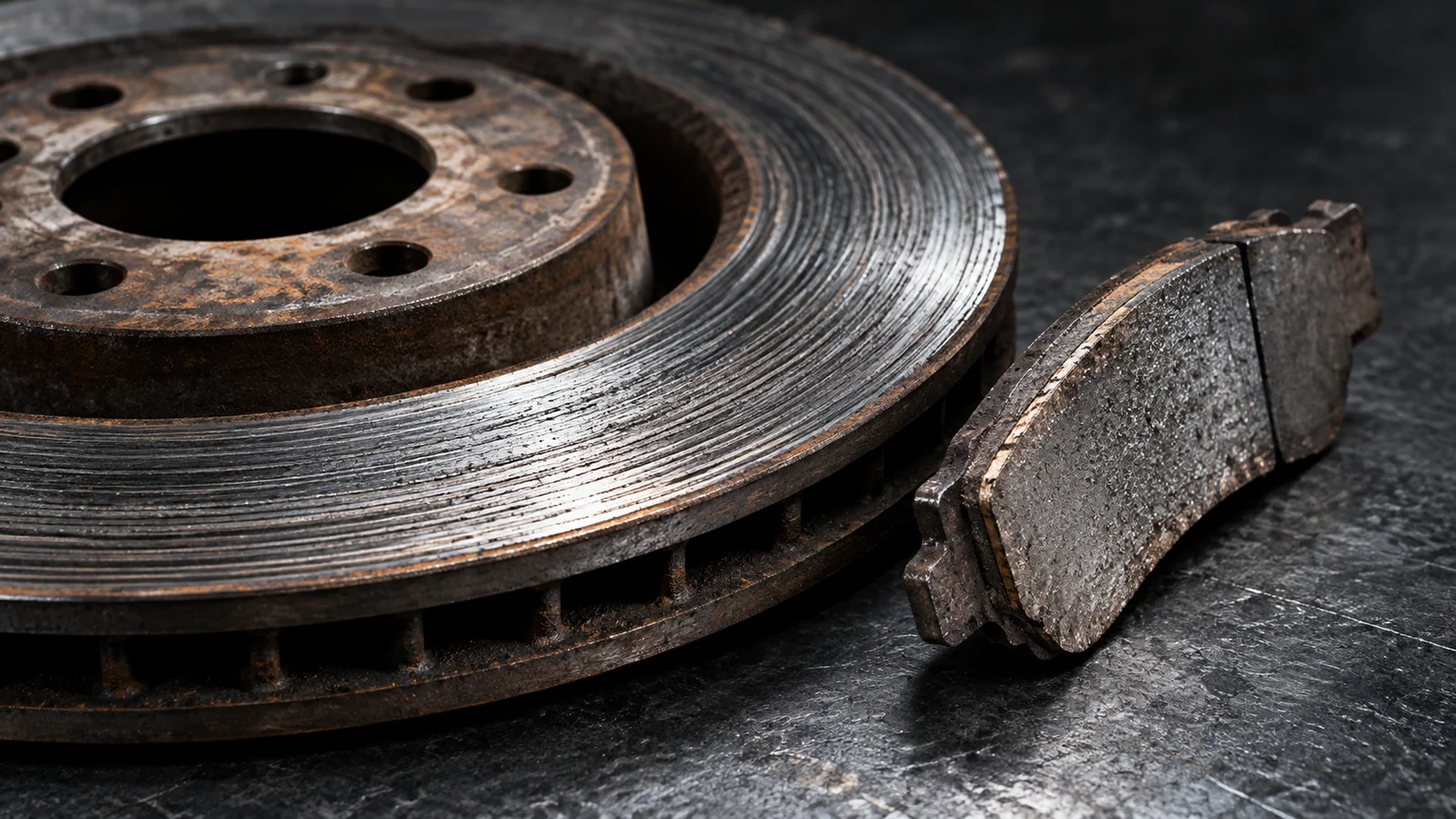
A grinding noise when braking needs prompt inspection. Worn friction material, damaged brake surfaces, trapped debris or a contact problem can produce scraping or grinding, and sound alone cannot establish the cause. If stopping ability changes, the pedal feels abnormal or the noise is severe, stop safely and arrange assistance. Do not keep driving to see whether it wears away.
What details should you give the shop?
Describe whether the noise occurs only with pedal pressure or continues while rolling, whether it started after brake work, and whether you also notice pulling or vibration. Mention the apparent wheel location, but let inspection confirm it.
A recording made while safely parked may be useful if the noise occurs then. Do not ask a passenger to lean outside or repeat hard stops to capture a sound.
Can the pads look fine while a brake is damaged?
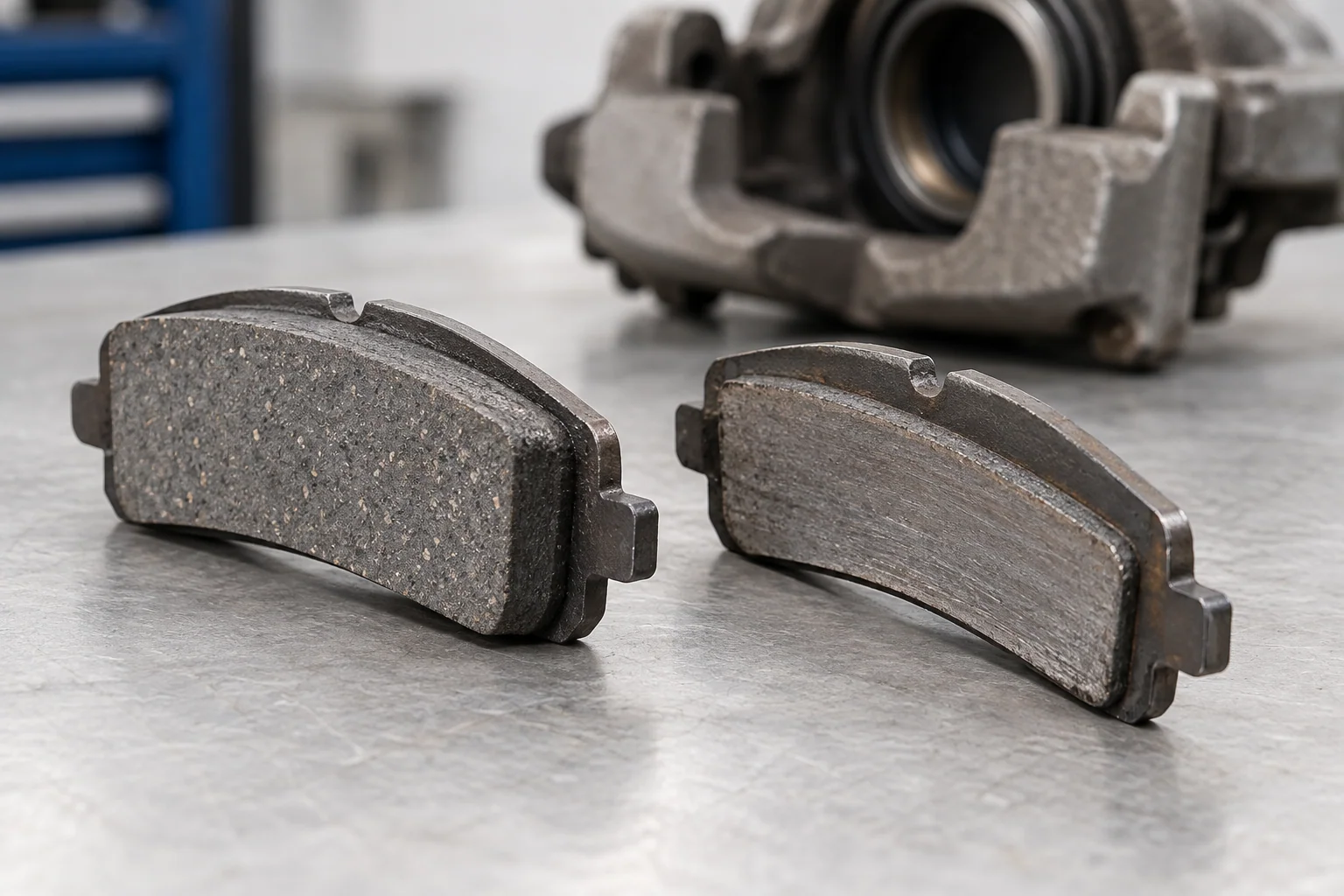
Yes. A view through the wheel may show only part of one pad. Inner and outer pads can wear differently when movement is restricted, and friction material can be damaged as well as worn thin.
The technician needs to inspect the relevant pads and disc surfaces, caliper operation, hardware and possible unwanted contact. HELLA's failure guidance connects uneven wear with binding guides, pistons or pads, which is why replacing friction material alone may leave a cause unresolved.
What if it grinds even when you are not braking?
That detail broadens the inspection. A dragging brake or contact near the disc may make noise while rolling, and the wheel bearing and surrounding assembly also need assessment. Noise without pedal application does not automatically clear the brakes or prove a bearing failure.
Ask the shop to demonstrate the source and describe any damage or restriction found. A bent shield, worn pad and bearing fault are different repairs; they should not be combined into a parts list without evidence.
Will new pads be enough?
It depends on what the inspection finds. A disc damaged by contact with a pad's backing plate needs assessment against the applicable service requirements. Measure disc condition rather than deciding from pad thickness alone.
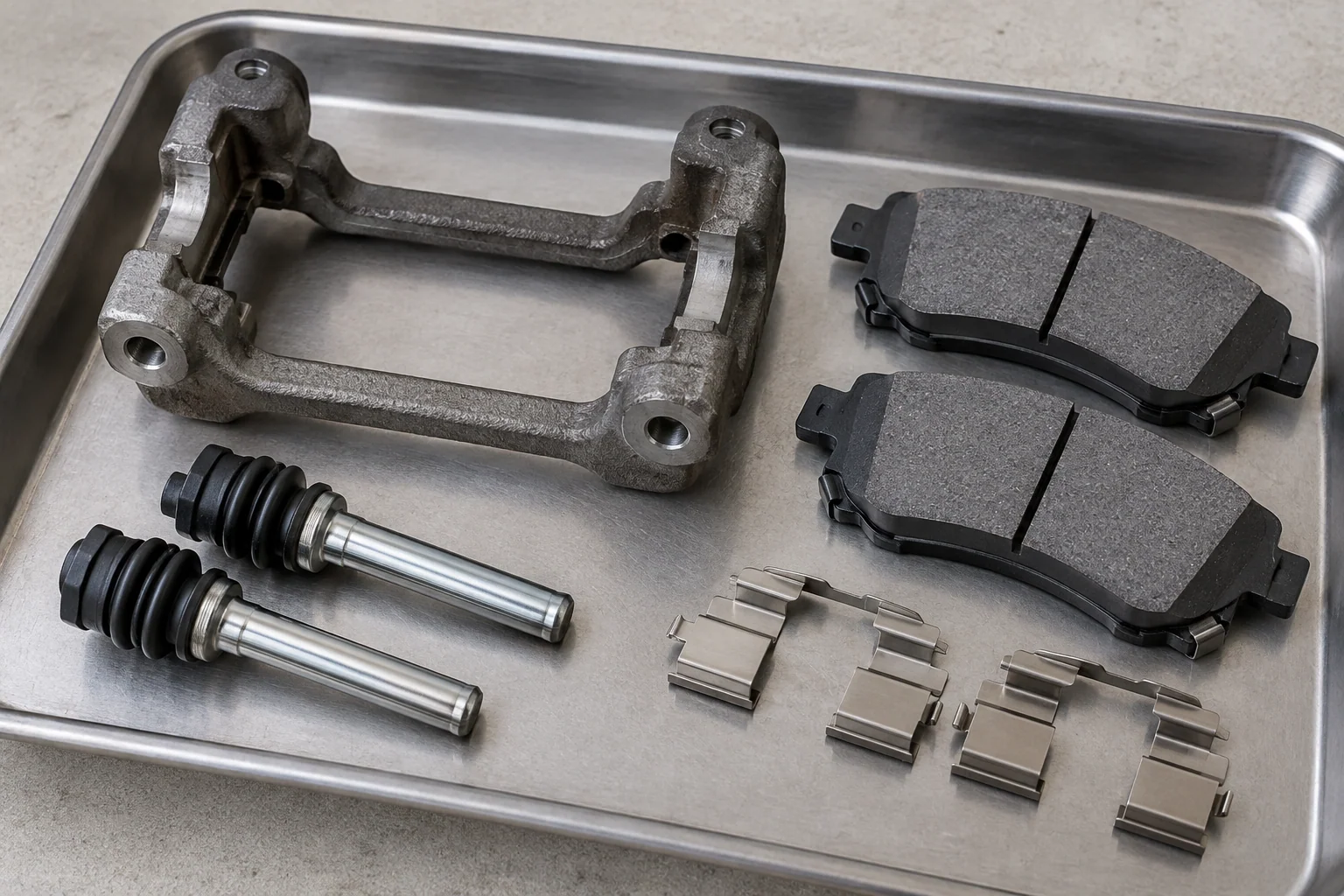
The repair plan should also address any sticking component, damaged hardware or installation fault. If discs are replaced, the applicable axle-pair and new-pad requirements matter. Ask which components are included and why each is needed.
What should be checked after the repair?
The shop should confirm proper component movement and brake operation and recheck the original noise once the vehicle is safe to test. Follow the fitted parts' bedding instructions.
Do not try to silence grinding by spraying lubricant onto brake friction surfaces. Noise treatment is not a substitute for repairing wear or damage. Keep the inspection findings with the repair order so a returning sound can be compared with the original fault.
Sources & further reading
- HELLA — Failure modes of brake discs and brake pads
- HELLA — Repairing brakes: Important tips
- HELLA — Checking the brakes
- AA1Car / Larry Carley — Brake Rotor Replacement: Why, When and How
Vehicle designs and maintenance requirements vary. Consult the owner’s manual for your exact vehicle and seek a qualified inspection for a specific fault.