Engine
Rear Main Seal Symptoms: How to Test and Confirm the Fault
Published:
Edited and fact-checked by: Jacob Bowen
General information; vehicle-specific diagnosis requires an inspection. How we prepare our guides · This page reserves space for ads. Advertising policy · Privacy choices
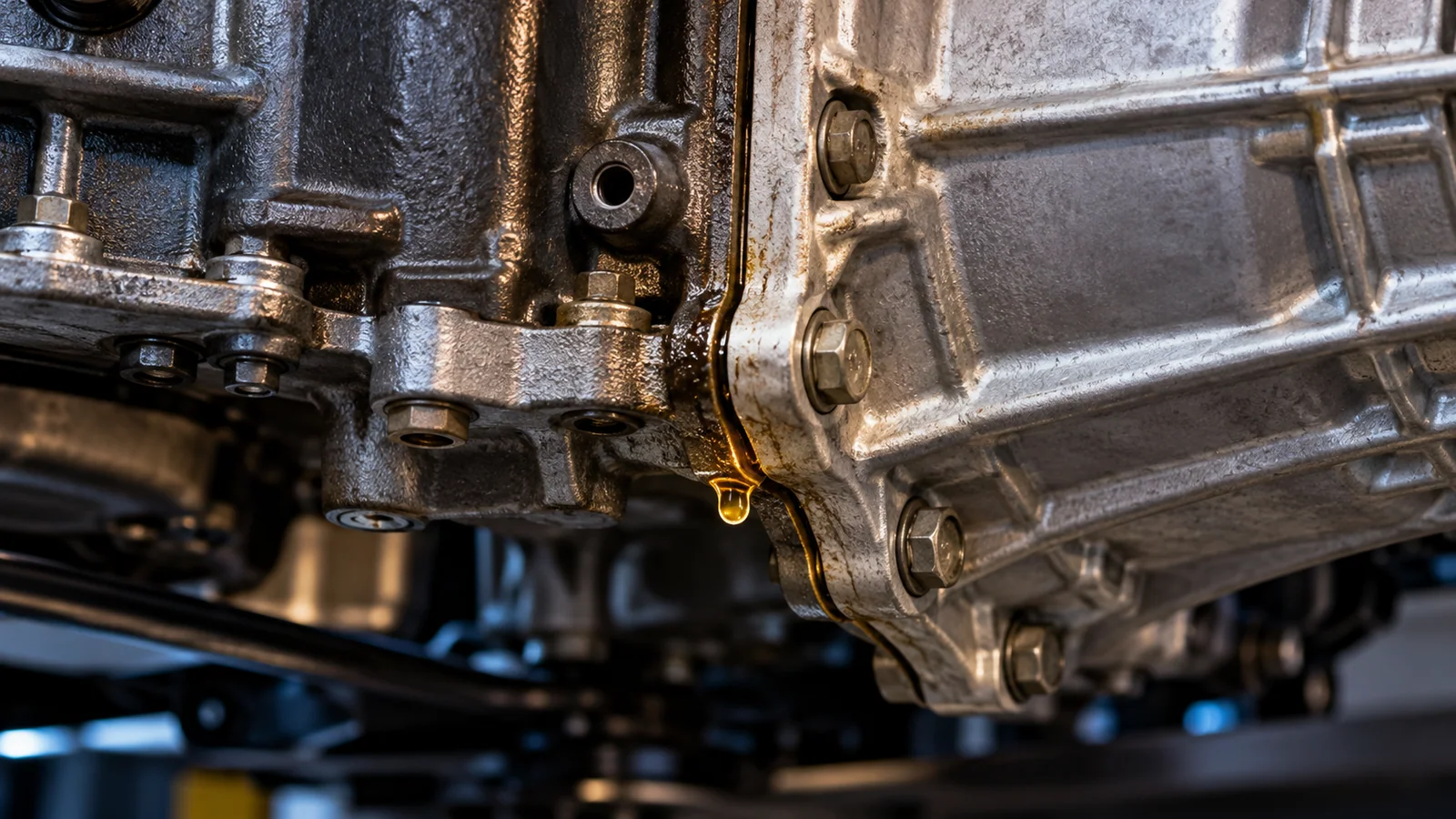
The quick answer
A leaking rear main seal can leave engine oil near the joint between the engine and transmission, but oil in that area does not confirm the seal failed. Leaks from above, the oil-pan joint or the transmission can reach a similar area. Trace fresh fluid to its origin before approving the substantial access work a seal repair may require.
Is the rear main seal part of the engine or transmission?
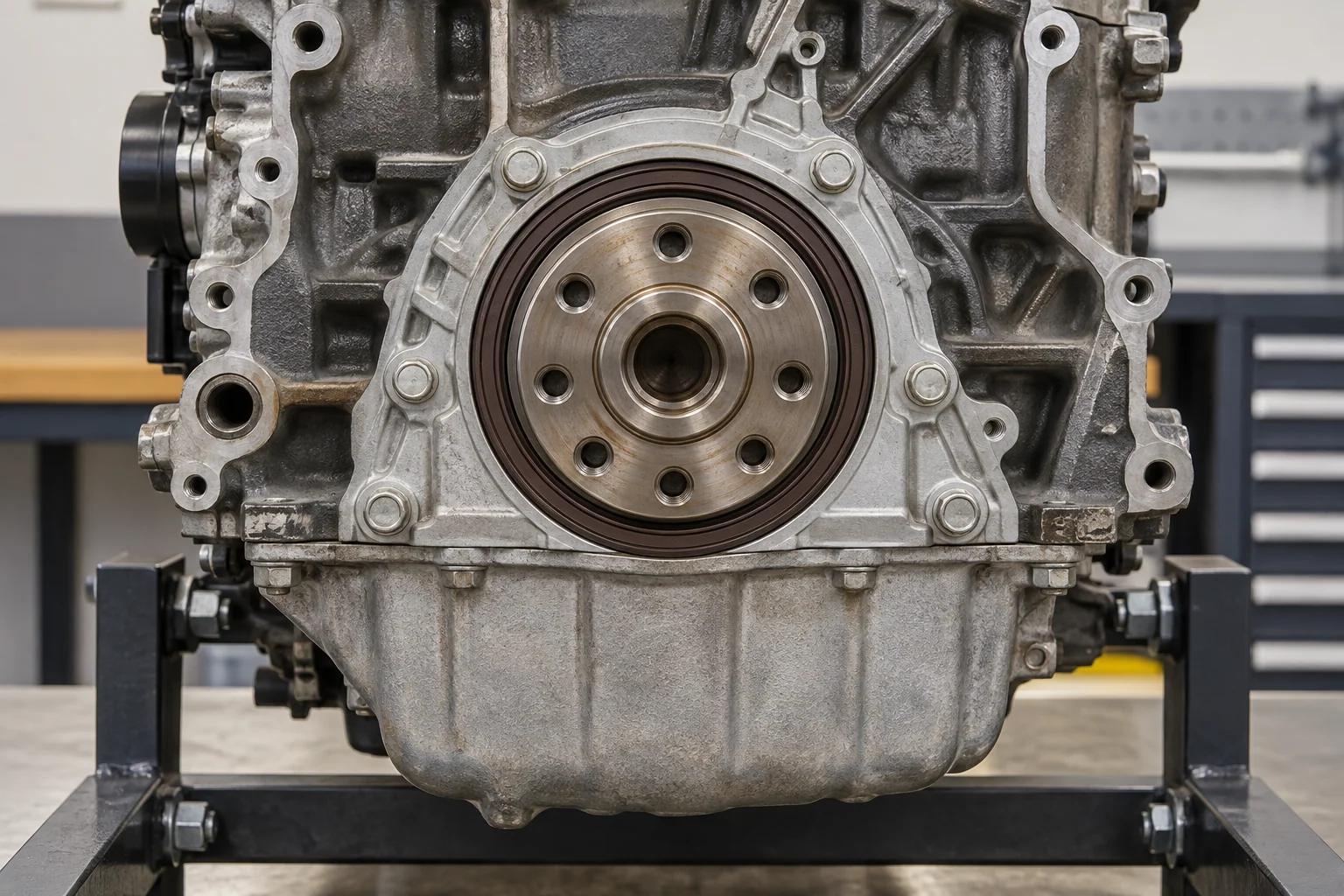
It seals around the rear of the engine's crankshaft to help retain engine oil. Its position near the transmission is why the terms are sometimes confused. A transmission-fluid leak needs a different diagnosis.
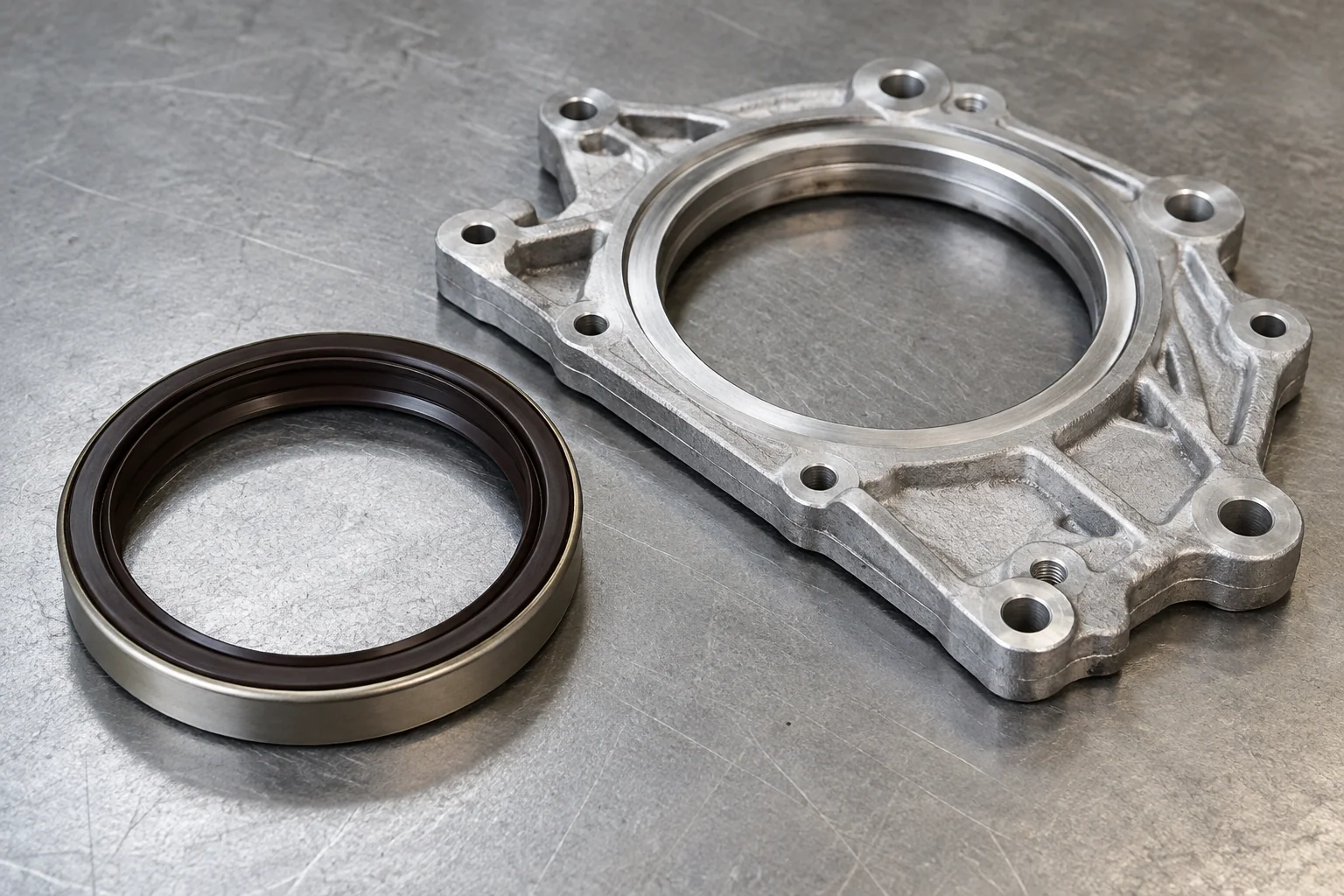
Fel-Pro describes one-piece, two-piece and rope designs. The engine's year and design determine the arrangement; a vehicle name or a 'Chevy 350' search alone is not enough to specify the seal or access procedure.
What other leaks can imitate a rear-main-seal leak?
Underhood Service identifies oil-pressure-sensor, oil-pan and nearby gallery-plug leaks as possible sources of oil appearing at the bellhousing. Fel-Pro's leak checklist also calls for examining other engine gaskets and crankshaft seals.
Ask whether the shop checked above and around the suspected seal and identified the fluid. A wet bellhousing or oil spot under the car is useful evidence to investigate, not a reason by itself to remove the transmission.
How can the actual leak be confirmed?
The technician should locate the beginning of fresh leakage rather than follow an old stain to its lowest point. Underhood Service notes that suitable dye in the engine oil can help reveal the source.
Ask what the inspection established and what remains hidden. If access is limited and further disassembly is needed to confirm the origin, clarify that diagnostic scope and authorization before treating a suspected seal as a proven failure.
Why should crankcase ventilation be checked?
Excessive crankcase pressure can contribute to seal leakage. Both Fel-Pro and Underhood Service call attention to the PCV system when assessing rear-main-seal work. The technician should verify its condition with the applicable procedure rather than fitting a seal and ignoring the surrounding system.
If the seal is exposed for repair, the crankshaft sealing surface also needs inspection for damage or wear. A new seal cannot automatically compensate for a damaged surface, and the suitable repair depends on its design.
What happens after the leak source is established?
Repair the source actually found. If that is the rear main seal, use the exact seal-maker and vehicle instructions. Fel-Pro distinguishes installation requirements for rubber and PTFE designs; applying oil to every new sealing lip is not a universal rule.
Request the access work, seal and related requirements in the estimate, then ask how fresh leakage will be checked afterward. See the related replacement guide for the repair scope. Do not treat an additive as proof that a failed seal has been restored.
Monitor engine oil level using the proper checking method while arranging assessment. Stop safely and shut the engine off for an oil-pressure warning, rapid loss or severe engine symptoms. There is no guaranteed safe distance based on the size of a driveway spot.
Sources & further reading
- Fel-Pro — Rear Main Seal Replacement
- Underhood Service — Rear Main Seal Diagnostics Q&A
- Fel-Pro — Engine Fluid Leak Inspection Checklist
Vehicle designs and maintenance requirements vary. Consult the owner’s manual for your exact vehicle and seek a qualified inspection for a specific fault.