Engine
Low Oil Pressure: Causes and Diagnostic Steps
Published:
Edited and fact-checked by: Jacob Bowen
General information; vehicle-specific diagnosis requires an inspection. How we prepare our guides · This page reserves space for ads. Advertising policy · Privacy choices
The quick answer
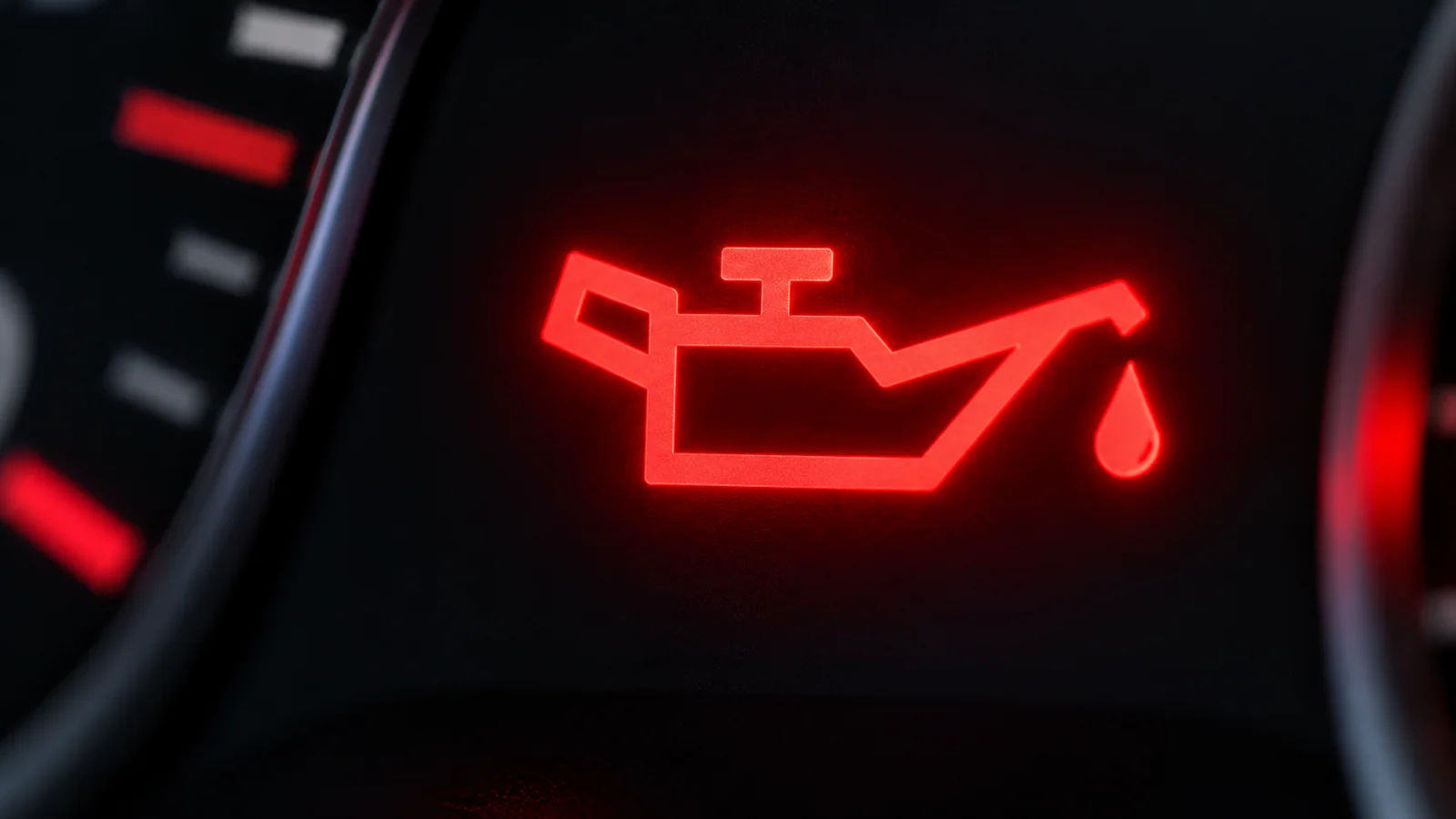
If the low-oil-pressure warning appears while the engine is running, stop safely and shut the engine off. Do not continue driving to see whether it clears. Check the oil level as the owner's manual directs, but remember that level and pressure are different: a full engine can still have inadequate lubrication. Have the warning investigated before resuming operation.
Can low oil level cause low pressure?
Yes, insufficient oil can affect the pump's supply. Overfilling can also cause problems, so add only the specified oil and amount required by the vehicle's checking procedure.
If the level is low, the cause of the loss still needs attention. An external leak, oil consumption or a service problem may require different work. Topping up does not establish that pressure is now correct or that the original cause is repaired.
Could the oil-pressure sensor or gauge be wrong?
A sender, connector, wiring or instrument fault can produce a misleading indication. That possibility must be tested rather than assumed because the engine sounds normal or the warning comes and goes.
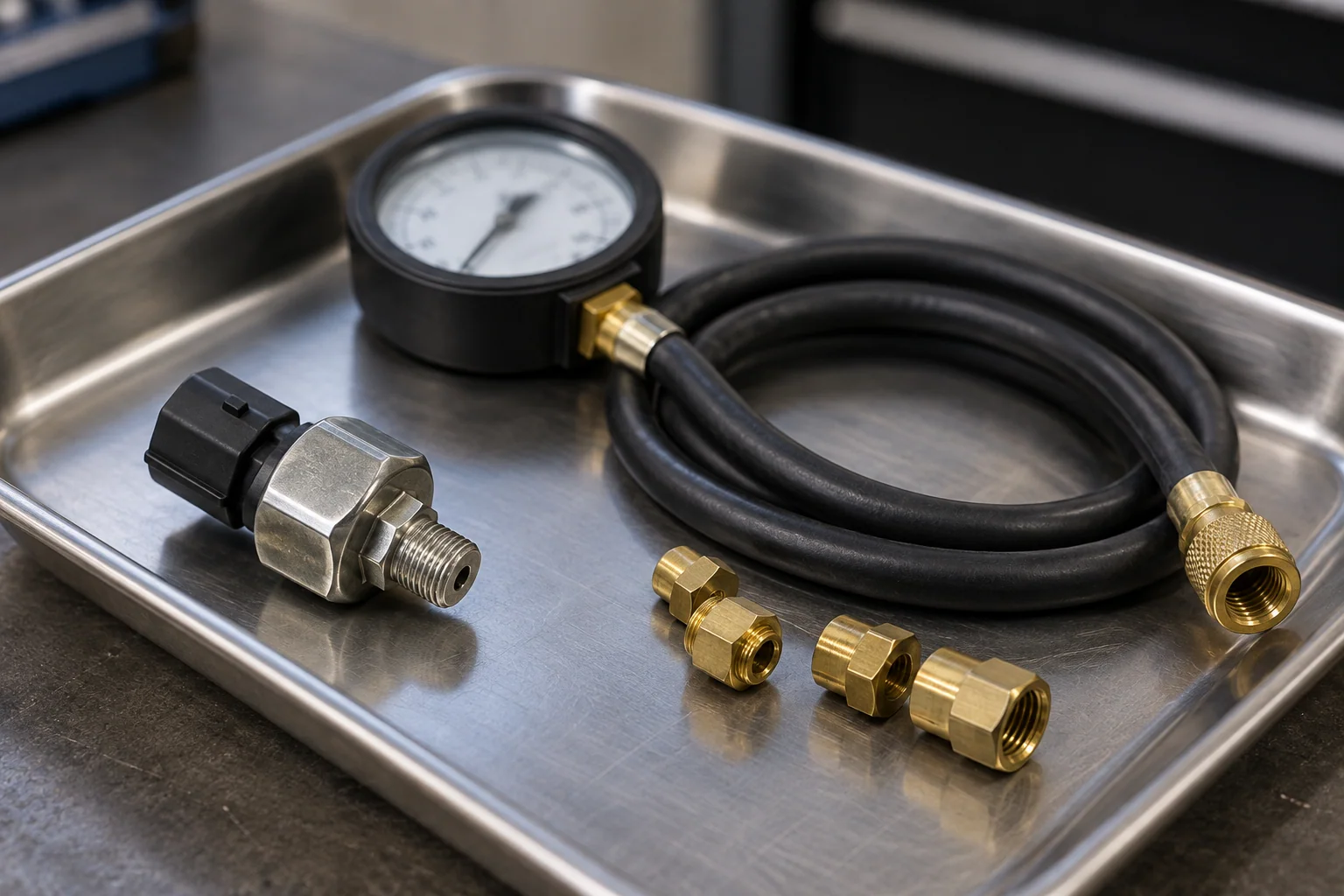
The technician should compare an appropriate direct pressure measurement with the vehicle's specified limits and the indicated reading. If actual pressure is normal under the required conditions, the investigation can focus on how it is measured and displayed. If pressure is low, replacing a sensor will not restore lubrication.
What oil pressure should the engine have at idle?
There is no single idle-pressure figure for every engine. Oil temperature, engine speed and pump-control design matter. Ask for the measurement, test conditions and specification used to judge it.
Pico's pressure-testing guidance emphasizes comparison with manufacturer tolerances. A cold reading cannot automatically establish that pressure is sufficient when hot, and an internet rule about pressure per engine rpm is not a substitute for the correct specification.
Does confirmed low pressure mean the pump has failed?
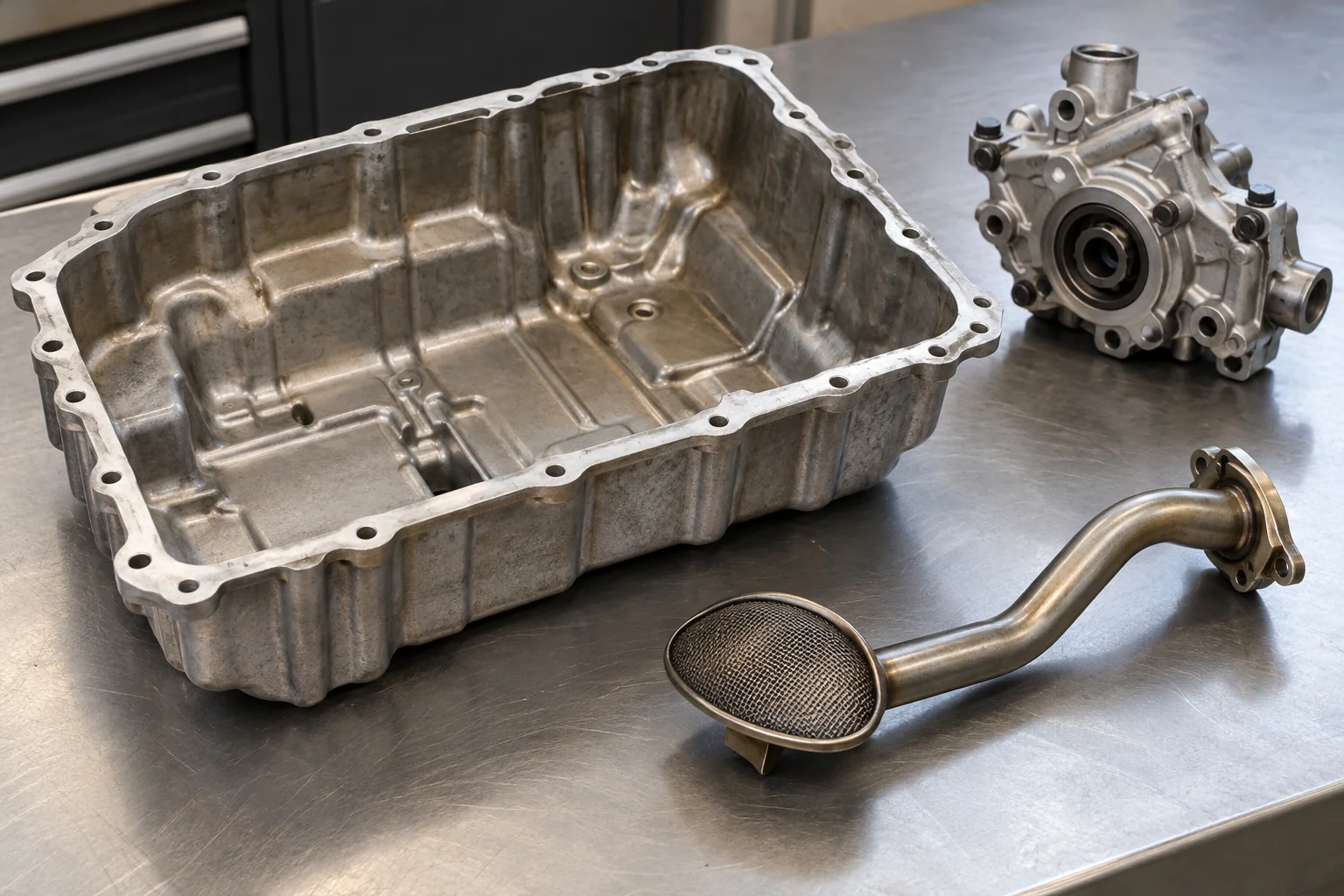
Not necessarily. The investigation may involve oil condition and specification, the pickup and its supply path, pressure regulation, internal leakage or excessive engine clearances as well as pump condition.
The shop should explain what finding supports the proposed repair. For example, a supply restriction and worn internal engine clearances do not call for the same correction. A larger pump or thicker oil is not a general repair for every low-pressure complaint.
What should be verified after the repair?
Actual pressure should be checked against the applicable requirements, and the original warning or noise should be reassessed. Ask whether evidence of lubrication-related damage was found and whether that changes the repair plan.
Keep the recorded readings with the repair order. The dashboard light going out is useful information, but a measured result provides a clearer basis for confirming that the lubrication problem has been corrected.
Sources & further reading
- AA1Car / Larry Carley — Troubleshoot Low Oil Pressure
- Pico Technology — Oil pressure | Automotive oscilloscope test
- AA1Car / Larry Carley — Diagnose Oil Pump
Vehicle designs and maintenance requirements vary. Consult the owner’s manual for your exact vehicle and seek a qualified inspection for a specific fault.