Engine
Oil Pump Replacement: Required Tests, Procedure and Cost Drivers
Published:
Edited and fact-checked by: Jacob Bowen
General information; vehicle-specific diagnosis requires an inspection. How we prepare our guides · This page reserves space for ads. Advertising policy · Privacy choices
The quick answer
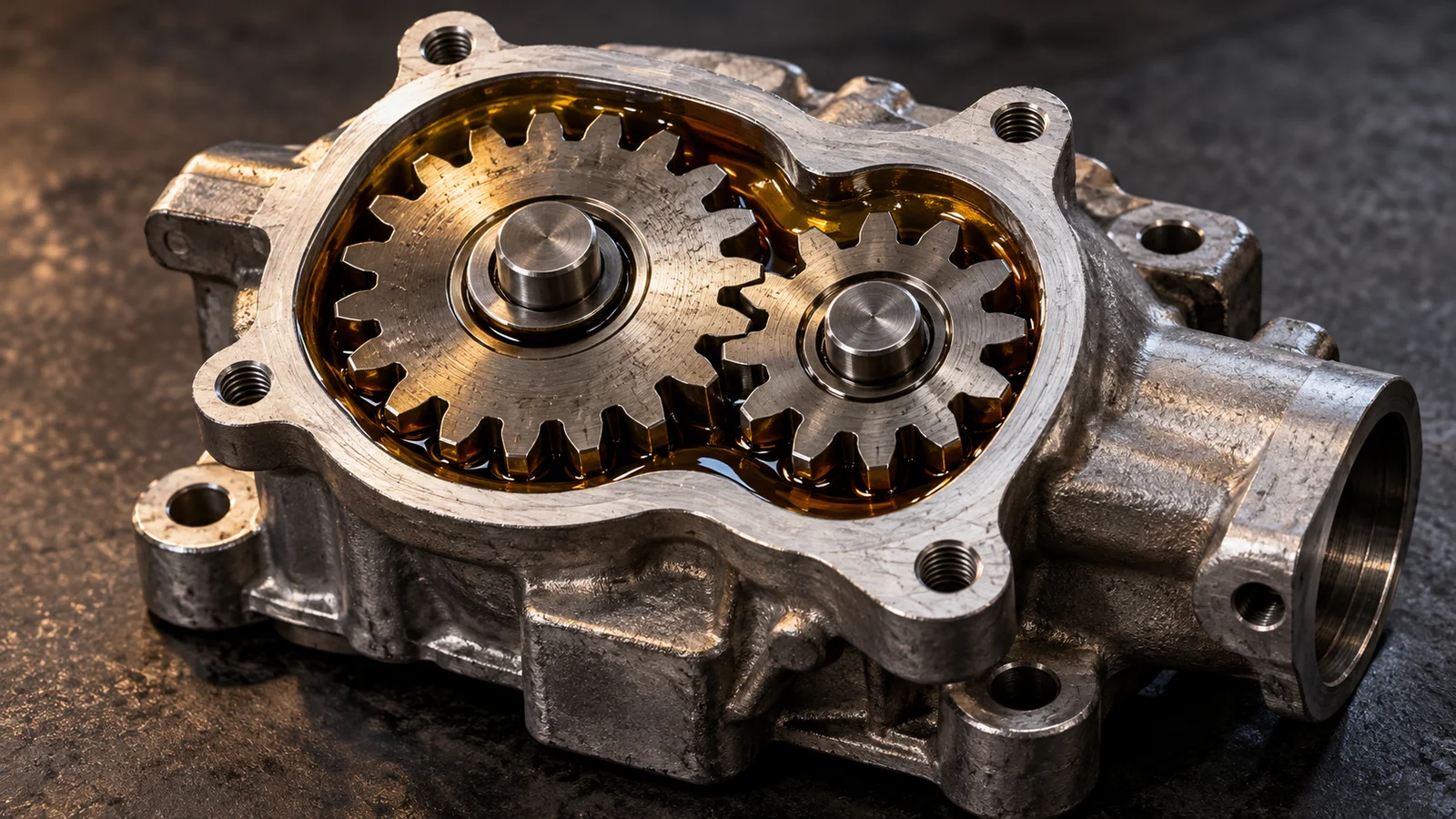
Replace an engine oil pump only after testing confirms a pump or pump-drive fault. A pressure warning can also involve the sensor circuit, inadequate oil supply, a pickup problem or internal engine wear. Verify actual pressure against the engine's specifications before authorizing major work. If the oil-pressure warning appears while driving, stop safely and shut the engine off.
Why doesn't a low-pressure warning prove the pump is bad?
The pump supplies flow, while the lubrication circuit and its clearances determine the resulting pressure. Excessive internal leakage or worn bearings can leave pressure low even when a replacement pump is fitted.
The technician should establish oil level, the specified lubricant and condition, then check the warning circuit and measure pressure directly with suitable equipment. The engine's temperature, speed and test location matter. A generic pressure-per-RPM rule is not the engine's service specification.
What should be checked before the pump is replaced?
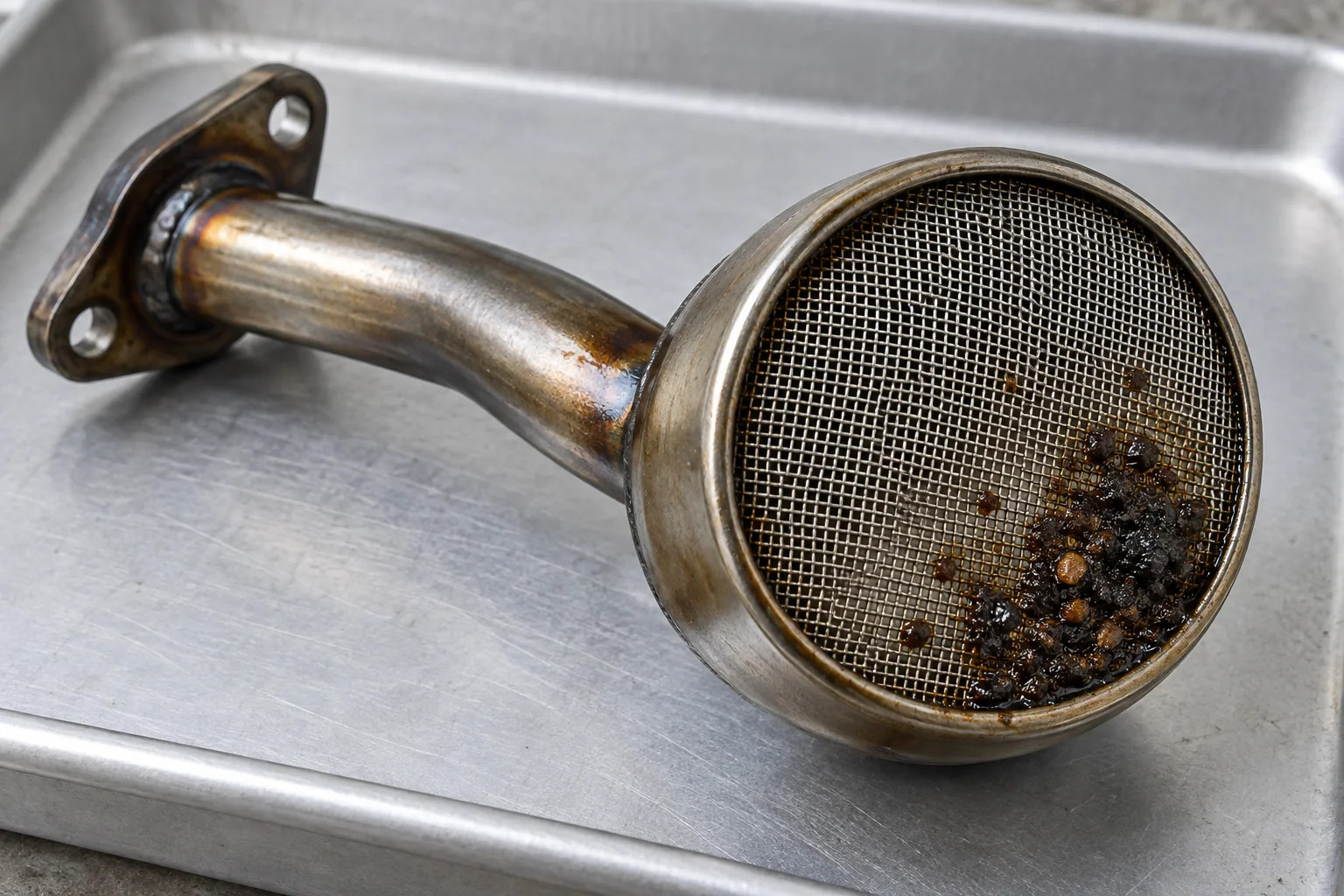
If pressure is genuinely low, investigate the pickup, supply seals or connections, pump drive, pump condition and pressure-control system as the procedure requires. Where wear or debris suggests a wider engine problem, assess that before treating a new pump as a complete repair.
A scored or worn pump needs the applicable inspection and measurement, not a diagnosis from the dashboard alone. Ask which result confirms the proposed failure and whether the original cause, such as debris or inadequate oil supply, will also be corrected.
What if you are looking for a Power Stroke low-pressure oil pump?
Identify the exact engine and which oil circuit the diagnosis concerns. A quote for a high-pressure oil-pump leak is not interchangeable with a general lubrication-pump replacement estimate. A 6.0-liter procedure should not be assumed to fit a 7.3-liter engine.
One specific example is Ford TSB 04-4-4: it addresses outlet-fitting or end-plug leaks at the high-pressure oil pump on listed 1998–2003 7.3-liter diesel applications. Ford describes seal repairs that do not require removing the pump assembly, after confirming the leak source. That is a model-limited example, not a universal Power Stroke diagnosis or current coverage promise.
What does a proper oil-pump replacement involve?
Access varies: some pumps are reached through the sump, while others are incorporated into the front of the engine. Follow the exact removal procedure rather than assuming every engine needs only an oil-pan removal.
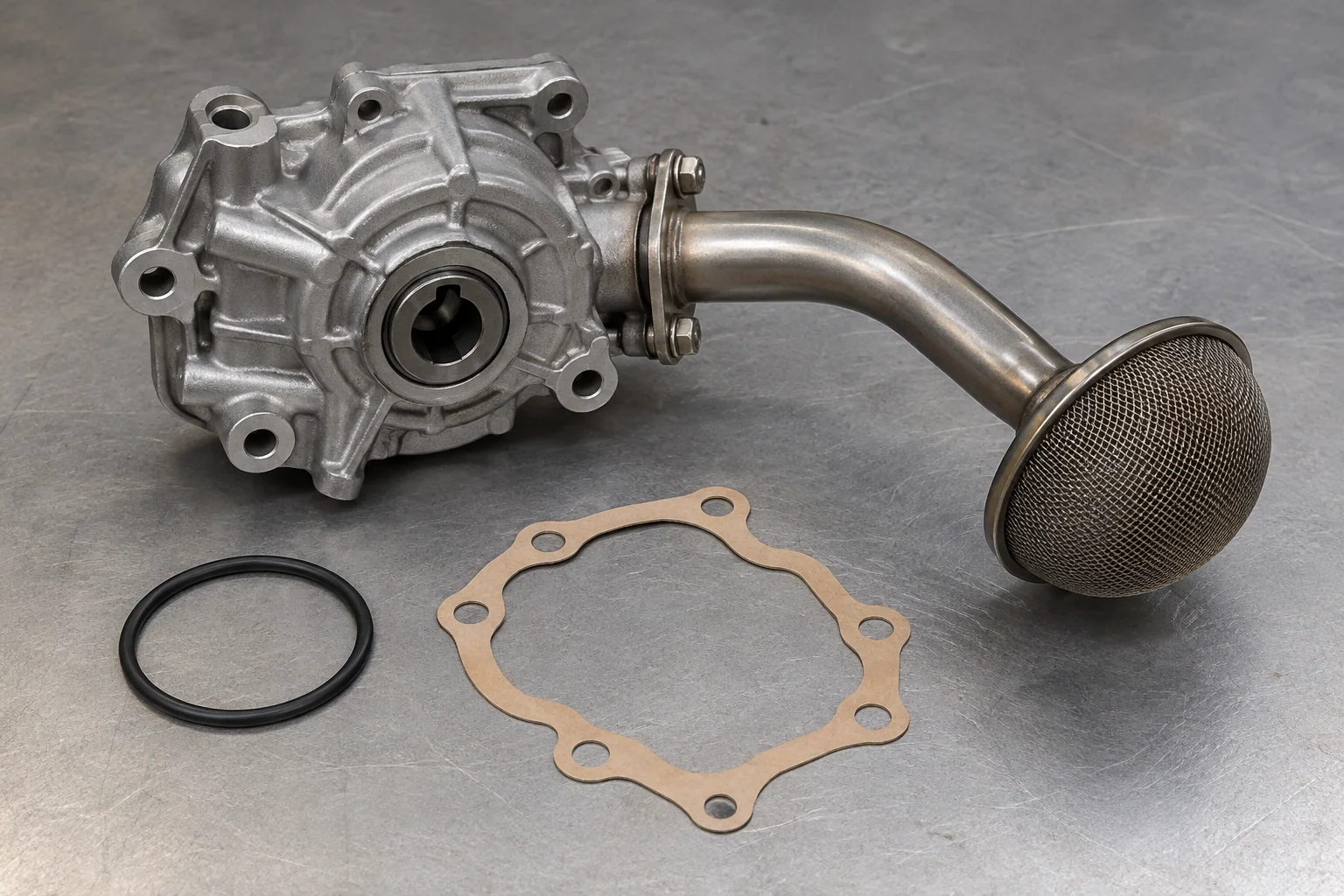
Install the correct pump and required seals, address the pickup and any debris source, and follow the manufacturer's priming requirements. Use the specified oil and filter and verify pressure before returning the engine to normal operation. Incorrect sealing or a missed supply problem can compromise the replacement.
Do not repeatedly restart an engine with unresolved low pressure to see whether the warning disappears. Professional testing should control that risk.
How much does oil-pump replacement cost?
RepairPal's broad US estimate, updated September 3, 2026, is $1,631–$2,179: labor of $1,152–$1,691 and parts of $479–$488. Taxes, fees, location and related repairs are excluded. It is not a quote for every oil-pressure problem or a particular diesel high-pressure pump.
Ask what access work, pickup parts, seals, oil, filter, priming and pressure verification are included. If internal engine damage is found, request an explanation of that additional work before comparing the quote with pump-only replacement.
Sources & further reading
- AA1Car / Larry Carley — Troubleshoot Low Oil Pressure
- MOTOR — What to Do When the Oil Light Glows
- AA1Car / Larry Carley — Diagnose Oil Pump
- RepairPal — Oil Pump Replacement Cost Estimate
- Ford TSB04-4-4: specified 7.3-liter high-pressure oil-pump leaks
Vehicle designs and maintenance requirements vary. Consult the owner’s manual for your exact vehicle and seek a qualified inspection for a specific fault.