Engine
Low Engine Oil Level: Causes and Diagnostic Steps
Published:
Edited and fact-checked by: Jacob Bowen
General information; vehicle-specific diagnosis requires an inspection. How we prepare our guides · This page reserves space for ads. Advertising policy · Privacy choices
The quick answer
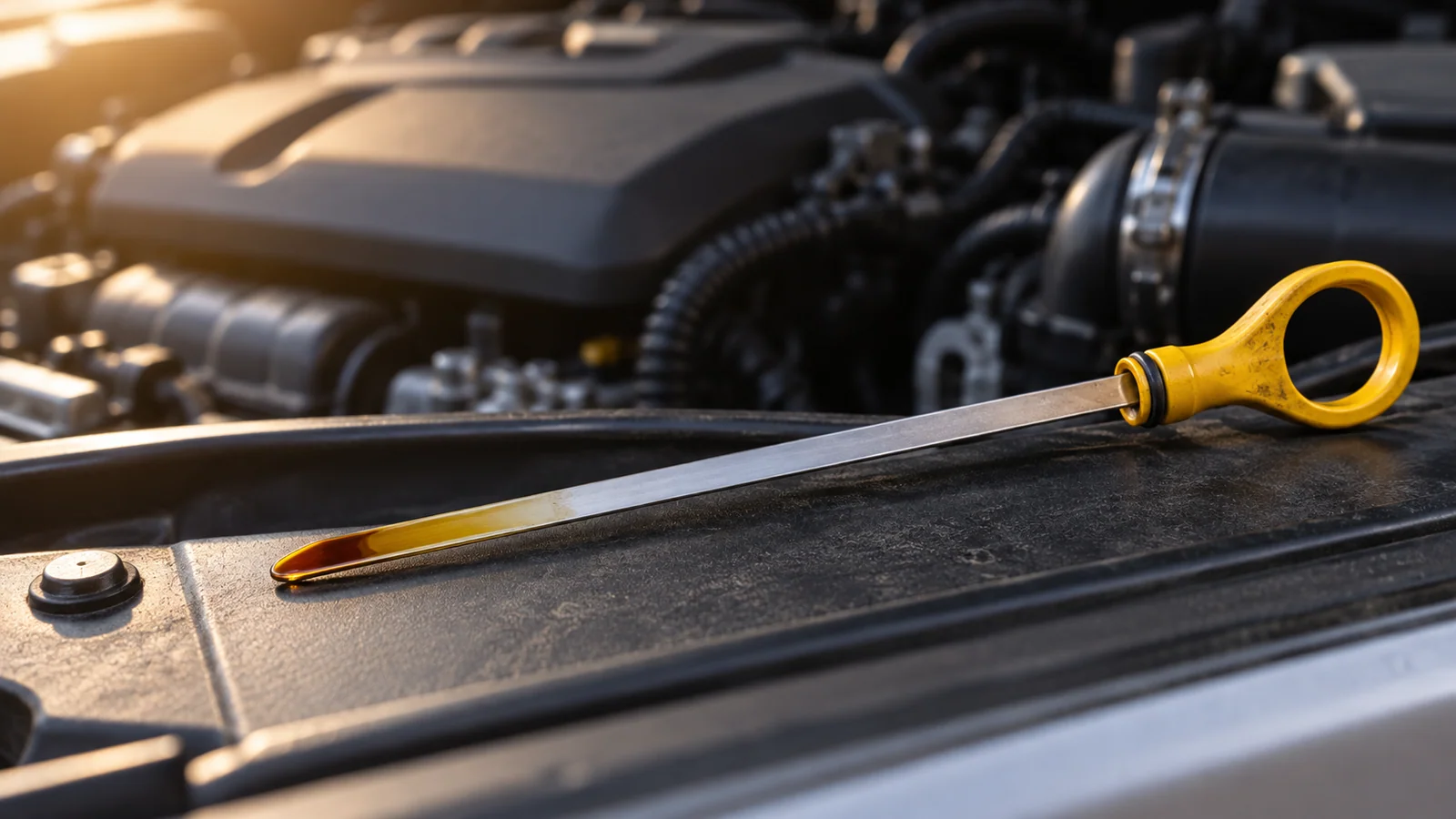
If the engine-oil level is low, confirm the reading using your vehicle's specified procedure and add the correct oil without overfilling. Then investigate why the level dropped. If an oil-pressure warning appears while the engine runs, or the engine develops abnormal knocking or clattering, stop safely and shut it off. A top-up alone does not establish that it is safe to restart.
Is low oil level the same as low oil pressure?
No. Level is the amount of oil available; pressure is a condition within the lubrication system. Too little oil can contribute to pressure loss, but pressure can also be low with the correct amount of oil in the sump.
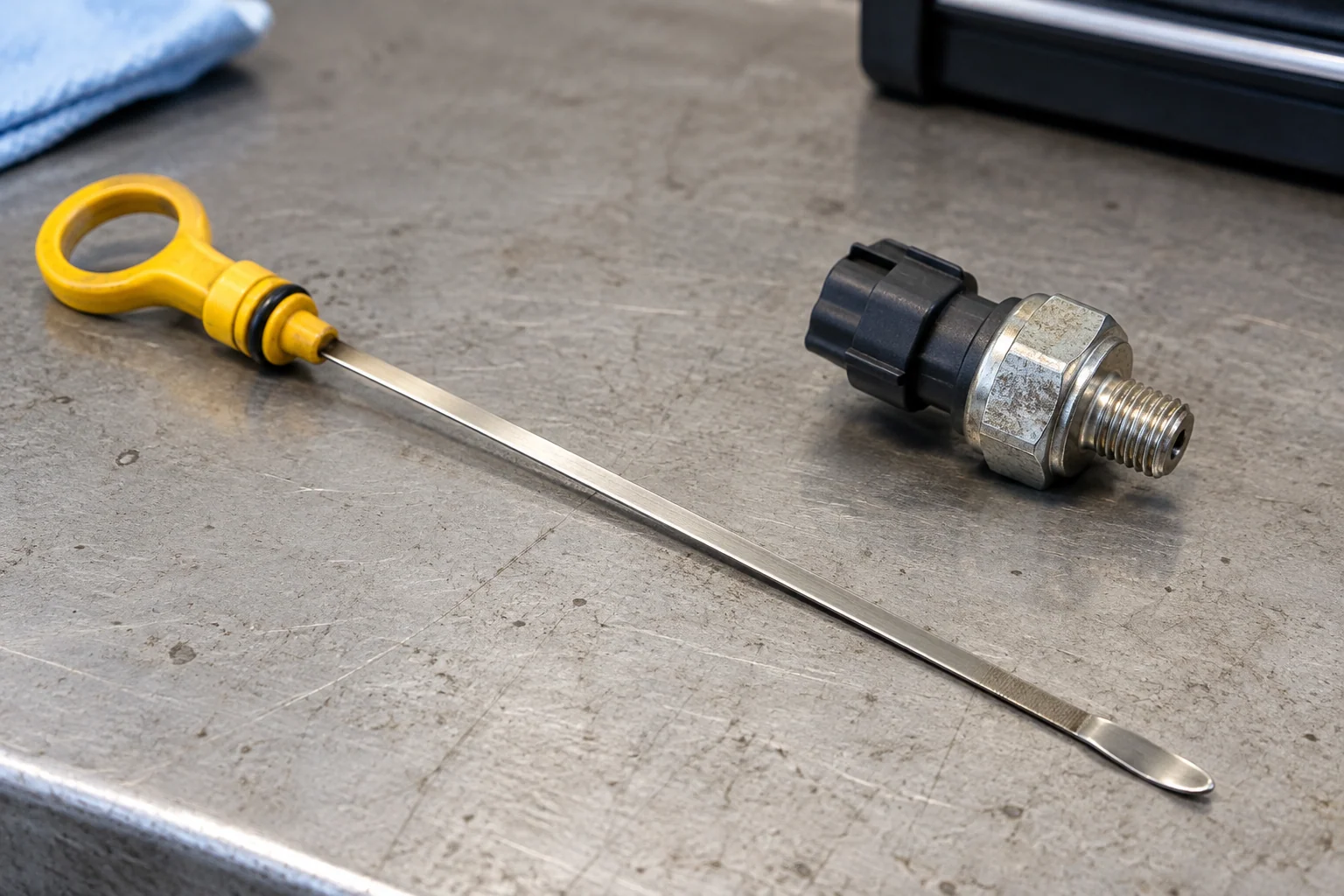
Read the exact warning message in the owner's manual. Motorservice describes separate level and pressure sensors, as well as electrical and mechanical failures that can affect their readings. Do not assume a warning is a sensor fault before checking the actual condition.
How should you check the oil level?
Use your own manual's conditions, particularly whether the engine should be warm or cold and how long it should be off. An electronic level check may have different requirements from a dipstick.
As a specific example, the 2025 Mazda CX-5 manual gives this routine dipstick check:
- Park on a level surface. For this routine check, Mazda specifies warming the engine to normal operating temperature, then switching it off and waiting at least five minutes.
- Remove the dipstick, wipe it, reinsert it fully and remove it again to read the level.
- The normal range is between MIN and MAX. If near or below MIN, add the specified oil to MAX without overfilling.
- Check the dipstick O-ring is correctly positioned and fully reinsert the dipstick.
Why does the level keep dropping?
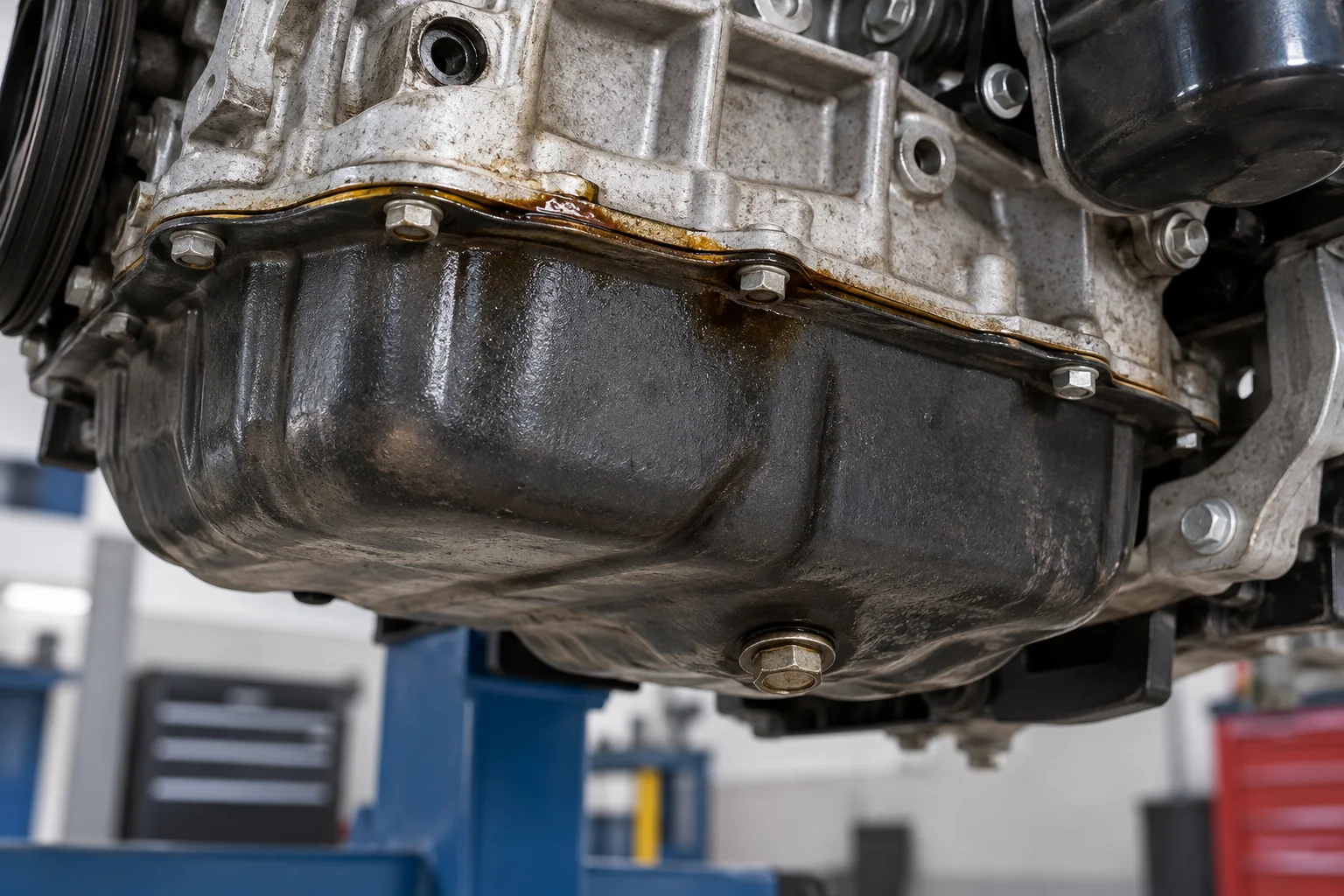
Oil may be escaping externally or being consumed inside the engine. An incorrect starting fill or a service-related problem also needs consideration if the level changed after an oil change. The amount missing and the distance traveled are more useful than guessing from mileage alone.
Record the date, odometer and amount added each time, using consistent checking conditions. Tell the shop about visible leakage, smoke, recent work and any warnings. Have it investigate external leaks and, where indicated, perform the manufacturer's oil-consumption assessment. There is no single acceptable consumption rate for every engine.
What should you do after topping up?
Keep monitoring the level and arrange diagnosis if it falls again. Correct the demonstrated leak or internal problem rather than treating repeated oil additions as a completed repair.
The Mazda steps above are routine inspection instructions. Do not run an engine with an active pressure warning merely to warm it for a level check. If pressure is in doubt, the shop should verify it with the proper gauge and engine-specific procedure. A correct level and a quiet engine do not independently prove adequate pressure.
Sources & further reading
- Motorservice / Pierburg — Oil level and oil pressure sensors from Pierburg
- AA1Car / Larry Carley — Troubleshoot Low Oil Pressure
- MOTOR — Dealing With Oil Consumption Issues
- Mazda: 2025 CX-5 engine-oil level inspection
Vehicle designs and maintenance requirements vary. Consult the owner’s manual for your exact vehicle and seek a qualified inspection for a specific fault.