Engine
Oil Pan Gasket Replacement: Procedure, Costs and Common Mistakes
Published:
Edited and fact-checked by: Jacob Bowen
General information; vehicle-specific diagnosis requires an inspection. How we prepare our guides · This page reserves space for ads. Advertising policy · Privacy choices
The quick answer
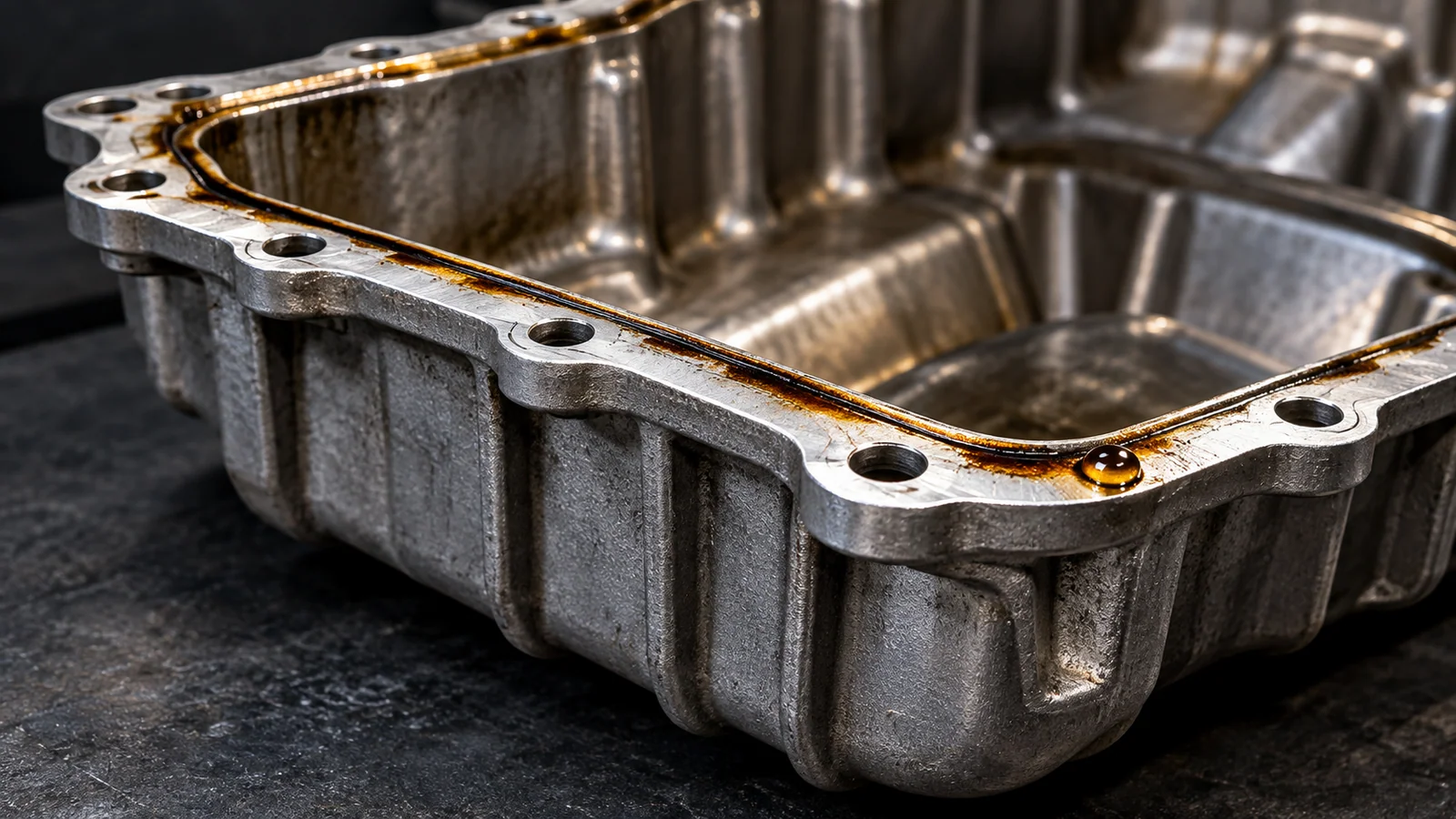
A leaking oil-pan gasket usually needs replacement or resealing with the material specified for that engine. First confirm that the oil comes from the pan joint: a leaking drain plug, a cracked pan or oil running down from above needs a different repair. The gasket price alone does not tell you the labor involved.
How do you know the oil-pan gasket is actually leaking?
Ask the technician to show you where fresh oil begins. Cleaning the area and checking it again, sometimes with suitable fluorescent dye, can separate an active leak from old residue.
A wet pan is not proof that its gasket failed. Check the drain-plug area and the pan itself separately, and look above the joint for another source. Replacing a gasket will not seal a crack in the pan.
Does your engine use a gasket or liquid sealant?
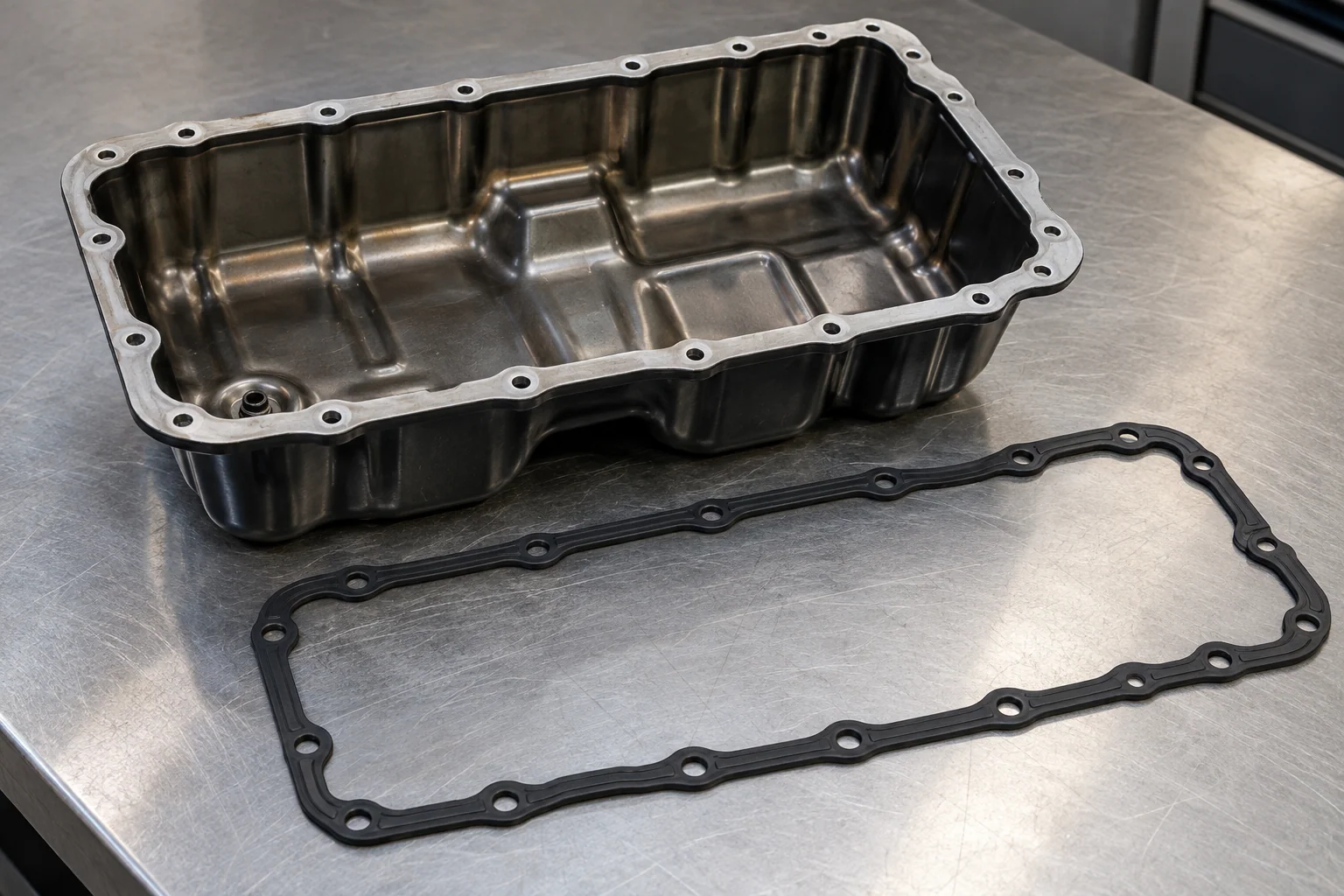
Find the procedure for the exact engine before buying parts. Some joints use a separate gasket; others use specified liquid sealant. An upper-pan repair and a lower-pan repair may involve quite different access.
Fel-Pro says its molded silicone oil-pan gaskets must be installed clean and dry. Specified junctions may still need small amounts of RTV. That does not mean every pan should get a bead of silicone around the entire gasket.
What should a correct replacement involve?
The repair involves draining the oil, gaining the required access, removing the pan, preparing the mating surfaces and installing the correct seal. Some vehicles require engine support or subframe removal, so review the access and support instructions before treating this as a driveway job. Never work underneath a vehicle supported only by a jack.
Use the applicable gasket instructions and service information for surface preparation, sealant placement, tightening sequence, torque and any required cure time. Fel-Pro describes temporary alignment aids that hold the gasket and pan in position while bolts are started; forcing a misaligned gasket into place can undermine the repair.
After reassembly and the required waiting period, refill with the specified oil and check for fresh leakage.
How much does oil-pan gasket replacement cost?
RepairPal's US estimate, updated September 3, 2026, is $583–$798, including $455–$668 labor and $128–$130 parts. Taxes, fees, location and related repairs are excluded. Treat this as a broad benchmark, not a quote for your engine.
For a BMW, Ford F-150 or Ford 6.7-liter upper-pan repair, get an estimate matched to the year, engine and leaking joint. Ask whether it covers resealing the existing pan or replacing a damaged pan, plus oil, required hardware and access work.
Which shortcuts can cause another leak?
Do not assume more sealant means a better seal. Fel-Pro warns that excess RTV can enter the crankcase or oil passages and cause engine damage. Smearing sealant onto the outside also leaves the condition of the joint unresolved.
Avoid tightening bolts by feel to stop a leak. Have the seal and pan condition checked instead. If oil loss is rapid or an oil-pressure warning appears, stop safely and shut the engine off rather than trying to reach a shop.
Sources & further reading
- Fel-Pro — Oil Pan Gasket Installation
- Fel-Pro — How to Install Fel-Pro Oil Pan Gaskets
- Fel-Pro — Gasket Leak Inspection Process
- RepairPal — Oil Pan Gasket Replacement Cost Estimate
Vehicle designs and maintenance requirements vary. Consult the owner’s manual for your exact vehicle and seek a qualified inspection for a specific fault.