Engine
Engine Compression Test: Procedure and How to Read the Results
Published:
Edited and fact-checked by: Jacob Bowen
General information; vehicle-specific diagnosis requires an inspection. How we prepare our guides · This page reserves space for ads. Advertising policy · Privacy choices
The quick answer
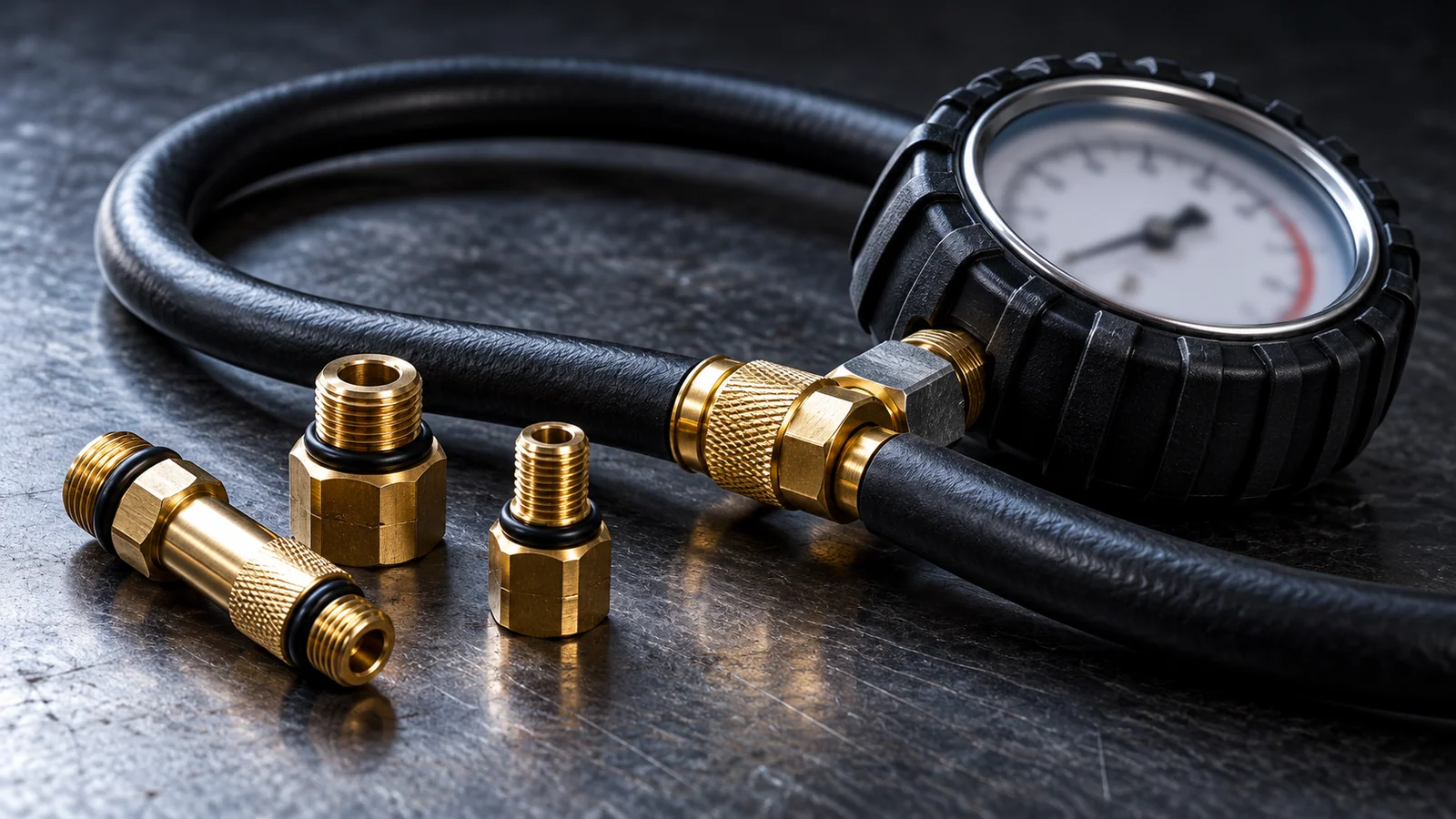
An engine compression test checks how effectively the cylinders build pressure. Compare the results with the specifications and test conditions for that exact engine, not a universal PSI target. Low or uneven readings can justify further mechanical testing, but they do not by themselves identify a failed gasket, valve or piston ring.
What is the difference between measured and relative compression?
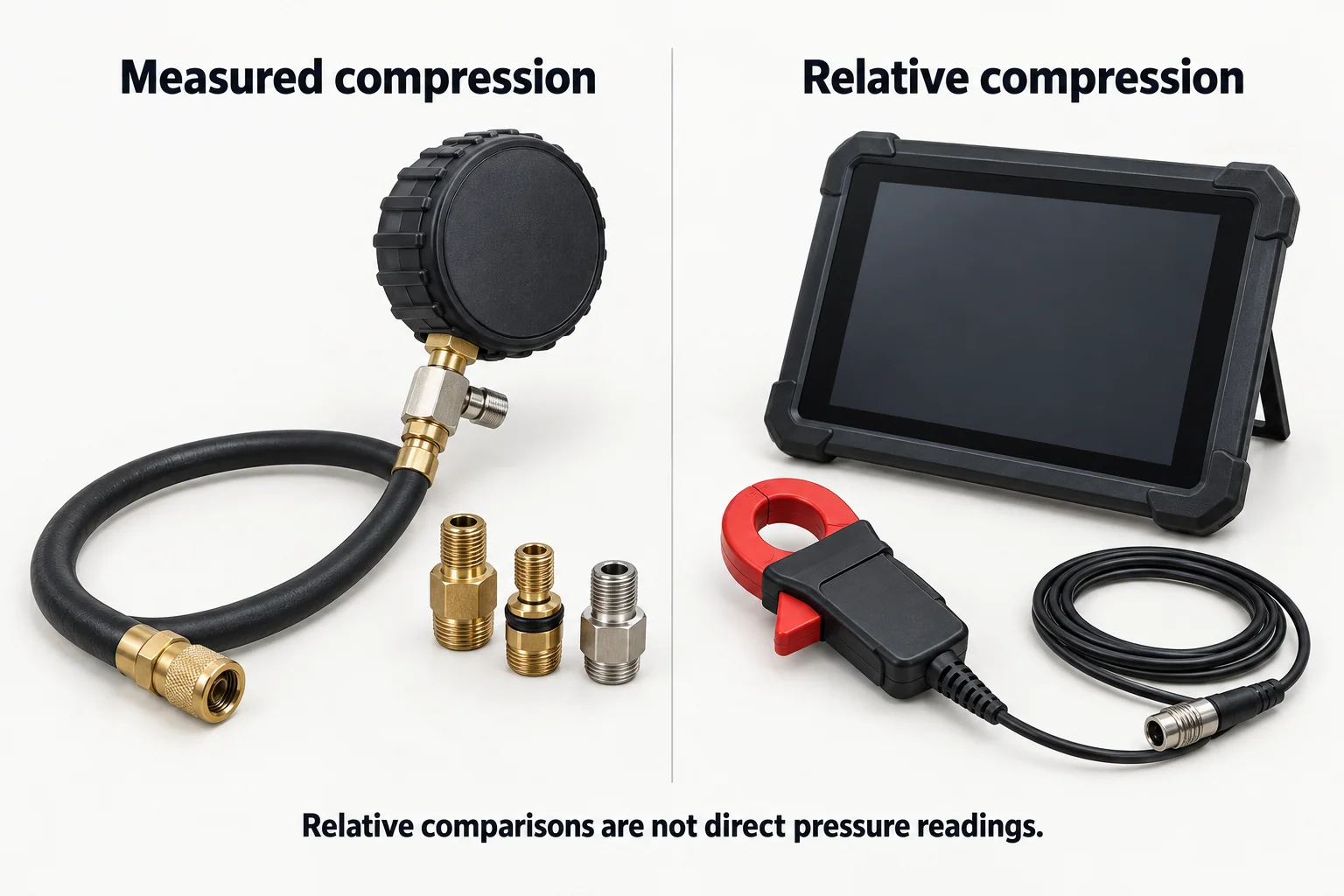
A gauge or pressure transducer measures pressure through a suitable cylinder connection. A relative test compares cylinders indirectly, commonly using changes in starter-current demand during cranking.
Pico explains that the starter works harder as a cylinder compresses its air. Repeating differences in current peaks can highlight a cylinder for further investigation. Those peaks are not direct PSI readings, and equal-looking cylinders do not establish that their absolute pressure meets the engine's specification.
What must be correct before the results mean anything?
Use the vehicle's procedure for engine temperature, disabling starting and fuel delivery, throttle position, access and cranking conditions. Keep the conditions consistent across cylinders. Cranking speed matters, so a weak battery or changing starter performance needs attention before readings are compared.
The tester and adapter must suit the engine. A gasoline spark-plug adapter is not a universal diesel kit, and diesel access may involve different components. Follow the equipment limits and vehicle procedure rather than removing injectors or glow plugs simply because a generic guide suggests it.
How should you interpret a low reading?
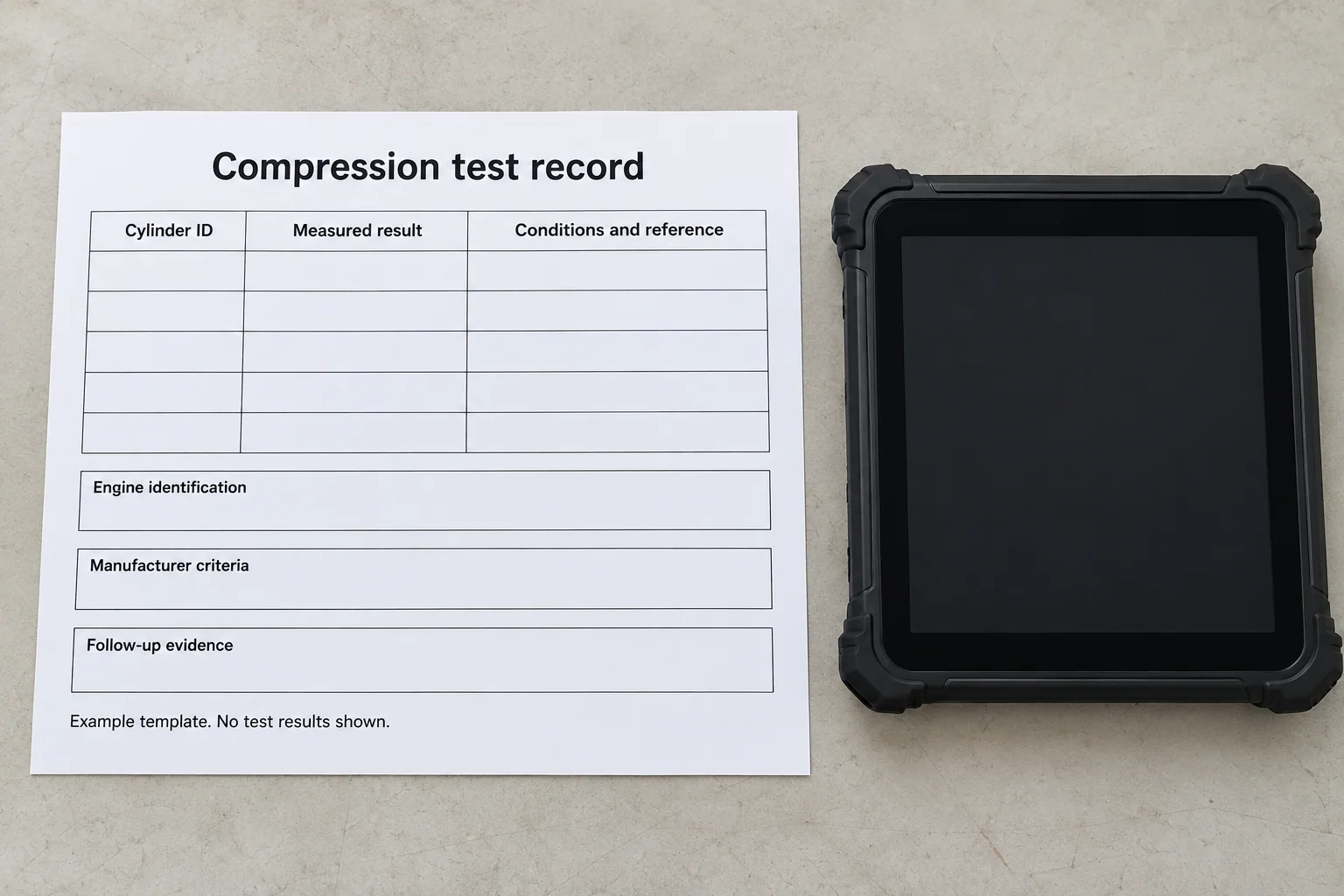
Record each cylinder's pressure and the conditions used. Check both the specified minimum and the permitted variation, where the manufacturer supplies them. A lower cylinder needs investigation; low readings across the engine also warrant checking the setup and engine breathing before condemning its internal parts.
Relative-compression software may label results in firing order rather than by the manufacturer's cylinder numbers. Pico specifically warns that some displays cannot identify cylinder 1 from a battery-only test. Ask how the suspect cylinder was identified before approving work on it.
What do wet and running compression tests add?
A wet test repeats a pressure check after a controlled amount of oil is introduced as permitted by the applicable procedure. A change can help investigate sealing at the rings and cylinder, but it is evidence to interpret with the other findings, not a complete diagnosis. Do not pour an arbitrary quantity into a cylinder.
A running in-cylinder pressure test uses different conditions and can reveal valve-event or breathing behavior over time. Its results should not be compared directly with a cranking-pressure specification. Pico's training material emphasizes that engine design and variable valve timing affect the waveform.
When do the results justify engine repairs?
Ask what additional evidence identifies the fault and what remains uncertain. Further checks may include cylinder leakage or valve-timing investigation. A low pressure number alone does not justify a head-gasket replacement or a complete engine rebuild.
Request the results by cylinder, the manufacturer's comparison criteria and the confirmed repair scope. After repair, the relevant test and original running complaint should both be rechecked.
Sources & further reading
- Pico Technology — Compression testing - Picoauto Library
- AA1Car / Larry Carley — How to Check Engine Compression
- Pico Technology — Relative compression (gasoline) | Automotive oscilloscope test
Vehicle designs and maintenance requirements vary. Consult the owner’s manual for your exact vehicle and seek a qualified inspection for a specific fault.