Drivetrain
CV Axle and CV Joint Replacement: Procedure, Costs and Common Mistakes
Published:
Edited and fact-checked by: Jacob Bowen
General information; vehicle-specific diagnosis requires an inspection. How we prepare our guides · This page reserves space for ads. Advertising policy · Privacy choices
The quick answer
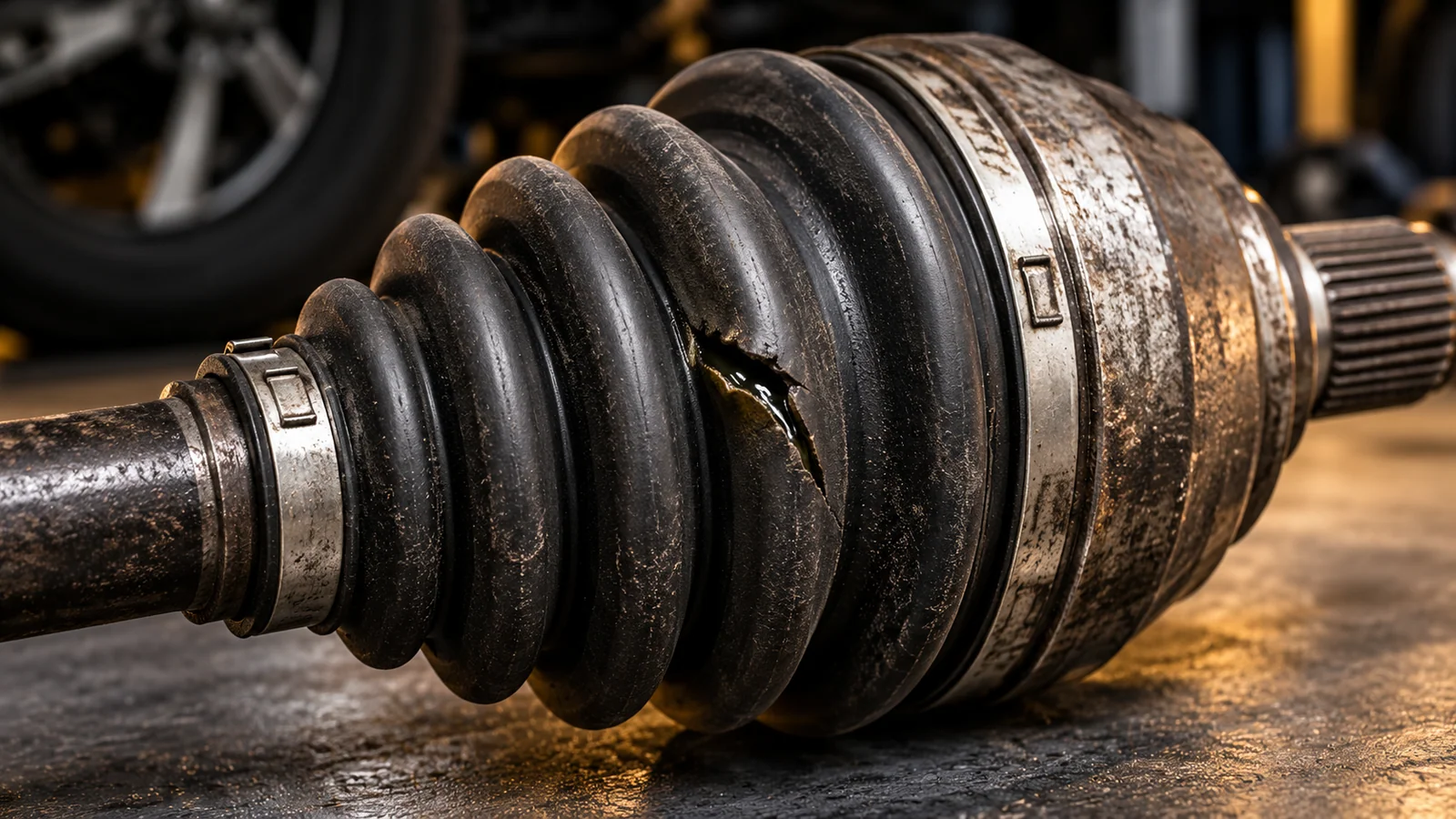
A worn or damaged CV joint needs replacement; a torn boot caught before joint damage may be repairable with a new boot and the correct grease. A complete axle assembly is another option. Have the joint inspected before choosing the repair, because fresh grease cannot restore worn joint surfaces.
What symptoms suggest a CV axle problem?
Clicking during turns can point toward an outer CV joint. Clunks or shudder during acceleration can involve an inner joint, but mounts and other driveline parts can cause similar symptoms. A vibration at road speed alone is not proof that an axle is bad.
Arrange an inspection promptly if a boot is leaking or a joint is noisy. There is no dependable remaining-mileage allowance once damage starts; a joint that separates can leave the vehicle unable to drive.
Is a CV joint the same thing as a CV axle?
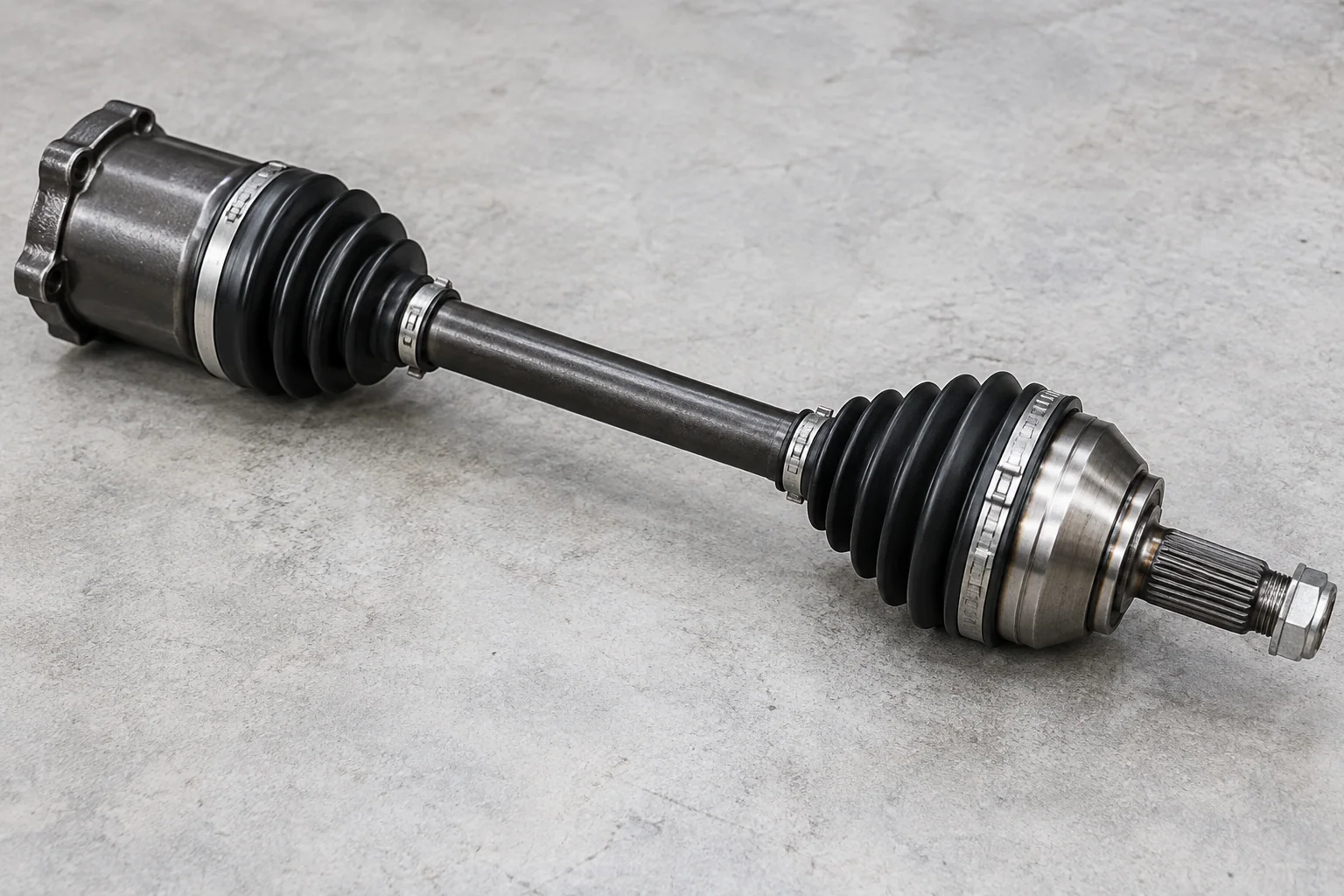
The axle, often called a half shaft, includes a shaft and joints that allow it to transmit power while the suspension and steering move. The boots retain grease and keep contamination out.
Replacement assemblies must match the exact application. MOOG calls out compressed length, spline count and seal diameters as fitment checks. Match the required ABS-related features too; appearance alone is not enough.
Can you replace just the torn boot?
Possibly, if inspection finds a serviceable joint. Noise, excessive looseness, damaged internal surfaces or contaminated grease can change that decision. Compare the full labor and parts cost of a boot repair with the appropriate joint or axle assembly.
A boot-only quote and a complete axle quote cover different work. Ask what the inspection found rather than selecting on the lowest parts price.
What matters during CV axle installation?
The vehicle-specific procedure determines how the axle is released from the hub and transmission or differential. Support it during removal and installation, protect seals and ABS components, and verify that its inner retention mechanism is properly engaged.
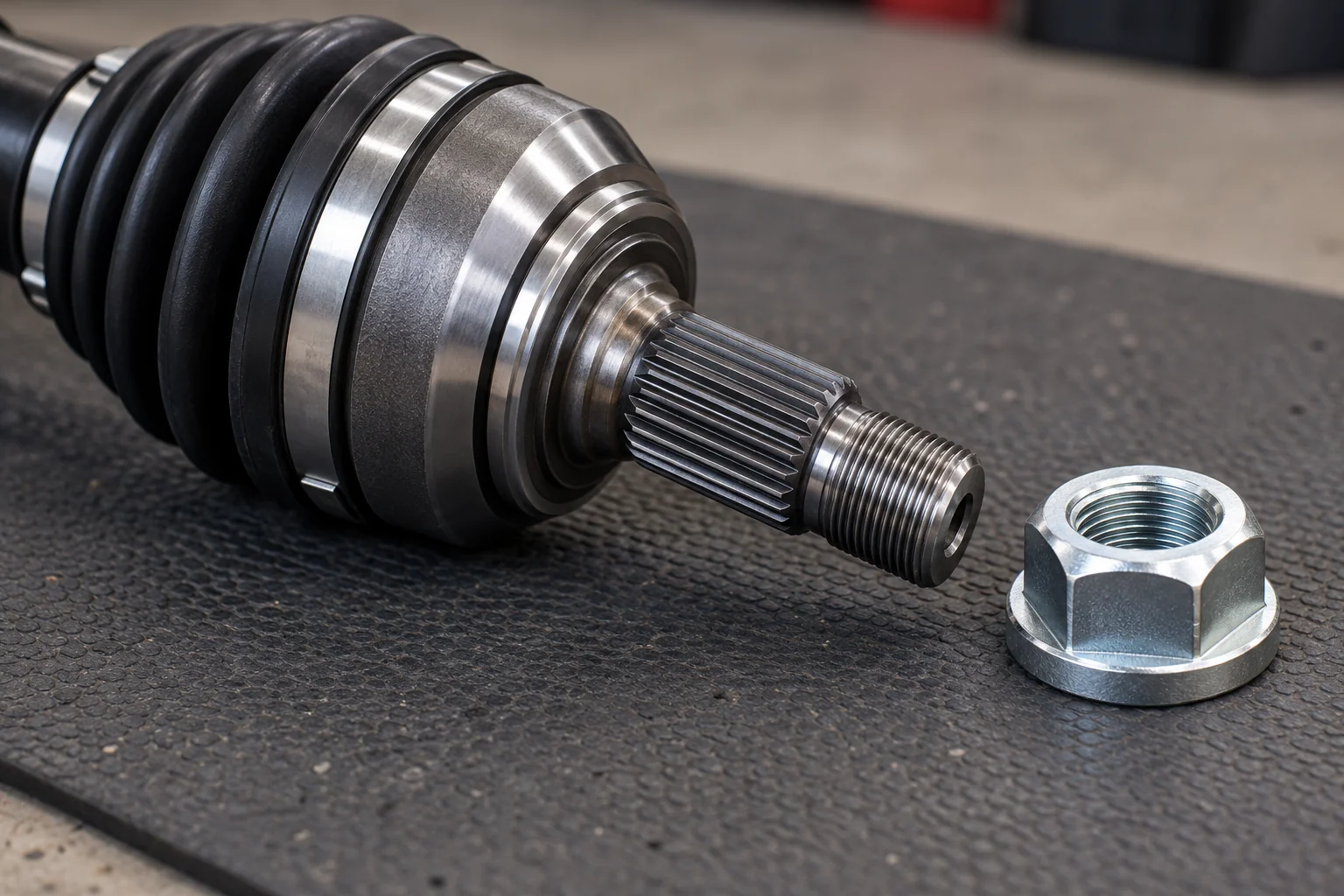
Use required replacement hardware and the manufacturer's tightening procedure. MOOG specifically warns against reusing prevailing-torque axle nuts or using power tools for final spindle-nut tightening. There is no universal axle-nut torque.
How much does CV axle replacement cost?
RepairPal's general US CV axle replacement estimate is $1,283–$1,381, updated September 3, 2026. It lists $208–$306 in labor and $1,075–$1,076 for parts, excluding taxes, fees and location differences. Use that as a named-service benchmark, not an exact quote for your car.
Confirm which side and how many assemblies the estimate covers. A boot, seal or individual joint is a different service. Get a vehicle-specific comparison that identifies the part type, warranty, necessary fluid and any related work.
What should be checked before the car comes back?
Ask the shop to verify that the axle is seated, affected fluid levels are correct, and seals and boots are not leaking. The original noise or vibration should be checked again. If it remains, replacing another axle without further diagnosis is not a useful next step.
Do both CV axles need replacement together?
Inspect both sides, but ask for evidence supporting each replacement. The failure of one does not establish the condition of the other. Suspension lifts or damage that changes axle angles also deserve attention when investigating repeat failures.
Sources & further reading
- MOOG — Replacing a CV Axle
- MOOG — Why CV Axles Fail
- AA1Car / Larry Carley — How to Repair or Replace Constant Velocity Joints
- RepairPal — CV Axle Replacement Cost Estimate
Vehicle designs and maintenance requirements vary. Consult the owner’s manual for your exact vehicle and seek a qualified inspection for a specific fault.