Ignition and engine control
Crankshaft Position Sensor: Symptoms, Diagnosis and Repair Options
Published:
Edited and fact-checked by: Jacob Bowen
General information; vehicle-specific diagnosis requires an inspection. How we prepare our guides · This page reserves space for ads. Advertising policy · Privacy choices
The quick answer
A faulty crankshaft-position sensor or its circuit can cause a crank-no-start, stalling or running problems because the engine computer relies on crankshaft timing information. Those symptoms have other causes too. Diagnosis should check the signal and its circuit under the conditions that trigger the problem before a sensor is replaced.
What does the crankshaft-position sensor tell the engine?
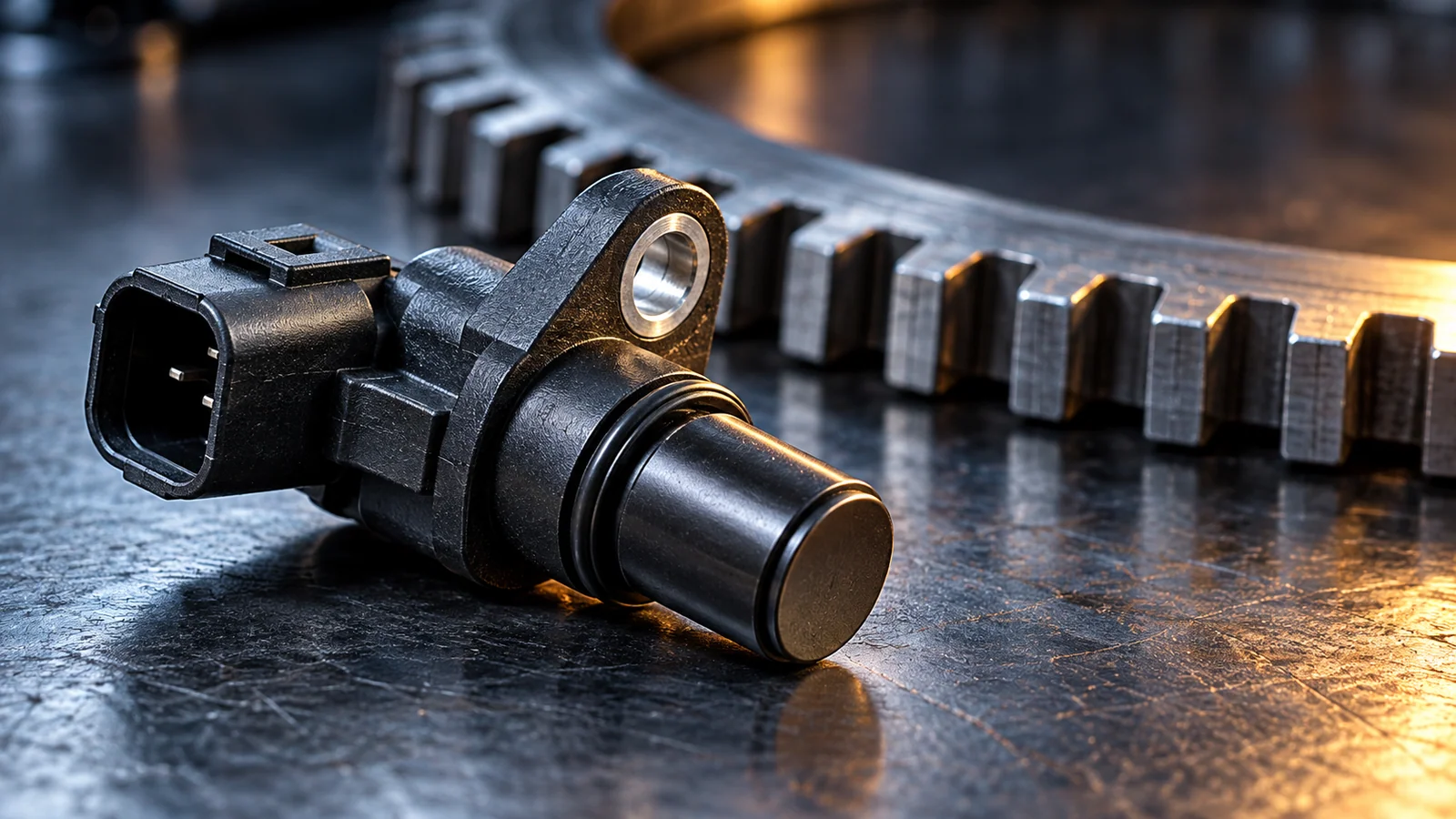
The sensor, often abbreviated CKP, provides information about crankshaft speed and position. The computer uses it for engine timing, including ignition and injection control. Pico also explains its role in detecting the small speed changes associated with misfires.
A camshaft-position sensor supplies related information but is a different component. A crank/cam correlation fault concerns the relationship between signals; the name does not prove either sensor is defective. Get the exact code and the correct engine-specific diagnostic procedure.
Which symptoms justify testing the crank sensor?
Delphi lists starting difficulty, stalling, rough idle, reduced power and an engine warning light among reasons to investigate. These are clues, not a reliable way to choose a replacement part.
Note whether the engine cranks normally, whether the problem appears hot or cold and whether it restarts after cooling. Underhood Service describes heat-related intermittent failures that can be difficult to reproduce and may not immediately leave a code. A useful report is, for example, that the engine cranks but will not start after a warm shutdown, rather than simply that the car will not start.
If the engine stalls in traffic or cannot run dependably, stop using the vehicle and arrange diagnosis and transport. Do not try to reproduce an intermittent stall on a busy road.
How should the sensor and wiring be tested?
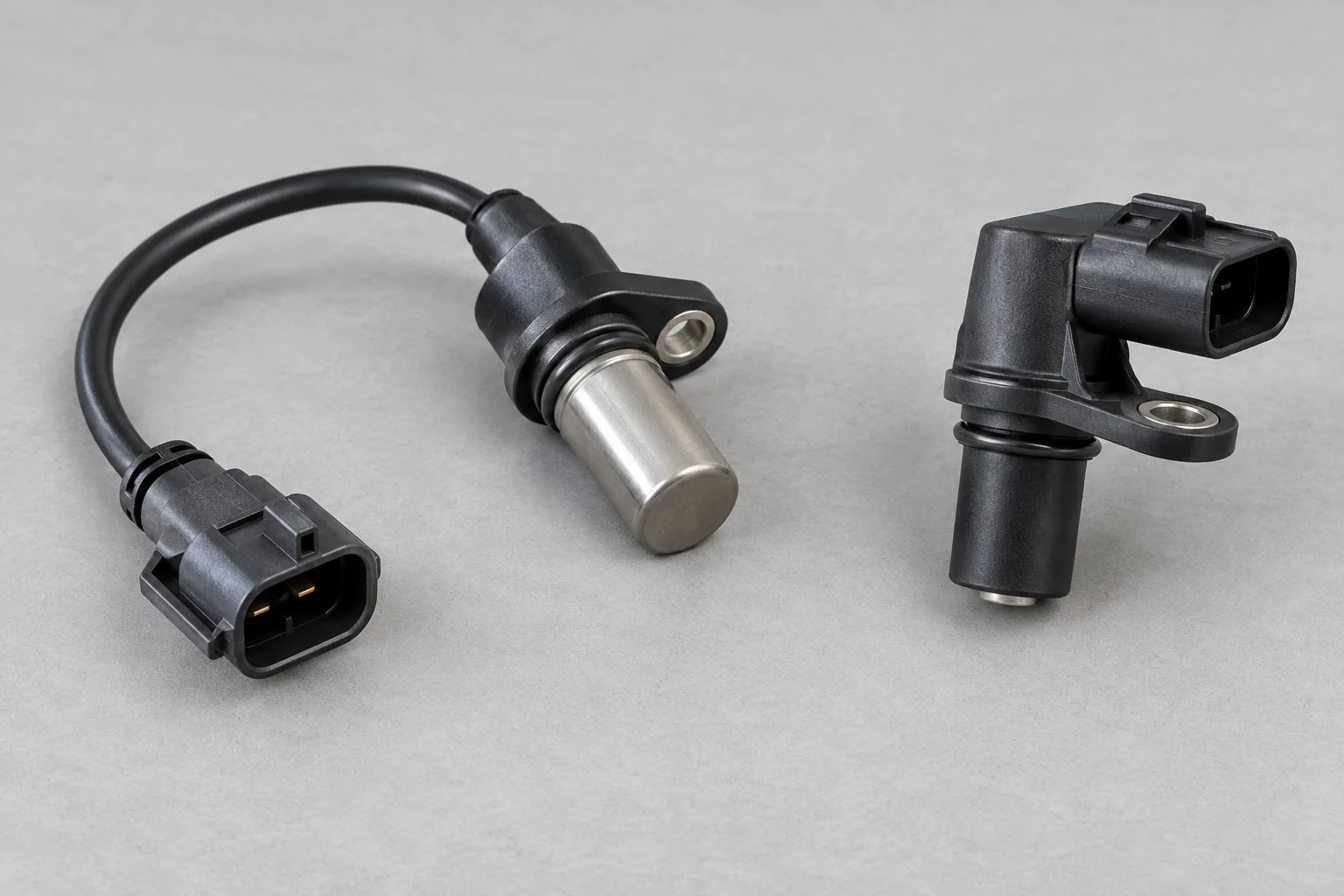
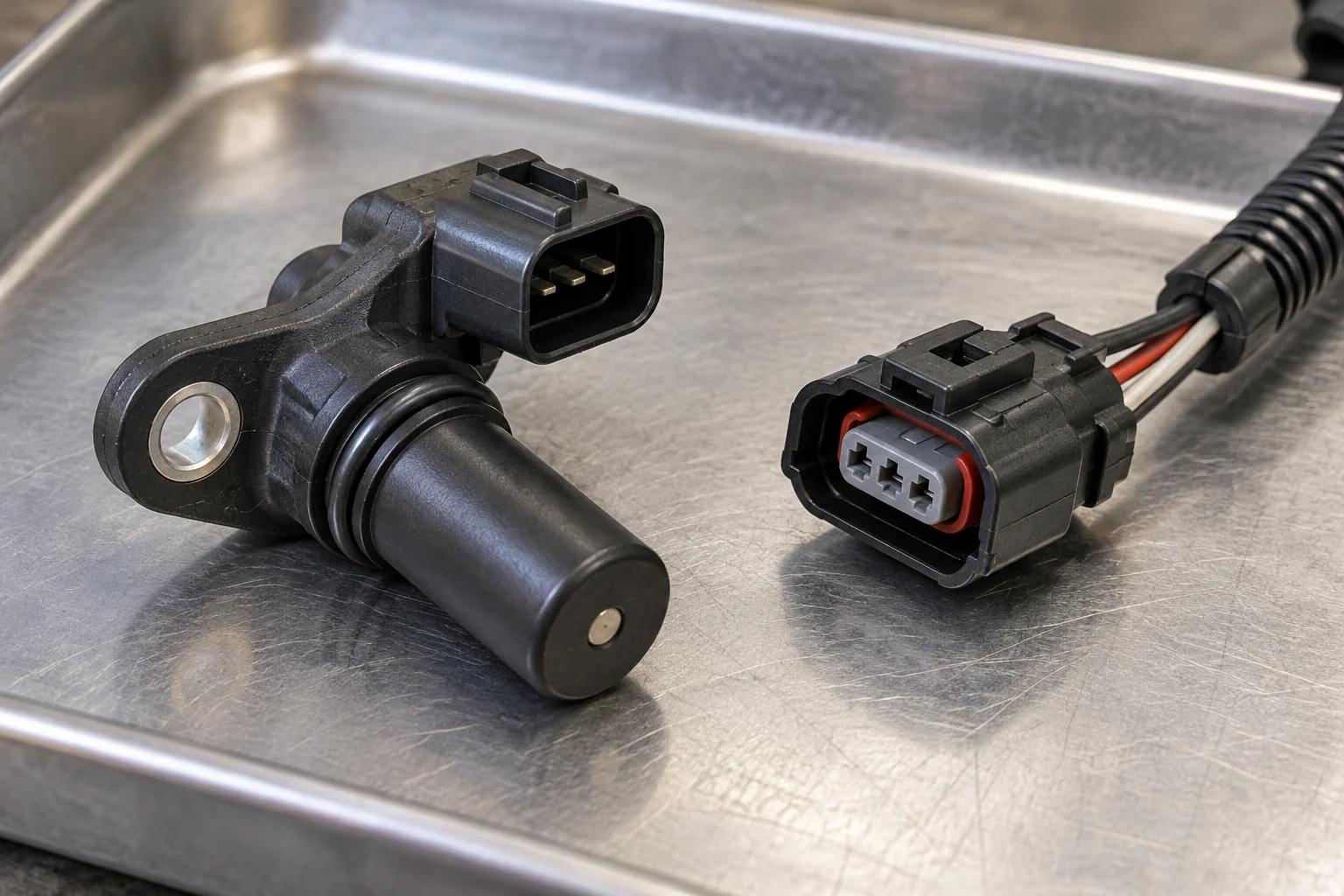
First identify the sensor design and wiring diagram. Delphi distinguishes inductive and Hall-effect sensors and cautions that wire count can be misleading because an extra wire may be shielding. Do not choose a test solely by counting pins.
A shop may check cranking-speed data, inspect the connector and harness, and capture the sensor waveform. Underhood Service notes that some scan-tool or computer combinations do not display engine speed during cranking. A zero reading therefore needs confirmation before condemning the sensor.
Pico's test specifically covers a ground-referenced inductive sensor during cranking. It explains that signal output depends on rotation and that excessive gap, debris, pulse-wheel damage or circuit faults can affect the result. That example waveform and hookup are not universal settings for every CKP sensor.
When is sensor replacement the right repair?
Replace the sensor when testing supports a sensor fault. Repair a proven connector, harness, mounting or pulse-wheel problem instead when that is the cause. A signal that is absent at the computer needs tracing through the actual circuit, which can include an ignition module on some designs.
Fit the correct application-specific part and follow the manufacturer's installation and any required post-repair procedure. Sensor location and access vary by engine; instructions for a Kia, Nissan, Mercedes or Ford cannot be transferred just because the symptom sounds similar.
Ask the shop to verify the original hot/cold starting condition after repair and explain any remaining codes. Clearing a warning without checking that the signal and symptom are corrected is not a meaningful confirmation.
Sources & further reading
- Pico Technology — Crankshaft position sensor (non-floating, cranking) | Automotive oscilloscope test
- Delphi — How to test your crankshaft position sensor
- Underhood Service — Crankshaft and Camshaft Position Sensor Diagnosis
Vehicle designs and maintenance requirements vary. Consult the owner’s manual for your exact vehicle and seek a qualified inspection for a specific fault.